Here’s the secret every working stylist knows and most couples don’t: an expensive-looking wedding is rarely an expensive wedding. It’s an edited wedding. Fewer ideas, executed with conviction, placed exactly where people look.
So if you want to style a wedding on a small budget — for a client, a friend or your own portfolio — this is how stylists actually do it. Not with a craft-store trolley and a hot glue gun, but with decisions.
Why styling a wedding on a small budget is a design problem, not a money problem
Small budgets fail when they’re spread thin. A little bit of everything — a few flowers on every table, some bunting, a sign here, a lantern there — reads as clutter, and clutter reads as cheap. The same money concentrated into two or three confident moments reads as intentional.
That’s the whole mindset shift. You’re not asking “how do we afford everything?” You’re asking “what are the three things this wedding will be remembered for, and how do we make those unforgettable?”
It’s exactly the thinking we teach in the Certificate in Wedding Styling — because big-budget clients need editing just as much as small-budget ones.
Start with the venue: choose one that does half the work
The cheapest styling decision happens before you buy a single candle. A venue with good bones — exposed timber, stone walls, big windows, a garden, a view, beautiful existing furniture — is already styled. Your job becomes enhancing it, not hiding it. A blank function room makes you build atmosphere from scratch — that’s where budgets disappear.
How to work with a venue’s existing features
- Walk the space at the time of day the wedding happens. Where does the light fall? What looks beautiful already? What needs hiding?
- Style towards the features, not over them. Put the ceremony in front of the fireplace or the view. Let the timber beams carry the ceiling instead of paying for draping.
- Plan one simple fix per eyesore — an exit sign, stacked chairs, a harsh tube light — rather than restyling the whole room around them.Ask what’s included. Many venues have furniture, candle holders, arbours or linen they don’t advertise. Ask for the inventory before you hire anything.
Build a tight colour palette — and stick to it
A restrained palette is the single fastest way to make modest décor look considered. Two or three colours plus a neutral, and everything you add either belongs or it doesn’t. No debates, no impulse buys, no “it was on sale.”
It saves money practically, too: you can mix hired, borrowed and owned pieces and they’ll still look like one collection. Tonal schemes — whites and creams, greens and naturals — are especially forgiving because nothing has to match perfectly.
Spend where the camera and the guests look
Guests don’t study every surface. They look at three places, and so does the photographer: the ceremony focal point, the head or couple’s table, and the entry moment when they first walk into the reception. Those are your investment zones.
The ceremony focal point
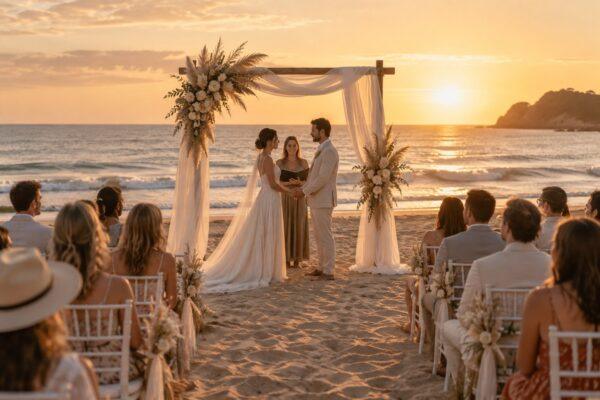
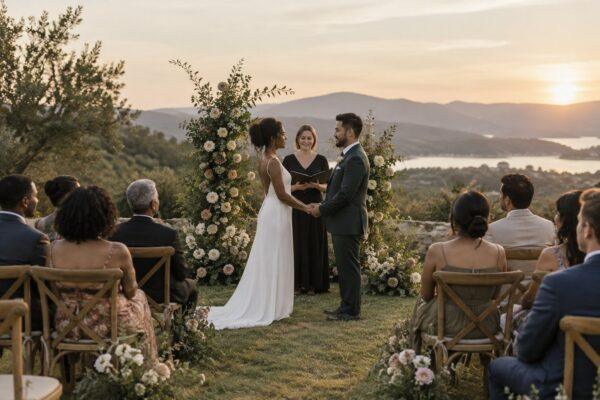
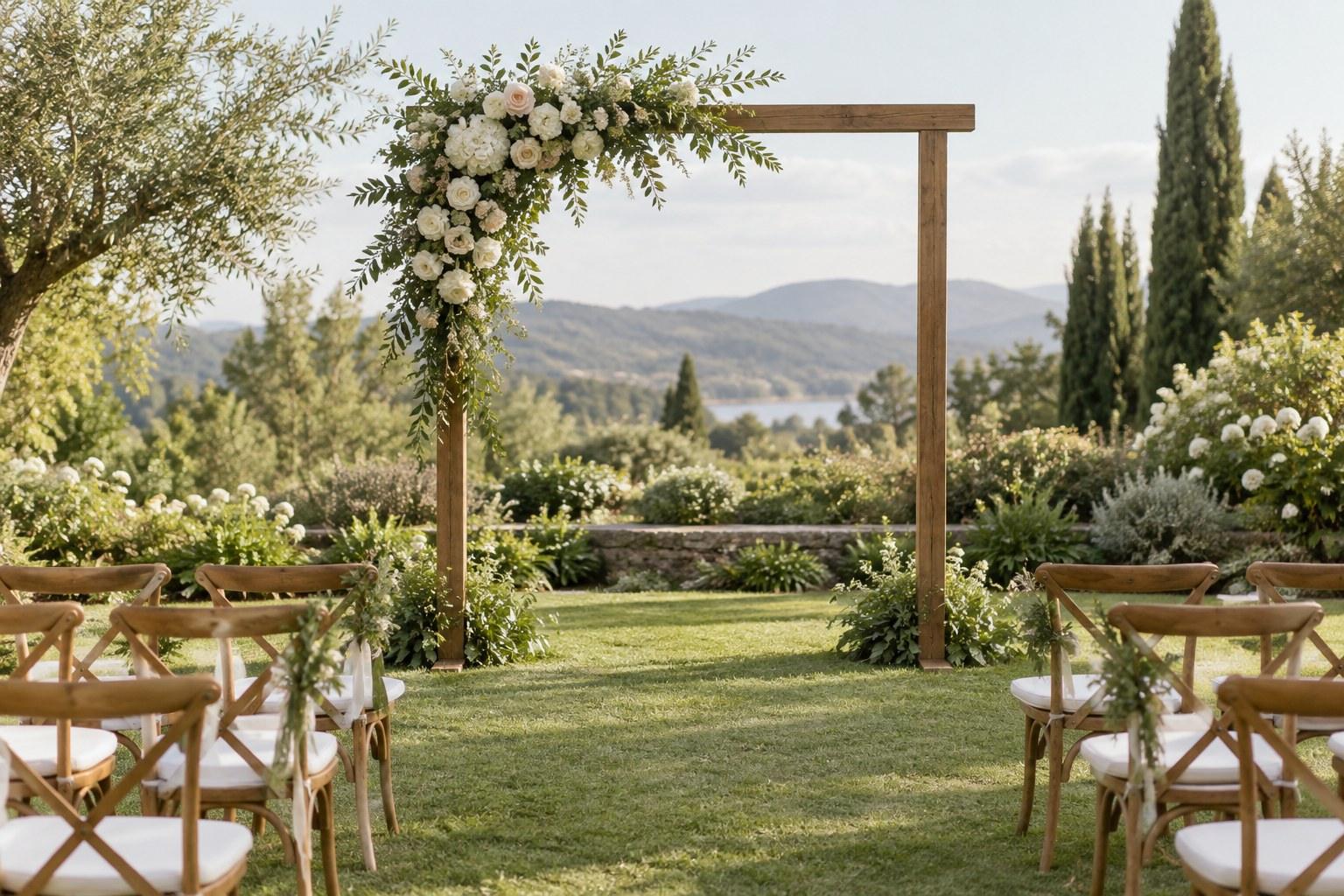
This is the backdrop to the most photographed minutes of the day. One strong, asymmetrical floral arrangement on a simple arch or against a beautiful wall will outperform a full floral arch done timidly. Spend here first.
The head table
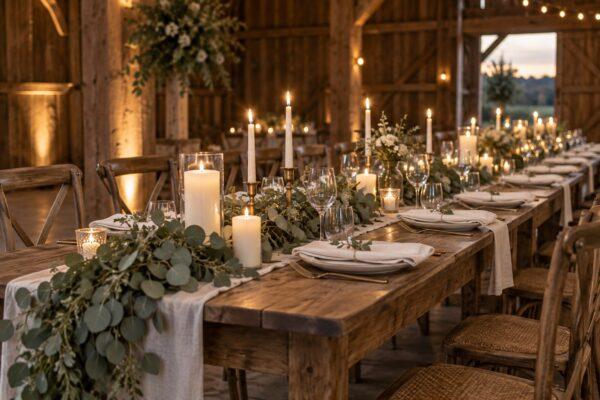
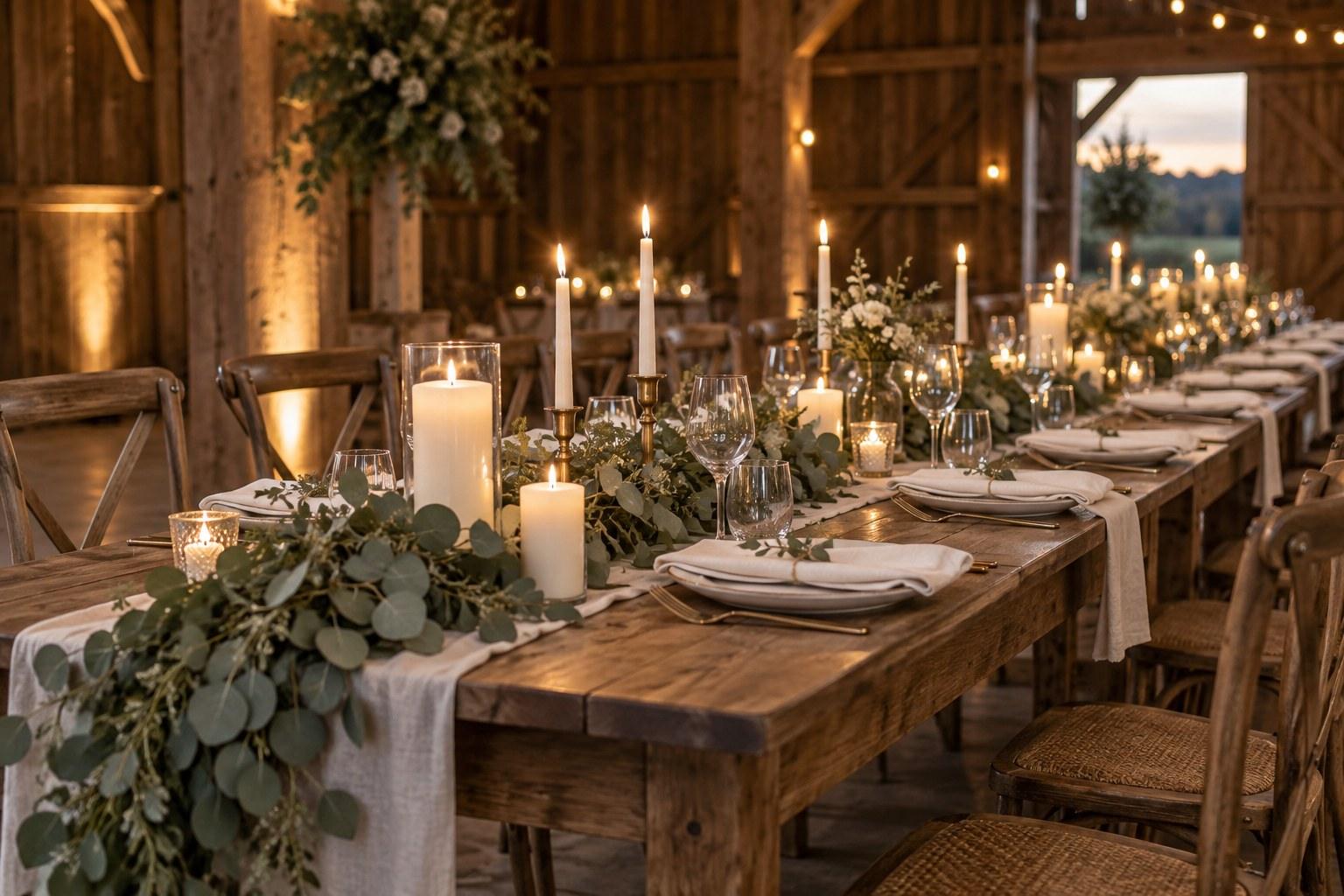
It’s in the speeches, the portraits and every candid of the couple laughing. Give it more — more candles, a fuller runner, the best linen — and let guest tables echo it in a lighter version.
The entry moment
First impressions set the tone for the whole room. A welcome sign, a grouping of candles or a single big arrangement at the door tells guests “this has been designed” before they’ve found their seat.
A quick tip: ask the photographer early which angles they plan to shoot the ceremony and speeches from. Knowing exactly what will be in frame tells you where every styling dollar should land — and where nobody will ever see it.
Everything else — the bathrooms, the bar corner, the cake table, the guestbook — can be clean, simple and quiet. Nobody has ever left a wedding complaining the bathroom lacked florals.
Where to spend vs where to save when you style a wedding on a small budget
| Element | Spend or save? | Why it works |
|---|---|---|
| Ceremony backdrop | Spend | It’s the most photographed spot of the day — one strong focal point carries the whole ceremony |
| Head table | Spend | Appears in speeches, portraits and candids; guest tables can echo it more simply |
| Candles and lighting | Spend | Biggest atmosphere change per item; transforms any room once the sun goes down |
| Entry or welcome moment | Spend | Sets guest expectations instantly and gets photographed |
| Guest table florals | Save | Greenery runners and bud vases repeated down the table look abundant for less |
| Chair décor | Save | Rarely seen once guests sit; good chairs need nothing added |
| Signage | Save | One well-designed sign beats five small ones — keep it to what guests actually need |
| Favours | Save or skip | Often left behind; put that money into food, drink or lighting instead |
| Novelty props and extras | Save or skip | Themed props date quickly and add clutter rather than polish |
Candles and lighting: the biggest impact per dollar
If you only take one thing from this post, take this: light is the cheapest luxury in styling. A plain room with dozens of candles looks romantic. An expensively decorated room under overhead fluorescents looks like a conference.
- Mix candle heights — tapers, pillars and tea lights together create depth that one size can’t.
- Cluster, don’t scatter. Groups of candles read as intentional; lone tea lights disappear.
- Hire the holders, buy the candles. Candle holders are a common hire item; the candles themselves are consumables.
- Check venue rules first. Some venues ban open flame or require enclosed holders — quality LED candles are the fallback.
- Ask about dimmers. Turning the house lights down is free and changes everything — the goal is warm, low, layered light, never one flat source from above.
Repetition and mass: one element, lots of it
Luxury looks rely on abundance, but abundance doesn’t have to mean variety. A table covered end to end in one kind of greenery looks lush. The same space dotted with six different ideas looks busy.
Choose one hero element and repeat it with discipline: a long line of bud vases with a single stem each, a runner of trailing foliage, a row of identical tapers, a cluster of the same bloom massed together. Repetition creates rhythm, and rhythm is what the eye reads as “designed.”
Hire vs buy vs borrow: how stylists decide
- Hire anything bulky, specialist or needed in large quantities for one day — arbours, furniture, large candle holders, linen, glassware. You avoid storage and resale headaches.
- Buy consumables and anything you’ll reuse — candles, ribbon, floral foam alternatives, basic vessels you can use across future jobs.
- Borrow from the couple’s network, the venue or your own kit — but only when the pieces genuinely fit the palette. A free item that doesn’t belong costs you the whole look.
If you’re building a styling business, the buy column slowly becomes your inventory. Invest in versatile neutrals — clear glass, simple brass, white ceramics — that work across dozens of palettes, not trend pieces you’ll use once.
Repurpose ceremony pieces at the reception
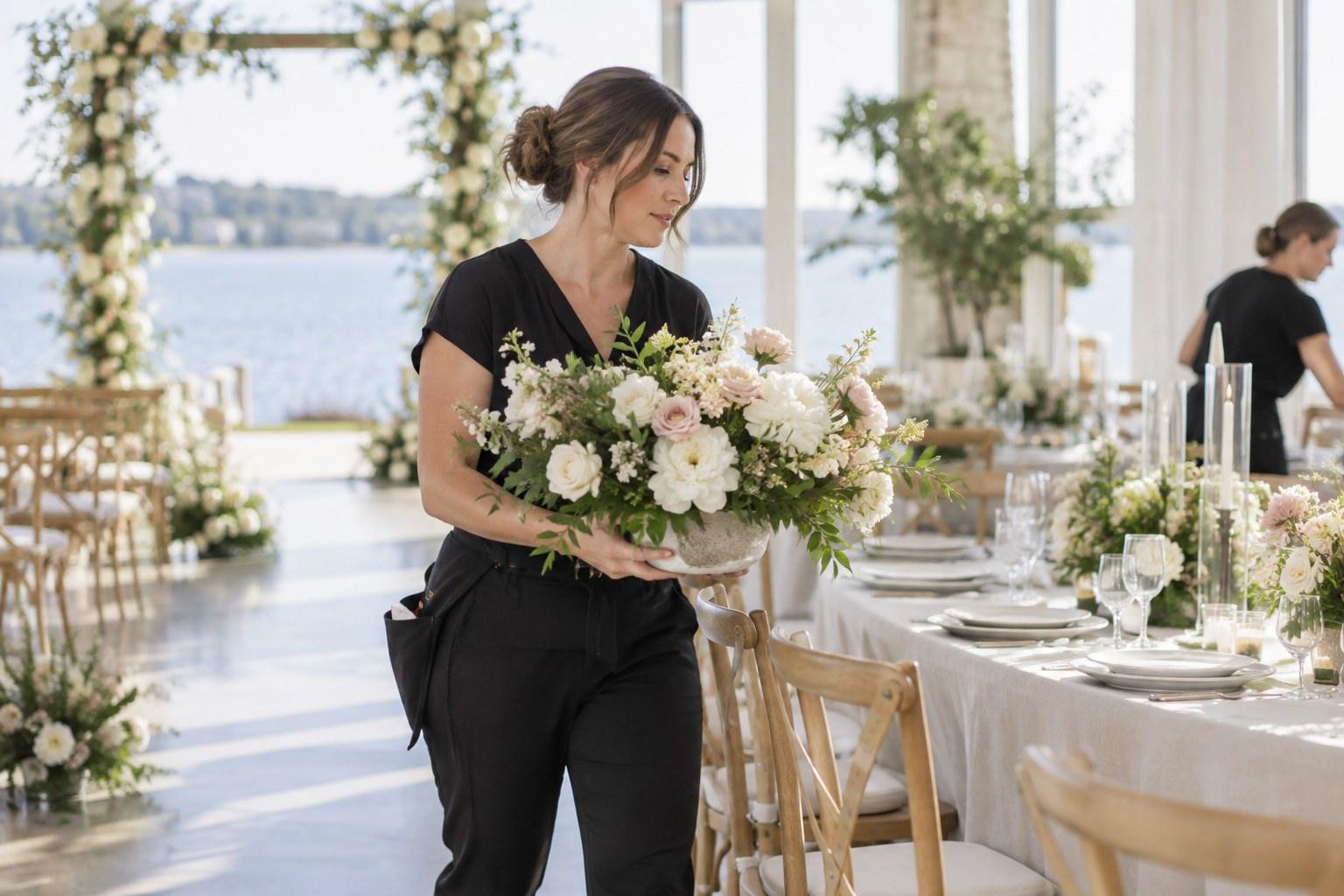
This is the oldest trick in the stylist’s book, and it works every time. Aisle arrangements become head-table florals. Ceremony candles move to the cake table or the bar. The welcome sign becomes the seating-chart backdrop. The arch arrangement gets lifted onto the head table or the entry.
Plan it on paper: which piece moves, where, who moves it and when. The flip usually happens during canapés, so design arrangements to be portable — low, stable and easy to carry.
Greenery-led and seasonal florals
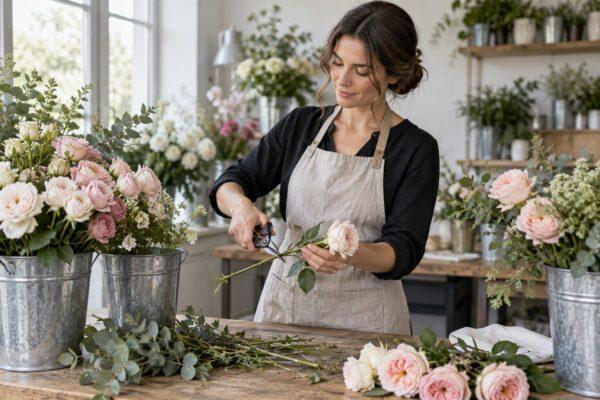
Florals are where budgets most often blow out, and where smart choices save the most. Lead with greenery and texture, then add blooms as accents rather than the main event. Foliage gives you volume, movement and that relaxed, abundant look for a fraction of the stems.
Seasonal, locally grown flowers are generally better value and better quality than blooms flown in out of season. Be flexible with varieties — ask for a colour and a feel rather than a specific flower, and let the florist use what’s best that week. If you want to go deeper into stem selection, mechanics and how florists price their work, that’s covered in our Certificate in Floral Design.
Linen and texture do the quiet heavy lifting
A good tablecloth or runner changes how everything on the table looks. Natural linen, crinkled cotton or a simple runner over timber adds texture that photographs beautifully — and texture is what makes simple styling feel rich rather than sparse. Beautiful tables? Skip the cloths and use runners. Plain trestles? Full-length linen is usually a smarter spend than extra flowers.
What not to DIY on a small budget
DIY can save money. It can also quietly cost more in time, materials, stress and results. Be honest about what’s worth it:
- Worth DIYing: simple bud vases, candle arrangements, basic signage from a good template, table setting on the day with a clear plan.
- Think twice: large floral installations, the bridal bouquet, anything structural or hanging, and anything that has to be done the morning of the wedding by people who should be getting ready.
- Always factor in: bump-in and bump-out labour, transport, storage and the cost of practice runs. “Free” labour from the couple’s friends still has to turn up, know the plan and pack down at midnight.
On the day, the best budget décor is the décor someone competent is responsible for. Pair a simple styling plan with a solid run sheet — the kind of logistics we cover in the Certificate in Wedding Planning — and small budgets stop feeling small.
What styled shoots teach you about expensive looks
Styled shoots are the best proof that budget and beauty aren’t the same thing. Look closely at the ones that stop your scroll: a single table, one arrangement, a handful of candles, one beautiful chair — composed, lit and photographed with total control.
The lesson isn’t to copy the props. It’s to copy the editing. Strong composition, a clear palette, negative space, good light and nothing unnecessary in frame. That’s what makes something look expensive, and every one of those skills transfers directly to a real wedding on a real budget.
If you’re a new stylist, a small, carefully edited styled shoot is also one of the smartest ways to build a portfolio that attracts the clients you actually want. Learn to compose, light and edit a scene properly in the Certificate in Wedding Styling, and you’ll never need a big budget to create an expensive-looking result.
Styling a wedding on a small budget: FAQs
How do you make a cheap wedding look expensive?
Edit ruthlessly. Choose a tight colour palette, concentrate spending on the ceremony focal point, head table and entry, use lots of candlelight, and repeat one element in volume instead of mixing many small decorations.
What is the best thing to spend money on when styling a wedding on a small budget?
Lighting and the ceremony focal point. Candles and warm, low lighting change the atmosphere of an entire room, and the ceremony backdrop appears in the most important photographs of the day.
Is it cheaper to hire or buy wedding décor?
It depends on the item. Hiring usually makes more sense for bulky, specialist or high-quantity pieces like furniture, arbours and candle holders. Buying suits consumables like candles and versatile pieces you’ll reuse.
Can you reuse ceremony flowers at the reception?
Yes, and you should. Aisle arrangements, ceremony candles and arch florals can move to the head table, bar or cake table during canapés. Plan who moves each piece and choose portable, stable vessels.
What wedding décor should you not DIY?
Be cautious with large floral installations, the bridal bouquet, anything structural or hanging, and any job that has to be done on the morning of the wedding. Simple candle groupings and bud vases are much safer DIY projects.