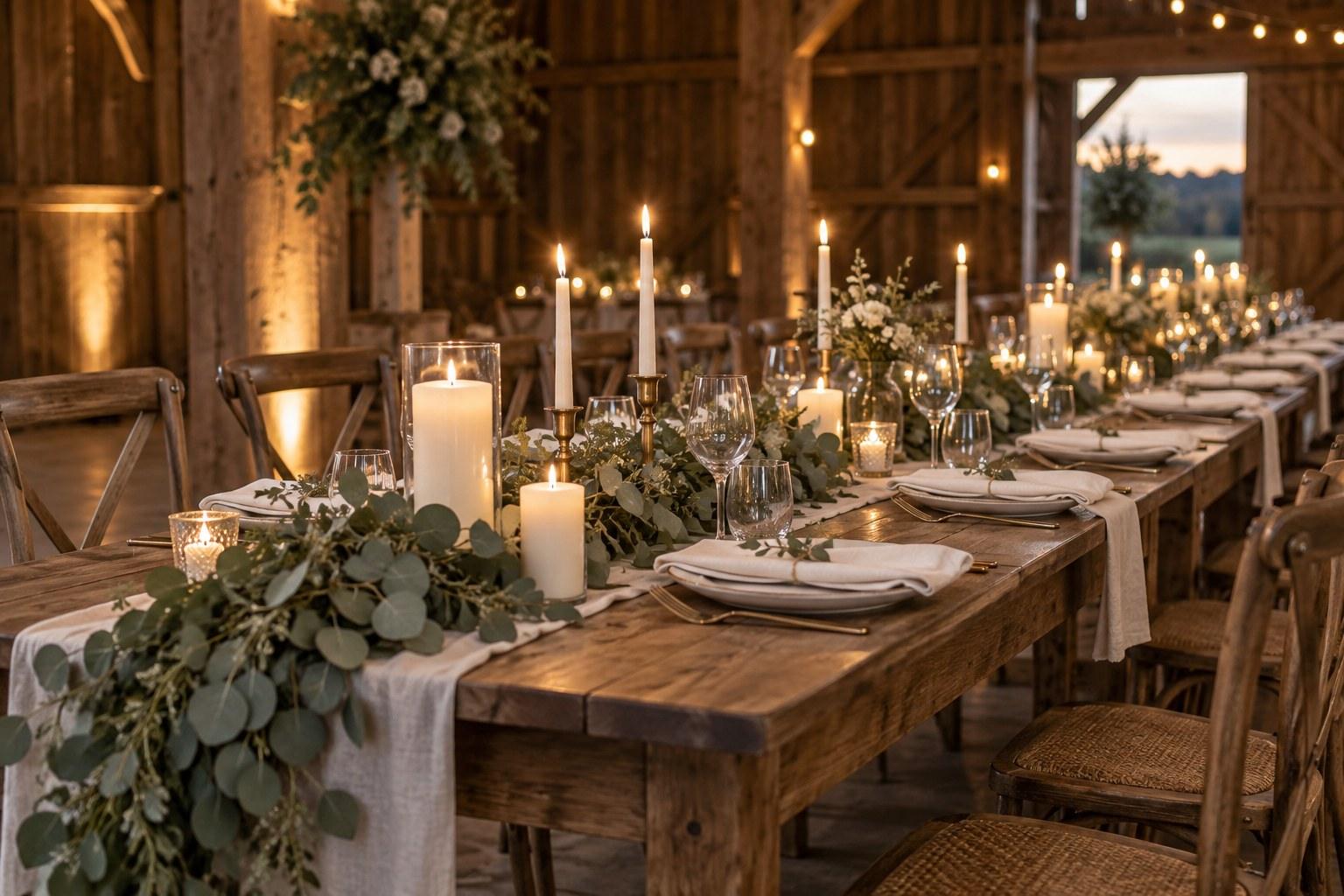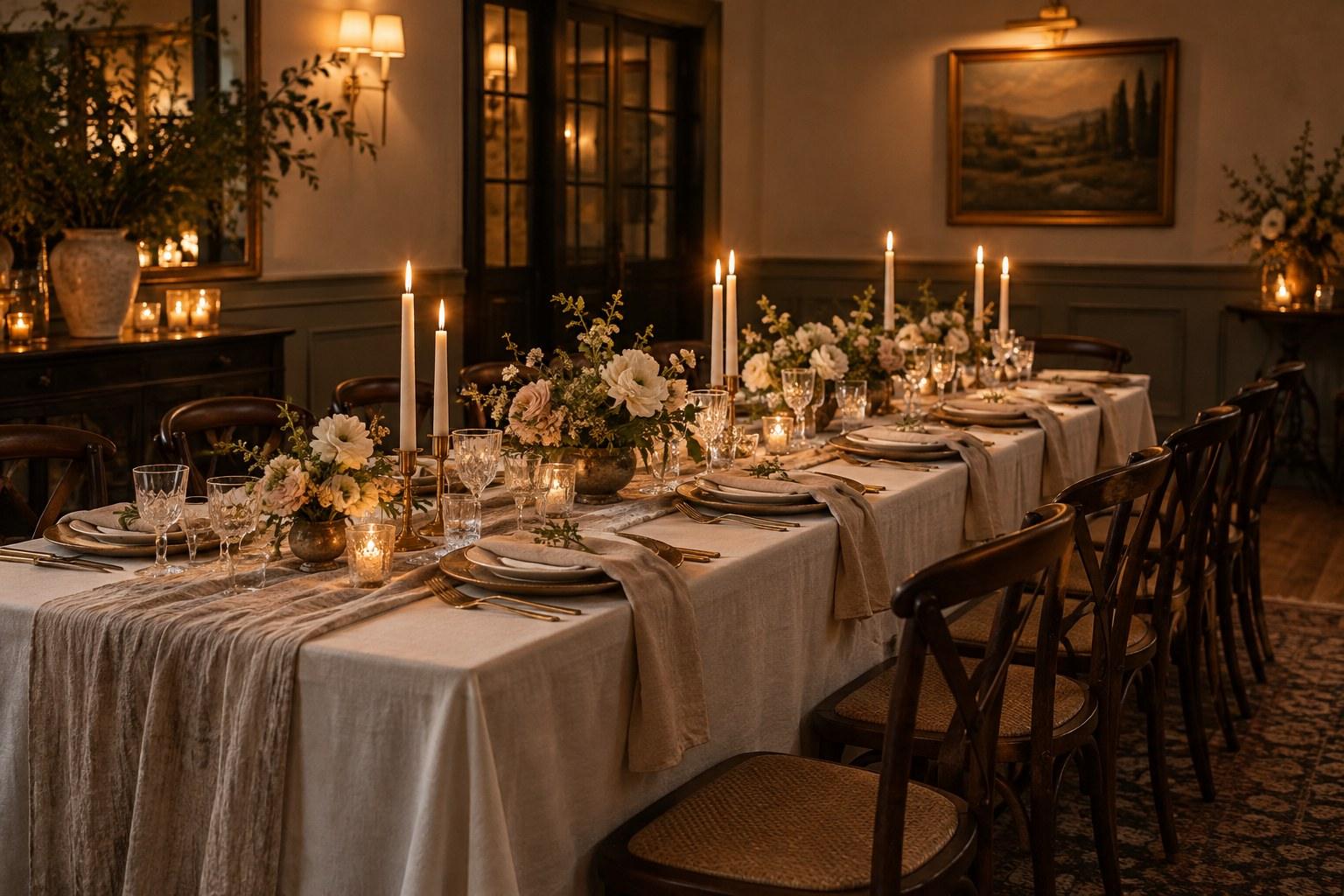
Small weddings look bare unless you do this: style the room you’ve actually got, for the guests who are actually coming. That sounds obvious. It isn’t — because most decor instincts, most supplier packages and most Pinterest boards were built for a hundred and twenty guests in a ballroom, not eighteen people in a private dining room.
Micro wedding styling is its own discipline. With fewer guests, every object is closer to someone’s eye, every empty corner is more visible, and every photograph is a close-up. Get it right and the day feels rich, deliberate and deeply personal. Get it wrong and it looks like a big wedding that half the guests forgot to attend.
Here’s how planners and stylists make small spaces feel intentional — from the first floor plan to the last place card.
Micro wedding styling starts with two numbers: guests and square metres
Before you open a moodboard, get the confirmed guest count and the real dimensions of the space. Not the venue’s marketing capacity — the actual room, with the fixed furniture, the fireplace, the bar and the door the waiters use.
Those two numbers decide almost everything else. A room that comfortably holds the guest list with a little breathing space is your ideal. A room that’s far too big for the group is the real danger — and it’s more common than you’d think, because couples fall in love with a venue before they’ve finalised the list. If that’s your situation, your styling job is to shrink the room visually: pull the table into the warmest part of the space, use lighting to define the zone, and let the rest of the room fall into soft shadow.
A room that’s tight is easier to work with than you’d expect. Tight rooms read as cosy and generous — provided you style with restraint and keep service paths clear.
One long table or clusters? Choosing the layout for an intimate wedding
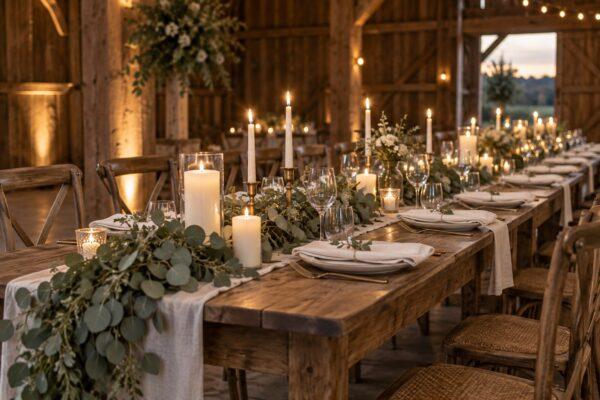
For most micro weddings, one long table wins. It turns the meal into the main event, puts every guest in the same conversation and gives you a single, continuous canvas to style. It also photographs beautifully from the head of the table — that classic shot down the length of candles and faces.
Clusters still have their place. If the room is an awkward shape, if there’s a column in the middle, or if the couple want a more relaxed, lounge-style feel, two or three smaller tables can work. The rule is that each cluster needs its own clear moment — a candle grouping, a low arrangement — so no table looks like the overflow table.
Whatever you choose, think about sightlines. Where do the couple sit? Can everyone see them for speeches? What’s behind them in photos — a feature wall, a window, or the kitchen pass? Sightlines are the quiet difference between a layout that feels designed and one that feels arranged.
Scale: fewer, bigger moments beat lots of little decor
This is the single most important idea in small space wedding decor. When the budget is spread across dozens of tiny items — a jar here, a sign there, a scattering of trinkets — the result looks busy up close and invisible from across the room. When the same effort is concentrated into a handful of strong moments, the whole space feels considered.
Pick your focal points deliberately. For most intimate weddings, three is plenty:
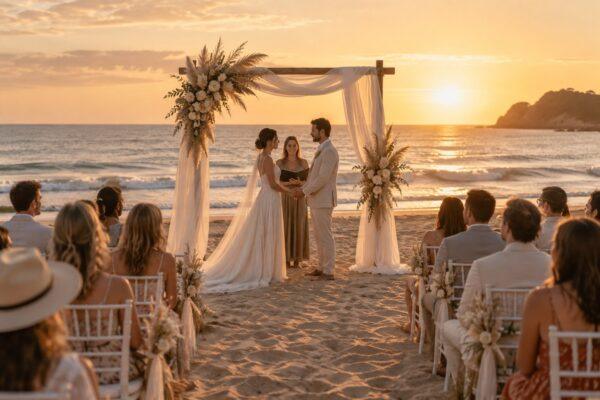
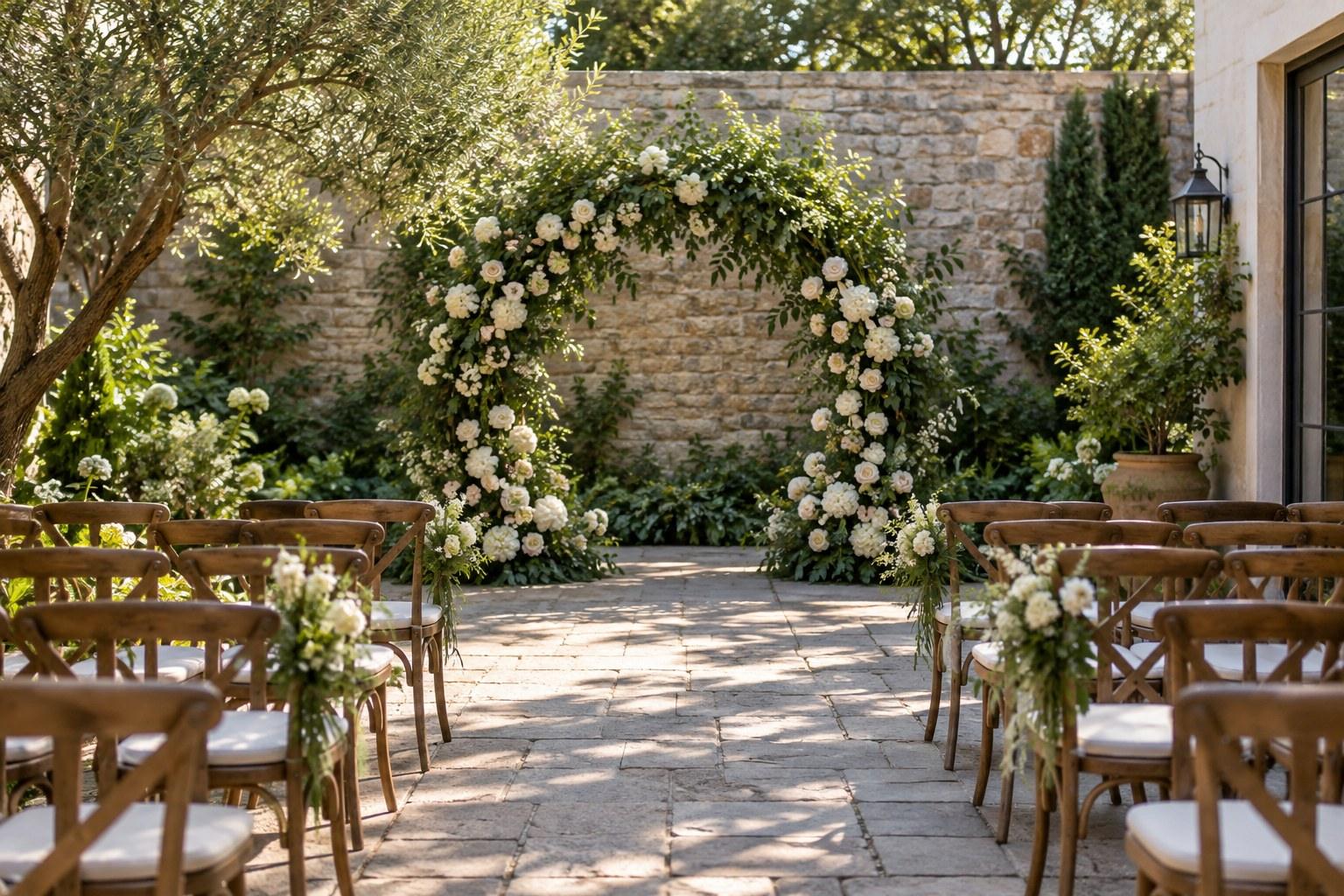
- The ceremony backdrop — one statement arrangement, an arch, a draped frame, or simply the best architectural feature in the venue, lightly enhanced.
- The tablescape — the hero of any micro wedding, because guests will sit at it for hours.
- One statement installation — a hanging floral piece, a wall of candles, a bar moment. Just one.
Everything else should support those three, not compete with them. If you can’t explain why a decor item is there, it probably shouldn’t be.
How to style a micro wedding table: layering linens, candles and florals
With a small guest list, the table is the room. Guests are close enough to touch the linen, read the menu and notice whether the glassware matches. That’s a gift — it means texture and detail actually get seen.
Start with the base layer
Linen sets the mood before anything else lands. A floor-length cloth feels formal and finished; a runner on a beautiful timber table feels relaxed and lets the venue show through. Layer a contrasting runner or a soft gauze over a plain cloth for depth without clutter.
Build height carefully
Keep florals low enough that guests can talk across the table — on a long, narrow table that’s non-negotiable. Get height from taper candles instead: they add drama without blocking faces. Mix candle heights for rhythm, and check the venue’s rules on open flame before you fall in love with the idea.
Let florals run, not sit
Instead of evenly spaced centrepieces, try a loose, continuous garland of greenery and blooms down the table, gathering into fuller clusters in a few places. It reads as abundant even with modest quantities, and it ties the whole table into one composition.
Edit the place setting
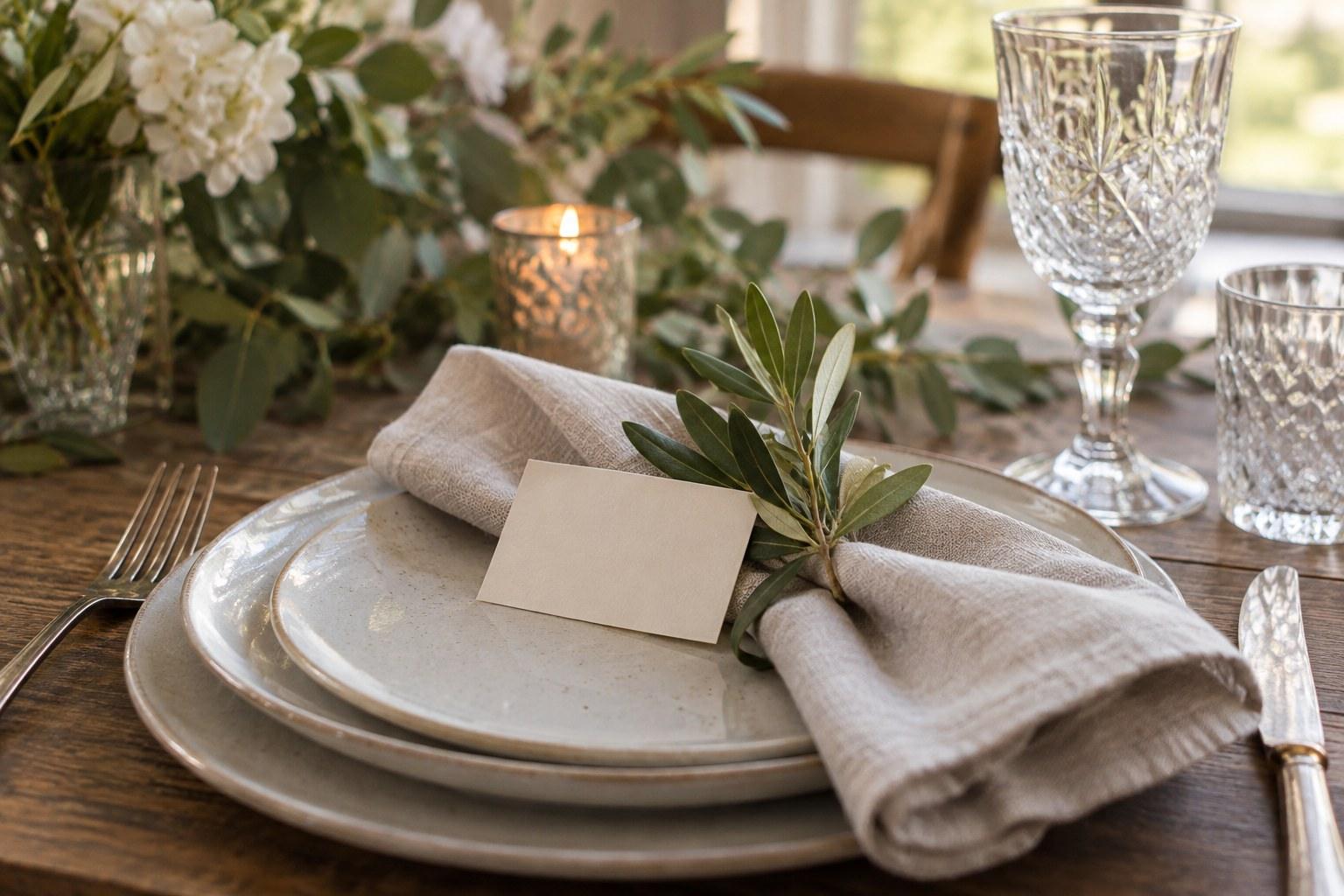
Charger, plate, napkin, cutlery, glassware, name card — then stop. On a small table every extra object multiplies fast. One considered detail per setting, like a sprig of herbs tucked into the napkin, does more than three novelty items.
Use the venue’s architecture instead of fighting it
Micro weddings happen in wonderful, unconventional places — restaurants, private dining rooms, family homes, gardens, rooftops. Each one already has a personality. Your job is to frame it, not cover it.
| Space type | Styling move | Avoid |
|---|---|---|
| Restaurant | Work with the existing palette and lighting; focus on the table and one entry moment | Bringing in decor that clashes with the restaurant’s interior |
| Private dining room | One long table, layered linens, candlelight to make the room glow | Large installations that crowd service paths |
| Family home | Celebrate heirlooms and personal pieces; style the zones guests actually use | Trying to make a home look like a hotel function room |
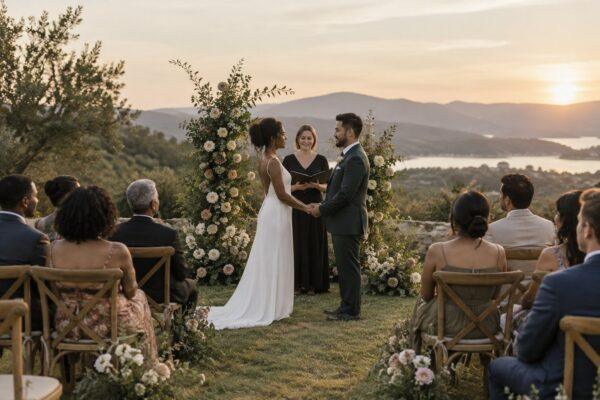
| Garden or courtyard | Anchor the ceremony with one backdrop; use lanterns and festoon lighting to define the space after dark | Scattering small decor across a big lawn where it disappears |
| Rooftop | Let the view be the backdrop; keep styling low, weighted and wind-proof | Tall arrangements, loose linens and anything that can blow away |
Venue-led styling is a core skill in destination and intimate work, where you’re often designing for a space you’ve only seen on a site visit. It’s a big part of what we cover in the Certificate in Intimate, Micro & Destination Weddings.
Lighting for intimacy — the cheapest way to look expensive
If you remember one thing from this guide, make it this: lighting does more for a small space than any amount of decor. Harsh overhead light flattens a room and exposes every empty corner. Low, warm, layered light pulls everyone together and makes a modest setup feel lush.
- Ask the venue to dim or switch off overheads during dinner.
- Cluster candles in groups rather than spacing them evenly.
- Use uplights or lamps to soften corners you can’t fill.
- Check the light at the actual time of day the wedding happens — not the morning of your site visit.
Styling for photos: close-up details matter more
At a large wedding, photographers shoot crowds and wide room reveals. At a micro wedding, there’s less crowd to shoot — so the camera moves closer. Place settings, hands on linen, candle flames, a grandmother’s ring dish holding the bands. These details become the story.
Brief the photographer on your focal points and give them a few minutes with the finished table before guests sit down. Make sure nothing in the background undoes the work — stacked chairs, a staff station, a fire exit sign that’s right behind the couple.
Where to splurge and where to save on micro wedding decor
One of the joys of a smaller guest count is that the per-guest details become possible. Couples can often afford better quality simply because they need less quantity. Guide them to spend where guests will touch, see and photograph:
- Splurge: table linen, glassware, the hero florals, quality candles, stationery, and the one statement moment.
- Save: filler decor, signage that nobody reads, large-scale backdrops the venue doesn’t need, and anything placed where guests won’t go.
If you’re a stylist wanting to sharpen this kind of design judgement more broadly, the Certificate in Wedding Styling goes deep on composition, palette and tablescapes for every size of wedding.
Personal touches that make a small wedding feel intentional
With a short guest list, you can personalise in ways big weddings can’t. Handwritten place cards. A printed menu with a note from the couple to each guest. Family heirlooms on the table — a grandparent’s candlesticks, a mother’s cake stand, an old photograph framed at the entry. These cost little and mean everything, and they’re the details guests talk about afterwards.
Want ready-to-use checklists for this kind of planning? The Micro, Intimate & Destination Wedding Handbook ebook is a practical companion for planners and stylists working on smaller celebrations.
Common micro wedding styling mistakes
- Over-styling a tiny room. Every surface decorated means nothing stands out. Leave negative space.
- Leaving empty corners. In a room that’s too big, dead zones look abandoned. Light them softly, fill them with a lounge moment, or close them off.
- Ignoring sightlines. Tall florals that block faces, a couple seated with their backs to the view, speeches nobody can see.
- Styling for a bigger wedding. Copying a large-wedding package — welcome sign, seating chart, card box, dessert table — when the guests could be greeted by name at the door.
- Forgetting service. Small rooms get crowded fast. Staff need to reach every seat without squeezing past arrangements.
Most of these come from the same place: forgetting that the wedding is small on purpose. When you design for intimacy instead of apologising for it, the styling falls into place. And because micro weddings sit right alongside full planning — timelines, suppliers, logistics — many stylists pair this with the Certificate in Wedding Planning.
Micro wedding styling FAQs
How do you make a small wedding not look empty?
Match the space to the guest count, concentrate decor into a few strong focal points, and use low, warm lighting to define the area guests actually use. If the room is too big, visually shrink it — pull the table into the best part of the room and let the rest fall into soft shadow.
What is the best table layout for a micro wedding?
One long table suits most micro weddings — it keeps everyone in the same conversation and gives you one continuous surface to style. Clusters can work in awkwardly shaped rooms or for a relaxed, lounge-style feel, as long as each table has its own clear moment.
How many focal points does an intimate wedding need?
Usually three is plenty: the ceremony backdrop, the tablescape and one statement installation. Everything else should support those moments rather than compete with them.
Where should couples spend their budget on micro wedding decor?
On the things guests touch, see up close and photograph — linen, glassware, hero florals, candles and stationery. Save on filler decor, unread signage and anything placed where guests won’t spend time.
Can you learn micro and destination wedding styling online?
Yes. The Wedding Academy’s Certificate in Intimate, Micro & Destination Weddings is studied online and covers how to plan and design smaller and destination celebrations professionally.
Ready to design small weddings that feel anything but small? Enrol now and start building the skills couples are looking for. 💍