Table of Contents
- What’s Shaping Wedding Design Trends for 2026
- 2026 Wedding Color Trends: Bold Palettes and Tonal Layering
- 2026 Wedding Flower Trends: Sculptural Florals and Embroidered Details
- Wedding Tablescape Ideas 2026: Tableware, Linens and Texture
- Sustainable Wedding Decor Ideas That Still Feel Luxurious
- Personalization and Customization: Moving Beyond the Cookie-Cutter Wedding
- Budget, Venue and Planning: Making Wedding Design Trends Work in Practice
- Frequently Asked Questions
Last Updated: October 16, 2026
What’s Shaping Wedding Design Trends for 2026
Wedding design trends for in 2026 reward couples who want a day that feels unmistakably theirs.
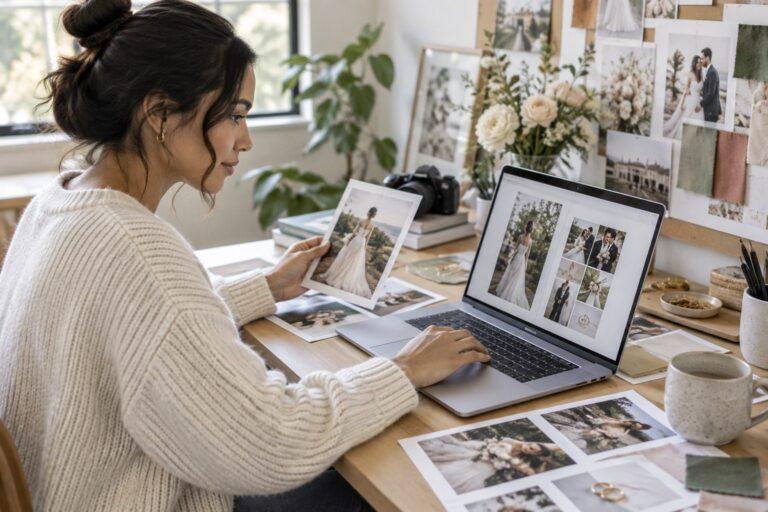
Couples arrive with mood boards, strong opinions about palette and a wish to avoid anything that looks rented-in.
Below, we break down twelve looks shaping 2026, from merlot and moss green to sculptural florals and reusable décor, with practical notes on budget, venue and timeline.
The strongest 2026 weddings are built as complete design systems, not collections of separate pretty ideas. Pick a palette, a floral language and a material story, then repeat them everywhere.
2026 Wedding Color Trends: Bold Palettes and Tonal Layering
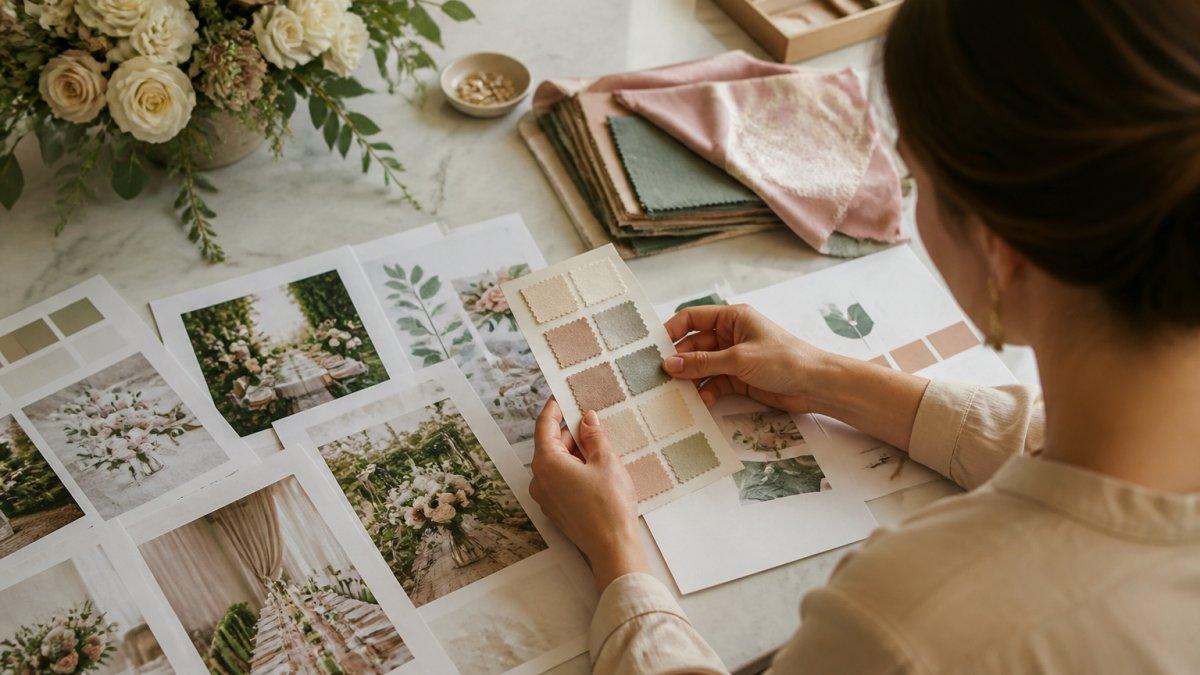
2026 wedding color trends split into two camps: saturated statement hues and a quieter family of new neutrals. Both work on the same principle, tonal layering. Instead of one flat color, build three or four related shades so the room has depth from every angle.
The practical win is flexibility: a tonal palette lets you spend heavily on one hero moment, usually the tablescape or ceremony backdrop, and use simpler shades elsewhere.
Statement Hues: Merlot, Plum, Fuchsia and Chartreuse
Merlot and plum anchor the season’s boldest palettes, with fuchsia and chartreuse as accents rather than full-room colors. Deep wine tones read as luxurious in candlelight, while a single chartreuse ribbon or napkin adds tension that stops the scheme feeling heavy.
For planners, the trick is restraint. Choose one primary color, one secondary, and one accent, then apply them in that order of volume. Treating all four as equal flattens the room into noise.
The New Neutrals: Cloud Dancer, Powder Blue and Warm Metals
Cloud Dancer, powder blue and warm metals form the softer side of the 2026 palette. These whites and pale blues keep large venues feeling open, while brass and aged gold add richness without silver’s coldness.
Layer them through linens, tableware and stationery rather than flowers alone. That keeps the palette consistent even when seasonal blooms shift.
2026 Wedding Flower Trends: Sculptural Florals and Embroidered Details
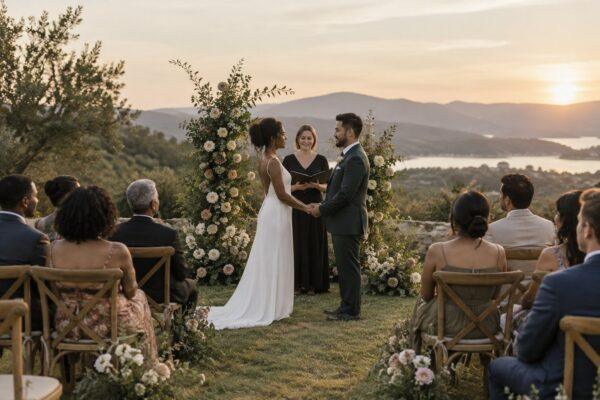
2026 wedding flower trends move away from tight, uniform arrangements toward sculptural florals with natural movement: visible stems, asymmetric shapes, and arrangements that look like they grew into place.
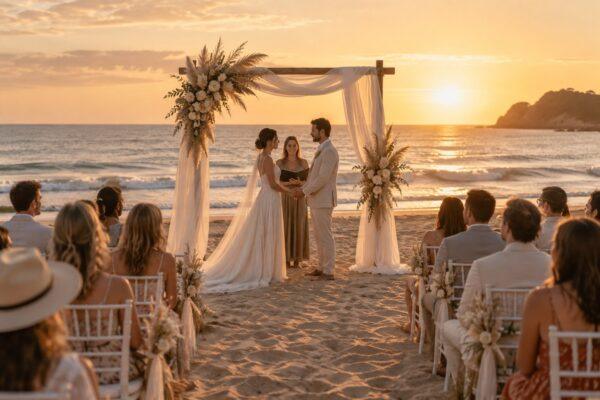
This suits how couples use flowers now: fewer, larger installations. One statement piece at the ceremony, repositioned at the reception, often costs less than dressing every table.
Photograph your installations from the guest’s seated eye level before the wedding day. Sculptural florals can look sparse from standing height and generous from a chair, so check both angles during setup.
Statement Bouquets with Natural Movement
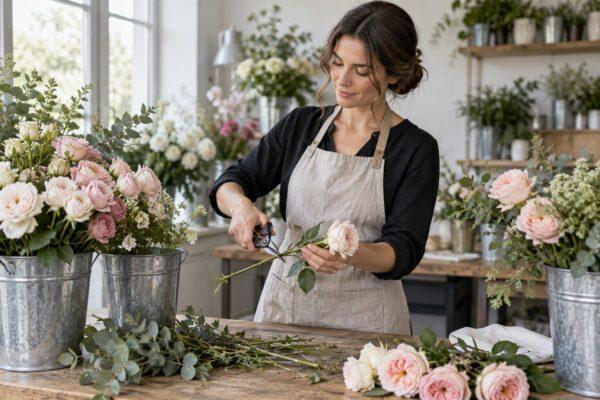
A statement bouquet in 2026 is loose, layered and slightly wild, mixing large blooms with trailing foliage and textural fillers so it moves when the couple walks.
Build in flexibility: ask your grower what is at its best that week rather than fixing a flower list months ahead. The silhouette matters more than the exact variety.
Beaded and Embroidered Floral Accents
Beaded details and embroidered florals carry the botanical theme into textiles, veils, jacket sleeves, ring boxes and linen napkins.
These accents make personalization practical: a monogrammed ring box or hand-embroidered napkin doubles as a keepsake, so the spend survives past the wedding day.
Wedding Tablescape Ideas 2026: Tableware, Linens and Texture
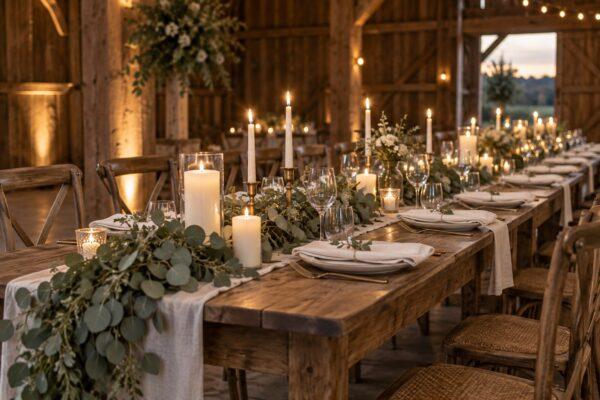
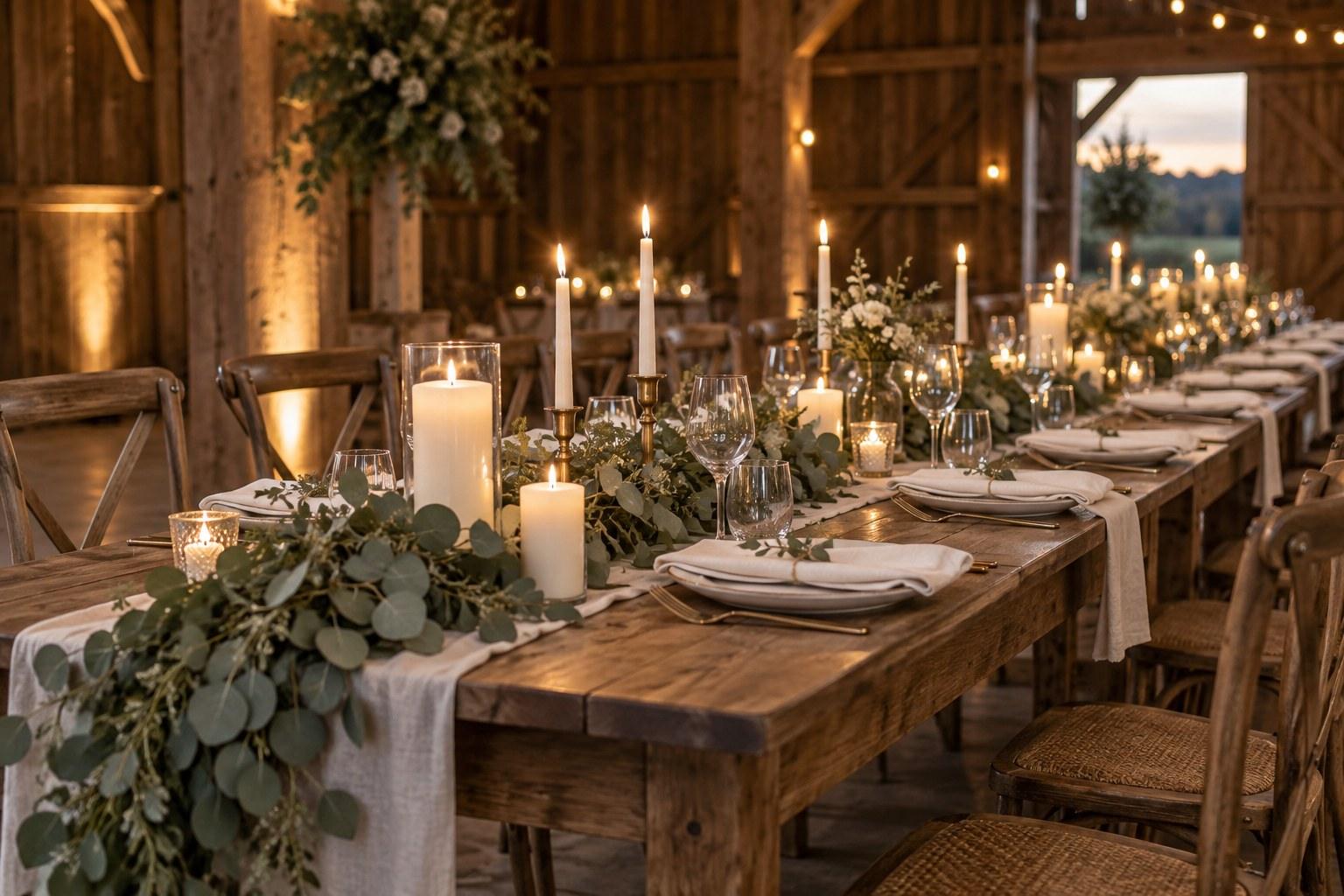
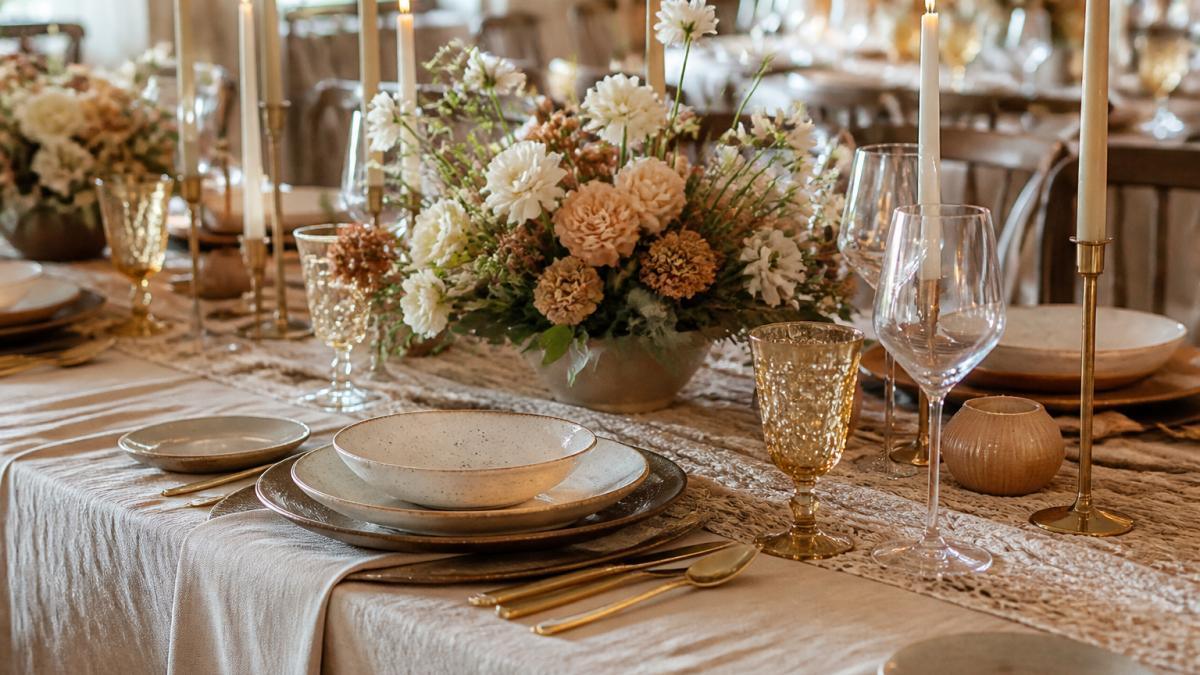
Wedding tablescape ideas for 2026 lean on texture over pattern: mixed tableware, slubby linens and layered candlelight do more work than printed designs and photograph beautifully in low light. The tablescape is also where couples lose the thread of their design system, buying beautiful pieces that don’t talk to each other. Treat the table as a small, complete composition that repeats your palette, floral language and material story at close range.
Build the Table in Five Layers
A 2026 tablescape reads as considered when built in layers from the surface up. Work in this order and each decision constrains the next, stopping the table feeling busy.
- Linen as the base tone. Choose the linen first, because it sets the value of everything above it. Slubby weaves, washed linen and raw silk in your secondary palette shade give the table depth without pattern. A tonal runner rather than a full cloth keeps the wood or stone visible and reads more modern.
- Charger or placemat as the contrast. This is where you introduce finish, not color. A matte ceramic plate against a warm metal charger, or a hand-thrown stoneware plate on a brushed brass rim, creates the tension that makes a table look styled rather than rented.
- Glassware as the height layer. Colored glass is one of the most photographed 2026 details. A single tinted goblet, smoke, amber or olive, repeated down the table adds color without adding a new palette.
- Centerpiece as the focal point. Keep it low and sculptural with visible stems, and repeat the same floral language used at the ceremony. If the ceremony used asymmetric, garden-style arrangements, the table should echo that silhouette at a smaller scale.
- Candlelight as the atmosphere layer. Layer heights, tapers in low holders, votives at table level, one or two taller pillars, so the light has depth from every seat. Warm-toned candles (ivory, honey, blush) flatter skin tones far better than stark white in photographs.
A Worked Example: Merlot, Moss and Brass
Run the palette from the color section through one table: muted moss green linen, matte cream stoneware, aged brass chargers, smoke-tinted glassware, and a low centerpiece of merlot dahlias with trailing amaranthus and visible stems.
This is the mechanism most couples miss: one primary, one secondary, one accent, applied in that order of volume. Treat every element as equally important and the table flattens into noise.
Match the Tablescape to the Venue
The same table reads differently depending on where it sits, and 2026 couples increasingly choose venues that demand adaptation.
- Converted warehouse or industrial space. Raw surfaces absorb color, so push saturation up one step and add warm candlelight to soften concrete and steel. Textured linen does more work here than in a bright room.
- Hotel ballroom. Patterned carpet and existing chandeliers compete with your palette. Keep the table tonal and let the centerpiece carry the color, so the table doesn’t fight the room.
- Marquee or tent. Daylight through canvas washes out pale shades. Deepen the linen and use colored glass to hold the palette against the light.
Budget Trade-Offs on the Table
The tablescape is where small spends multiply, because every choice repeats across every table. Planners commonly allocate the largest share to the two or three elements guests actually touch and photograph, glassware, centerpiece and candlelight, and keep the rest tonal and simple.
Lower-cost ways to achieve the 2026 look without losing the effect:
- Rent glassware and chargers rather than buying; rental stock is usually better made and arrives clean.
- Use a runner instead of a full linen to cut fabric cost while keeping the layered look.
- Repeat one hero centerpiece across all tables rather than varying them; consistency reads as intentional and costs less than bespoke per-table design.
| Element | 2026 Direction | Practical Note |
|---|---|---|
| Linens | Textured, tonal, slubby weaves | Base tone for the whole palette; runner over full cloth saves cost |
| Tableware | Mixed finishes, matte plus metal | Contrast finish, not color |
| Glassware | Single tinted shade | Adds color without a new palette entry |
| Centerpieces | Low, sculptural, visible stems | Keep below eye level for conversation |
| Lighting | Tapers, votives, warm tones | Layer heights for depth; warm tones flatter skin |
| Accents | Beaded or embroidered details | Doubles as a keepsake |
Set one full table as a mock-up at least three weeks before the wedding and photograph it under the venue’s actual evening lighting. Tablescapes that look balanced in daylight often lose their contrast under warm bulbs, and it is far cheaper to adjust a mock-up than a full room on the day.
Sustainable Wedding Decor Ideas That Still Feel Luxurious
Sustainable wedding decor ideas work best built into the design, not added as a gesture.
Rented furniture and tableware is usually better made than disposable alternatives, so the room simply looks more expensive.
- Choose reusable or rented pieces for at least the ceremony backdrop
- Plan a second position for every large installation
- Use potted plants or dried elements that guests can take home
As documented in guidance on reducing event waste from the UK government, planning reuse at the design stage is far more effective than trying to recycle afterwards.
Personalization and Customization: Moving Beyond the Cookie-Cutter Wedding
Personalization and customization are the clearest thread running through 2026. Couples want details that reference their story: a childhood dessert, a grandparent’s fabric, a place they traveled together. The cookie-cutter style is out.
But almost no trend report answers the second question: which of these choices will still feel right in five years? The most useful skill a planner can offer in 2026 is helping couples separate short-lived aesthetics from adaptable choices, so their wedding looks like them and not like the year it was held.
Separate the Trend Layer from the Story Layer
Every design decision in a wedding belongs to one of two layers, and they age very differently.
- The trend layer is the aesthetic wrapping: the specific shade of chartreuse, the exact silhouette of a bouquet, the current shape of a place card. These are the choices that will date fastest, and they are also the cheapest to change.
- The story layer is the content: the grandparent’s fabric, the place they got engaged, the dessert from their first trip together. These do not date, because they were never about fashion in the first place.
The practical rule is to spend the trend budget on things that are easy to swap, stationery, napkins, signage, glassware, and spend the story budget on things that last, like a hand-embroidered detail, a custom illustration, or a piece of furniture that becomes a keepsake.
A Framework for Choosing What to Personalize
Unlimited personalization sounds generous and usually backfires. Couples who add a new custom element to every surface end up with a busy, incoherent room and a budget blown on small items instead of one memorable moment.
A more disciplined approach gives each couple a small number of personalization slots and protects the rest of the design:
- One ceremony moment. A reading, a symbol, a piece of fabric wrapped around the bouquet stem, something guests see at the emotional peak.
- One tablescape detail. A named place card, a family recipe card at each setting, or a hand-tied napkin in a meaningful color.
- One sensory element. A signature drink, a scent, or a song that references their story, the details guests remember through senses rather than sight.
- One keepsake. A ring box, an embroidered handkerchief, or a signed guest book that leaves the wedding with them.
Everything outside those four slots stays disciplined and tonal. The contrast is what makes the personal details land: if every surface is custom, nothing feels special.
Personalization That Survives the Trend Cycle
Some personal choices are inherently more durable than others, steer couples toward them when they are undecided.
- Textiles over prints. An embroidered monogram or a family fabric can be reused, framed or passed on. A printed motif tied to a specific 2026 aesthetic usually cannot.
- Objects over signage. A hand-thrown vessel, a vintage brass tray or a piece of family furniture carries meaning into the home after the wedding. Vinyl signage rarely does.
- Experiences over props. A dessert from their first date, a cocktail named after a shared place, or a reading in a grandparent’s language creates a memory rather than a photo backdrop.
Briefing Vendors on Personalization
Personalization fails most often in the handoff, not the idea. When briefing a florist, stationer or rental supplier, be explicit about which elements are story-layer and must not be substituted, and which are trend-layer and can flex with availability or budget. A florist who knows the grandparent’s fabric must appear in the bouquet but the bloom variety is flexible will make better decisions on the day than one working from a mood board alone.
Unlimited personalization sounds generous and usually backfires. Couples who add a new custom element to every surface end up with a busy, incoherent room and a budget blown on small items instead of one memorable moment. Cap the personalization slots and protect the rest of the design.
The couples whose weddings still look like them in five years are the ones who spent their trend budget on swappable details and their story budget on things that last. Personalization is not about adding more, it is about choosing what deserves to be permanent.
Budget, Venue and Planning: Making Wedding Design Trends Work in Practice
Trends only earn their place if the timeline and budget support them.
Venue matters more than most couples expect: a converted warehouse absorbs color differently from a marquee or ballroom, and some venues restrict candles, hanging installations or confetti.
On budget, allocate the largest share to the two or three moments guests will remember, usually the ceremony backdrop and the tablescape.
A realistic planning sequence looks like this:
- Confirm venue rules and load-in access
- Set the primary, secondary and accent colors
- Choose the floral language and hero installations
- Plan the reuse route for each large piece
- Book suppliers and confirm seasonal availability
- Build the detail layer: stationery, favors, ring boxes
- Run a full setup rehearsal with your crew
The gap between a beautiful mood board and a wedding that delivers comes down to planning discipline.
Frequently Asked Questions
What are the trending wedding colors for 2026?
The 2026 wedding color trends lean toward bold, saturated hues layered with soft neutrals. Merlot, plum, fuchsia, chartreuse, moss green, midnight blue, and sunset orange are appearing alongside shades of white such as Cloud Dancer. Couples are building tonal palettes with a primary color, a secondary accent, and warm metals like silver or gold. This approach lets you use strong colors without overwhelming the venue. If you are training as a stylist, learning to build these layered palettes is a core skill covered in professional styling courses.
What floral styles are popular for 2026 weddings?
Sculptural florals with natural movement are leading the 2026 wedding flower trends. Instead of tightly packed, uniform arrangements, designers are creating statement bouquets that feel organic, with stems that curve and trail. Embroidered and beaded floral accents are also appearing on linens and bridal accessories. These designs work across budgets because the focus is on shape and texture rather than volume. Choosing seasonal blooms and reusable structures keeps costs down while still delivering a strong visual impact.
How can couples make wedding trends feel personal?
The most effective way to personalize a trend is to adapt it to your story rather than copying it exactly. Choose a color palette that reflects a place you love, incorporate a family fabric into your tablescape, or use custom favors that double as place cards. Personal details like ring boxes, handwritten menus, and meaningful song choices turn a styled look into something that feels like yours. Setting clear design boundaries early helps you filter trends so only the ones that resonate make it into the final plan.
How can you incorporate wedding trends without overspending?
Focus your budget on two or three statement areas, such as the ceremony backdrop and the head table, and keep the rest simple. Reuse ceremony florals at the reception, choose seasonal blooms, and rent tableware instead of buying. Sustainable wedding decor ideas like potted plants, fabric draping, and candlelight create atmosphere at a lower cost than large installations. Pricing for professional styling and floral services depends on quantity, dates, and delivery, so always request a current quote from your supplier.