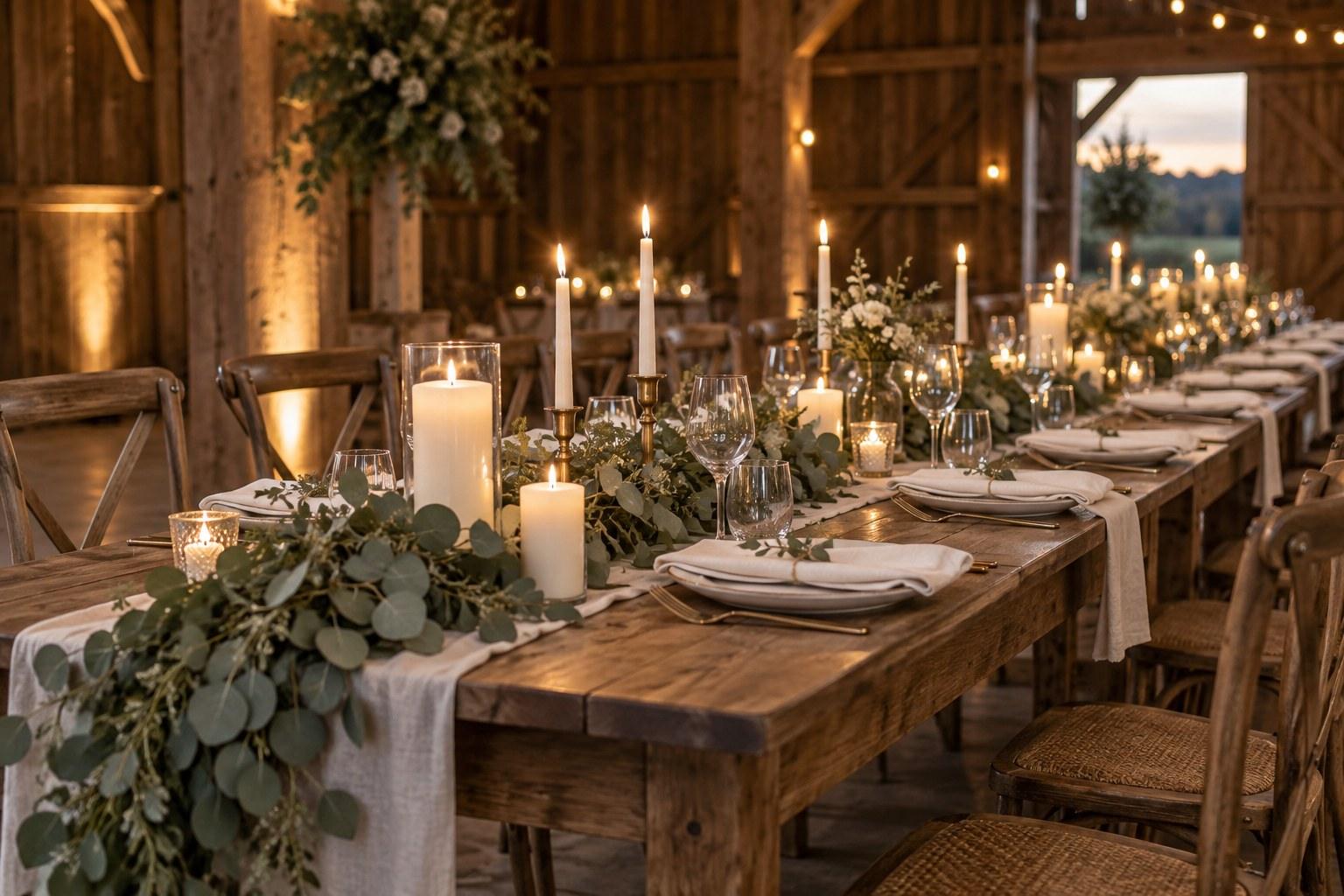
A wedding styling mood board is not a pretty collage — it is a decision-making document. Done well, it ends the “can we just add a bit of dusty blue?” spiral, gets a signature on the styling scope, and tells every supplier exactly what to build on the day. Done badly, it is 40 saved images from a Pinterest rabbit hole that nobody can price, source or recreate.
Here is the full process wedding stylists actually use — how to brief the couple, build the board, source the pieces, present it so it gets approved in one round, and translate it into an on-the-day setup that matches what you sold. 🎨
What is a wedding styling mood board (and what it is not)
A mood board is a curated visual and material summary of one wedding’s design direction. It sets colour, texture, form, mood and hierarchy. It should be specific enough that a florist, a hire company and a stationer can all read it and land in the same place.
It is not a full design proposal, a floor plan or a quote. Those come after. Confusing them is the most common reason a board gets picked apart — the couple starts costing items in their head while you are still selling a feeling.
- A mood board sets direction — palette, texture, atmosphere, references.
- A design concept sets detail — specific vessels, linen names, stem lists, quantities.
- A production schedule sets delivery — who bumps in what, when and where.
Learn the whole sequence properly inside the Certificate in Wedding Styling, where the concept-to-install workflow is taught as one connected system rather than a Pinterest exercise.
How to build a wedding styling mood board: the 7-step process
1. Run a styling brief before you open a single image
Ask the couple what they want guests to feel walking in, not what they want to see. Then get the practical constraints on the table: venue, season, guest numbers, ceremony and reception spaces, any non-negotiables (a grandmother’s tablecloth, a colour one of them genuinely hates), and their comfort level with drama. Write it down. Your board must be traceable back to that brief — that is what makes it defensible.
2. Gather wide, then cut hard
Collect 60–80 references fast without judging them. Interiors, fashion editorials, architecture, food photography, textile close-ups — not just weddings. Then cut to 12–18. If two images say the same thing, keep the better one. The cut is the actual skill; anyone can collect.
3. Lock the palette to a shortlist
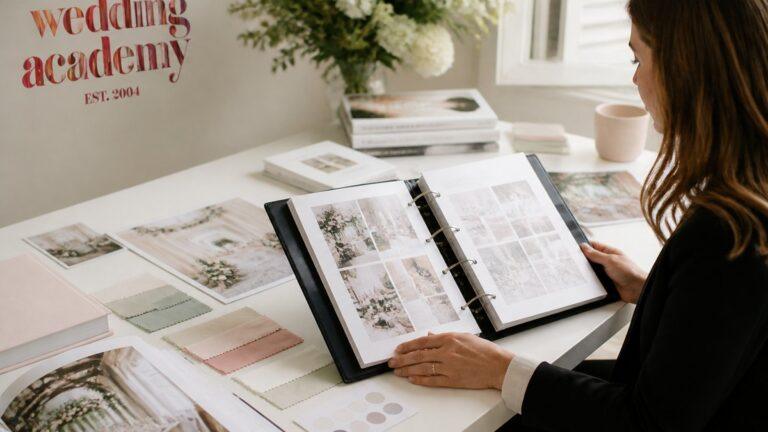
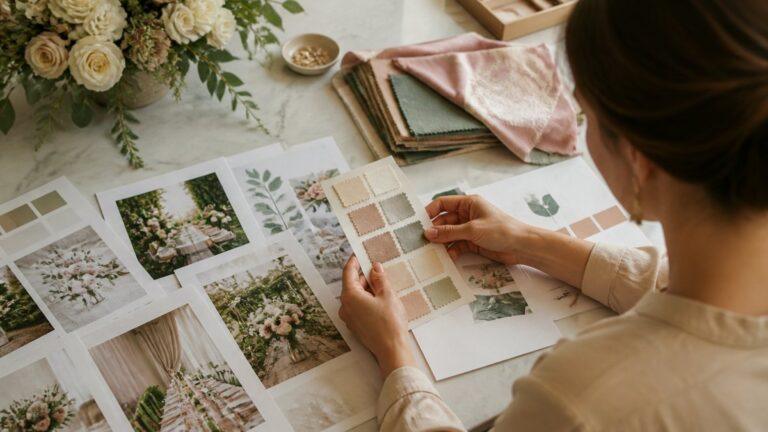
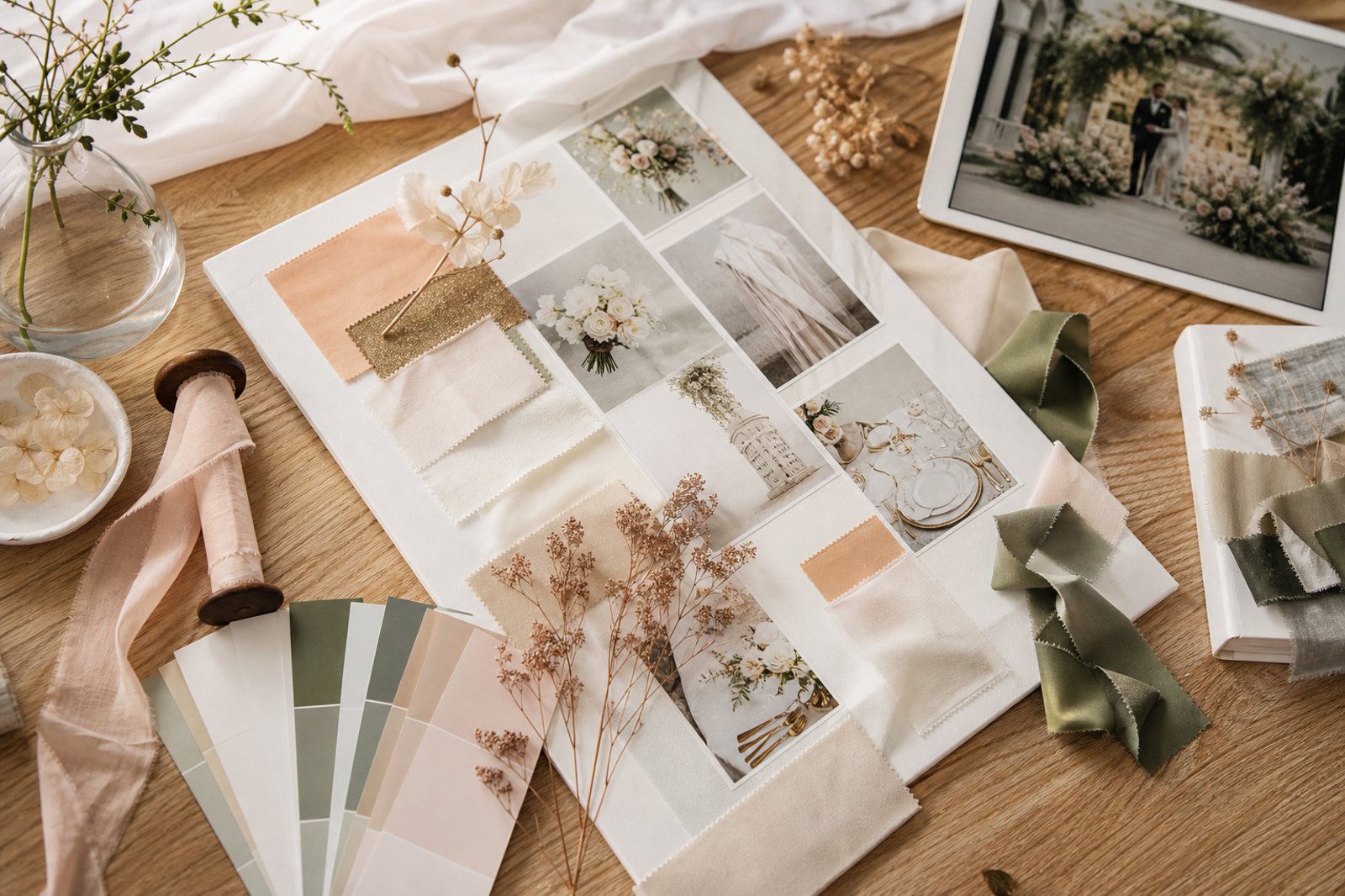
Three to five colours: a base, a secondary, one or two accents, and a metal or neutral. Pull them from real materials wherever you can — a linen swatch, a ribbon, a paint chip, a petal. Screen colour lies. Print colour lies differently. Physical swatches settle arguments before they start.
4. Add texture and form, or it stays flat
Colour is the easy part. What separates a professional board is texture and silhouette: matte ceramic against raw linen, glossy taper candles, a low sprawling arrangement versus tall architectural stems, chair shape, glassware profile. Include at least one image per texture family you intend to use.
5. Build it in zones, not one big grid
Split the board by moment: arrival, ceremony, cocktail hour, reception tablescape, cake and dance floor. A single collage forces the couple to imagine the flow themselves — and they will imagine it wrong. Zoned boards also make the eventual install list obvious.
6. Sanity-check sourcing before you present
Every image on the board should map to something you can actually get. Check hire catalogues, your florist’s seasonal availability, linen stock and lead times first. Presenting a board built on out-of-season blooms or a single unavailable chair is how you end up re-doing the design for free.
7. Write the words that go with the pictures
Add a short paragraph of design intent, three to five keywords, and captions on the key images. Couples forward boards to family. Your words travel with it and stop other people re-interpreting your work.
The best tools for building a wedding mood board
| Tool | Best for | Watch out for |
|---|---|---|
| Canva | Fast, clean client-facing layouts and brand consistency | Template-y look if you do not restyle it |
| Early gathering and secret boards with the couple | Never present from it — no hierarchy, no control | |
| Adobe InDesign / Illustrator | Premium multi-page concept decks | Steeper learning curve |
| Milanote / Figma | Flexible zoned boards and collaborative editing | Can look like a workspace, not a proposal |
| Physical board | Real swatches, in-person meetings, texture selling | Hard to share remotely — photograph it well |
Whatever you use, keep one master template with your own typography and spacing so every board you send looks like it came from the same studio. Consistency reads as expertise.
How to present a mood board so clients actually approve it
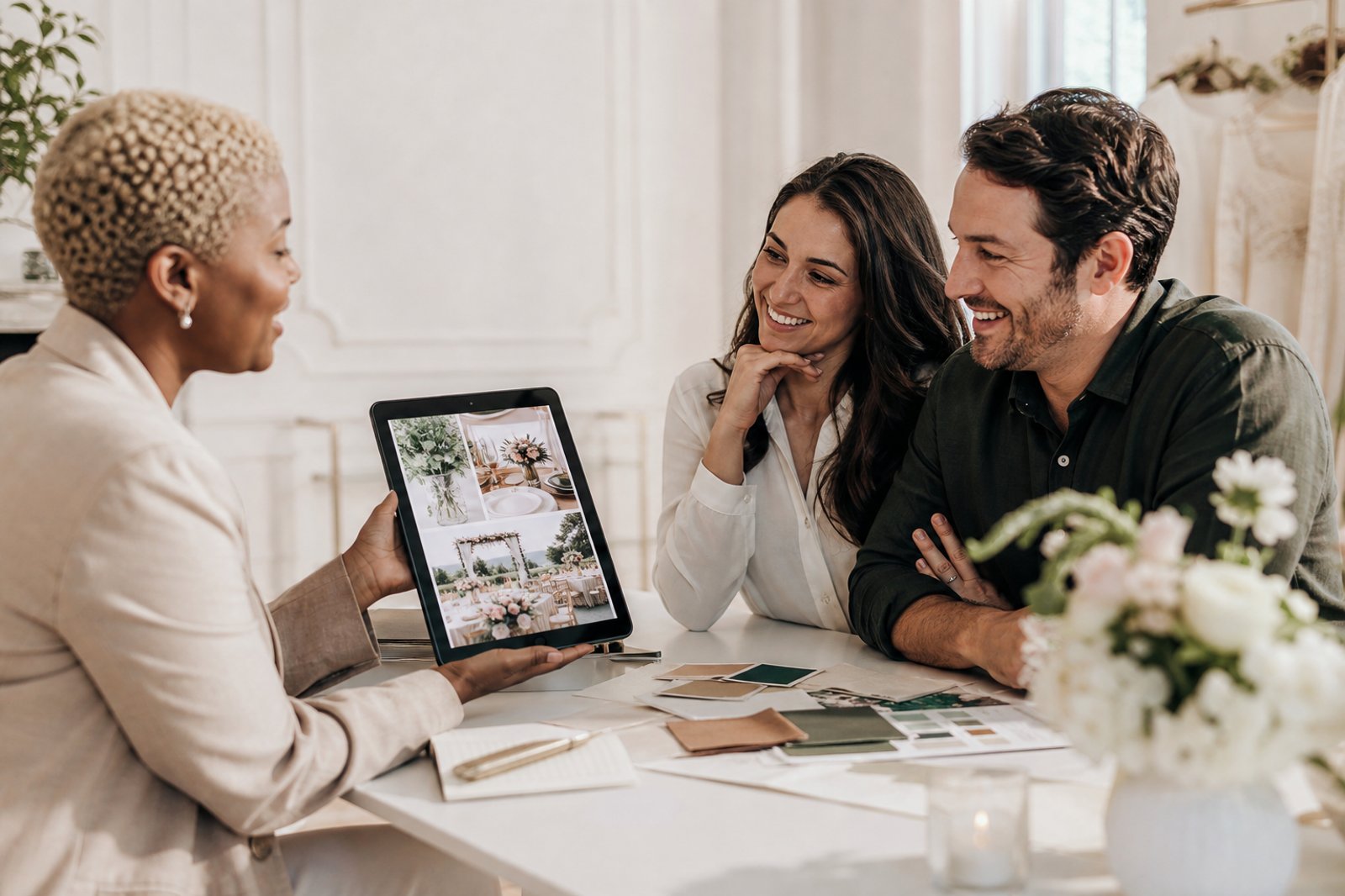
Do not email the board and hope. Present it live, in person or on a call, and talk them through it in this order:
- Play back the brief. “You said you wanted it warm, relaxed and a bit unexpected.” Now they are nodding before they see anything.
- Show the whole board once, silently. Let them react.
- Walk the zones in guest order. Arrival → ceremony → reception. Story, not inventory.
- Name the trade-offs yourself. “The tall arrangements mean we go simpler on the aisle.” Pre-empting objections is the entire job.
- Ask one closing question. “Does this feel like your wedding?” Not “what do you think?” — that invites redecorating.
Handling feedback without losing the design
Give a defined revision window — one round of amendments, in writing, within a set number of days. Ask couples to comment on feeling, not swap individual images. If they send new references, do not paste them in; ask what the new image gives them that yours does not. Nine times out of ten it is one element, and you can absorb it without breaking the concept.
Then get sign-off in writing on the final board and attach it to the contract as the agreed styling scope. That single habit prevents most on-the-day disputes.
Turning your mood board into the on-the-day setup
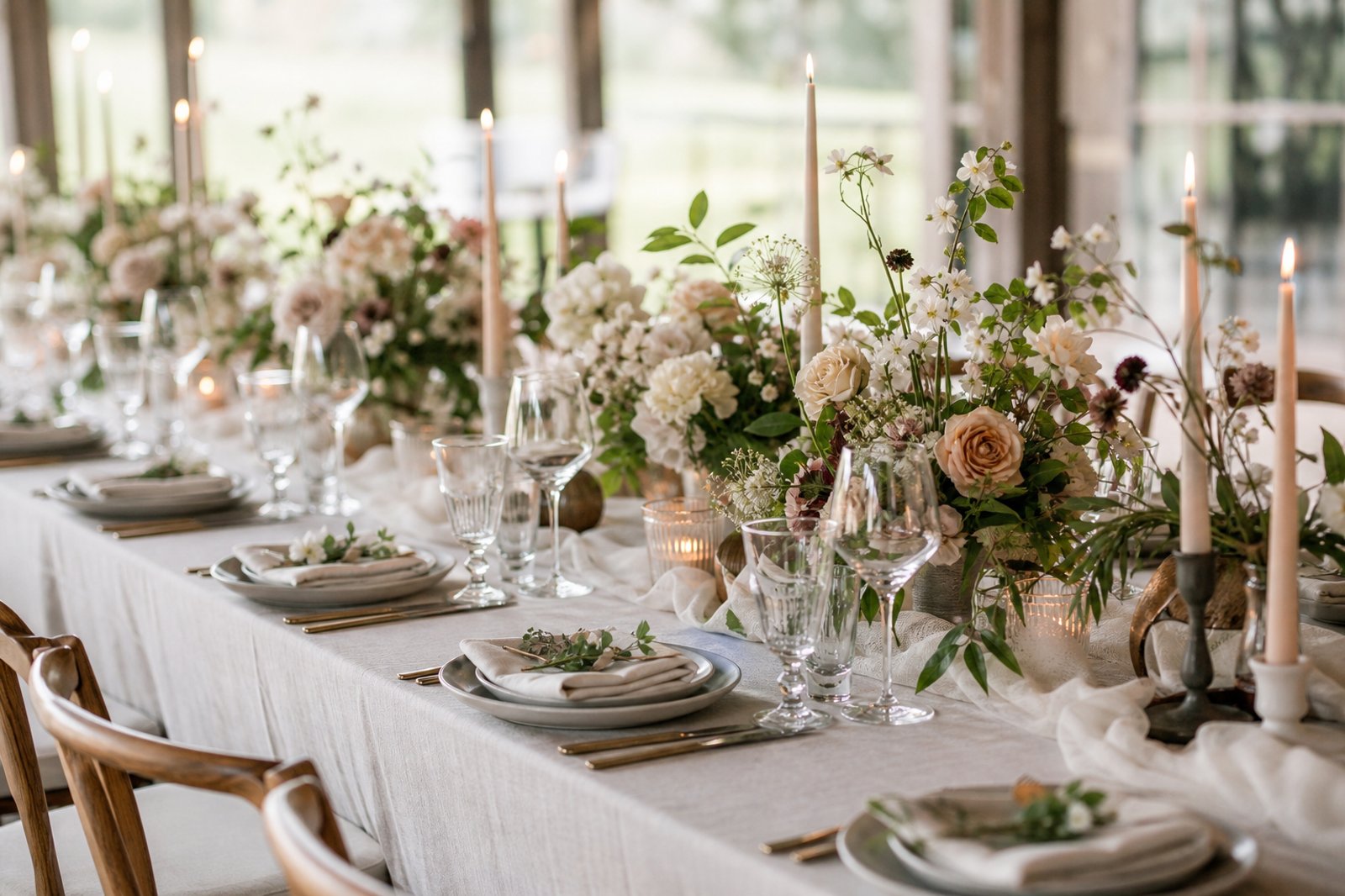
This is where most self-taught stylists lose the plot: the board is beautiful and the room is not. Bridge it with three documents built directly from the approved board.
- The item schedule. Every piece, quantity, supplier, hire reference and where it lives on the day. Board image → line item.
- The zone sheets. One page per space with the board excerpt, a rough layout and a reference photo of the intended finish, so a casual on install day builds it the way you saw it.
- The run sheet. Bump-in times, access, deliveries, who styles what, and — always — bump-out.
Do a styled test of the tablescape before the day if the design is complex. Photograph it. That photo becomes the definitive instruction for your team and reassures the couple far more than another render.
On the day, work zone by zone in guest-arrival order, photograph each finished zone before guests enter, and keep a small styling kit (scissors, wire, pins, cloths, adhesive, spare candles) within arm’s reach. The gap between a board and a room is almost always logistics, not taste — which is exactly what the Certificate in Wedding Styling drills through with real production paperwork.
Common wedding mood board mistakes to avoid
- Too many images. Over 20 and the concept stops being readable.
- Mixing four palettes. If you cannot name the palette in one line, it is not a palette.
- Other stylists’ finished work as the hero. Reference mood, not a copy of someone’s signature install.
- No venue reality. A moody candlelit board for a 2pm garden ceremony is a fight waiting to happen.
- Skipping texture. Colour-only boards look identical to every other board.
- No sign-off. An unapproved board is just an opinion.
Frequently asked questions
How many images should a wedding styling mood board have?
Aim for 12–18 tightly edited images, grouped into zones. Fewer than 10 and the direction feels thin; more than 20 and the couple starts shopping instead of approving.
Should I charge for a wedding mood board?
Concept work is billable work. Most stylists include the first board inside a styling or design package and charge for additional concepts or full redesigns beyond the agreed revision round. Set that expectation before you start designing.
What is the difference between a mood board and a wedding design concept?
The mood board sets direction — palette, texture, atmosphere. The design concept turns that direction into specifics: named products, stem lists, quantities, layouts and suppliers. The board is approved first; the concept is built from it.
Can I use Pinterest images on a client mood board?
Use them for private gathering and internal reference, and credit original photographers and stylists wherever you present publicly. For client-facing boards, lean on your own imagery, supplier catalogues and licensed stock where you can — it looks more professional and avoids crediting headaches.
Do I need a qualification to work as a wedding stylist?
There is no licence required to call yourself a wedding stylist. Structured training matters because it gives you the process — briefing, concept, sourcing, production and install — that couples and venues actually pay for. The Certificate in Wedding Styling is built around exactly that workflow.
Start styling weddings properly
A mood board that gets approved in one round is not luck. It is a brief, an edit, a sourcing check, a presentation script and a production plan — repeated on every single wedding. Build that system once and styling stops feeling like guesswork.