Table of Contents
- Why Your Wedding Planning Portfolio Decides Who Hires You
- What to Include in a Wedding Planning Portfolio
- Building a Wedding Planning Portfolio With No Experience
- Using a Styled Shoot for Your Wedding Planner Portfolio
- Wedding Planner Portfolio Examples That Actually Convert
- Your Wedding Planning Portfolio Checklist
- From Portfolio to Booked Clients
- Frequently Asked Questions
Last Updated: October 18, 2026
Why Your Wedding Planning Portfolio Decides Who Hires You
Your wedding planning portfolio is a curated collection of visual proof that shows couples you can run their day. It is not a scrapbook.
Couples hand over a large budget and a once-in-a-lifetime date to a near stranger. They need evidence fast.
At The Wedding Academy, we train career changers to build that evidence before their first paid client.
But first, here is what most guides get wrong. They tell you to wait until you have real weddings.
You do not need paying clients to build a credible wedding planning portfolio. You need planning artefacts, real vendor relationships, and one well-shot styled project.
What to Include in a Wedding Planning Portfolio
A wedding planning portfolio should contain planning documents, styled imagery, vendor references, and a short case story for each project. Couples want to see process, not just pretty photos.
Think of it as two halves. The visual half proves taste. The document half proves competence.
The Planner-Specific Deliverables Couples Want to See
Most portfolios show photos and nothing else. That is a styling portfolio, not a planning one.
Include these planner deliverables:
- A sample budget breakdown with categories and contingency
- A monthly to-do list from booking to wedding day
- A guest list and RSVP tracking sheet
- A vendor list with roles and contact points
- A run sheet for the wedding day itself
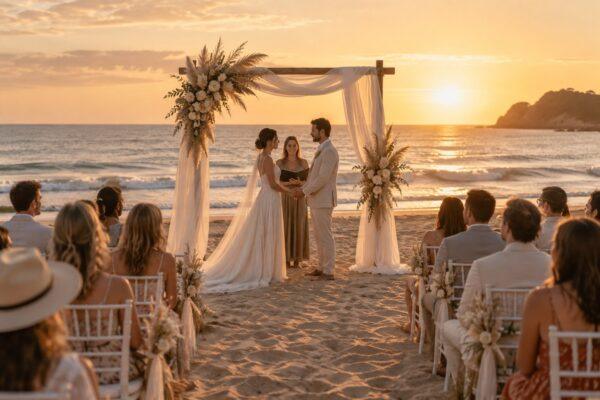
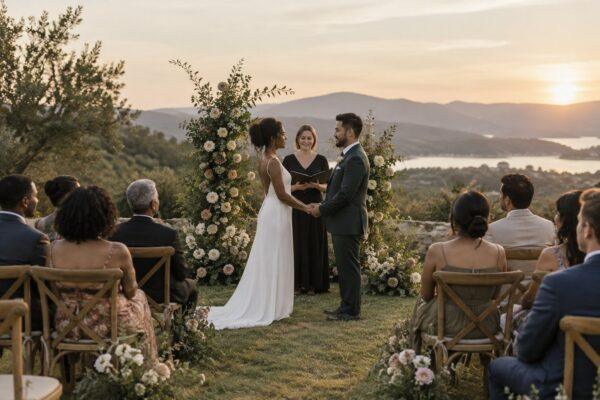
- Ceremony ideas and floor plans
Redact names. Keep the structure. Couples read these and relax.
Show one messy version and one clean version of the same budget. Couples trust planners who admit costs move, and it proves you manage change rather than hide it.
Building a Wedding Planning Portfolio With No Experience
You can build a wedding planning portfolio with no experience by creating three to five self-directed projects, each with a clear label. Label every piece honestly.
Ethics matter here. Never present a styled shoot as a real wedding. One mislabelled project can end your reputation with vendors who talk to each other.
Your First Five Portfolio Opportunities
Here is the plan we give students who have zero clients. Work through them in order, each one builds evidence and relationships for the next.
- Assist an established planner for one wedding. Ask to shadow coordination only. Offer to arrive early, carry the emergency kit, and take notes during the vendor walkthrough. In exchange, request permission to describe your role as ‘coordination assistant’ and to use redacted planning documents you helped prepare. A common pattern is to start with a single wedding, then ask for a written reference you can quote on your site.
- Lead a styled shoot with a photographer and two vendors. Choose a venue that allows editorial shoots, set a realistic budget (many beginners spend a few hundred dollars on flowers and rentals, not thousands), and write a one-page brief covering mood, color palette, and shot list. Trade images for vendor time, photographers often need fresh content, and florists need portfolio pieces. Get a simple one-page collaboration agreement signed by every vendor that states how images will be credited and where they can be used.
- Plan a friend’s micro-wedding at cost, with written permission to use it. Keep the guest count small (under 30), document every planning document you create, and ask your friend to sign a short release allowing you to show redacted materials and photos. This gives you a real wedding case story without a paying client.
- Build a mock planning pack for a fictional wedding with a real venue layout. Pick a local venue, download its floor plan if available, and create a full budget, run sheet, vendor list, and contingency plan. Label it clearly as a ‘sample planning pack, fictional scenario.’ This is the fastest way to show planning competence before you have real clients.
- Volunteer coordination for a community or charity ceremony. Contact a local church, community center, or nonprofit that hosts events. Offer to coordinate for free in exchange for a written testimonial and permission to use redacted documents. Charity events often have smaller budgets but real logistics, perfect for demonstrating run sheets and vendor coordination.
Each one gives you deliverables. Five projects fill a portfolio without a single lie.
Keep a simple permission log. For every project, note who gave permission, what they allowed you to use, and the date. This protects you if a vendor or client later questions an image or document.
Outreach Scripts for Your First Opportunities
Most beginners stall because they do not know what to say.
To an established planner:
Hi [Name], I’m training as a wedding planner and I’m looking for hands-on experience.
To a photographer for a styled shoot:
Hi [Name], I’m building my wedding planning portfolio and planning a small styled shoot at [venue]. I’m looking for a photographer to collaborate.
To a charity or community venue:
Hi [Name], I’m a wedding planner in training and I’d like to offer free coordination for one of your upcoming ceremonies.
Wedding Academy guidance on building a portfolio with no experience
Using a Styled Shoot for Your Wedding Planner Portfolio
A styled shoot is a planned photo session with real vendors, built to showcase design and planning skill. It is the fastest ethical route to portfolio imagery.
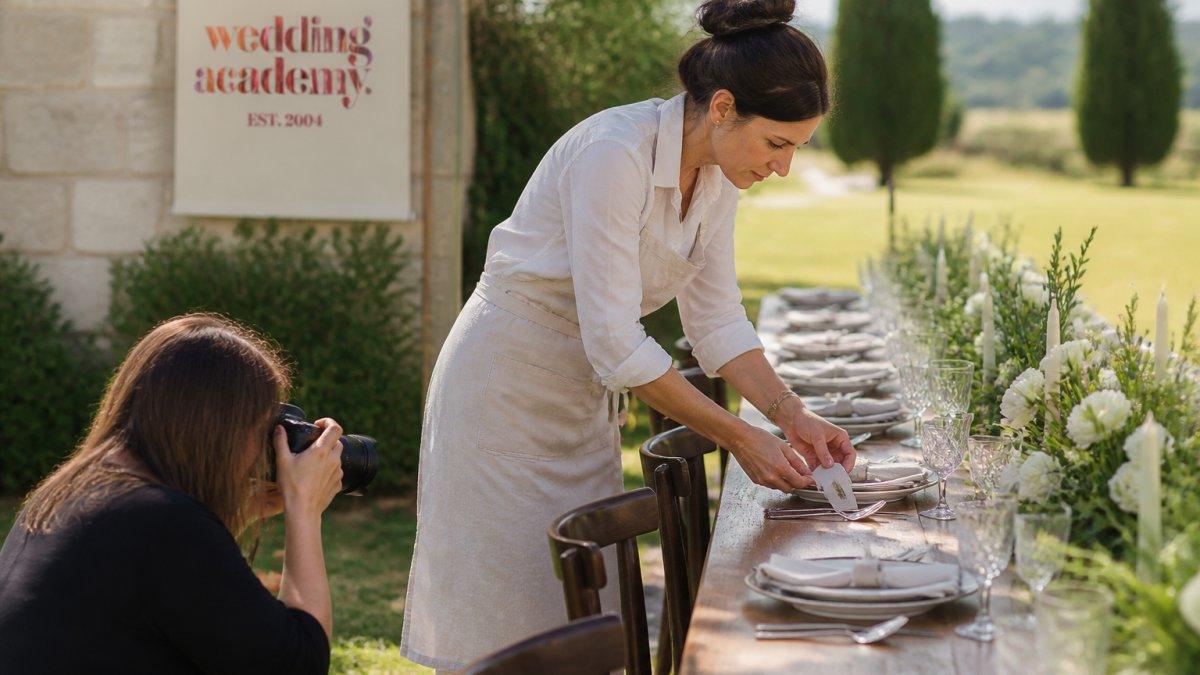
Plan it like a real wedding. Set a budget, write a run sheet, book a venue, and brief every vendor. Then credit all collaborators by name.
Keep the costs low. Borrow linens, use sample stock, and trade images for vendor time.
Never crop out vendor credits or claim sole authorship of a styled shoot. Photographers and florists share those images, and a missing credit spreads fast in local wedding networks.
Wedding Planner Portfolio Examples That Actually Convert
Converting portfolios share one trait: they lead with the couple’s problem, not the planner’s taste. Structure beats volume.
Use this layout for each project:
- One hero image
- Two lines on the brief and constraints
- Three planning documents
- One line on the outcome
- Vendor credits
Three deep projects outperform fifteen thin ones. Curate hard.
The Case Story Structure That Turns Browsers Into Enquiries
A case story is not a caption. It is a short narrative that proves you can solve a couple’s problem. Use this four-part structure for every project:
- The brief. One or two sentences on who the couple was and what they wanted. Example: ‘A winter micro-wedding for 28 guests with a $12,000 budget and a strong preference for local vendors.’
- The constraints. One sentence on the hardest part. Example: ‘The venue had no on-site kitchen, and the couple wanted a plated dinner.’
- What you did. Two or three sentences on the planning decisions you made, not the design details. Example: ‘We sourced a mobile caterer, built a contingency plan for snow, and created a run sheet that gave the caterer a two-hour setup window.’
- The outcome. One sentence on the result. Example: ‘The couple reported the day ran on schedule, and the caterer has since referred us to two other couples.’
This structure works for real weddings, styled shoots, and mock projects, just label the project type clearly at the top.
Connecting Portfolio Pieces to Your Services
A portfolio that does not link to your services is a gallery, not a sales tool. For each project, add a short line that connects the work to what you offer. Example: ‘This project shows our full planning package: budget, vendor coordination, and day-of management.’ Then link to a services page that lists what is included, what it costs (or a starting range), and how to enquire.
A common pattern is to group projects by service, full planning, partial planning, and day-of coordination, so couples can see the work that matches their budget and needs.
Portfolio Evaluation Checklist
Run this checklist before you publish anything.
| Item | Done When | Frequency |
|---|---|---|
| Project labels | Every piece marked real, styled, or mock | Before publishing |
| Planning documents | At least three per project | Per project |
| Vendor credits | Every collaborator named and linked | Per project |
| Case story | Brief, constraints, what you did, outcome | Per project |
| Service link | Each project links to a relevant service page | Per project |
| Mobile check | Pages load and read well on a phone | Monthly |
| Image quality | Sharp, consistent editing | Per upload |
| Contact route | Enquiry form tested end to end | Monthly |
| Personal style | One clear specialty stated | Quarterly |
Also check accessibility. Add alt text to images and keep contrast readable.
Career changers with four or five projects who need a portfolio that reads as professional rather than student-level, and who want each project to point directly to a service and an enquiry form.
Your portfolio website needs to work on a phone. Most couples browse on mobile, often late at night. Test every page there first.
Your Wedding Planning Portfolio Checklist
Run this checklist before you publish anything.
| Item | Done When | Frequency |
|---|---|---|
| Project labels | Every piece marked real, styled, or mock | Before publishing |
| Planning documents | At least three per project | Per project |
| Vendor credits | Every collaborator named and linked | Per project |
| Mobile check | Pages load and read well on a phone | Monthly |
| Image quality | Sharp, consistent editing | Per upload |
| Contact route | Enquiry form tested end to end | Monthly |
| Case story | Brief, constraints, outcome | Per project |
| Personal style | One clear specialty stated | Quarterly |
Also check accessibility. Add alt text to images and keep contrast readable.
From Portfolio to Booked Clients
A portfolio only earns money when it turns browsers into enquiries. That means matching your presentation to the couples you want.
Start with market research. Look at five local planners and note what their portfolios lack.
Kelsey Reiersen of Stone & Co.
That business layer is where most new planners stall.
Our Certificate in Wedding Business & Marketing covers exactly that gap, and the Advanced Certificate in Wedding Planning, Styling and Business builds both sides together.
You can study while working full time. Every course is self-paced with lifetime access, so portfolio building fits around your current job.
A portfolio gets you noticed. Business skill gets you paid.
Frequently Asked Questions
How do I make a wedding planning portfolio with no experience?
Start with work you can create rather than work you have to be hired for. Assist an established planner on a real wedding, volunteer to coordinate a friend’s celebration, and lead a styled shoot with local vendors who need images too. Document each project with photos, your planning documents, and a short case study explaining the brief, your decisions, and the outcome. Three to five clearly labeled projects give you a credible wedding planning portfolio before you have paying clients, and a structured course can supply the planning templates and process knowledge you apply to each one.
What should a wedding planner include in a portfolio?
Couples want proof of process, not just pretty photos. Include real weddings or styled shoots with a short story, your timeline and budget documents (redacted), floor plans and seating charts, vendor lists, and any styling or ceremony details you managed. Add a page on your planning process, a short bio, testimonials, and clear contact details. A wedding planning portfolio checklist helps here: photos, case studies, sample deliverables, services, and a call to action. Keep it to your strongest work rather than every event you have touched.
Can I use styled shoots in a wedding planning portfolio?
Yes, styled shoots are one of the fastest ways to build a wedding planning portfolio from scratch, provided you label them honestly. Credit the photographers and vendors involved, state that the shoot was a styled collaboration rather than a client wedding, and focus the case study on your planning and styling decisions. A styled shoot for a wedding planner portfolio shows your taste, vendor collaboration, and ability to run a timeline. Pair two or three shoots with at least one real event so couples see you can handle actual client pressure.
How many weddings should a wedding planner include in a portfolio?
Three to six strong projects is usually enough for a new planner. Depth beats volume: each entry should include photos, a short brief, the planning documents you produced, and the result. If you have only one real wedding, add two styled shoots and a sample planning pack to reach a credible set. Update the portfolio as you book clients, replacing weaker early work. Quality, clear labeling, and a consistent visual style matter more than the number of weddings listed.
Building a wedding planning portfolio from scratch takes planning, honesty, and a little nerve. The hardest part is starting with no clients, and that is exactly where structured training helps. The Wedding Academy has supported more than 11,000 graduates over 20 years with self-paced, globally recognised certification in planning, styling, floral design, and business. Browse the courses and start building your portfolio with a qualification behind it.