You planned a gorgeous wedding. The photographer nailed it. The couple loved every minute. And then… the gallery sits in a Dropbox folder, you post six photos to Instagram, and the whole thing quietly disappears into the feed.
That’s a waste of your best work. Wedding planner press features — your real weddings and styled shoots published on wedding blogs and in magazines — turn one great day into credibility that keeps working for you long after the last dance. But plenty of pitches stall in an editor’s inbox — usually not because the wedding wasn’t beautiful enough, but because the submission was missing something editors can’t work without. Here’s how to get published properly.
Why wedding planner press features are worth the effort
Let’s be honest — a feature won’t fill your calendar on its own. But it does several jobs at once that are hard to get any other way:
- Credibility. An editor chose your work. That’s third-party validation, and couples notice it.
- Backlinks and SEO. Many online publications credit vendors with a link. A link from a relevant wedding site can help your own website show up in search.
- Social proof. “Featured on…” is a stronger story than “here’s another wedding we did”.
- Content you can share for months. One feature gives you a blog post, a carousel, a newsletter story and a talking point on consult calls.
Press is one piece of a bigger marketing system, not a replacement for it. If you want the whole system — positioning, content, SEO, referrals and sales — that’s exactly what the Certificate in Wedding Business & Marketing walks you through.
Types of wedding press features you can pitch
Real wedding features
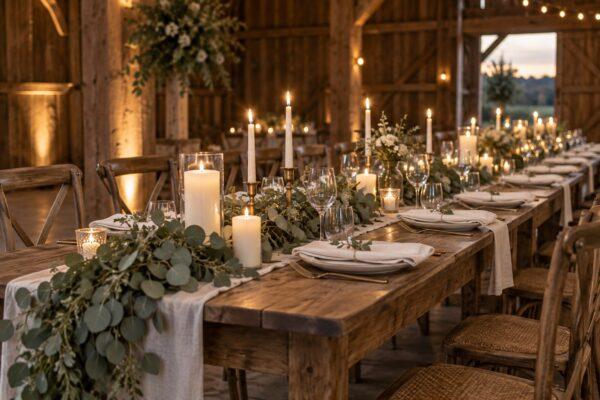
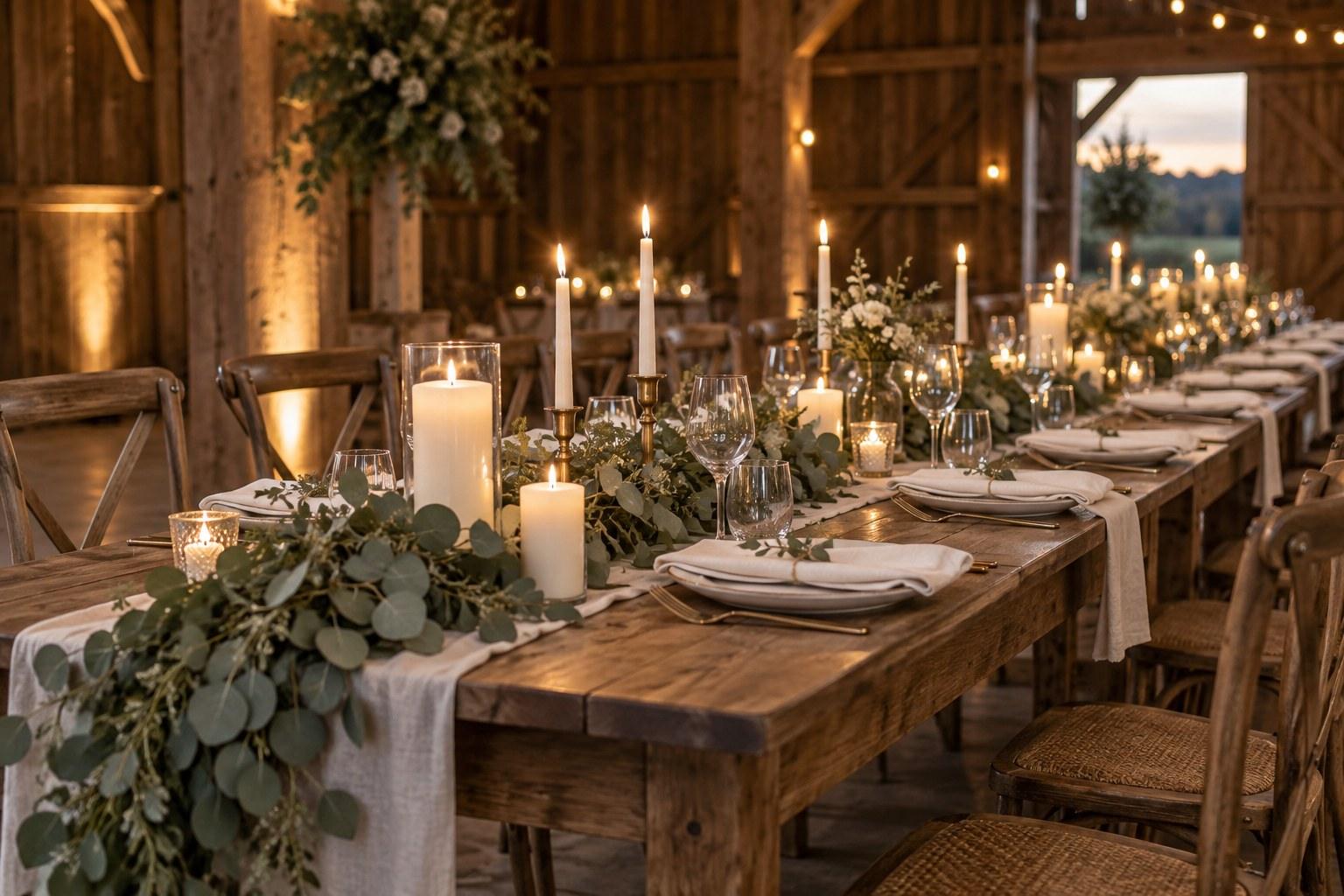
The bread and butter of wedding media. A real couple, a real day, a full gallery and the story behind it. Editors want weddings with a clear point of view. “It was lovely” isn’t a story. “They turned a working farm shed into a candlelit dinner for 60” is.
Styled shoots
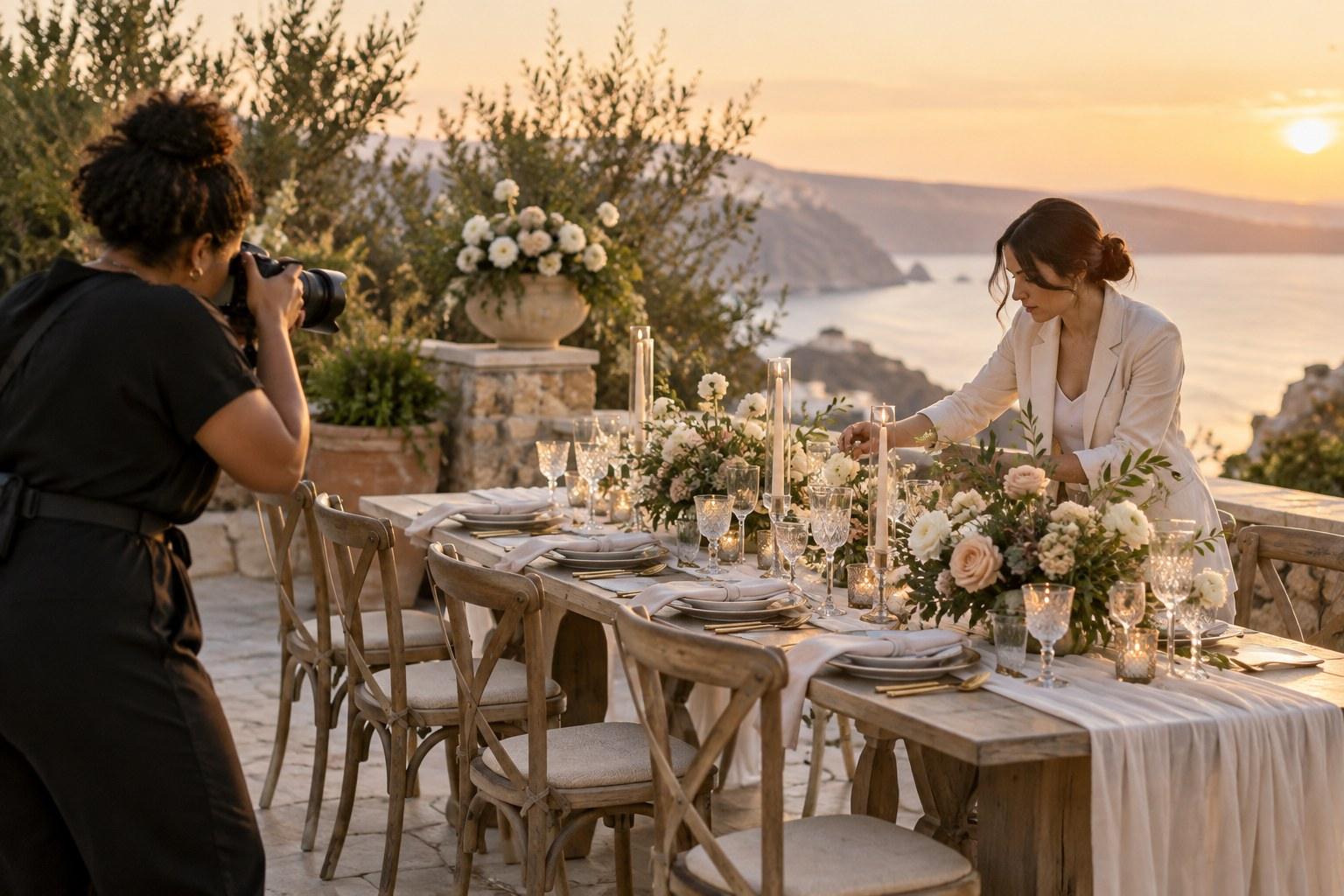
Collaborative, concept-led shoots created to show off a look or idea. Great for showing the work you want to be booked for — but they live or die on the concept, not just “pretty”.
Expert quotes and commentary
Editors regularly need a planner’s view on trends, budgets or etiquette. No gallery needed — just fast, quotable answers and a short bio. It’s one of the most underrated routes into press.
Podcasts and guest content
Podcasts, guest posts and expert columns show how you think, not just what you’ve designed. Pitch a specific topic you can genuinely teach, not a general “I’d love to come on your show”.
How to choose the right wedding blog or magazine
This is where most planners go wrong. They pick the biggest name they’ve heard of and hope. Instead, filter every outlet through three questions:
- Does my work actually fit their style? Scroll their last few months of features. If they publish moody, editorial city weddings and you’re sending a pastel garden party, it’s a no — however good it is.
- Is their audience my audience? A feature seen by couples in your region or niche is worth more to your business than a bigger outlet whose readers would never book you.
- What do their submission guidelines say? Most publications spell out exactly how they want work submitted. Follow them to the letter.
Exclusivity: don’t post everything before you submit
Many publications want work that hasn’t been published elsewhere — and some treat a full gallery on your blog or social media as “already published”. Before you share anything, check the guidelines of your first-choice outlet.
- Agree with the photographer and couple before the wedding who’s handling the submission.
- Hold back the full gallery. A teaser image or two may be fine — check the outlet’s rules.
- Submit to one outlet at a time if they ask for exclusivity. Wait for an answer (or their stated response window) before moving to the next.
Editors ignore pitches that miss this. Sending the same wedding to five places at once, or pitching something that’s already all over Instagram, is one of the quickest ways to burn a relationship with an editor.
What wedding editors need from a submission
Your pitch might be charming, but the editor still has to build a post or a page from what you send. Make it easy for them:
- Strong, professional images — a curated selection, not every frame. Details, wide shots, portraits and moments, in the format the outlet requests.
- The photographer’s permission. They own the images. Often the photographer submits, or you submit together. Never send someone else’s photos without a clear yes.
- The couple’s consent. Real couples need to agree to being published — in writing is best. Some will happily say yes; some won’t, and that’s their call.
- Full vendor credits. Every supplier, spelled correctly, with their business name and website or handle. Missing credits are a classic reason submissions stall.
- The story or concept. For a real wedding: who the couple are, what mattered to them, how that shaped the design. For a styled shoot: the idea, the inspiration and why it’s relevant now.
- Your planner’s notes. Decisions, problems solved, tips readers can use — this is where your expertise shows.
Build a wedding press submission pack
Stop rebuilding this from scratch every time. Create a reusable submission pack template and fill it in after every wedding you’re proud of. Here’s what goes in each type of pitch:
| Feature type | What to send | Tip |
|---|---|---|
| Real wedding | Curated gallery link, couple’s story, design concept, full vendor credits, written consent from couple and photographer | Lead with what makes this wedding different — one sentence an editor could use as a headline |
| Styled shoot | Gallery link, concept and inspiration, mood or colour story, full credits for every collaborator | Agree the target outlet and its guidelines with the team before the shoot, not after |
| Expert quote | Short, direct answers to the journalist’s actual question, your name, business, location and a one-line bio | Reply fast and keep it quotable — a useful paragraph beats a polished essay |
| Podcast or guest content | Two or three specific topic ideas, what listeners or readers will learn, links to past work or content | Show you know the show or publication — reference what they already cover |
If you want ready-made frameworks for this kind of marketing admin, the Wedding Business & Marketing Handbook ebook is a practical companion to keep on your desk.
How to write a pitch email for wedding press features
Short. Specific. About them, not you. Your pitch email should be readable in under a minute and answer one question: why does this belong in this publication?
- Subject line: clear and searchable — the type of submission, the location and the hook. No “Hi!!” or “Exciting opportunity”.
- Opening line: what you’re submitting and the one thing that makes it special.
- Why it fits them: one or two sentences connecting your work to what they publish. Prove you’ve actually read their outlet.
- The essentials: location, season, photographer, and confirmation that you have permission from the couple and photographer.
- The link: one gallery link and a credits list.
- Sign-off: your name, business, website, phone.
Personalise every single pitch. A copy-paste “Dear Editor” sent to a long list is obvious — and it’s the fastest route to the archive folder.
Timing and following up politely
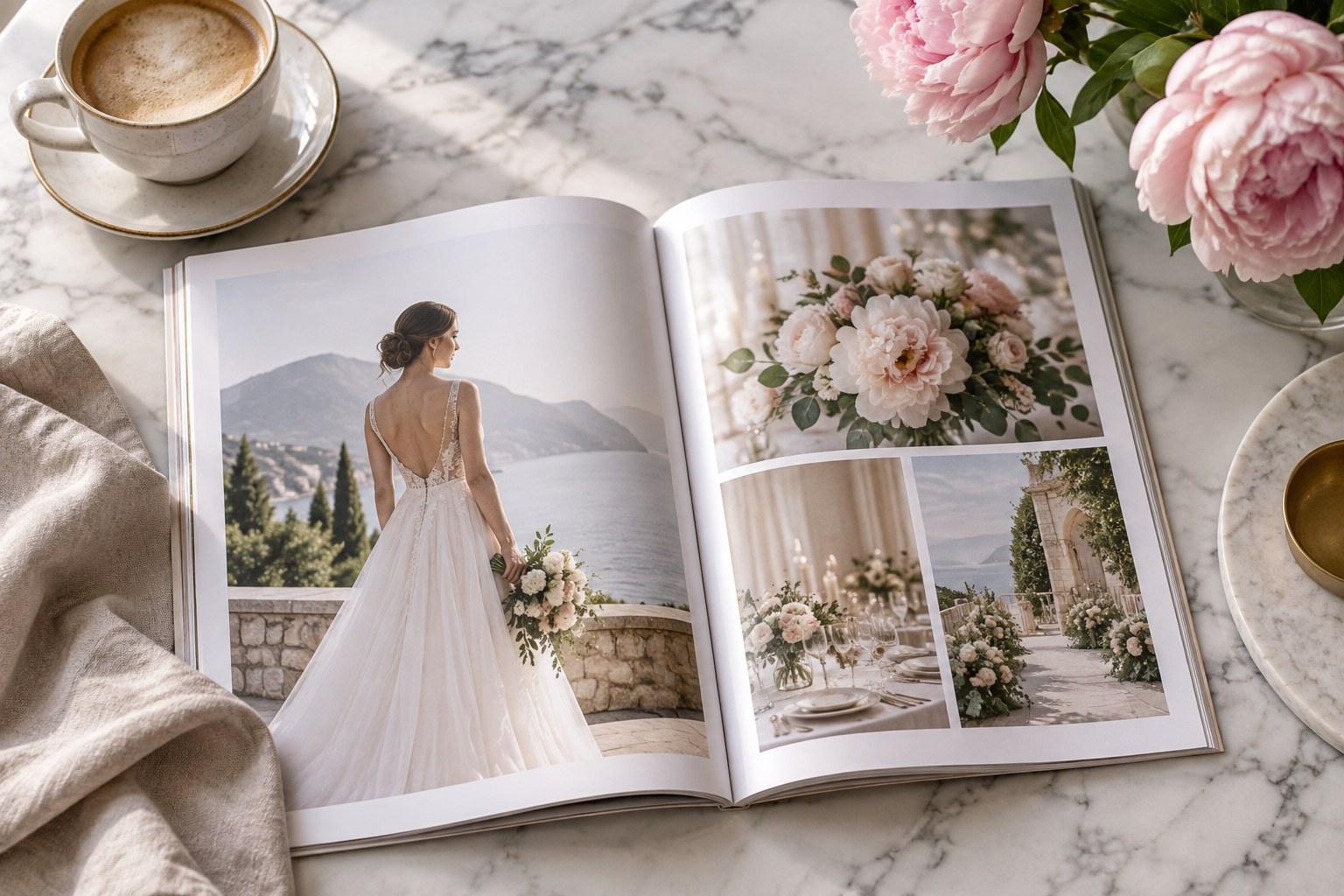
Timing matters in two ways. First, submit while the work is fresh — don’t let a great wedding sit for a year before you pitch it. Second, think seasonally — print magazines plan well ahead, so check each outlet’s lead times and plan backwards.
Then wait. If the guidelines mention a response window, respect it. If they don’t, give it a reasonable stretch before sending one short, friendly follow-up — reply in the same thread, restate the submission in a line, and ask if it’s still under consideration. If you still hear nothing, or get a polite no, move to the next outlet on your list.
What to do once your press feature is published
The feature going live isn’t the finish line — it’s the start of the content it gives you.
- Share it everywhere — social, newsletter, your blog — linking to the feature and tagging the outlet so they see the traffic you’re sending back.
- Thank everyone. The editor, the photographer, the couple and every vendor. A short personal note goes a long way.
- Add an “As featured in” section to your website — but only for genuine, published features. Never list an outlet you were merely submitted to. That claim destroys trust the moment a couple checks.
- Keep a press log — outlet, date, link and editor — for your next pitch.
Common wedding press submission mistakes
- Pitching the wrong outlet. Beautiful work in the wrong style is still a no.
- Missing or wrong vendor credits. Editors shouldn’t have to chase you for the florist’s name.
- No permissions. No couple consent or photographer approval means no feature — and potentially a damaged relationship.
- Mass pitching. Blasting the same email to every outlet ignores exclusivity and reads as lazy.
- Burying the story. A gallery link with no context gives an editor nothing to write.
Get these right and you’re already ahead of most submissions in any editor’s inbox. Want to go further? The Certificate in Wedding Business & Marketing covers how to build a brand that editors and couples remember, and if you’re still building your core planning skills, the Certificate in Wedding Planning gives you the foundations. Ready for the full picture? The Advanced Certificate in Wedding Planning, Styling and Business brings planning, design and business together.
Wedding planner press features FAQs
How do wedding planners get featured in magazines and blogs?
Choose outlets that match your style and audience, read their submission guidelines, and send a complete pack: professional images with the photographer’s permission, the couple’s consent, full vendor credits, the story behind the day and your planner’s notes. Pitch with a short, personalised email.
Can I submit a wedding to more than one publication at once?
Only if the outlets’ guidelines allow it. Many publications ask for exclusive content, so the safe approach is to submit to your first choice, wait for a response or their stated window, then move to the next outlet if it’s declined.
Who should submit a real wedding — the planner or the photographer?
Either can, but agree it upfront. The photographer owns the images, so they must approve any submission, and many outlets are used to receiving submissions from photographers. What matters is that only one person submits, with everyone’s permission and full credits.
Do I need the couple’s permission to submit their wedding?
Yes. Always get the couple’s consent before submitting their wedding for publication — ideally in writing, and ideally raised early in the planning process. If they decline, respect it.
Can I put “As featured in” on my website?
Only for features that have genuinely been published. Being submitted, shortlisted or contacted isn’t a feature. Keep your press list honest and link to the real articles where you can.