Table of Contents
- What to Look for in Wedding Floral Design Courses
- Side-by-Side Comparison of the Best Online Wedding Floral Design Courses
- 1. The Wedding Academy: Certificate in Floral Design
- 6. Team Flower Design Classes: Free Resources and Paid Instruction
- How to Choose Based on Your Goal
- Frequently Asked Questions
Last Updated: October 19, 2026
What to Look for in Wedding Floral Design Courses
Choosing the best online wedding floral design courses starts with two questions: does the curriculum actually cover wedding work, and will anyone give you feedback on what you make?
Wedding work is not general floristry with a white ribbon tied around it. Bridal bouquets must survive a full day in a photographer’s hands, and ceremony installations must be built on site within strict setup windows.
Curriculum Depth and Wedding-Specific Content
A strong wedding curriculum covers the full event: bridal bouquets, ceremony backdrops and arbors, centerpieces, corsages and boutonnieres, plus flower care and preparation.
Business content matters just as much. Pricing a wedding, managing supplier costs, and coordinating with planners keep florists trading. A useful test: does the syllabus show you how to quote a full wedding, or only how to make a centerpiece?
Instructor Support and Hands-On Feedback
Video lessons teach technique; feedback teaches judgment. The best courses let you submit your own work and hear what an experienced florist would change, because a bouquet that looks fine on camera can fall apart in a car.
Ask three things before enrolling: who the instructors are, how quickly students get answers, and whether the course includes live sessions or community. Self-paced learning is flexible, but flexibility without support leaves beginners guessing.
Before you buy any course, email the provider one specific question about the curriculum. The speed and detail of the reply tells you more about student support than any sales page.
Side-by-Side Comparison of the Best Online Wedding Floral Design Courses
The courses below differ mainly in wedding focus, format, instructor support, and business training.
Comparison Criteria Used
- Wedding-specific lessons, does the syllabus name bridal bouquets, ceremony installations, centerpieces, corsages, and boutonnieres, or only general arrangements?
- Format and access, self-paced versus scheduled, and whether access is lifetime or time-limited.
- Instructor support, video-only, community access, live sessions, or submitted-work critiques.
| Course | Format | Wedding-Specific Content | Instructor Support | Credential | Business Training | Cost Transparency | Best For |
|---|---|---|---|---|---|---|---|
| The Wedding Academy | Self-paced, lifetime access | Yes, dedicated floral design certificate | Confirm live/community options directly | Certificate in Floral Design | Yes, pricing and supplier management | Check current price and refund terms on the enrollment page | Career changers who want a recognized qualification |
| Hope Flower Farm | Online classes | Yes, brand-building focus | Not clearly listed | Not confirmed | Yes, brand angle | Pricing not clearly listed; verify before committing | Aspiring designers building a floral brand |
| The Floral Coach | Self-paced online | Fundamentals with design applications | Not detailed | Not confirmed | Limited | Verify current price and refund policy | Learners who want core design theory |
| AIFD Online Education | Scheduled online courses | Design principles, not confirmed wedding focus | Structured course format | Design theory progression | No | Pricing and enrollment details not shown | Students wanting structured design study |
| Online Wedding Flower Boot Camp | Online boot camp | Yes, wedding flowers throughout | Not detailed | Not confirmed | Limited | Verify before enrolling | DIY couples and new wedding florists |
| Team Flower Design Classes | Online classes plus free resources | Bouquets and arbors covered | Free resources plus paid classes | Not confirmed | Limited | Free and paid tiers; confirm which classes are free | Budget-conscious learners testing the water |
How to Read the Table
The two columns most readers skip matter most after purchase: instructor support and cost transparency. A beautiful syllabus with no feedback mechanism leaves beginners guessing, and no published refund policy is a risk if the wedding focus proves thinner than the sales page suggests. Before you enroll, ask what feedback students receive on submitted work and what the refund window is.
Treat every ‘not listed’ or ‘not confirmed’ cell as a task, not a verdict. A five-minute email to the provider resolves most of them, and the reply speed is itself a signal about student support.
1. The Wedding Academy: Certificate in Floral Design
Our top pick is The Wedding Academy because its floral design certificate sits inside a broader wedding education platform.
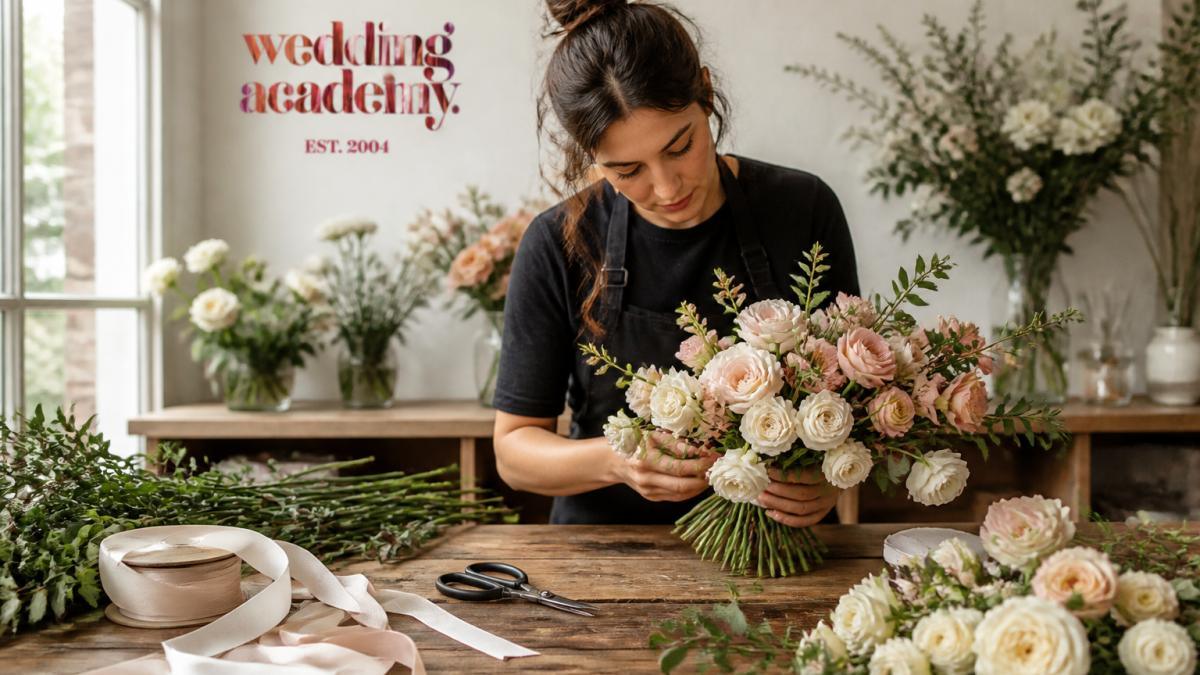
The Certificate in Floral Design is 100% online and self-paced, with lifetime access, built for people who cannot quit a job to retrain.
(/2026/10/how-to-become-a-professional-wedding-planner/) floristry. That dual purpose suits anyone testing whether they enjoy the work before investing in a longer program.
Specific lessons and pricing are not included in the available information. The boot-camp format suits short, intensive learning, but it is unlikely to replace a full certificate if you plan to build a business.
6. Team Flower Design Classes: Free Resources and Paid Instruction
Team Flower offers online design classes alongside free learning resources, with step-by-step instruction covering arrangements, bouquets, and arbors (Flower Arrangement Classes Online). The arbor content is a real advantage, since ceremony installations are where many new florists feel least confident.
The free resources make this a low-risk starting point. The tradeoff is that the available information does not specify which classes are free or what the paid courses cost, so plan to verify before enrolling.
Learners who want to try wedding floral arranging before spending on a full certification program.
How to Choose Based on Your Goal
The right course depends on what you want to do with it and how much experience you have. Match the course to your goal and level, then check the wedding-specific logistics it actually teaches.
Match the Course to Your Goal and Level
- DIY couples planning their own wedding, you need bouquet, centerpiece, and boutonniere instruction plus quantity and timing guidance, not a business curriculum. A short boot-camp or DIY-focused course is enough; skip anything heavy on pricing and supplier contracts.
- Hobbyists testing whether they enjoy floral work, start with free or low-cost resources and one paid fundamentals course. Prioritize courses with at least one feedback opportunity so you learn whether your eye matches your hands.
- Career changers, look for a certificate program with a formal credential, business training, and instructor support. This is where the difference between a hobby certificate and a chargeable qualification shows up.
Check the Wedding-Specific Logistics the Course Teaches
Design technique is only half of wedding floristry. Before you enroll, confirm the course covers the practical side:
- Flower sourcing and seasonality, which flowers are available when, and how to substitute without changing the design intent.
- Quantities and budgeting, how many stems a centerpiece or arbor actually needs, and how to quote a full wedding rather than a single arrangement.
- Timelines, when to order, condition, and assemble so flowers peak on the wedding day, not the day before.
- Transport and storage, how bouquets survive a car journey and how installations are stored overnight in a venue.
If a course never mentions sourcing, quantities, timelines, transport, or setup, it teaches arrangement technique rather than wedding work, fine for a hobbyist, a gap for anyone charging clients.
A Short Decision Checklist
- If you want a recognized qualification to show clients and venues, choose a certificate program with a formal credential and assessed work
- If you are testing whether you enjoy floral work, start with free or low-cost resources and one paid fundamentals course
- If you already design and need business skills, prioritize courses covering pricing, supplier management, and event logistics
- If you are planning your own wedding, a DIY-focused course with quantity and timing guidance is enough
Frequently Asked Questions
How long does a wedding floral design course take?
Course length varies by provider and format. Self-paced options like The Wedding Academy let you work through material on your own schedule, so completion time depends on your availability. More structured programs with fixed schedules may run several weeks or months. Most online courses allow lifetime access, so you can revisit lessons as needed. Check each course’s estimated hours and access terms before enrolling.
Can you learn floral design online?
Yes. Online floral design courses cover design principles, color theory, and arrangement techniques through video lessons and hands-on projects. You can practice with real flowers at home while following instruction. The key is choosing a course with clear demonstrations and, ideally, feedback on your work. Self-paced learning suits people balancing a full-time job, and lifetime access lets you review techniques before a big event.
What is the difference between a floristry course and a wedding flower design course?
A general floristry course covers broad skills like flower care, design elements, and various arrangement types for everyday work. A wedding flower design course focuses on bridal bouquets, centerpieces, ceremony installations, and event-specific logistics. If you want to specialize in weddings, look for a course that explicitly addresses wedding flowers, seasonal planning, and client consultation alongside core design skills.
Do you need a qualification to become a wedding florist?
No universal license is required to work as a wedding florist in most places, but a recognized certification builds credibility with clients and venues. A formal qualification demonstrates you have studied design principles, flower care, and wedding-specific techniques. It also signals professionalism when pitching to couples and wedding planners. Many successful florists combine certification with a strong portfolio of real arrangements.
What should a wedding floral design course teach?
A strong course should cover design fundamentals like color, balance, proportion, and texture; flower care and preparation; core wedding arrangements including bridal bouquets, centerpieces, corsages, and boutonnieres; and wedding-specific logistics such as seasonal flower selection and installation planning. Business topics like pricing, client consultation, and supplier management add practical value if you plan to sell your services.
The hardest part of entering wedding floristry is not learning to arrange flowers. It is building the confidence and business skills to charge for your work. The Wedding Academy was built for exactly that transition, with self-paced online certificates, lifetime access, a globally recognized qualification, and a curriculum that covers pricing, supplier management, and installations alongside design. Browse the courses and start building a career you can run from anywhere.