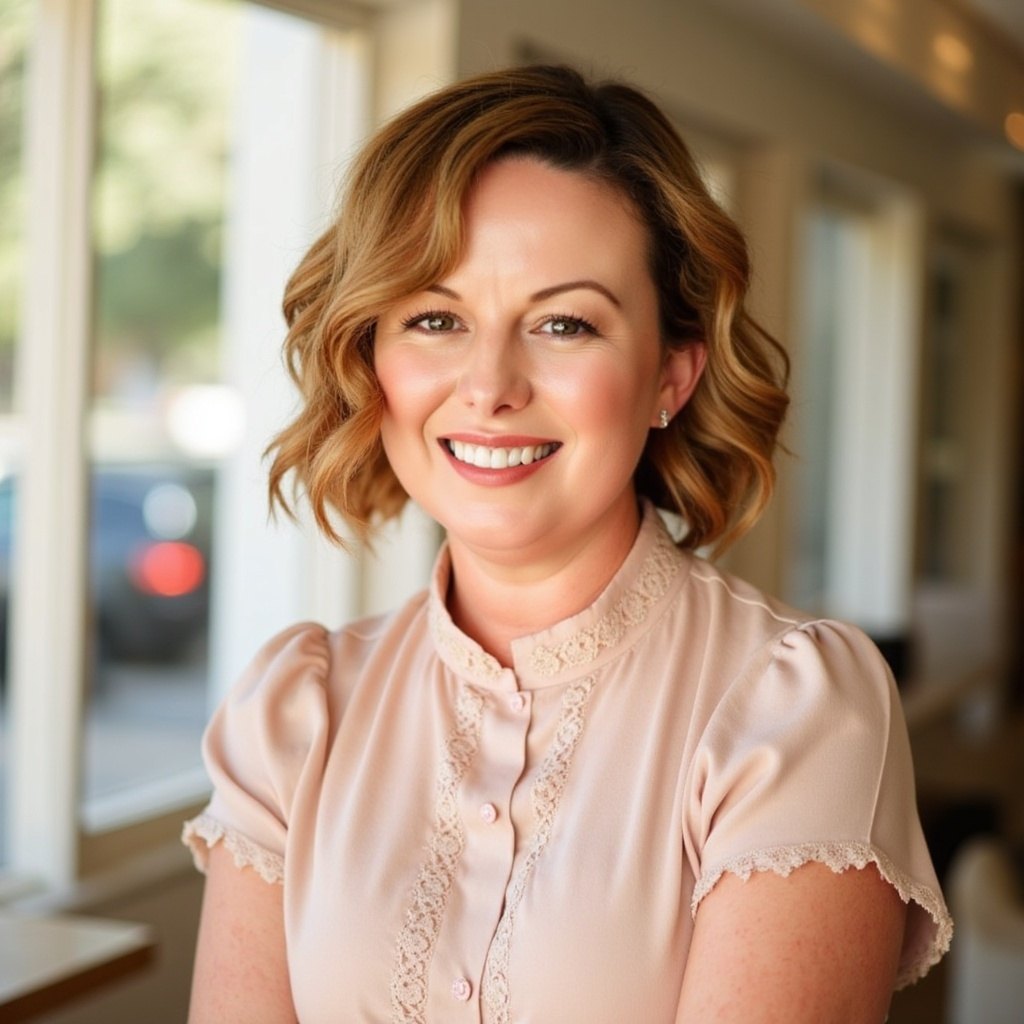
Before I was a wedding planner, before I owned The Wedding Academy, before I ever sat at a kitchen table on the Sunshine Coast talking a bride through a seating chart, I produced theatre.
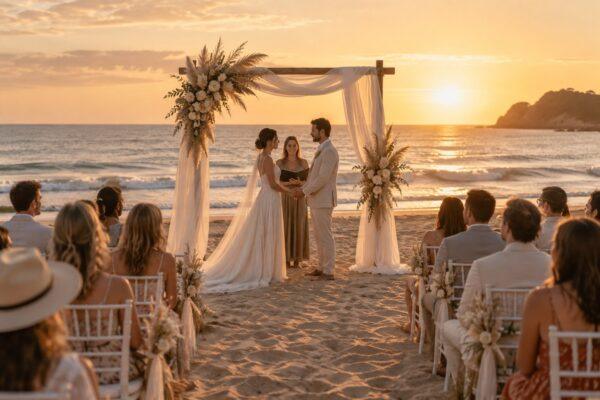
That sentence usually gets one of two reactions. Either people smile politely and file it under interesting former life — or they lean in, because they already suspect what I know: a wedding day is a show. It has a call time, a cast, a crew, a set, a script, cues, entrances, an interval and a finale. And like every show ever staged, it will only look effortless if somebody spent weeks making it so.
So let me tell you what producing taught me, and why it still shapes every wedding I plan through Darling Don’t Panic and every lesson I write for the planners I train.
Lesson one: the audience should never see the mechanics
In theatre, the moment the audience notices the crew, the spell breaks. They stop believing the story and start watching the machinery — the shoes squeaking in the wings, the set piece that didn’t quite land, the light that came up two seconds late.
Weddings are exactly the same, except the audience is your family and the stakes are personal. Your guests should never see the mechanics of your day. They shouldn’t see the caterer looking for a power point. They shouldn’t see the celebrant asking who has the paperwork. They shouldn’t see the bridesmaid frantically texting the photographer, and they should certainly never see the couple solving a problem.
When I’m working, my whole job is to keep the mechanics offstage. That means I make myself very visible to suppliers and almost invisible to guests. The best compliment I get is when a mother of the bride says, “It all just flowed.” It didn’t flow. It was engineered to feel like flow.
Lesson two: a run sheet is not paperwork, it’s the score
Theatre people don’t argue about whether you need a schedule. Of course you need a schedule — everyone from the stage manager to the lighting operator works from the same document, and it is granular to the minute.
Wedding run sheets are often treated as a nice-to-have. A pretty PDF, emailed late, that half the suppliers never open. That’s how days fall apart. A real run sheet says who arrives when, who they report to, where they park, what they need from the venue, what happens if the ceremony runs late, and who makes the call to move on.
The test I use is blunt: if I got hit by a bus this morning, could someone else run this day from my document? If the answer is no, the document isn’t finished. That’s a producer’s standard, not a planner’s standard, and I think weddings deserve the higher one.
Lesson three: rehearse the transitions, not the moments
Nobody worries about the vows. The vows are the easy part — the couple is emotionally invested, everyone is watching, and the moment carries itself.
What breaks a wedding day is the seams between the moments. Ceremony to canapés. Canapés to seated. Speeches to first dance. Those are the transitions, and transitions are where theatre productions live or die too. A scene change that takes forty seconds too long will lose a room faster than a bad line.
So I plan seams obsessively. Who invites guests to move? What sound cue tells them? Where do we put the drinks so the crowd flows the right direction? Who is quietly getting the couple back into the room before the speeches? Guests don’t remember transitions when they work. They only remember standing around confused, holding an empty glass, wondering what happens next.
Lesson four: your cast is nervous, and that’s your job too
Producing taught me that half of the work is emotional. Performers get nervous. Families get nervous. And on a wedding day, everyone is a first-timer except the suppliers and me.
A nervous person makes decisions they wouldn’t normally make. They arrive late because they were paralysed. They snap at the person they love most. They start rearranging a table plan at 4pm because it’s the only thing they feel they can control.
The planner’s answer is not to bark orders. It’s to remove uncertainty. People calm down when they know exactly what is about to happen, who they should ask, and that somebody else is holding the whole thing. Half of my role on the day is simply saying, out loud, in a steady voice: next we’re doing this, and I’ve got it.
Lesson five: contingency is not pessimism
Theatre budgets have contingency lines and understudies because things go wrong, and nobody takes it personally. Weddings often skip that step, because planning for rain feels like inviting it.
It isn’t. Contingency is a gift to your future self. A wet-weather plan you’ve actually walked through. A buffer in the timeline that absorbs the traffic, the missing button, the family photo list that grew. A supplier list with mobile numbers that somebody other than the bride is holding.
The couples I look after don’t hear most of this. They hear, “Yes, we’ve got a plan for that.” The plan existed weeks earlier.
Why I teach it as well as do it
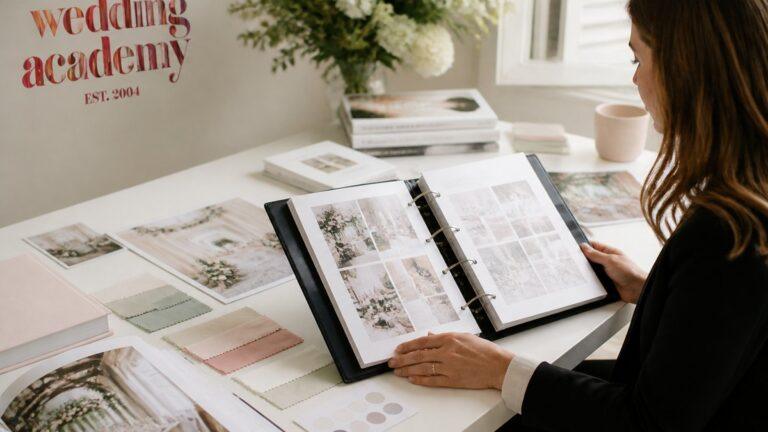
Somewhere along the way, the two halves of my working life stopped being separate. I run The Wedding Academy, where we train wedding planners, stylists and florists all over the world, and I host the Wedding Empires podcast, where I get to interrogate other people in this industry about how they actually work.
And I still plan and style weddings myself, because I don’t believe you can teach a craft you’ve stopped practising. Every time I run a real wedding day, I find something new that belongs in the curriculum — a supplier conversation that goes better when it’s framed differently, a timing assumption that doesn’t survive a real venue, a moment where the theory needs a footnote.
That’s the loop: what I learn on the floor goes into the Certificate in Wedding Planning, and what my students argue with me about makes me sharper on the floor. It’s the reason I keep answering student questions myself instead of handing that to someone else.
What this means if you’re getting married
If you’re planning your own wedding, the theatre lens is genuinely useful. Ask yourself three questions about your day:
- Who is holding the run sheet, and is it detailed enough that a stranger could run it?
- Who is managing the transitions between each part of the day?
- Who does a supplier call when something goes sideways — and is it you?
If the answer to that last one is “me” or “my mum,” that’s the gap. Not because you’re incapable, but because you’re in the show. Nobody performs the lead role and stage-manages at the same time.
What this means if you’re a planner
If you’re building a career in this industry, borrow the producer’s mindset early. Write documents someone else could run. Plan the seams. Build contingency without apology. Manage the emotional temperature of the room as deliberately as you manage the timeline.
And treat the invisible work as the actual job. The styling gets photographed, but the reason a day feels calm is almost never visible in the gallery.
That’s what we teach, step by step, in the Certificate in Wedding Planning — and if you want the planning, styling and business side together, the Advanced Certificate is the full path.
The curtain call
Theatre gave me a nervous system for live events: an assumption that something will move, that the schedule is a living thing, that the show must be protected from the panic. Weddings gave me the reason to care, because unlike a season of performances, this one runs once.
You get one night. One audience made of everyone you love. One set of photos. It should be run by somebody who has done it enough times to be boring about the details and calm about the surprises.
If that’s the kind of hands you want your day in, I’d love to hear about it — what you’re planning, where, and what you’re most worried about. That last part usually tells me the most.
And if you’re on the other side of the aisle — the one who wants to run days like this for other people — start with the Certificate in Wedding Planning.