A floral recipe stem count is the list of exactly which flowers and how many stems go into one design — one bouquet, one buttonhole, one centrepiece. Florists build a recipe for every design in a wedding, multiply by the quantity needed, add a sensible buffer for breakage, and that becomes the flower order.
Without recipes you’re guessing, and guessing in floristry costs money. Order too few stems and you’re scrambling at midnight; order too many and your profit ends up in the compost. Here’s how professional wedding florists work out stem counts with confidence.
What is a floral recipe?
A floral recipe is exactly what it sounds like: the ingredients list for an arrangement. It typically includes:
- Each flower and foliage variety used in the design
- The number of stems of each
- Colour or variety notes — for example, a specific rose variety or “blush, not peach”
- Mechanics and sundries — vessels, foam alternatives, chicken wire, tape, ribbon, pins
- Size notes — finished dimensions so the design is consistent every time
Once you have a reliable recipe, you can price accurately, order precisely and hand the design to someone else on your team knowing it’ll come out the same.
Understanding flower roles in a recipe
Before counting stems, sort your flowers by the job they do in the design. Most wedding recipes use some version of these roles:
| Role | What it does | Examples |
|---|---|---|
| — | — | — |
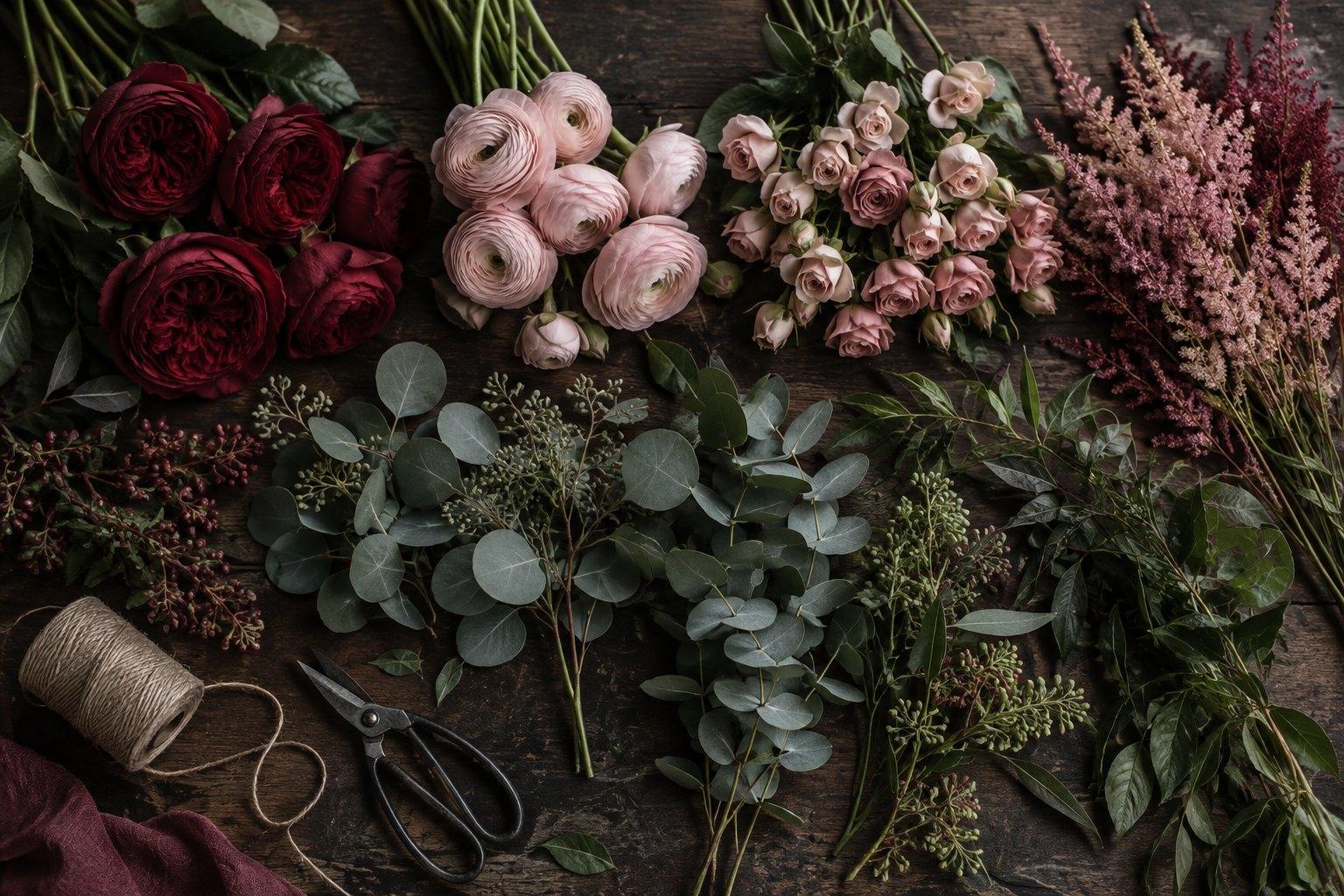
| Focal | The hero blooms that draw the eye | Garden roses, peonies, dahlias, large ranunculus |
| Secondary | Supports the focal flowers and adds depth | Spray roses, lisianthus, smaller roses |
| Filler and texture | Fills gaps and softens the shape | Astilbe, waxflower, gypsophila, veronica |
| Line or movement | Adds height, shape and flow | Delphinium, snapdragon, trailing stems |
| Foliage | Structure, volume and greenery | Eucalyptus, ruscus, pittosporum, olive |
Thinking in roles keeps your design balanced and makes substitutions easier if a flower isn’t available.
How to work out a floral recipe stem count
There’s no universal formula — stem counts depend on the size of each bloom, the style of the design and how full the couple wants it. But the method professional florists use is consistent.
1. Build a test arrangement
The most reliable way to create a recipe is to make the design once and count as you go. Many florists make a sample bouquet or centrepiece for the consultation or a trial, recording every stem. That sample becomes the recipe.
2. Count bloom heads, not just stems
Spray roses, stock and other multi-headed stems give you several blooms per stem. Single-headed flowers give you one. Note this in your recipe — a design that “needs twelve roses” might need twelve stems of standard roses or far fewer stems of spray roses.
3. Adjust for style
Loose, garden-style designs use more foliage and movement and fewer tightly packed focal blooms. Compact, rounded designs need more focal and secondary flowers packed closely together. The same size bouquet can have a very different recipe depending on the look.
4. Record finished size
Write down the finished dimensions — diameter, height, trail length. “Medium bouquet” means different things to different people; measurements don’t.
Example: how a recipe comes together
Here’s an illustrative way to think through a bridesmaid bouquet recipe. The exact numbers will change with flower size and style, so treat this as a way of thinking rather than a fixed rule:
- A handful of focal blooms, positioned in odd-numbered groupings
- A slightly larger number of secondary flowers to support them
- Several stems of filler to soften gaps
- A few stems of line flowers or trailing greenery for movement
- Enough foliage to build structure and frame the flowers
Make the bouquet, count each group, and you have your recipe. Do the same for the bridal bouquet, buttonholes, corsages, ceremony pieces, centrepieces and any installations.
Scaling recipes into a wedding order
Once every design has a recipe, building the order is straightforward maths.
- Multiply each recipe by the quantity — ten centrepieces, five bridesmaid bouquets, and so on.
- Total each flower variety across all designs.
- Round up to wholesale bunch sizes — flowers are usually sold in bunches or boxes, not single stems. Check how your wholesaler packs each variety.
- Add a buffer — most florists order extra to allow for damaged stems, blooms that don’t open properly and last-minute changes. How much depends on the variety and your experience with it.
A simple spreadsheet with recipes on one tab and the totalled order on another saves hours on every wedding.
Don’t forget foliage and sundries
New florists often recipe the flowers carefully and then guess the greenery. Foliage frequently makes up a large part of the volume in a design, especially in loose, garden-style work, so count it just as carefully. Note which foliage is used for structure and which for trailing movement — they’re often different varieties with different stem lengths.
Sundries belong in the recipe too. Ribbon lengths, pins, stem wrap, wire gauges, vessels, chicken wire and water tubes all cost money and time. If they aren’t on the recipe, they won’t be in your quote or your workroom kit on the morning of the wedding. A complete recipe means nothing gets forgotten when the pressure is on.
Things that change your stem count
Even good recipes need adjusting. Watch for:
- Bloom size variation — flowers vary by grower, variety and time of year; larger heads mean fewer stems.
- Opening stage — tight buds look smaller on delivery and need time to open. Plan your processing schedule accordingly.
- Availability — if a focal flower is unavailable, the substitute might be smaller or larger, changing the count.
- Venue scale — a design that looks generous in a small room can disappear in a grand ballroom.
- Client changes — “just a bit fuller” can add a surprising number of stems across a whole wedding.
Using recipes to price wedding flowers
Recipes aren’t just for ordering — they’re the foundation of accurate pricing. Once you know exactly what goes into a design, you can cost the flowers, sundries and mechanics, then add your labour, design fee, delivery and set-up. Without recipes, florists often underprice because they forget a few stems here and there, and across a wedding those stems add up.
Recipes also make quoting faster. Keep a library of your most common designs with their recipes, and you can price a new enquiry in minutes rather than hours. Our Certificate in Floral Design covers wedding flower pricing and ordering as part of building a professional floristry practice.
Keeping a recipe library
Every recipe you create is an asset. Store them somewhere organised — a spreadsheet, a binder or floristry software — with a photo of the finished design. Over time you’ll build a library covering:
- Bridal and bridesmaid bouquets in different sizes and styles
- Buttonholes, corsages and wristlets
- Low and tall centrepieces
- Ceremony arrangements and arbour pieces
- Cake flowers, garlands and installations
Update recipes after each wedding with notes on what worked and what you’d change. That habit turns each event into better accuracy on the next.
Learning to build floral recipes properly
Working out stem counts is a skill that sharpens with practice, and it helps to learn from people who’ve done it many times. The Wedding Florist’s Handbook by Jac Bowie covers wedding floristry techniques and the business side of running a floral service — a useful reference to keep in the workroom. If you also style events, the Certificate in Wedding Styling complements floral skills beautifully.
The bottom line
A floral recipe stem count turns floristry from guesswork into a repeatable system. Build each recipe from a real sample, count by role, record sizes, multiply out, round to bunch sizes and add a buffer. Do that and your orders, prices and designs become consistent, profitable and stress-free.
Frequently asked questions
What is a floral recipe?
A floral recipe is the ingredients list for one arrangement: each flower and foliage variety, the number of stems, colour notes, mechanics and finished size. Florists use recipes to order, price and recreate designs consistently.
How do florists work out stem counts?
They make a sample of each design and count every stem by role — focal, secondary, filler, line and foliage — then multiply by quantity, round up to wholesale bunch sizes and add a buffer for breakage.
How many extra flowers should I order for a wedding?
Most florists add a buffer for damaged stems and blooms that don’t open well. The right amount depends on the variety and your experience, so track waste after each wedding and adjust.
Do spray roses count as one stem?
Yes, a spray rose is one stem but carries several smaller blooms, so you usually need fewer stems than single-headed roses to fill the same space.
Why do floral recipes matter for pricing?
Recipes show exactly what goes into each design, so you can cost flowers and sundries accurately before adding labour, design and delivery. Without them, florists often underprice.
Ready to design, price and order wedding flowers like a professional? The Certificate in Floral Design teaches you wedding floristry techniques and the business systems behind them — 100% online, at your own pace.