Here’s a question most florists only learn to ask after something goes wrong: “Does anyone close to you react to flowers?” It sounds small. It isn’t. A sneezing maid of honour or a celebrant with streaming eyes is not the photo anyone wanted.
Wedding flower allergies and sensitivities are one of those topics that separate a florist who makes pretty things from a florist who runs a professional service. You’re not a doctor, and you should never act like one. But you can ask better questions, design smarter, and document everything — so that the people who matter most on the day can actually enjoy it.
Why wedding flower allergies belong in your first consultation
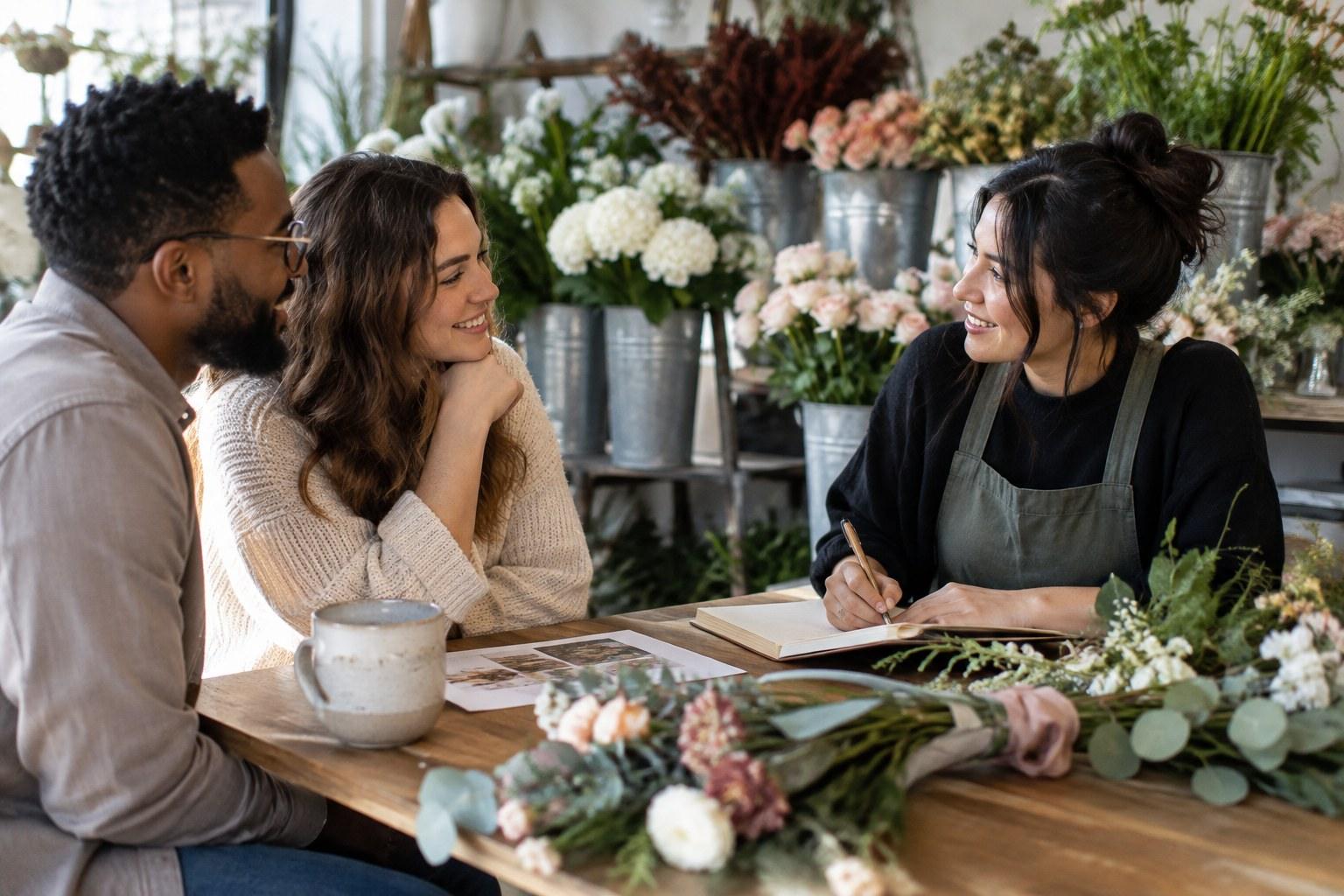
By the time you’re placing a wholesale order, the design is basically set. If you discover at that point that the groom gets hay fever from heavy-pollen blooms, you’re unpicking a whole palette. Ask early and it’s simply part of the brief.
And it’s not just about the couple. Think about everyone who will be holding, wearing or sitting closest to your work:
- The couple — they’re carrying or wearing flowers for hours, and they’re in every close-up.
- The wedding party — bouquets, buttonholes, flower crowns, wrist corsages. All worn right next to the face.
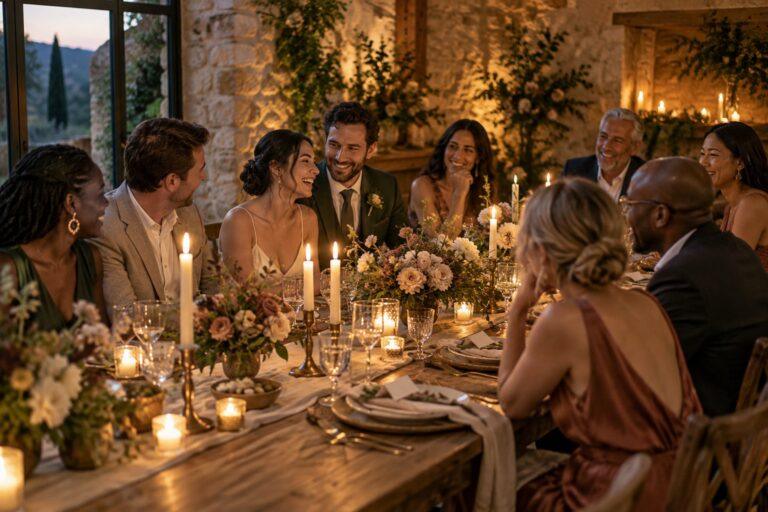
- Close family — parents and grandparents often sit at the head table or front row, inches from your biggest pieces.
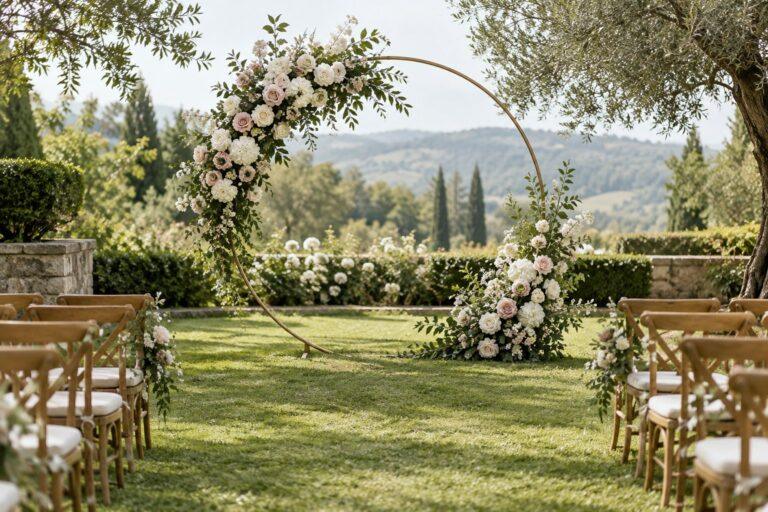
- The celebrant or officiant — standing under or beside the ceremony arch for the whole ceremony.
- Guests with known issues — the couple usually knows who has asthma or strong reactions; ask them to tell you.
- Children — flower girls and page boys handle petals, touch everything and sometimes put things in their mouths.
Asking also does something powerful for your brand. It tells the couple you think about people, not just product.
Wedding flower allergy questions to put on your intake form
Don’t rely on remembering to ask out loud. Build it into your enquiry or consultation form so it’s asked every single time, the same way. Keep the wording non-medical — you’re gathering information, not diagnosing.
| Question to ask | Why it matters | Design response |
|---|---|---|
| Does anyone in the couple, wedding party or close family have a known allergy to flowers, plants or pollen? | Personal flowers are worn and held close to the face for hours | Shortlist lower-pollen options for personal flowers; remove stamens where possible |
| Is anyone sensitive to strong scents or fragrance? | Heavily scented blooms can bother some people, especially indoors | Lean on scent-light flowers and foliage near the head table and ceremony |
| Does anyone have asthma or breathing issues that certain flowers or dried materials trigger? | Pollen, scent and dust from dried elements are commonly mentioned triggers | Keep the strongest pieces away from those guests; limit loose dried material |
| Has anyone reacted to plant sap or latex on their skin? | Some stems release sap that can irritate sensitive skin | Seal or wrap stems on handheld pieces; choose alternatives for wearables |
| Are pets or animals part of the day, or near any dried arrangements? | Animals can chew or brush against flowers and dried materials | Ask the couple to check any plant concerns with their vet; place arrangements out of reach |
| Will flowers be used on or near the cake or food? | Not every flower is safe to have in contact with food | Only edible flowers sourced as food-safe touch food; use barriers for decorative pieces |
| Will children be handling flowers or petals? | Little hands touch, crush and taste things | Choose gentle materials for flower girl baskets; brief the parents |
Add one more line at the bottom of the form: “If anyone has a known allergy, we recommend they check with their own doctor about any specific flowers you’re considering.” It puts the medical question exactly where it belongs.
Flower traits to think about when designing for allergies
Sensitivities vary enormously from person to person. One guest sneezes at anything with visible pollen; another is fine with pollen but can’t sit near a strongly perfumed bloom. So rather than chasing a mythical “safe list”, train yourself to look at four traits.
Heavy, visible pollen
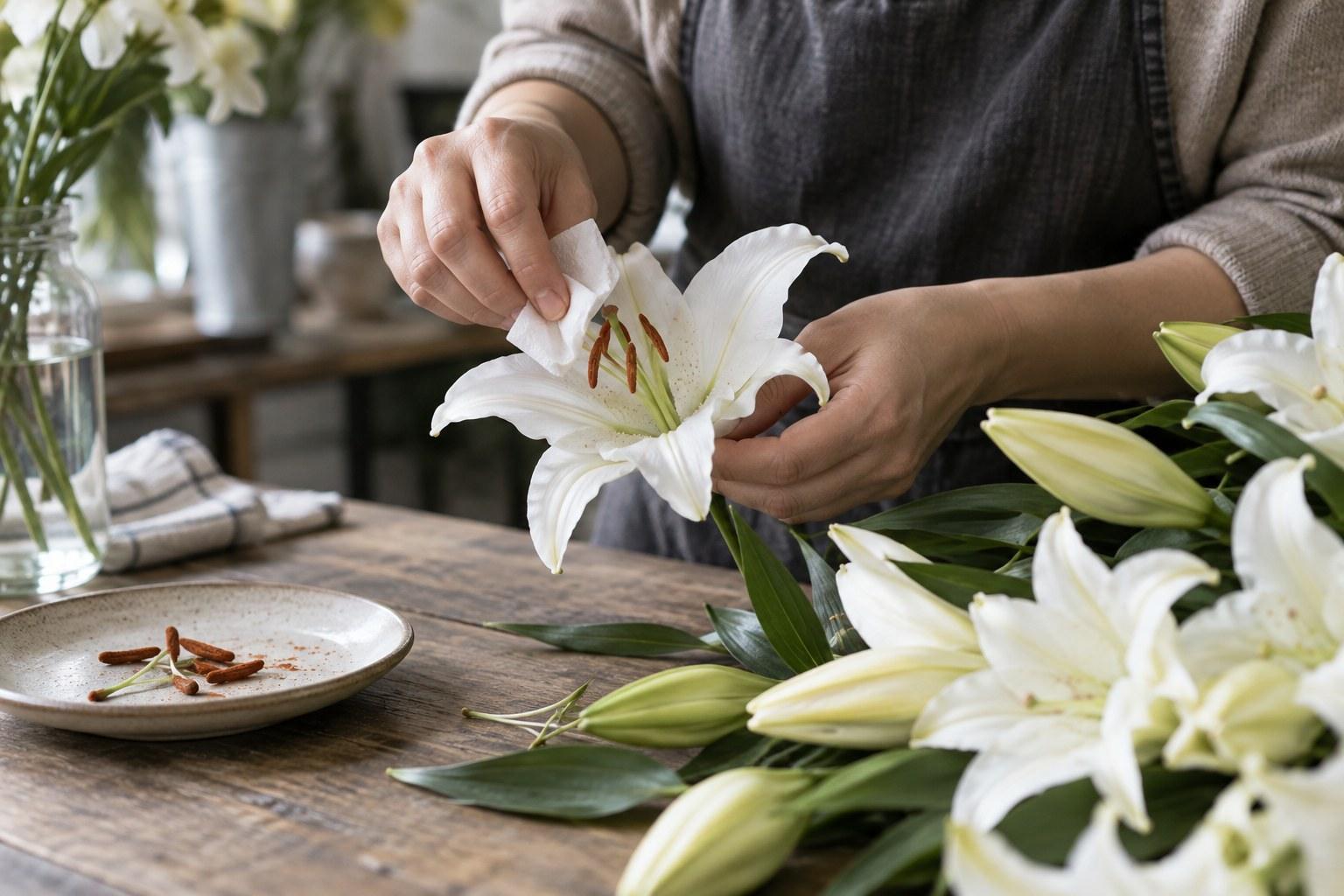
Flowers with prominent, open stamens tend to shed more pollen — onto clothes, tablecloths and noses. Lilies are the classic example, and many florists routinely remove lily stamens anyway, both to reduce pollen and to stop those orange stains on a white dress.
Strong scent
Fragrance is half the romance of wedding flowers — and for scent-sensitive people, half the problem. Strongly perfumed blooms such as some lilies, tuberose, hyacinth, gardenia and certain garden roses can bother people who react to fragrance, especially in a small or enclosed room. That doesn’t mean banning them — just placing them carefully.
Sap and latex
Some stems release a milky sap when cut — euphorbia is the one florists most often talk about — and some people find plant sap irritating on their skin. If someone has mentioned skin reactions or a latex sensitivity, take extra care with anything they’ll hold or wear.
Dusty dried materials
Dried grasses, pampas, seed heads and preserved botanicals look gorgeous and photograph beautifully. They can also shed dust and fibres. For someone whose breathing is easily irritated, a big shedding installation directly overhead is worth a rethink.
Allergy-friendly wedding flower design swaps that still look beautiful
Good news — designing around sensitivities rarely compromises the look. It just means being deliberate:
- Remove stamens. On lilies and other flowers with prominent anthers, removing them early — with tissue, before they open fully — is standard practice for many florists.
- Choose scent-light flowers. Many florists lean towards blooms that are often recommended as lower-pollen or lighter in fragrance — for example, many hydrangeas, orchids and some rose varieties. Treat this as a starting point, not a promise: any individual can still react.
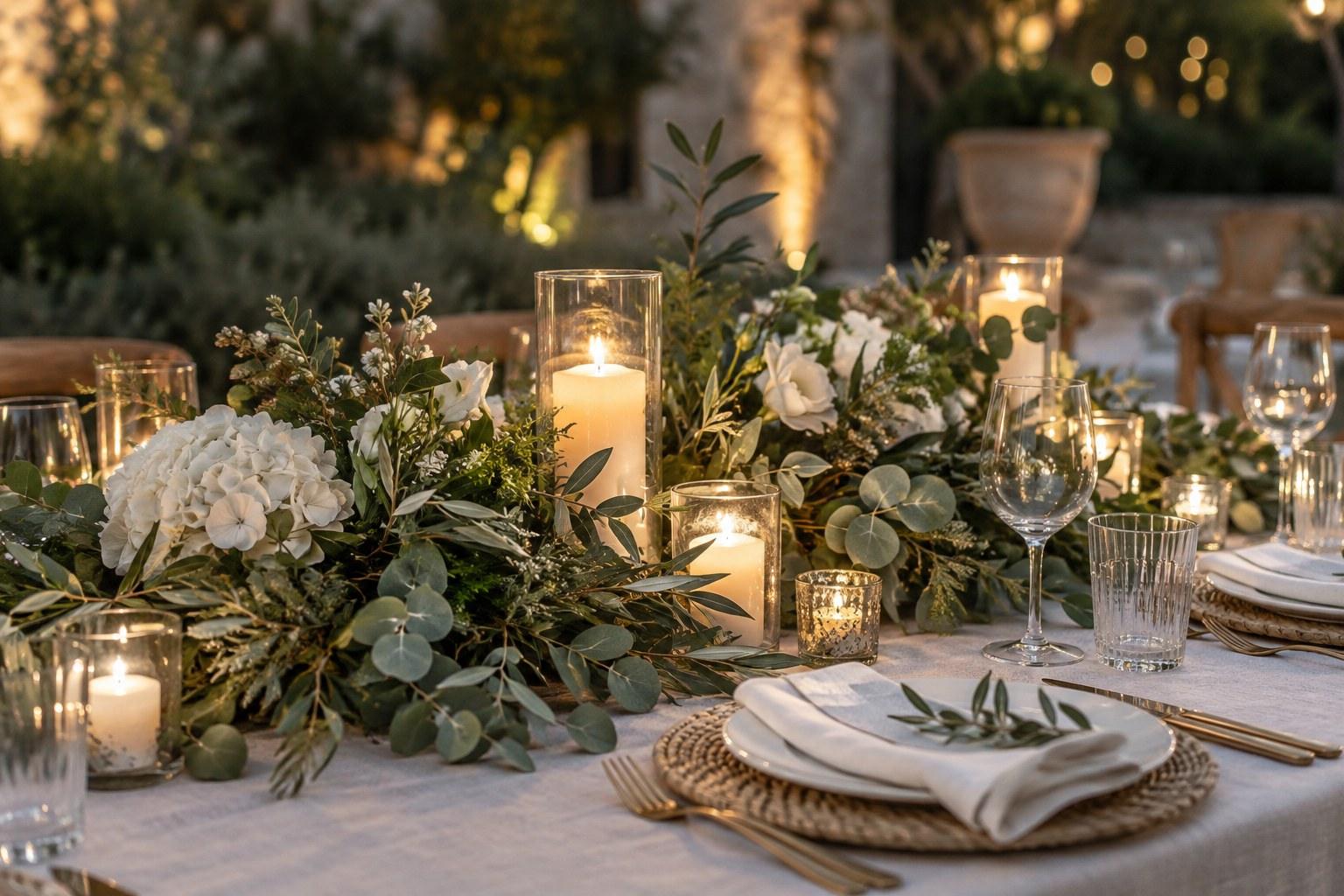
- Go foliage-led. Lush greenery-heavy designs with fewer focal blooms can look modern and generous while reducing the volume of pollen and scent on the table.
- Use placement as a design tool. Keep the most fragrant or pollen-heavy pieces away from the head table, the bridal party and the ceremony focal point. Put them at the entrance, the bar or the guest book table instead.
- Consider faux or preserved elements for specific items. For a buttonhole or a hair piece worn by someone with a known sensitivity, a well-made faux or preserved option can be a sensible swap — without converting the whole wedding.
Notice what’s missing from that list: the words “allergy-free” and “hypoallergenic”. Don’t use them with clients. No flower can be guaranteed not to cause a reaction, and promising otherwise exposes you if someone does react. “Generally lower-pollen” and “lighter scent” are honest and still reassuring.
This kind of design thinking — working from people and venue first, then flowers — runs right through the Certificate in Floral Design, alongside the mechanics, recipes and business systems that make a floral studio work.
Flowers on wedding cakes and food: be strict
This is where good intentions cause real problems. A few loose blooms tucked onto a cake look effortless, but many common florist flowers are not suitable for contact with food, and some are treated with products that were never meant to be eaten.
- Only edible flowers sourced as food-safe go directly on food. Buy them from a supplier who sells them for culinary use, not from your general wholesale order.
- Decorative flowers need a barrier. If the couple wants regular blooms on or around the cake, use a non-toxic barrier between stems and icing — and agree with the cake maker who’s responsible for what.
- Coordinate with the cake maker and caterer. They may have their own requirements, and they know the food. Put the agreement in writing.
Handling flowers safely on the wedding day
Your care shouldn’t stop at the design. On the day, a few habits protect you, your team and the people you’re delivering to:
- Wear gloves when handling sap-producing stems or large quantities of dried material.
- Wash hands before pinning buttonholes or handing over bouquets, so you’re not transferring pollen or sap to someone’s suit or skin.
- Label personal flowers. If you’ve made a stamen-free or faux buttonhole for a specific person, label it with their name so it actually reaches them.
- Brief your team and the planner. Make sure whoever is placing arrangements knows which pieces stay away from the head table.
- Do a final stamen sweep on site — lilies keep opening in transit.
Documenting wedding flower allergies in your proposal and contract
If it isn’t written down, it didn’t happen. Record what the couple told you and what you’ve agreed to do about it — in the proposal, then again in your final confirmation.
A short “sensitivities” section in your proposal works well: who has flagged what, the design adjustments you’re making, and any substitutions. Then add a clear clause to your terms that you’ll take reasonable steps based on the information provided, that natural materials can still cause reactions in some people, and that anyone with a known allergy should seek their own medical advice. Get proper advice on wording for your own location.
For the full consultation-to-delivery workflow — intake forms, proposals, pricing and studio systems — the Wedding Florist’s Handbook is a practical companion to keep on your workbench.
Make thoughtful floristry your point of difference
Couples remember how you made them feel. When you’re the florist who asked about Grandma’s asthma and quietly moved the lilies to the entrance, you become the florist they recommend to everyone.
If you want to build that level of care into a real floral business, start with the Certificate in Floral Design. Want to expand into full room design? The Certificate in Wedding Styling pairs naturally with it, and the Advanced Certificate in Wedding Planning, Styling and Business takes you deeper into running the business side. 🌿
Wedding flower allergies FAQs
Should a florist ask about allergies before a wedding?
Yes — ideally at the first consultation, through your intake form. Ask about the couple, wedding party, close family, celebrant, any guests with known issues and children, so sensitivities shape the design from the start instead of forcing late changes.
Are there hypoallergenic wedding flowers?
No flower can be guaranteed not to cause a reaction, so avoid promising “hypoallergenic” or “allergy-free” flowers. Some blooms are often recommended as generally lower-pollen or lighter in scent, but sensitivities vary from person to person, and anyone with a known allergy should check with their own doctor.
Why do florists remove lily stamens?
Lily stamens carry a lot of visible pollen that can shed onto noses, clothes and linen — and it stains. Many florists remove them early, using tissue, to reduce pollen and protect dresses and tablecloths.
Can you put fresh flowers on a wedding cake?
Only edible flowers sourced as food-safe should touch food directly. If the couple wants decorative blooms on the cake, use a non-toxic barrier and agree the details in writing with the cake maker.
How do you design wedding flowers for a scent-sensitive guest?
Lean on scent-light blooms and foliage-led designs near where that person sits, and move the most fragrant pieces to the entrance, bar or other areas away from the head table and ceremony.