Here’s the uncomfortable truth about destination wedding welcome bags: most of them are full of stuff guests throw away. The monogrammed lip balm. The branded bottle opener. The heavy candle nobody can fit in their carry-on. All lovingly chosen, all paid for by the couple, all left behind in a hotel bin on checkout morning.
The short answer, if you’re looking for destination wedding welcome bag ideas that actually work: be useful first and pretty second. Water, a short local guide, the weekend itinerary and key contacts will do more for your guests than any branded trinket ever will. Get the useful core right, add one or two genuinely local touches, and stop there.
What is a destination wedding welcome bag actually for?
Before choosing a single item, get clear on the bag’s job. It isn’t a party favour. It does three things:
- A warm arrival. Guests have travelled, often across time zones, and arrive tired. The bag says “we’re so glad you’re here” before anyone has unpacked.
- Practical help. Where do I need to be, when, and what do I wear? How do I get there? Who do I call if I’m lost? The bag answers it so guests don’t message the couple twenty times.
- Setting the tone. The look, the contents and the local flavour signal what kind of weekend this is going to be — relaxed beach celebration, intimate vineyard dinner, city elopement with a party after.
Every item should serve at least one of those jobs. If it serves none, it’s clutter — however cute on a mood board.
The useful core: destination wedding welcome bag essentials
The non-negotiable layer. If the budget only stretches this far, the bag still does its job brilliantly.
Water and a local snack
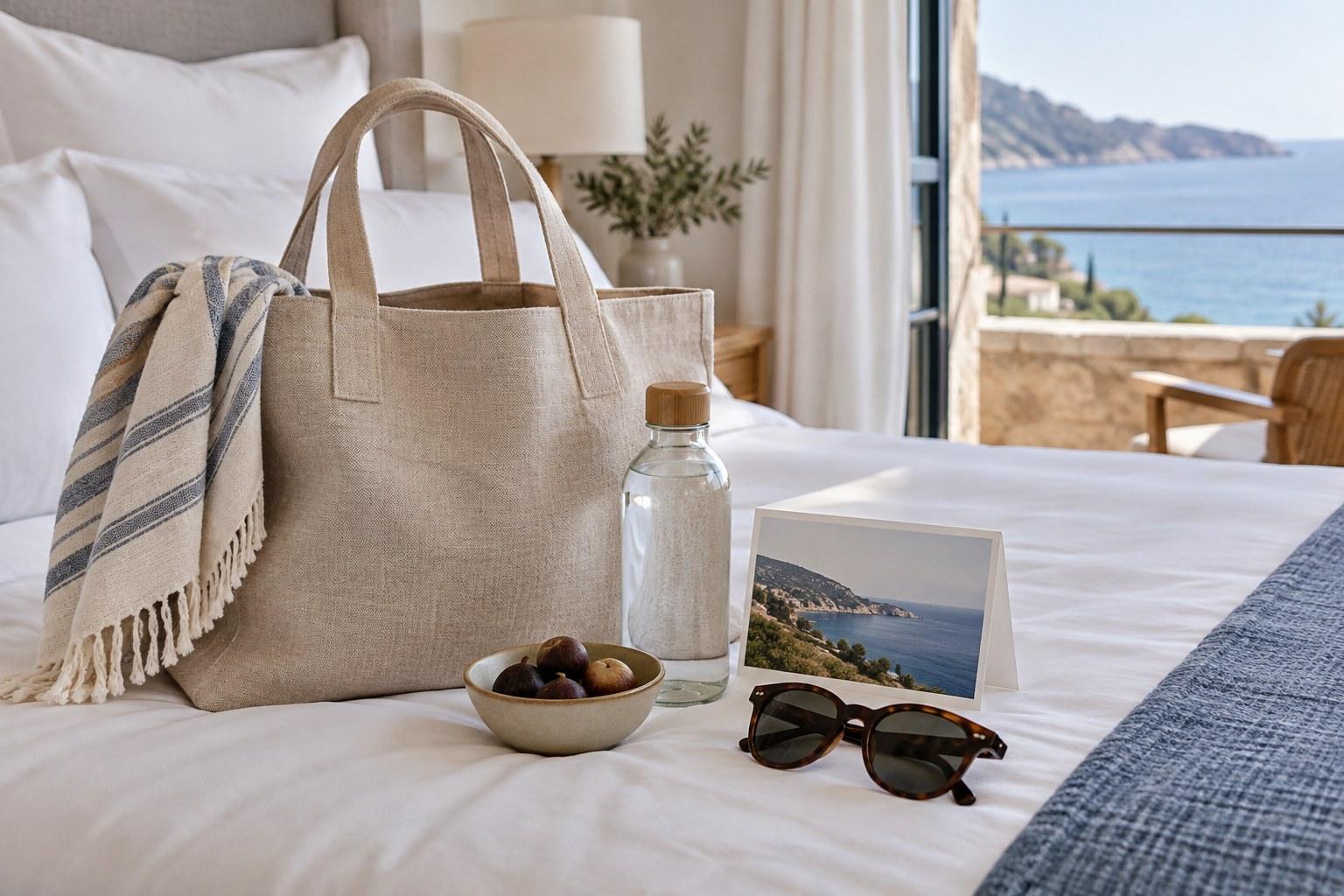
The first thing most guests want after travelling is a drink and something to eat. Water (or a refillable bottle where tap water is good) plus a snack from the destination beats almost anything else you could include.
A printed itinerary and key contacts
The couple has a wedding website, but not every guest has read it or has data abroad. A simple printed card with each event, its time, location, dress code and transport arrangements is the single most valuable thing in the bag. Add a contact list: you or your on-site coordinator, a nominated family member, the hotel front desk and local emergency numbers.
Map or transport information
Include how guests get to each event, shuttle pick-up points and times, and a note on local taxis. A simple map of the venue, hotel and a few favourite spots is useful and charming.
Something for the climate
Match this to the destination and the time of day of the events: sunscreen, a hand fan, insect repellent, a light wrap or pashmina for evenings, a compact umbrella. Guests rarely pack perfectly for somewhere new — this is where the bag quietly saves someone’s weekend.
A short local guide
One page, not a booklet: the couple’s favourite café, a walk worth the effort, a pharmacy, an ATM and a phrase or two in the local language. Personal picks make it feel like a letter, not a brochure.
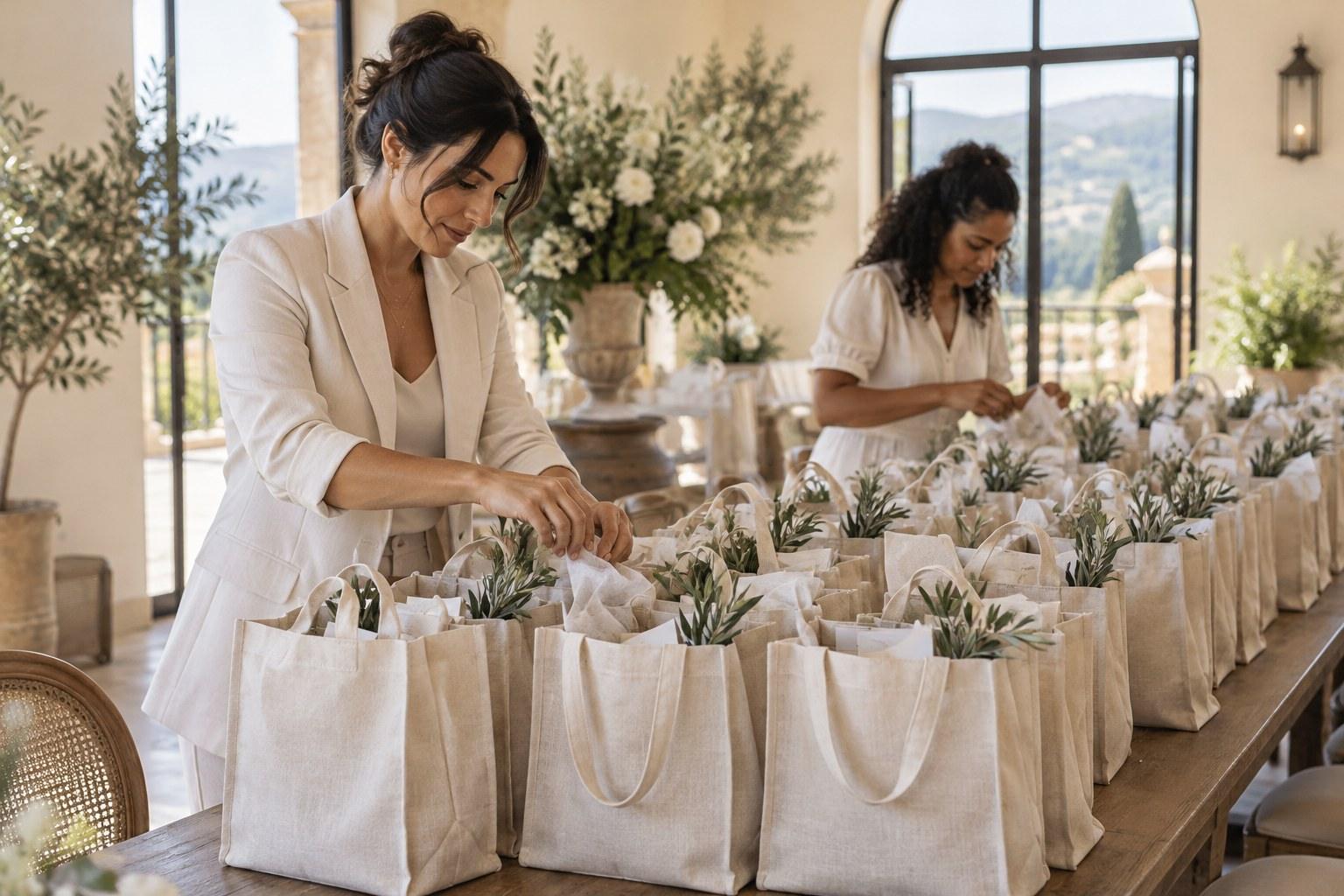
Local welcome bag ideas guests actually remember
Once the useful core is covered, this is where the bag gets its personality. One or two local touches are plenty — think small, light and genuinely of the place:
- A miniature product from a local maker — olive oil, honey, sea salt, spice blend, coffee or tea
- A local sweet or baked treat the couple loves
- A small handmade item from a market or artisan — something flat and light
- A note explaining where each item comes from and why the couple chose it
That note matters. A jar of honey is nice. Honey from the farm where the couple got engaged is a story guests tell at dinner.
Check customs, food import rules and venue policies
Two rules catch planners out. First, if you’re shipping items into the destination — or guests will carry items home — food, plant and animal products can be restricted by customs and biosecurity rules, and those rules differ by country. Check the official guidance for the destination and for the guests’ home countries before you commit to anything edible or organic. Second, some hotels and venues restrict outside food, alcohol or deliveries to rooms. Ask the venue directly and get the answer in writing.
What to skip: welcome bag items that waste the budget
Here’s where you earn your fee — gently talking couples out of things that end up in the bin.
- Heavy or bulky items. Glass bottles of wine, ceramic mugs, big candles. Guests flying home with carry-on only can’t take them.
- Branded clutter. Monogrammed koozies, hashtag sunglasses, logo keyrings. Fun for a photo, forgotten by Sunday.
- Anything that melts or spoils. Chocolate in a hot climate, fresh pastries that sit in a lobby for hours, cheese without refrigeration.
- Liquids that break the trip home. Full-size lotions or local spirits that won’t pass airline liquid rules. If you include liquids, keep them travel-size or clearly “use it here” items.
Destination wedding welcome bag checklist: worth it or skip it?
| Item | Worth it? | Why, or what to do instead |
|---|---|---|
| Bottled or refillable water | Yes | Guests arrive thirsty; it’s used within hours |
| Printed itinerary and contacts | Yes | The most useful item in the bag — works without data or Wi-Fi |
| Transport info or simple map | Yes | Cuts down on lost guests and late arrivals to events |
| Sunscreen, fan, repellent or wrap | Yes, matched to the climate | Solves a real problem guests didn’t pack for |
| Local snack or treat | Yes | Gets eaten and tastes of the place; check heat and venue rules |
| Small local maker product | Usually | Memorable if light and travel-friendly; check customs rules |
| Full bottle of wine or spirits | Rarely | Heavy and hard to fly home with — serve it at the welcome drinks instead |
| Branded trinkets | Skip | Swap for one useful item the couple genuinely likes |
| Chocolate in a hot destination | Skip | Melts; choose a heat-stable local sweet instead |
| Large candles or ceramics | Skip | Too heavy and fragile for the trip home |
The budget conversation: helping couples prioritise
Welcome bags grow sneakily. One item becomes eight, and multiplied by the guest list it becomes a real budget line. Your job isn’t to tell couples what to spend — it’s to help them spend on what matters.
A simple approach that works: present the bag in three layers. The essentials layer (water, itinerary, contacts, climate item). The local layer (one or two items with a story). The extras layer (everything else). Ask the couple to fund layer one fully before they spend anything on layer three. Most couples, when they see it laid out that way, trim the extras themselves.
Also ask: is a bag for every guest the best use of this money, or would it do more for the welcome dinner or transport? Sometimes the honest answer is a smaller bag and a better first night. Weighing up trade-offs like this across the whole guest experience is exactly what we cover in the Certificate in Intimate, Micro & Destination Weddings.
Welcome bag packaging, labelling and guest needs
Packaging should look good and earn its keep afterwards: a reusable cotton or linen tote, a sturdy box or a woven basket guests can reuse. Skip plastic gift bags and piles of tissue.
- Label by guest name and room number. It feels personal and makes delivery far easier for hotel staff.
- Dietary needs. Pull allergies and dietary requirements from your guest list and adjust snacks per bag. Mark those bags clearly.
- Accessibility. Large-print itineraries for guests who need them, and transport notes on step-free routes where relevant.
- Kids’ versions. A colouring sheet, crayons, a kid-friendly snack and their own sun protection. Parents will thank you.
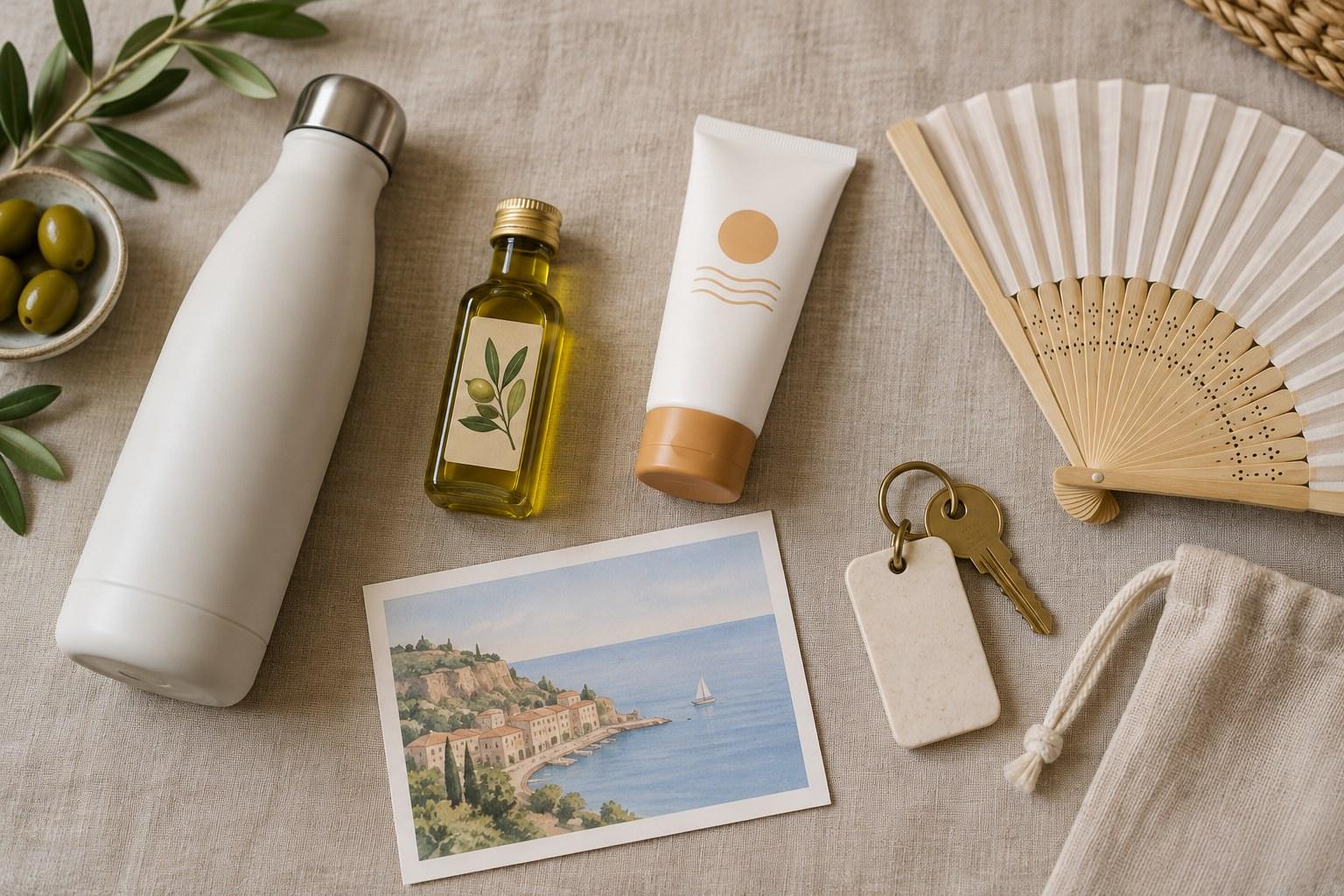
Welcome bag logistics: sourcing, assembly and hotel delivery
The part couples never see — and the part that decides whether bags land perfectly or sit in a storeroom.
Source locally or ship in?
Sourcing at the destination means fresher products and no customs headaches. Shipping in gives you control over print and packaging but adds cost, transit risk and possible import duties. Many planners split it: print itineraries and source totes before travel, then buy food and local products on arrival from suppliers you’ve vetted in advance.
Hotel delivery fees and policies
Many hotels charge a handling or delivery fee per bag, and some have rules about when and how gifts can go to rooms. Policies vary widely, so always check with the hotel in writing: whether there’s a fee, whether bags go in rooms before check-in or are handed over at the desk, and where you can store them.
Assembly day and a tracking sheet by room
Block out a proper assembly session with a helper — it always takes longer than you think. Build a tracking sheet with each guest’s name, room number, arrival date, bag type (standard, dietary, kids) and a delivered column. Hand a copy to the front desk. When a guest arrives early or changes rooms, you’ll know exactly which bag goes where.
For deeper templates and checklists on running guest logistics abroad, the Micro, Intimate & Destination Wedding Handbook is a handy companion to keep on your desk.
Sustainable welcome bags, without the lecture
The most sustainable welcome bag is one where everything gets used. Reusable totes, refillable bottles, minimal packaging and fewer items do more than any eco-messaging card. Choose well and guests simply notice there’s nothing left to throw away. 🌿
Common destination wedding welcome bag mistakes
- Finalising contents before you’ve checked venue and customs rules. Ask first, shop second.
- Leaving the itinerary out. Pretty bags with no practical information miss the point entirely.
- Forgetting late or split arrivals. Guests arrive across several days — plan delivery around the tracking sheet, not one drop.
- One-size-fits-all bags. An allergy-friendly bag for one guest is a small effort with a big impact.
Welcome bags are a small detail, but they show what separates a confident destination planner from an anxious one: thinking through the guest experience end to end. To build that skill set properly, the Certificate in Intimate, Micro & Destination Weddings walks you through it, and the Certificate in Wedding Planning gives you the planning foundations underneath.
Destination wedding welcome bag FAQs
What should go in a destination wedding welcome bag?
Start with the useful core: water, a local snack, a printed itinerary with key contacts, transport information and something suited to the climate, such as sunscreen or a light wrap. Then add one or two small local touches with a note explaining why the couple chose them.
Does every guest need a welcome bag?
Not necessarily. Many couples give one bag per room or household, which is simpler and less wasteful. Some put the money towards a welcome dinner or transport instead — worth discussing early.
When should welcome bags be delivered to guests?
Ideally they’re waiting in the room or handed over at check-in, so guests have the itinerary before the first event. Confirm the hotel’s policy on in-room delivery and any handling fees, and use a tracking sheet by room so late arrivals aren’t missed.
Can you include food in destination wedding welcome bags?
Usually yes, but check two things: the venue or hotel’s rules on outside food, and customs or biosecurity rules if you’re shipping items in or guests will take them home. Choose items that won’t melt or spoil, and adjust for dietary needs.
Should you ship welcome bag items or buy them at the destination?
A mix often works best. Print itineraries and source packaging before travel, then buy food and local products on arrival from suppliers you’ve checked in advance. It reduces shipping risk and customs issues and keeps the bag genuinely local.
Ready to plan destination and micro weddings guests rave about long after they fly home? Enrol today and build the skills to run every detail with confidence. ✈️