“Fake it till you make it” is bad advice for a new wedding planner, because a couple is trusting you with one day that can’t be re-run. But there’s a big difference between faking experience — which is lying — and backing yourself with confidence, preparation and honest framing, and that second thing is exactly what I want every new planner to learn.
So here’s my problem with telling new planners to fake it till they make it. It confuses two completely different behaviours. One builds a business that lasts. The other builds a house of cards that collapses at the exact moment a couple needs you most — on the day.
Let’s pull the two apart properly, so you know what to say, what never to say, and how to build real proof fast.
Where “fake it till you make it” comes from — and why it’s so tempting
The phrase comes from a decent place. It was originally about behaviour, not credentials: act like the calm, capable person you want to become, and over time you become them.
The trouble is how it gets used now. When you’re starting out with no portfolio, no reviews and no referrals, the gap between you and the established planner down the road feels enormous. Someone in a business group says “just fake it”, and suddenly it seems reasonable to round one family wedding up to “dozens”, borrow a few beautiful images, or call yourself an agency when it’s you and a laptop at the kitchen table.
I understand the pressure. But in weddings, the shortcut costs far more than it saves.
Why faking it backfires for a wedding planner
A wedding is a one-shot event
A café can remake a coffee. A web designer can push a fix next week. You can’t re-run a ceremony. If you’ve claimed experience you don’t have, the gap shows up in real time — the timeline that doesn’t account for photos, the vendor you didn’t brief, the rain plan that doesn’t exist. The couple pays for that, and so does your name.
Vendors talk
This industry is smaller than it looks. Venue coordinators, photographers, celebrants and florists work together constantly, and they notice who knows what they’re doing. Claim a wedding at a venue you’ve never worked and there’s a decent chance the venue manager is the one hearing about it.
Couples check
Couples read reviews, ask for references, reverse-search images and message the photographer whose credit they spotted. A careful couple — the kind you actually want — will find the holes.
Contracts and liability
Your contract and your marketing need to tell the same story. If you’ve sold a couple on experience, a team or qualifications you don’t have, and something goes wrong, that misrepresentation becomes a serious problem — not just an awkward conversation. Get proper advice for your own location, but the principle is simple: never promise in writing, or in a sales call, what you can’t stand behind.
The stress of being found out on the day
Here’s the part nobody mentions. Running a wedding is demanding enough when you’re being yourself. Running it while protecting a story — hoping nobody asks the wrong question, hoping the venue doesn’t mention it’s your first time there — is exhausting. Honest planners get to spend all their energy on the couple.

What crosses the line: faking it as a new wedding planner
Confidence is fine. Optimism is fine. These are not:
- Claiming weddings you didn’t run. Assisting is valuable — say you assisted. Attending as a guest is not planning.
- Using other people’s photos as your own. Pinterest, a supplier’s gallery, a friend’s photographer’s work — if you didn’t plan or style it, it doesn’t go in your portfolio without clear credit and context.
- Inventing reviews. No made-up testimonials, no “reviews” from your cousin pretending to be a bride. Ever.
- Implying qualifications or memberships you don’t hold. Logos, badges and vague phrases like “industry certified” all count if they aren’t true.
- Saying “my team” when there isn’t one. If you’ll bring in a freelance assistant for the day, say that. Couples respect clarity far more than a fictional crew.
If you’d be uncomfortable with a couple seeing the full truth behind a claim, the claim crosses the line.
Confidence vs pretending: what honest confidence sounds like
Honest doesn’t mean apologetic. You don’t need to open every call with “sorry, I’m new.” You need to tell the truth, then pivot straight to what you can do.
“How many weddings have you planned?” — scripts that work
Pick the version that matches your truth and make it yours:
- “You’d be one of my first couples as a lead planner. I’ve trained in the full planning process and I’ve assisted on real weddings, so I know what the day demands — and it means you get a lot of my attention.”
- “I’ve planned two weddings so far, both for people close to me, and I’m happy to walk you through exactly how I ran them and share the documents I used.”
- “I’m new to weddings, but not to events — I spent years running corporate functions, so supplier management and timelines are second nature. Let me show you how I’d approach yours.”
Notice the shape: the truth first, then evidence, then what’s in it for them. No squirming, no inflating.
Frame your transferable skills
Most people who come to wedding planning didn’t arrive from nowhere. Events, hospitality, admin, project management, retail, teaching — they all build skills couples need. Name them specifically: “I’ve managed budgets”, “I’ve coordinated people under time pressure”, “I’ve handled upset customers calmly”. That’s real experience, honestly framed, and it’s far more persuasive than an invented number.
| Faking it | Honest alternative | Why it works better |
|---|---|---|
| “I’ve done heaps of weddings” | “I’ve planned two and assisted on several — here’s how I ran them” | Specific and checkable, so it builds trust instead of risk |
| Other people’s photos in your gallery | Your own styled shoot, clearly labelled as styled | Shows your real eye and taste, with nothing to hide |
| Made-up reviews | Testimonials from the planner you assisted, or real clients | Genuine words survive any reference check |
| “My team will handle that” | “I bring in a trusted assistant on the day” | Sets clear expectations and still sounds professional |
| Vague “certified” badges | Naming the actual training you completed | Shows you’ve learned the process properly |
| Hiding that you’re new | Positioning “new” as more attention and fresh eyes | Turns your biggest worry into a selling point |
How to get wedding planning experience fast — honestly
The fix for “I have no experience” isn’t pretending. It’s getting experience, quickly and on purpose.
- Assist established planners. Offer to help on the day — set-up, guest wrangling, bump-out. You’ll learn more in one wedding beside a pro than in a month of reading, and you can honestly say you’ve worked real weddings.
- Run a styled shoot — and label it as styled. Collaborate with local suppliers, build a concept, and use the images with “styled shoot” stated clearly. It proves your eye without claiming a wedding that never happened.
- Plan for friends and family, properly — contract, timeline, budget tracker — and ask permission to share the photos and the process.
- Volunteer at community events, charity functions or venue open days.
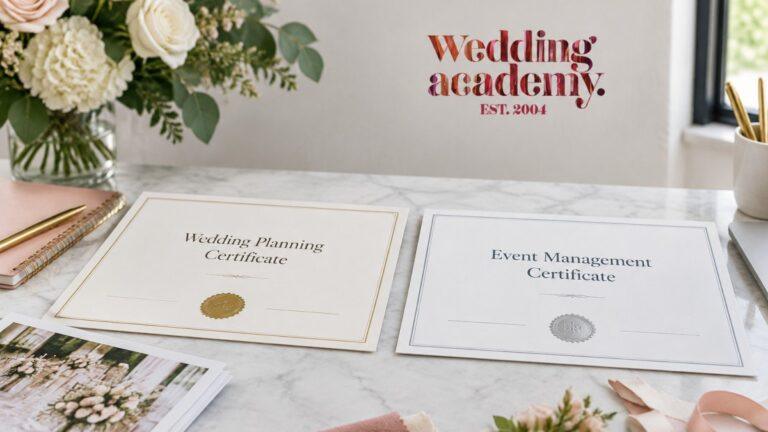
- Train, and get a certificate. A certificate is evidence that you’ve learned the process end to end — planning, contracts, suppliers, timelines. The Certificate in Wedding Planning covers exactly that, and the Advanced Certificate in Wedding Planning, Styling and Business adds styling and the business side so you’re not guessing at any of it.
- Document your process. Your checklists, run sheets and client questionnaires are proof too. Show couples how you work, not just how it looked.

Pricing honestly when you’re a new wedding planner
Pricing is where faking it creeps in quietly. Some new planners charge like a ten-year veteran to look established; others charge almost nothing because they feel like frauds. Both are a form of pretending.
Charge for what you can genuinely deliver right now. Be transparent that you’re building your portfolio, and let that shape your packages — maybe fewer bells and whistles, more hands-on time. But don’t undercut yourself to the bone. Prices that low tell couples you don’t value your own work and attract clients who’ll push your boundaries. Build your rates up as your proof grows — and learn to price, package and market your services properly from the start.
Use “new” as a selling point
Being new isn’t only a weakness. Said honestly, it’s a pitch:
- Attention. You’re not juggling a full calendar of couples. They get you — not a junior, not a template.
- Fresh eyes. You haven’t settled into doing every wedding the same way.
- Fewer clients at once. Faster replies, more time on the details, real care.
Plenty of couples actively want that.
When can you stop saying you’re new?
There’s no magic number. You stop leading with “new” when your evidence speaks for itself — when you have real weddings you led, real reviews from real couples, supplier relationships that refer you, and a process you’ve tested under pressure. At that point you don’t need to announce anything. Your portfolio does the talking, and every word of it is true.
The Wedding Academy has been teaching since 2004, 100% online, to more than 11,000 students, and I wrote the ten-book Wedding Academy Handbooks series because I want new planners to walk into their first meetings prepared rather than pretending. If you want the structure, the documents and the business skills behind honest confidence, the Advanced Certificate is where I’d start.
Fake it till you make it wedding planner FAQs
How do I get wedding planning clients with no experience?
Build real proof first: assist established planners, run a clearly labelled styled shoot, plan for friends or family with permission to share, and complete proper training. Then be upfront that you’re new, lead with your transferable skills, and sell the extra attention couples get from you.
Is it okay to use styled shoot photos in my portfolio?
Yes — as long as they’re labelled honestly as a styled shoot and you credit the suppliers involved. Styled shoots show your eye and taste. The line is presenting them as a real couple’s wedding.
What do I say when a couple asks how many weddings I’ve planned?
Tell the truth, then pivot to evidence and benefit: “You’d be one of my first couples as lead planner. I’ve trained in the full process and assisted on real weddings, and it means you get a lot of my attention.” Short, honest and confident.
Do I need a certificate to be a wedding planner?
A certificate isn’t the only route in, but it’s honest evidence that you’ve learned the planning process end to end — and it gives you a confident, true answer when couples ask about your background.
Back yourself — honestly. Enrol in the Advanced Certificate and build the skills, proof and business that never need faking.
— Jac Bowie, Owner & CEO, The Wedding Academy