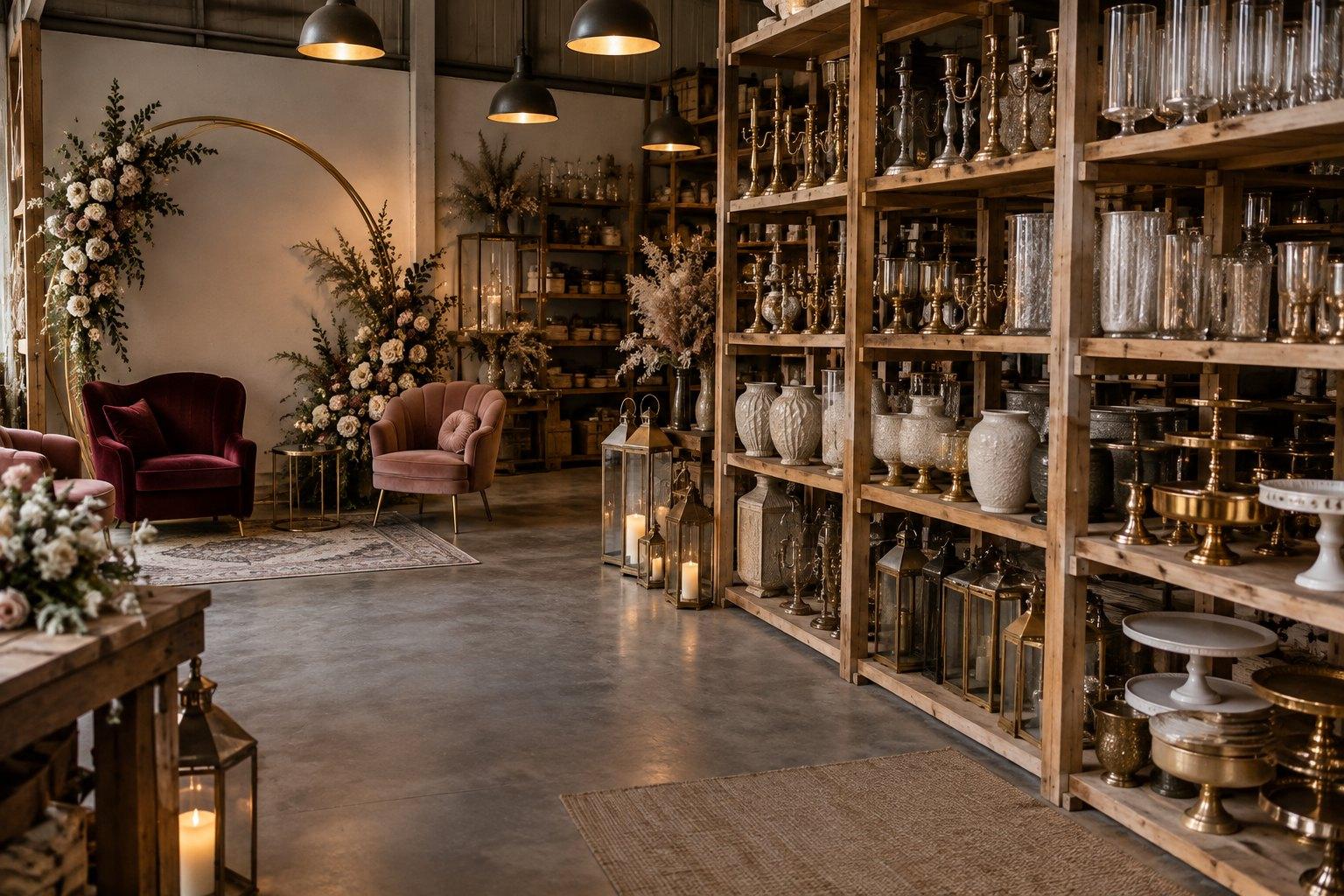
Starting a wedding prop hire business makes sense when you build inventory around what clients repeatedly ask for, price it to cover wear, cleaning and logistics, and treat storage and transport as part of the business — not an afterthought. Props earn money only when they’re out on hire, so every purchase should be a decision, not an impulse.
Plenty of stylists drift into hire by accident: they buy pieces for one wedding, then another couple asks to rent them. That’s a fine start. But turning a garage full of candle holders into a real business needs a plan. Here’s what to think about before you buy that next arch.
Is a wedding prop hire business right for you?
Prop hire can sit alongside styling or stand on its own. Some stylists offer hire only as part of a full styling package; others run a separate dry-hire service where clients collect items and set up themselves. Each model has a different workload.
| Model | What you do | What to consider |
|---|---|---|
| — | — | — |
| Full styling with your own props | Design, deliver, set up and pack down | Highest service level, most labour |
| Delivery and set-up hire | Deliver and place items, client handles design | Need vehicle, team and time on the day |
| Dry hire | Client collects and returns items | Less labour, more risk of damage and loss |
| Supplier-to-supplier hire | Rent to planners, venues and other stylists | Steady repeat work, trade pricing |
Ask yourself honestly: do you enjoy logistics, cleaning, packing and repairs as much as design? Prop hire involves a lot of all four.
Choosing inventory that actually rents
The biggest mistake new hire businesses make is buying what *they* love rather than what clients book. Before buying anything, look at your enquiries, your local venues and the styles that keep coming up.
Start with versatile staples
Items that suit many styles and get booked again and again usually form the core of a profitable range:
- Candle holders, hurricanes and lanterns in neutral finishes
- Glass and ceramic vessels and bud vases
- Cake and dessert stands
- Neutral linen, runners and napkins
- Easels, sign stands and frames
- Plinths and risers
- A simple, adaptable ceremony arch or backdrop frame
Add hero pieces carefully
Statement items — velvet lounge furniture, oversized floral urns, unusual arches, vintage pieces — help your brand stand out and photograph beautifully. But they’re bulky, harder to store and booked less often. Add them once your staples are working, and choose pieces that suit your local venues and the clients you want to attract.
Buy in sensible quantities
Think in table counts. A design that needs one item per table is useless if you only own enough for half the room. Buy enough to fully style a typical wedding of the size your area hosts, plus spares for breakages.
How to price wedding prop hire
Pricing is where hire businesses either thrive or slowly lose money. Your hire fee needs to cover far more than the item itself.
Factor in:
- Purchase cost and expected lifespan — how many hires before it’s worn out, broken or out of style?
- Cleaning and maintenance — washing, polishing, repainting, pressing and repairs all take time.
- Storage — the space, shelving and organisation every item occupies.
- Handling — packing, unpacking and checking items in and out.
- Delivery, set-up and collection — usually priced separately, based on distance, time and team size.
- Damage and loss — set clear damage policies and, where appropriate, a security bond. For terms and wording, check with your own lawyer.
Many hire businesses also set a minimum order value so small bookings remain worth the time. Review your pricing regularly; it’s easy to forget the hidden hours spent on each order.
Storage, transport and logistics
Props take up space — a lot of it. Before you scale, work out where everything lives. A well-organised storage area with labelled shelves, padded crates and a check-out system saves hours and protects your stock.
You’ll also need a practical plan for transport. Consider vehicle size, loading access at venues, how many people it takes to move heavy items safely, and how long set-up and pack-down will take. Venues often have strict bump-in and bump-out windows, so confirm them early and build them into your quote.
Systems that keep a prop hire business running
The difference between a stressful hire business and a smooth one is systems. As your range grows, put these in place:
- An inventory list — every item, quantity, condition and location.
- A booking calendar — so items can’t be double-booked for the same date.
- Order forms and quotes — clear item lists, dates, delivery details and terms.
- Check-out and check-in sheets — record condition before items leave and when they return.
- Photographs — catalogue photos for clients, and condition photos for your records.
- Contracts and terms — covering bonds, damage, late returns, cancellations and responsibility for items on site. Have them reviewed by your own lawyer.
Booking software or a well-built spreadsheet both work at the start — what matters is that you use it every time.

Insurance, tax and legal basics
Running a hire business brings responsibilities beyond styling. You may need public liability insurance, cover for your stock in storage and in transit, and vehicle insurance suitable for business use. Registration, tax and record-keeping requirements vary from country to country.
Don’t guess. Check with your own accountant, insurer and the relevant local authority about what applies to your business.
Marketing your prop hire range
Props sell through pictures. Invest in good photography of your range — both styled-in-use shots and clean catalogue images. Then get your props in front of the people who book them:
- Venues — offer a curated hire list that suits their spaces.
- Planners and coordinators — they often need extra pieces at short notice.
- Photographers — styled shoots showcase your props and build relationships.
- Couples — through your website, social media and wedding directories.
Partnerships with other suppliers are especially powerful. A planner who knows your range and trusts your delivery will send work your way again and again. If you’d like to sharpen your marketing skills, the Certificate in Wedding Business and Marketing is a natural next step.
Caring for and refreshing your range
Your inventory is your shop window, and tired props cost you bookings. Build regular maintenance into your week: polish metal, check glass for chips, repaint scuffed plinths, steam and repair linen, and retire anything that no longer looks its best. A chipped vase in a client’s photos damages your reputation far more than the cost of replacing it.
Refresh your range gradually rather than all at once. Spray-painting, re-upholstering or restyling existing pieces can give them a second life, and selling retired items can help fund new stock. Keep notes on which items are booked most and least often — that record tells you exactly where to invest next.
Mistakes to avoid when starting out
- Buying trend pieces before you have reliable staples.
- Underpricing and ignoring cleaning, storage and handling time.
- Running out of storage space within the first few months.
- Not recording item condition before and after each hire.
- Promising set-up times you can’t meet with your team and vehicle.
- Mixing personal and business finances.
Styling skills make hire more profitable
Prop hire businesses run by trained stylists have an edge: they can show clients how to use items together, upsell full styling packages and design collections that look cohesive rather than random. That’s where formal training pays off. The Certificate in Wedding Styling covers design, quoting and running a styling business, while The Wedding Stylist’s Handbook (Volumes 1 & 2) by Jac Bowie is a helpful reference for the design principles and business systems behind a styling service.
The bottom line
A wedding prop hire business can be a smart extension of your styling work — if you buy what clients book, price for every hidden hour, organise storage and logistics from day one, and protect yourself with clear systems and terms. Start small, track everything and grow your range as demand proves itself.
Frequently asked questions
How do I start a wedding prop hire business?
Decide on a hire model, research what local clients and venues book most, start with versatile staple items in sensible quantities, set up storage and booking systems, and price to cover cleaning, storage, handling, delivery and wear.
What wedding props are best to hire out?
Versatile staples tend to rent most often: candle holders, hurricanes, vessels, cake stands, neutral linen, sign stands, plinths and a simple adaptable arch. Add hero pieces once those are working.
How should I price wedding hire items?
Factor in the purchase cost and lifespan of each item, cleaning and maintenance, storage, handling, delivery and set-up, plus a clear damage policy. Review your pricing regularly.
Do I need insurance for a prop hire business?
You may need public liability, stock and business vehicle insurance, but requirements vary by country. Check with your insurer, accountant and the relevant local authority.
Should a prop hire business offer styling too?
Many do. Offering styling alongside hire lets you show clients how pieces work together and sell complete packages, which often makes the business more rewarding.
Ready to build a styling and hire business on solid foundations? The Certificate in Wedding Styling teaches design, quoting and the business skills stylists rely on — 100% online, at your own pace.