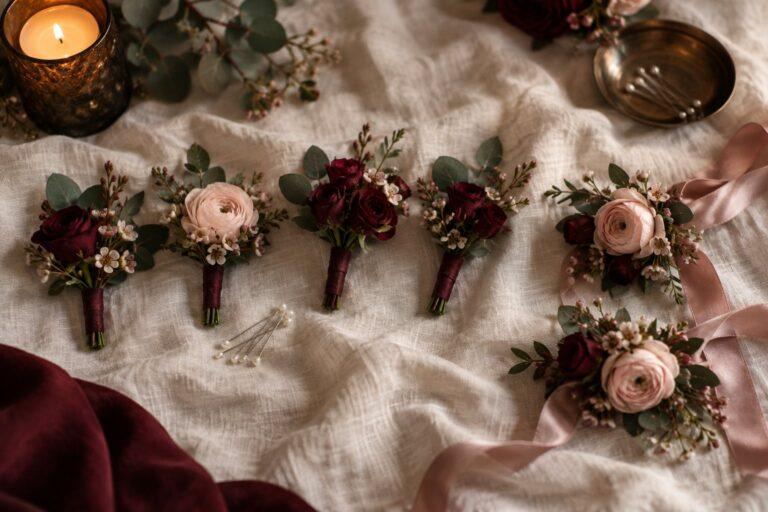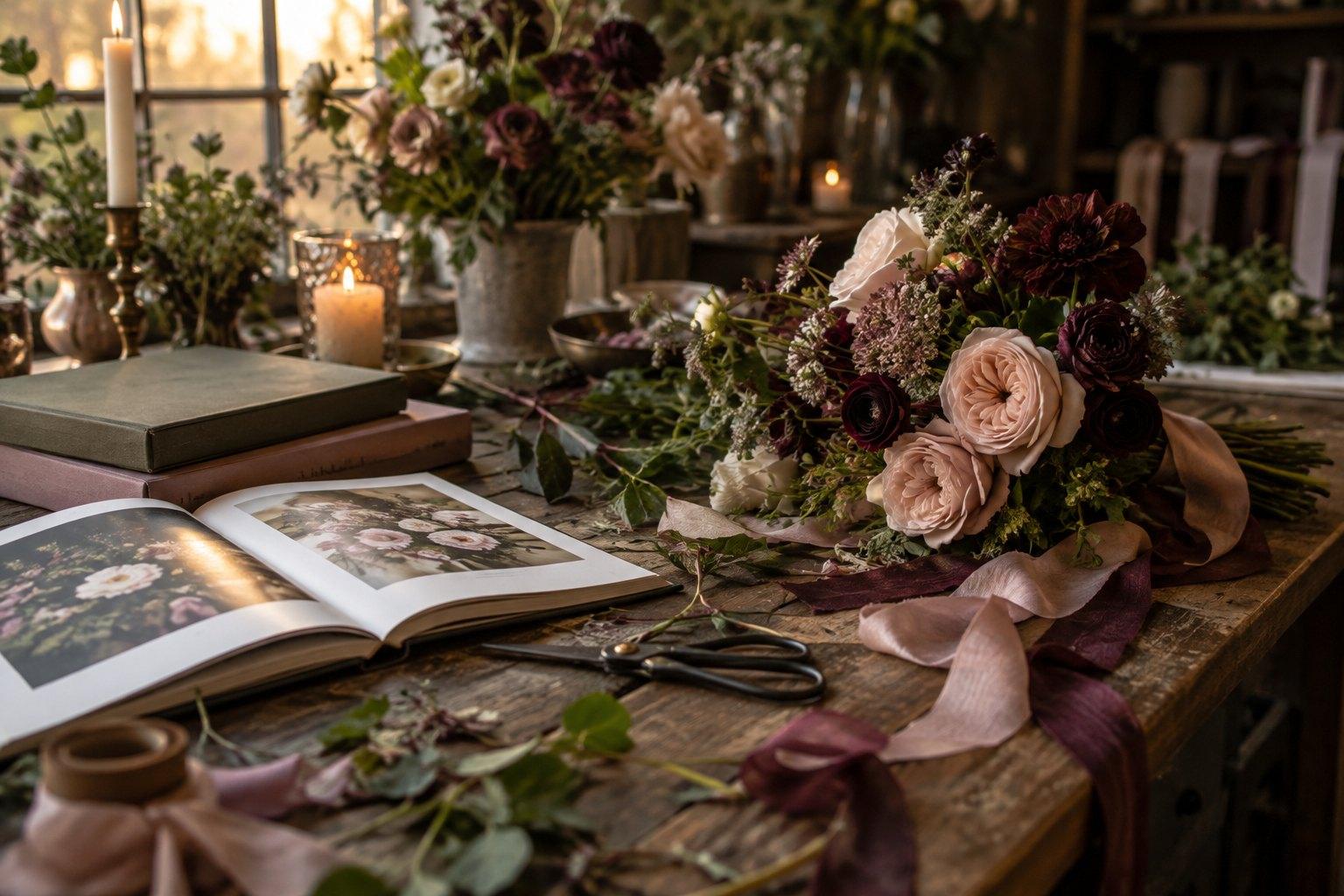
The best books for wedding florists cover five things: core technique and mechanics, flower and foliage reference, colour and design principles, large-scale installations and the business of wedding floristry. Build your library around those five shelves — with one practical, wedding-specific handbook at the centre — and every book you add will earn its place on your bench.
Floristry is a hands-on craft, so it’s fair to ask whether books help at all. They do — as long as you choose the right ones and use them properly. A good book gives you the “why” behind the technique, a reference you’ll reach for every time a couple asks for a flower you’ve never worked with, and the business frameworks that turn talent into profit.
Why books for wedding florists are worth the shelf space
Videos are brilliant for watching a technique once. Books are better for understanding it and coming back to it. When you’re quoting a ceremony arbour at your kitchen table late at night, you want a clear reference on mechanics, stem counts and how much product a design needs — not a forty-minute video.
Books also slow you down in a useful way. You read about proportion, then look at your own bouquet and spot what’s off. That reflection is where your eye develops.
The five shelves of a wedding florist’s library
1. Technique and mechanics
This is the core of your craft: hand-tied bouquets and spiralling, wiring and taping, buttonholes and corsages, flower crowns, foam-free mechanics, chicken wire and pin holders. Look for books with step-by-step photography and clear explanations of why each step matters, not just how.
Wedding work has its own demands — pieces need to survive hours out of water, be handled by nervous people and look good from every angle in photos. A wedding-specific book will address those pressures far better than a general floral art book.
2. Flower and foliage reference
Every florist needs a dependable reference for varieties: how to condition them, how long they last, which wilt in warm rooms, which are toxic or stain, and roughly which months they’re available in your region. You’ll use this constantly in consultations — especially when a couple shows you a photo of a bloom that won’t be available in their wedding month.
Pair a general reference with your own notes. Your local growers and wholesalers know what’s actually available near you better than any book.
3. Colour and design principles
Line, form, texture, focal points, balance and proportion — these principles are what separate an arrangement from a design. Books on colour theory and floral design principles train your eye so you can explain your choices to couples and stylists confidently, rather than saying “it just looks nice”.
4. Installations and large-scale work
Arbours, hanging installations, meadow aisles and statement entrances are where many wedding florists build their reputation. They’re also where things go wrong — structures that aren’t safe, flowers without water sources, set-up times that don’t fit the venue’s access window. Look for books that cover structure, weight, hydration and safe rigging, and always follow venue rules and local safety requirements.
5. The business of wedding floristry
This is the shelf many florists leave empty — and the one that determines whether you make a profit. You need to understand consultations, proposals, flower recipes, costing, ordering, waste, deposits and contracts. Getting these right matters as much as your design work.
The Wedding Florist’s Handbook by Jac Bowie was written to bridge that gap. It focuses on wedding floristry as a professional practice — from consultation and design through to costing, ordering and delivery — with practical tools you can use in your own business.
How the shelves compare
| Shelf | What it teaches | When you’ll use it |
|---|---|---|
| Technique and mechanics | How to build pieces that last and hold shape | Practice sessions and build days |
| Flower reference | Varieties, care, vase life, availability | Consultations and ordering |
| Colour and design | Proportion, line, focal points, palette | Concept and design stage |
| Installations | Structure, weight, hydration, rigging | Quoting and planning big pieces |
| Business | Costing, ordering, contracts, client process | Every enquiry and proposal |
Want to see whether a handbook suits the way you learn? Read a free chapter before you decide.
How to learn floristry from a book (so it actually transfers to your hands)
Reading about a spiral won’t make your hands do it. Make your reading active:
- Read, then make, then reread. Try the technique, then go back to the page — you’ll spot details you missed first time.
- Photograph your practice pieces from the front, side and above, and compare them to the book’s examples.
- Practise with inexpensive stems — supermarket flowers and garden foliage are perfect for wiring and mechanics practice.
- Keep a flower diary with notes on each variety you work with: how it conditioned, how long it lasted, how it behaved out of water.
- Build your own recipe cards for bouquets, buttonholes and centrepieces as you go. These become pricing tools later.
Inspiration books vs instruction books
There’s a difference between books that inspire you and books that teach you. Both have a place.
Inspiration books — beautiful photographic collections of floral work — are great for developing taste and sharing ideas with couples. But they rarely explain mechanics, stem counts or costs.
Instruction books teach repeatable skills and systems. They’re less glamorous, but they’re the ones you’ll still be reaching for years from now.
A balanced library has a few of each. If you’re just starting out, prioritise instruction — then add inspiration as your technique catches up with your taste.
Questions your floral library should help you answer
A good test of your bookshelf is whether it helps you answer the questions that come up on every wedding enquiry. Before you buy another title, check you’ve got these covered:
- Is this flower available in the couple’s wedding month in my region? — your flower reference plus your wholesaler.
- Will it survive hours out of water in a warm marquee? — your technique and flower care notes.
- How many stems does this bouquet actually need? — your recipe cards and business resource.
- How do I make this arbour safe and keep the flowers hydrated? — your installations reference.
- How do I explain why this palette works? — your colour and design principles book.
- What should my proposal and contract include? — your business handbook, then your own lawyer for the legal wording.
If a question regularly sends you scrambling through social media at midnight, that’s a gap on your shelf. Fill the gaps that cost you time or money first — that’s how a library grows into a genuine business tool rather than a decorative pile of books.
Building your library on a sensible budget
You don’t need a huge collection. Start with:
- One practical wedding floristry handbook as your foundation.
- One solid flower reference you trust.
- One design or colour principles book.
- A business resource for pricing and client processes.
Then add specialist titles — installations, sustainable floristry, dried flowers, particular cultural traditions — once you know which direction your business is heading. Ebooks are handy for quick searching on your phone in the studio or at the flower market. You’ll find the full Wedding Academy range on the books page.
Books plus training: the fastest route to confident wedding work
Books give you knowledge and reference. Structured training gives you progression, practical assignments and feedback from someone who can look at your work and tell you exactly what to fix. Many florists use both — the Certificate in Floral Design for guided learning and a handbook as an everyday studio reference.
If you’re also interested in the look beyond the flowers, the Certificate in Wedding Styling pairs naturally with floristry.
Frequently asked questions
What books should a beginner wedding florist read?
Start with a practical wedding floristry handbook covering technique and the client process, then add a flower reference and a design principles book. The Wedding Florist’s Handbook by Jac Bowie is written specifically for wedding work.
Can you learn floristry from books?
Books teach the principles and give you a lasting reference, but floristry is a hands-on craft. Combine reading with regular practice and, ideally, structured training with feedback on your work.
Do wedding florists need business books?
Yes. Costing, ordering, waste and contracts decide whether a wedding is profitable. A wedding-specific business resource is more useful than a generic small-business book.
Are ebooks useful for florists?
Very. Ebooks are easy to search on a phone or tablet in the studio, at the flower market or during a consultation, so you can check a technique or a variety quickly.
Can I preview The Wedding Florist’s Handbook?
You can read a free chapter on The Wedding Academy website to see the style and approach before buying.
Your library gives you the knowledge — practice and feedback turn it into beautiful, reliable wedding work. Learn bouquets, mechanics, design and the business of wedding flowers step by step with the Certificate in Floral Design, taught 100% online by The Wedding Academy.