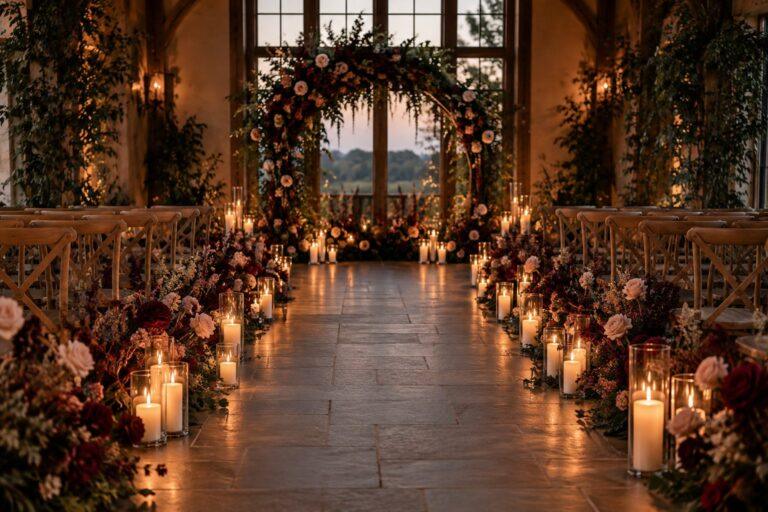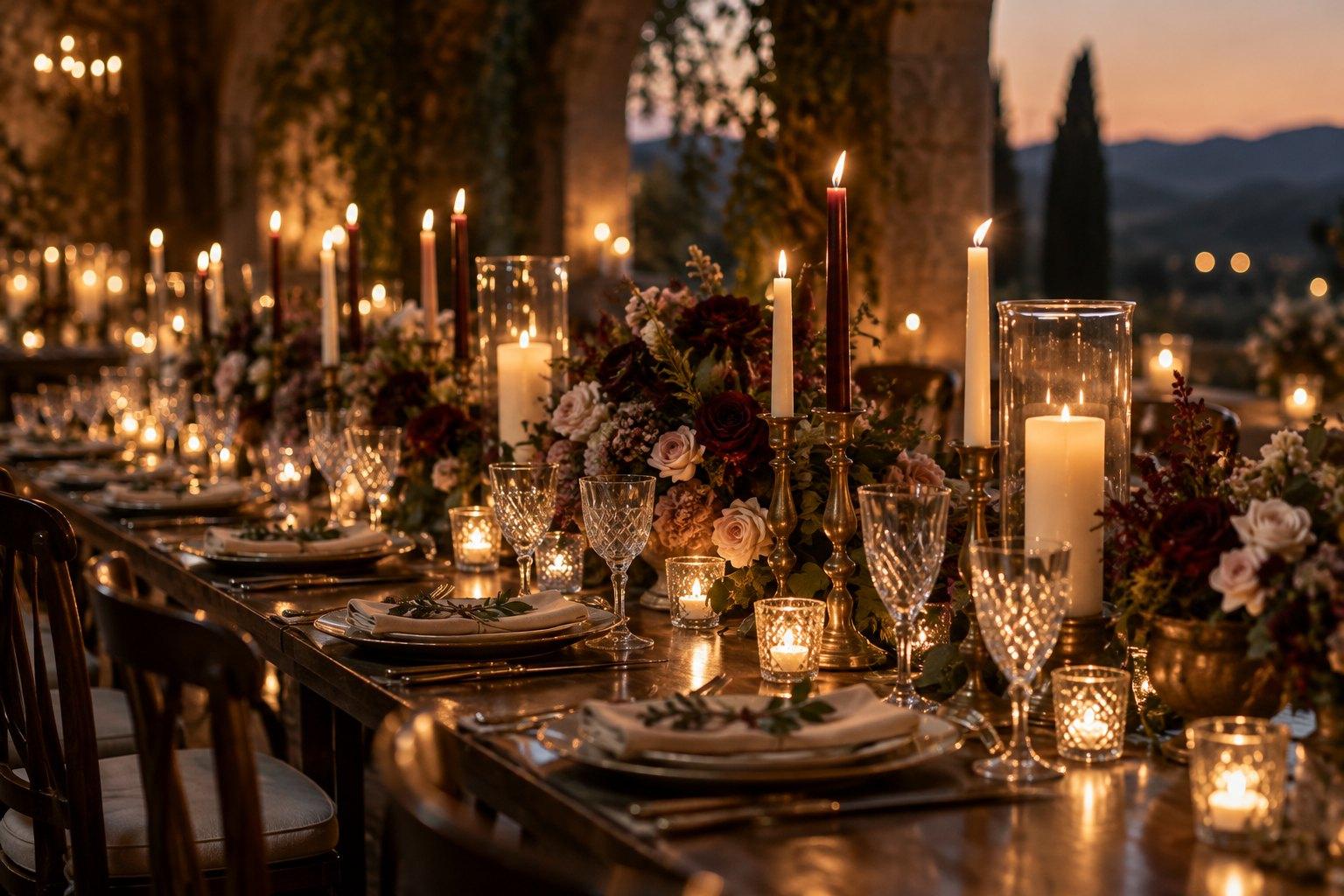
Wedding candle styling is the art of using layered candlelight to create warmth and atmosphere — while staying inside the venue’s fire rules and keeping guests safe. The best candlelit weddings combine three things: a clear lighting plan, the right vessel for every flame, and a confirmed conversation with the venue before a single candle is ordered.
Get it right and candles do more for a room than almost any other décor. Get it wrong and you’re blowing them out at bump-in because nobody read the venue agreement. Here’s how professional stylists handle it.
Why candles matter so much in wedding styling
Light changes how a space feels. Overhead venue lighting flattens everything; candlelight adds depth, shadow and intimacy. It flatters skin, makes glassware sparkle and turns an ordinary function room into something guests remember.
Candles also work hard for the budget. A table with good florals and no candlelight can look unfinished once the sun goes down. A table with modest florals and well-layered candles looks complete. That’s why stylists treat candles as part of the design from the very first mood board — not as an afterthought.
The three layers of wedding candle styling
Think in heights. A single row of tealights looks like a restaurant; layered candlelight looks designed.
- Low layer — votives and tealights in glass cups, scattered along the table at plate level. They create a soft glow on faces and linen.
- Mid layer — pillar candles, often inside hurricanes or lanterns. They add body and anchor clusters.
- High layer — taper candles in tall holders or candelabra. They draw the eye upward and add drama, especially on long tables.
Mix all three across a table and you get movement and rhythm. Keep tall elements spaced so guests can still see each other across the table — conversation always beats a wall of wax.
Choosing candle colours
Ivory and white are classic and forgiving. Coloured tapers — cabernet, blush, terracotta, deep green — are a simple way to bring a palette to life without adding more florals. Unscented candles are the standard for tables near food; scent competes with the menu and can bother guests.
Wedding candle safety: the non-negotiables
Candle safety isn’t the fun part, but it’s the part that protects your clients, your reputation and your business. Build these habits into every set-up:
- Enclose flames near anything flammable — florals, foliage, linen, ribbon, paper stationery and hair all catch faster than you’d think.
- Keep clear zones — no naked flames on walkways, low steps, near doorways or anywhere guests brush past.
- Use stable bases — tapers must sit firmly in holders; drip-free candles and secure holders reduce wobble and wax spills.
- Mind the airflow — outdoor breezes, fans and air-conditioning vents make flames flicker, gutter and spread wax.
- Assign responsibility — know who lights the candles, who monitors them during the event and who extinguishes them at the end.
- Protect surfaces — use trays, plates or liners under candles to protect venue furniture and hired linen.
If you carry public liability insurance, check what your policy says about open flames. For specifics, speak to your insurer or broker — requirements vary by country and provider.
Understanding venue rules on candles
Every venue has its own policy, and they vary enormously. Some allow open flames freely. Others allow them only if enclosed in glass that extends above the flame. Many historic buildings, marquees and heritage sites ban naked flames entirely. Some have smoke detectors so sensitive that even blown-out candles can be an issue.
Before you design, ask the venue these questions — and get the answers in writing:
- Are naked flames permitted? Anywhere, or only in certain areas?
- Must candles be enclosed? If so, how far must the glass extend above the flame?
- Are taper candles or candelabra allowed?
- Are there rules about outdoor flames, torches or fire pits?
- Who is allowed to light and extinguish candles, and when?
- Are there smoke or heat detectors that could be triggered?
- Is there a fee or deposit tied to wax damage or cleaning?
When rules are strict, local fire regulations may be behind them. If you’re unsure about legal requirements in your area, check with the venue and your local fire authority.
| Venue situation | Typical approach | Styling solution |
|---|---|---|
| — | — | — |
| Open flames allowed | Use all three layers freely with safe spacing | Tapers, pillars and votives mixed |
| Enclosed flames only | Glass must surround and rise above the flame | Hurricanes, lanterns, tall votive cups |
| No naked flames | Real flames not permitted at all | Quality LED pillars, tapers and tealights |
| Outdoor and windy | Flames gutter and blow out | Deep hurricanes, lanterns, LEDs as backup |
Making LED candles look convincing
LED candles have improved a lot, and for many venues they’re the only option. The secret is treating them like real candles in the design — not plonking a row of plastic tealights on a table.
- Choose real-wax LED pillars with a warm, soft flicker rather than a bright white glow.
- Put LEDs inside glass, lanterns or hurricanes — vessels hide the giveaway plastic bases and add sparkle.
- Mix heights and sizes exactly as you would with real candles.
- Test batteries and remotes before the day, and pack spares.
- Keep LED and real candles visually consistent if you’re combining them in different zones.
Candle styling ideas by area
Ceremony
Lanterns lining an aisle, clusters of enclosed pillars at the altar or arbour base, and candlelit windowsills all create a romantic evening ceremony. Keep the aisle path completely clear — a long dress or a nervous flower girl and a naked flame should never meet.
Reception tables
Layer votives, pillars and tapers around a low floral runner or bud vases. On round tables, a central cluster of hurricanes with votives radiating outward works beautifully. On long tables, repeat the same pattern every metre or so for rhythm.
Bar, lounge and dessert areas
Groups of candles at different heights on a bar back or dessert table add a warm, inviting glow. Keep flames well away from sugar work, tiered cakes and guests reaching across.
Planning, quantities and timing
Work out candle quantities from your table plan rather than guessing. Count tables, decide your pattern per table, then add spares for breakages and last-minute changes. Note burn times — a candle that’s gone by the speeches isn’t doing its job — and agree a lighting time with the venue coordinator so candles are glowing as guests walk in.
Pack a candle kit for every event: long-reach lighters, a snuffer, spare wicks or LEDs, a scraper for wax, cloths, trays and extra batteries. Small details like these are what separate a calm stylist from a panicked one.
Common wedding candle styling mistakes
Even experienced stylists slip up when they’re rushing. Watch for these:
- One height only — a flat line of tealights reads as functional, not styled.
- Too few candles — candlelight looks generous in clusters; a lonely votive per table just looks sparse once the room darkens.
- Ignoring sightlines — tall candelabra that block faces across the table frustrate guests and photographers alike.
- Lighting too late — candles lit after guests sit down miss the big entrance moment.
- Forgetting pack-down — wax needs time to harden before it can be removed cleanly from glass and linen, so build that into your bump-out timing.
If you want a deeper grounding in lighting, layout and the business of running a styling service, The Wedding Stylist’s Handbook (Volumes 1 & 2) by Jac Bowie is a practical reference to keep beside you. And to build a full portfolio of design skills, explore the Certificate in Wedding Styling or browse all our wedding courses.
The bottom line
Candlelight is one of the most powerful tools a wedding stylist has. Layer it thoughtfully, enclose it wherever it’s needed, confirm every venue rule in writing and plan who looks after it on the night. That’s how you deliver the glow couples dream of — with none of the drama.
Frequently asked questions
Are candles allowed at wedding venues?
It depends entirely on the venue. Some allow open flames, many require candles to be enclosed in glass, and some ban naked flames completely. Always confirm the rules in writing before you design.
How do you make wedding candles safe?
Enclose flames near florals, linen and paper, keep walkways clear, use stable holders, watch for breezes and vents, and assign someone to monitor and extinguish candles during and after the event.
Do LED candles look good at weddings?
They can look excellent when you choose warm, real-wax LED pillars and place them inside glass hurricanes or lanterns at mixed heights, just as you would real candles.
How many candles do you need per wedding table?
There’s no single number. Decide a repeatable pattern per table using low, mid and high layers, multiply by your table count and add spares for breakages and changes.
Should wedding candles be scented?
Unscented candles are the standard near food and on guest tables, because fragrance competes with the menu and can bother guests.
Want to design candlelit weddings with confidence — ambience, safety and venue rules all handled? The Certificate in Wedding Styling gives you the professional skills to plan, style and deliver beautiful events, 100% online.