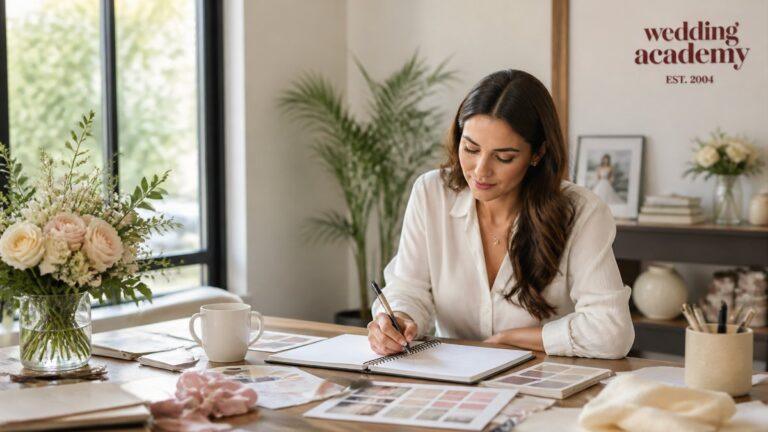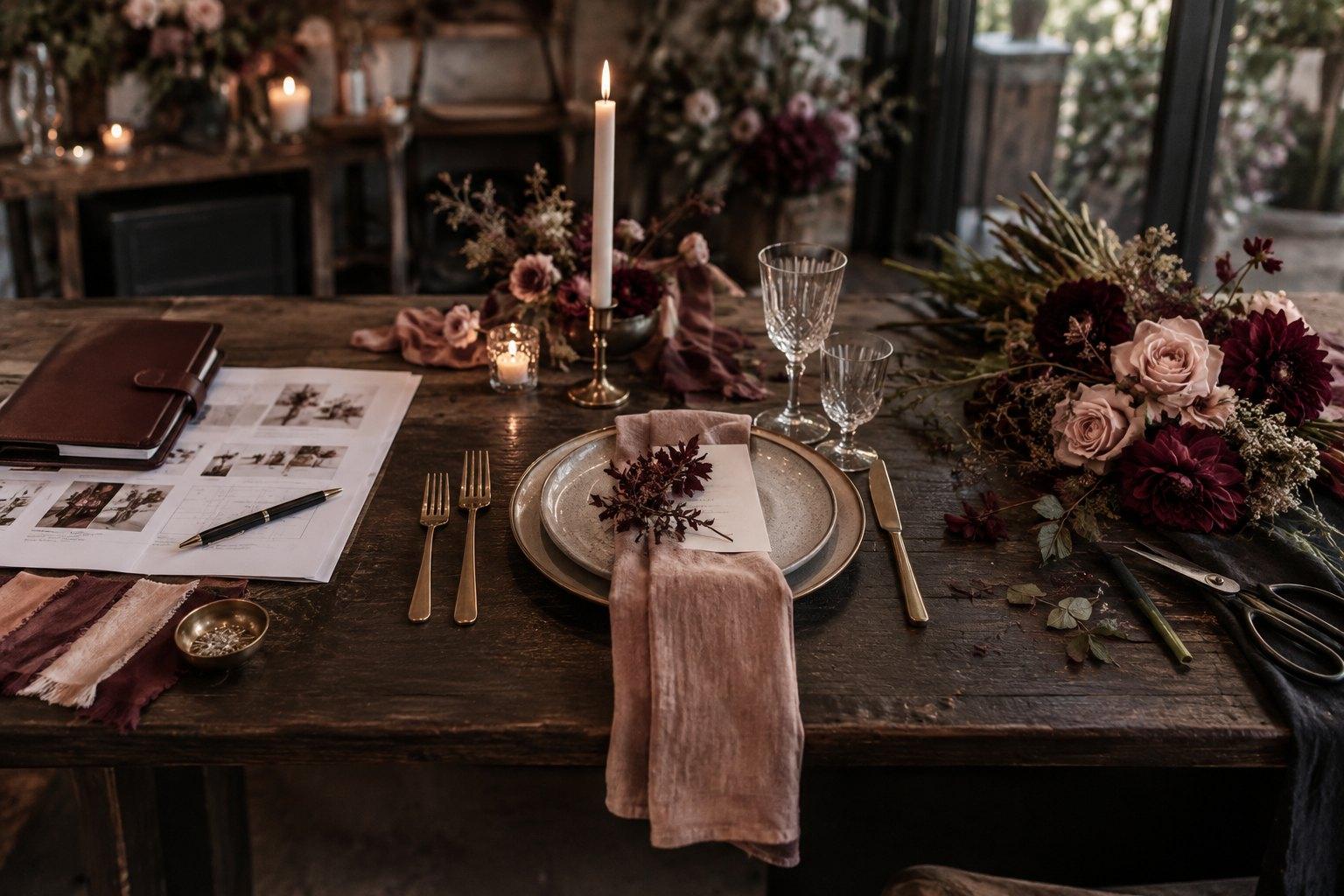
There are three main wedding career options for creative, organised people: wedding planner, wedding stylist and wedding florist. Planners manage the logistics, budget and suppliers, stylists design and install the look, and florists create the flowers — and the right choice depends far more on your temperament than on which Pinterest board you love most.
If you’re weighing up a move into weddings, it’s tempting to pick the role that photographs best. Don’t. Each of these jobs has a very different rhythm, toolkit and kind of pressure. This guide breaks down what each one is really like, so you can choose with your eyes open — or plan to combine two.
Wedding career options at a glance
Here’s the quick comparison before we dig in. None of these is “easier” — they’re just hard in different ways.
| Wedding planner | Wedding stylist | Wedding florist | |
|---|---|---|---|
| Core job | Logistics, suppliers, timeline, budget | Concept, colour, décor, set-up | Designing and making floral work |
| Main tools | Spreadsheets, contracts, run sheets | Mood boards, hire inventory, a van | Blooms, buckets, wire, a cool room |
| Pressure point | Many moving parts and people | Tight bump-in and pack-down windows | A perishable product and a hard deadline |
| Best suited to | Calm problem-solvers who love detail | Visual thinkers who love making spaces | Hands-on makers with stamina |
| Wedding day role | Running the whole day | Installing, then often packing down | Delivering, installing, sometimes styling |
What does a wedding planner actually do?
A wedding planner is the project manager of the wedding. You help couples set a realistic budget, shortlist and book suppliers, read contracts, build the timeline, manage RSVPs and seating logic, and then run the day so the couple never has to look at their phone.
The glamorous bit — the ceremony moment — is a tiny fraction of the job. The real work is hundreds of small decisions, follow-ups and contingency plans made over many months. Most full-service planners work with couples for anywhere from 6 to 18 months per wedding.
Skills a wedding planner needs
- Organisation that survives pressure — you’ll juggle multiple weddings at different stages at once.
- Clear, warm communication — with couples, parents, venues and a dozen suppliers.
- Budget literacy — you need to be comfortable talking money and tracking it.
- Calm problem-solving — rain, a late cake, a missing celebrant. You fix it quietly.
- Boundaries — couples will message at all hours if you let them.
Who thrives as a planner?
People who get genuine satisfaction from a checklist with every box ticked. If you’re the friend who organises the group trip, reads the fine print and still keeps everyone laughing, planning is probably your lane. The Wedding Academy’s Certificate in Wedding Planning is the focused option if you already know this is the role for you.
What does a wedding stylist do?
A wedding stylist turns a room into a feeling. You develop the concept with the couple, build the colour palette, source or hire furniture, linen, tableware, signage and props, and then physically transform the venue — often in a narrow window before guests arrive.
Styling is part design studio, part logistics operation. You’ll spend time creating mood boards and visualising spaces, but you’ll also spend a lot of time loading vans, steaming linen and polishing glassware. Many stylists build their own hire inventory over time, which turns the business into part rental company too.
Skills a wedding stylist needs
- A trained eye — colour theory, scale, proportion, texture and how a room reads from the doorway.
- Spatial planning — floor plans, guest flow and where the photographer will stand.
- Physical stamina — set-up and pack-down are real, physical work.
- Supplier coordination — you’ll work closely with florists, venues and hire companies.
- Presentation skills — selling a concept before it exists.
Who thrives as a stylist?
Visual people who rearrange the furniture at a friend’s dinner party and can’t walk past a crooked frame. If you think in colour and texture and love the “big reveal” moment, styling suits you. The Certificate in Wedding Styling goes deep on that design side.
What does a wedding florist do?
A wedding florist designs and makes the flowers: bridal and bridesmaid bouquets, buttonholes, ceremony arbours, centrepieces and increasingly large installations. You’ll consult with the couple, recommend flowers and colour, quote, order stock, condition it, build every piece and then deliver and install on the day.
Floristry is the most hands-on of the three. It’s a craft with real technique — mechanics, wiring, conditioning, colour work — and a product that starts dying the moment it’s cut. That gives the job a unique rhythm: quiet consultation weeks, then intense build days in the lead-up to each wedding.
Skills a wedding florist needs
- Technical floristry — bouquet construction, wiring and taping, structural mechanics.
- Product knowledge — flower varieties, vase life, what’s available in which months.
- Costing and ordering — buying the right quantity without waste is where profit lives.
- Speed and stamina — early starts, cold hands and long build days.
- Design sense — line, form and colour that complement the stylist’s vision.
Who thrives as a florist?
Makers. If you lose track of time when your hands are busy, love botany and don’t mind wet sleeves, floristry can be deeply satisfying. The Certificate in Floral Design covers the technique side.
How the three roles work together on a wedding day
On a well-run wedding, these roles interlock. The planner sets the timeline and access times. The stylist designs the overall look and installs furniture and décor. The florist builds pieces that fit the stylist’s concept and installs them in the planner’s window. Everyone packs down to the planner’s schedule.
Understanding all three — even if you only offer one — makes you a far better supplier to work alongside. Planners who understand floristry quote realistic set-up times. Stylists who understand planning design for guest flow. Florists who understand styling create pieces that actually sit in the room properly. This is exactly why the Advanced Certificate in Wedding Planning, Styling & Business teaches planning, styling and business together rather than in isolation.
A quick self-test: which wedding career fits you?
Answer honestly. Your gut reaction to each statement is the useful bit.
- “I love making a plan and seeing it run perfectly.” — Planner.
- “I care how a room feels the moment someone walks in.” — Stylist.
- “I’m happiest when my hands are busy building something.” — Florist.
- “I’d rather talk to people all day than be in a workshop.” — Planner or stylist.
- “I’m fine with heavy lifting and late nights packing down.” — Stylist or florist.
- “I want a business with a physical inventory I can hire out.” — Stylist.
- “I want low start-up overheads.” — Planner, usually.
If your answers split across two roles, that’s normal. It often points to a combined offer down the track.
Consider your starting point
Your current life matters too. If you’re working full-time and building on the side, planning or styling may be easier to start because consultations can happen in the evenings. Floristry needs workspace, cold storage and the ability to block out whole build days. None of that rules anything out — it just shapes how you start.
Can you combine wedding planning, styling and floristry?
Yes — and many successful wedding businesses do. The most common pairings are:
- Planner + stylist — a “planning and design” studio that manages logistics and owns the look.
- Stylist + florist — a design-led studio offering full floral and décor packages.
- Planner offering styling as an add-on — useful for elopements and intimate weddings.
The honest advice: start with one core service and do it brilliantly, then layer in a second once your systems are solid. Trying to offer everything from your first booking spreads you thin and makes your marketing vague. Couples book specialists they trust, then happily buy add-ons.
How to start in your chosen wedding career
Whichever path you choose, the early steps look similar:
- Learn the fundamentals properly. Structured training saves you from learning expensive lessons on a real couple’s day.
- Build a portfolio. Styled shoots, assisting established suppliers and helping friends all count — be upfront about what each piece of work was.
- Get your business basics right. Contracts, insurance and registering your business vary by country, so check with your local authority, lawyer or accountant.
- Build supplier relationships. Planners, stylists and florists refer each other constantly.
- Choose a clear niche. Luxury, elopements, cultural weddings, sustainable floristry — specificity makes marketing easier.
If planning is calling you, The Wedding Planner’s Handbook by Jac Bowie is a practical companion with worksheets you can use with real couples, and it pairs well with formal training.
Frequently asked questions
Which wedding career is easiest to start?
Wedding planning usually has the lowest start-up overheads because it relies on skills, systems and relationships rather than stock or a workspace. Styling and floristry need inventory, transport and storage, so they take more upfront planning.
Do I need qualifications to become a wedding planner, stylist or florist?
There’s generally no legal requirement in most countries, but structured training gives you proven processes, confidence and credibility with couples. Business registration and insurance rules vary, so check with your local authority.
Can I study planning, styling and business together?
Yes. The Advanced Certificate in Wedding Planning, Styling & Business at The Wedding Academy combines all three, which suits people who want to offer a combined planning and design service.
Which wedding career involves the most physical work?
Floristry and styling are the most physical. Both involve lifting, early starts, long build days and pack-down, while planning is more about coordination and communication.
Can I start a wedding career part-time?
Many people do. Planning and styling consultations can often happen in evenings, and online study lets you train around existing work before you take your first bookings.
Still torn between planner, stylist and florist? You don’t have to decide alone or forever. Learn the planning, the styling and the business side together, then build the studio that fits you. The Wedding Academy has trained over 11,000 students online since 2004 — and the Advanced Certificate in Wedding Planning, Styling & Business is the most complete place to start.