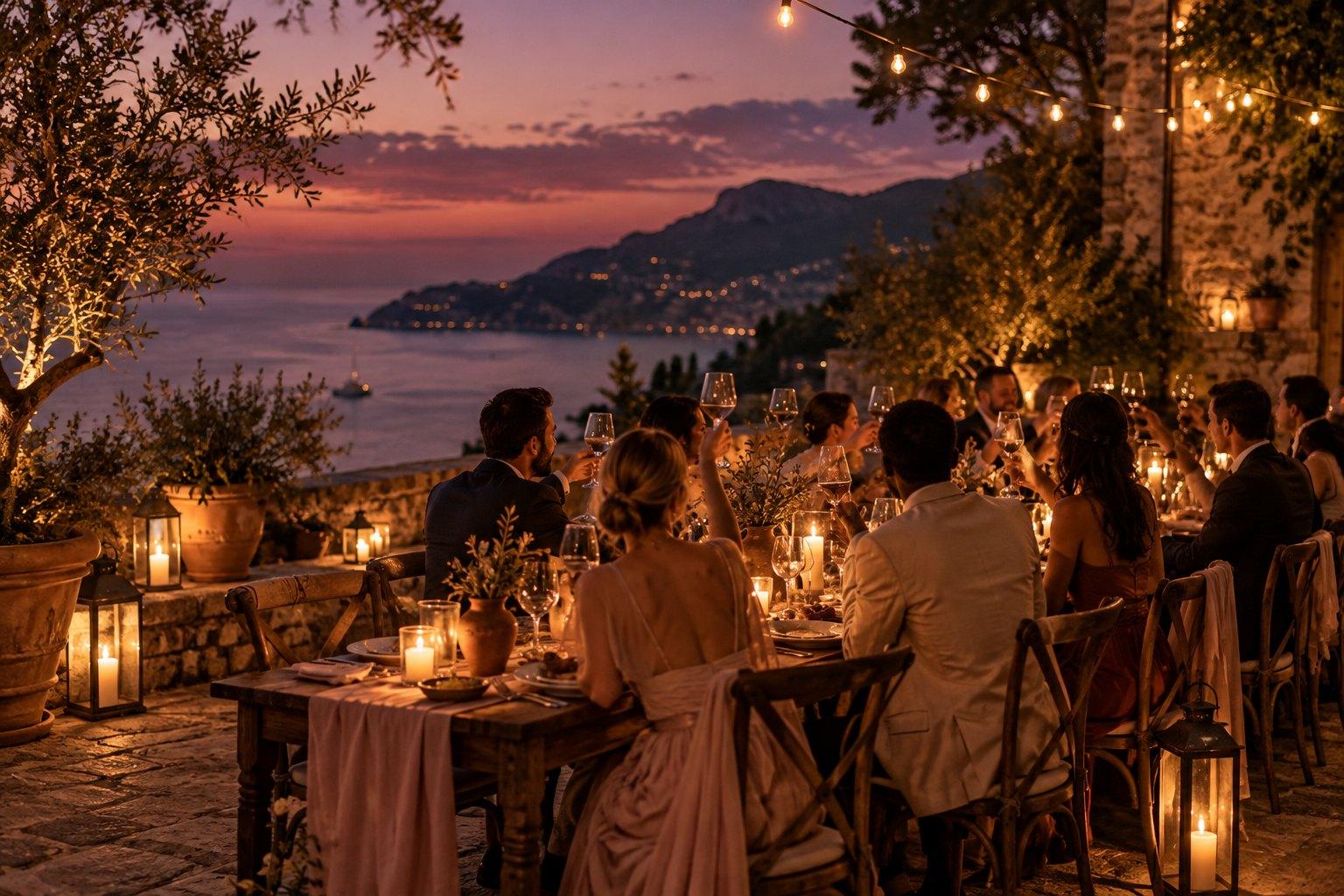
A destination wedding itinerary usually runs over two to four days: guest arrivals and a welcome event, an optional group activity, the ceremony and reception, then a relaxed farewell brunch before departures. The best itineraries balance shared moments with free time, keep transport simple and give every guest a reason to travel without exhausting them — or the couple.
When guests fly in, the wedding becomes a weekend. That’s the magic of a destination wedding — and the planning challenge. Your destination wedding itinerary shapes how guests feel from the moment they land to the moment they leave. Here’s how to design each event, how to pace the days and what can go wrong.
Why the destination wedding itinerary matters
At a local wedding, guests arrive for a few hours and go home. At a destination wedding they’re with you for days, often in an unfamiliar place, sometimes with children, jet lag and a dozen questions. A clear itinerary gives structure without smothering, helps vendors plan, keeps budgets in check and lets the couple spend time with people who’ve travelled a long way to be there.
It’s also the heart of guest experience — the area where destination planners really earn their reputation. Get the flow right and guests leave feeling looked after from start to finish, which is exactly the kind of experience that turns into referrals.
A sample three-day destination wedding itinerary
Here’s a classic shape. Shorten or stretch it to suit the couple, the guest list and the location.
| Day | Event | Purpose |
|---|---|---|
| Day 1 — arrival | Guest arrivals, welcome bags, welcome drinks or dinner | Break the ice and set the tone |
| Day 2 — optional | Group activity, free time, rehearsal for the wedding party | Shared experience without pressure |
| Day 3 — wedding | Ceremony, cocktail hour, reception, after-party | The main event |
| Day 4 — farewell | Farewell brunch, departures | A relaxed goodbye and thank-you |
Many couples merge the activity day into the arrival day or skip it entirely for a tighter weekend. There’s no single right answer — only what suits the couple and their guests.
The welcome event
The welcome event is your guests’ first impression of the destination and the wedding. It’s where strangers become friends, families mingle and the couple gets a proper hello with everyone before the big day.
Welcome event ideas
- Sunset drinks on a terrace or beach with local canapés
- A long-table family-style dinner with regional dishes
- A casual street-food night or market-style set-up
- A wine, beer or cocktail tasting featuring local producers
- A pool party or garden gathering for a laid-back crowd
Welcome event tips
- Time it for late arrivals: start in the early evening and keep it flexible so guests on later flights can still drop in.
- Keep it relaxed: it’s not the wedding. Lower-key styling and casual dress codes help guests unwind.
- Introduce the local flavour: food, drink and music from the destination make it memorable.
- Use it for logistics: a short welcome speech can cover transfers, timings and key contacts.
Optional activities and free time
Group activities give guests a chance to bond and experience the destination together. They’re optional by design — some guests will want to explore on their own, rest or work.
- Boat trips, snorkelling or a beach day
- Guided walking tours, vineyard visits or cooking classes
- Yoga, wellness sessions or a group hike
- A sports match or games afternoon for families
- A bridal party pampering session or a casual lunch for the groomsmen
Make sure every activity has a clear booking process, a deadline and a cost if guests pay for themselves. Be clear on who’s covering what. And protect free time — guests who spend days in back-to-back events get tired and cranky by the wedding.
The rehearsal
Schedule the ceremony rehearsal for the wedding party and celebrant, ideally at the ceremony location at a similar time of day. If a rehearsal dinner is planned, decide whether it’s just for the wedding party and family or whether it doubles as the welcome event.
The wedding day
The wedding day itinerary needs the most detail. Build a run sheet for the couple, vendors, the wedding party and guests — each version showing only what that audience needs.
- Getting ready and photography timings
- Guest transfers to the ceremony, with a buffer for delays
- Ceremony start and length
- Cocktail hour and photography timings
- Reception entrance, speeches, meals, first dance and cake
- After-party and late-night transport back to accommodation
Pay special attention to local factors: sunset time, heat at midday, noise restrictions, curfew rules at the venue and how long transfers really take. Ask local vendors — they know.
The farewell brunch
The farewell brunch is the gentle full stop on the weekend. Guests are tired, a little sentimental and often heading to the airport. Keep it casual, central and easy to dip in and out of.
- Timing: late morning works for most, allowing a sleep-in and early departures.
- Location: at or near the main accommodation so no transfer is needed.
- Food: buffet or family-style dishes, good coffee and something restorative.
- Atmosphere: relaxed — no speeches needed, but a short thank-you from the couple is lovely.
- Logistics: airport transfers coordinated from the brunch spot, with luggage storage if needed.
Pacing the itinerary: balance is everything
The most common mistake is doing too much. Every event costs the couple money, energy and time, and costs guests energy too. Use a simple rule: one main thing per day, with space around it. Build in downtime before the wedding so everyone arrives fresh, and give the couple some private time too — a quiet dinner, a morning walk, a moment to breathe.
Designing the itinerary for every kind of guest
Destination guest lists are rarely uniform. Grandparents, toddlers, guests with mobility needs, people who don’t drink and friends on a tight budget will all be part of the weekend. A thoughtful itinerary works for all of them.
- Families: offer a children’s activity or recommend local babysitting services, and avoid late-night starts for events kids will attend.
- Older guests and accessibility: check steps, uneven paths, beach access and shade at every venue, and arrange closer seating and simpler transfers where needed.
- Non-drinkers: include an interesting alcohol-free option at tastings and welcome drinks.
- Budget-conscious guests: include at least one free or low-cost option alongside paid activities, so nobody feels left out.
Backup plans for every event
Each event in a destination wedding itinerary needs its own plan B, not just the ceremony. A beach welcome party needs an indoor or covered alternative. A boat trip needs a cancellation policy and a land-based option. A garden brunch needs a terrace or dining room on standby. Confirm these with each venue when you book, note the deadline for making the call and tell guests how they’ll hear about any change. Clear backups mean a sudden storm becomes a small adjustment instead of a weekend-wrecking problem.
Budget and who pays
A multi-day itinerary adds up quickly. Agree early which events the couple hosts and pays for, and which are optional and guest-paid. Common approaches include the couple hosting the welcome event, wedding and farewell brunch, with optional activities at guests’ own cost. Spell this out clearly on the wedding website and invitations so there are no awkward surprises.
Communicating the itinerary to guests
Share the outline early on the wedding website so guests can book flights to cover the full weekend. Add detail as events are confirmed, and send a final itinerary — with addresses, dress codes and transfer times — in the pre-travel guide. A printed copy in welcome bags is a thoughtful touch.
For itinerary templates, checklists and worksheets for multi-day weddings, the Micro, Intimate & Destination Wedding Handbook by Jac Bowie is a useful reference. And if you’d like to specialise, our destination wedding planning course covers itineraries, guest experience, vendors and logistics — all studied online.
Frequently asked questions
How many days should a destination wedding itinerary be?
Most destination wedding itineraries run over two to four days, typically including a welcome event, the wedding day and a farewell brunch, with optional activities in between.
Do couples pay for the welcome event at a destination wedding?
Often, yes. Many couples host the welcome event, wedding and farewell brunch, while optional activities are paid for by guests. Agree this early and communicate it clearly.
What time should a destination wedding farewell brunch be?
Late morning usually works best, giving guests a chance to sleep in while still allowing time for airport transfers.
Should every guest attend every event?
No. Keep activities optional and protect free time. Only the welcome event, wedding and farewell brunch are usually open to all guests.
How can I learn to plan destination weddings?
The Wedding Academy’s Certificate in Intimate, Micro & Destination Weddings is studied online and covers itineraries, guest experience, logistics and destination business skills.
Want to design destination wedding weekends guests talk about for years? Study online at your own pace with The Wedding Academy’s Certificate in Intimate, Micro & Destination Weddings.