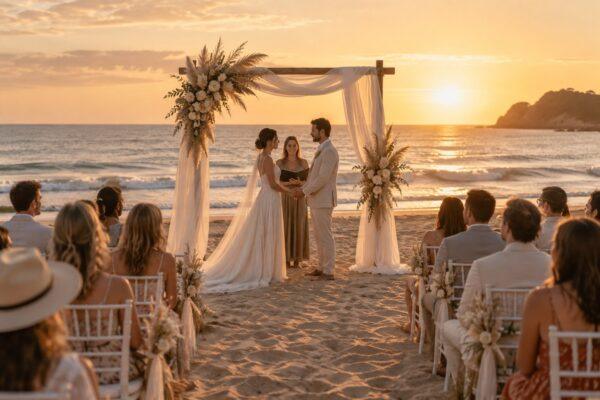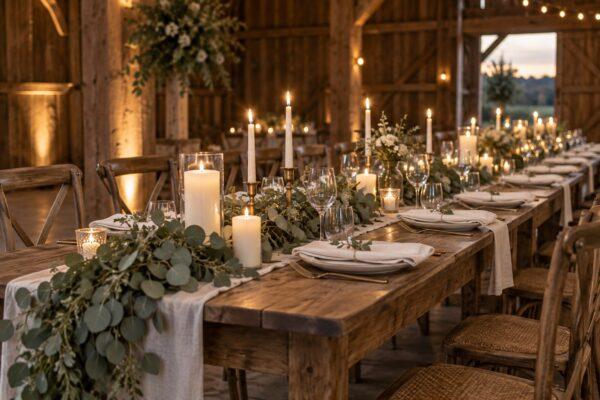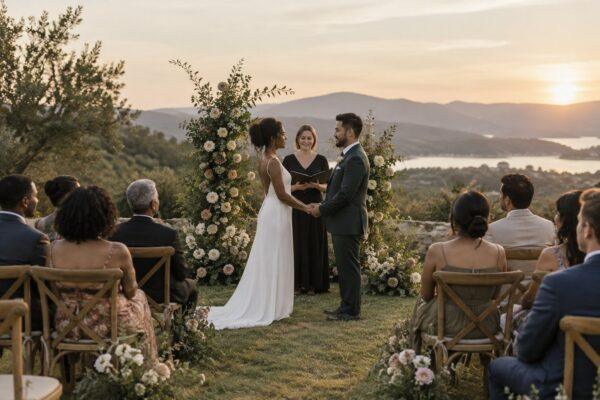
The ceremony is the shortest part of a wedding day and the most photographed. Twenty minutes, maybe thirty — and it produces the images the couple will hang on a wall, the frames the venue will use to sell the space, and the shots that will decide whether your styling gets you your next enquiry.
Yet ceremony styling is where a lot of new stylists underspend their attention. All the effort goes into the reception, and the ceremony gets whatever is left over: two arrangements pushed too far apart, a backdrop that competes with the view, and an aisle that looks generous in person and empty on camera.
This guide covers how to design a ceremony space that reads properly from every angle — the guest seats, the celebrant’s position and the photographer’s lens — and how to build it so it survives wind, heat and a venue that gives you ninety minutes.
Start with the frame, not the flowers
Before you choose a single stem, work out what the camera will see. Stand where the photographer will stand during the vows — usually just off the aisle, slightly behind and to the side of the couple — and look at the background.
Everything in that frame is now part of your design, whether you chose it or not: the car park, the marquee guy ropes, the fire exit sign, the beautiful old tree you had not noticed. Your first styling decision is whether you are hiding the background, framing it, or leaning into it.
- Hide it when the backdrop is cluttered or the venue is mid-renovation — a solid or dense installation blocks it out
- Frame it when the view is the reason the couple booked the venue — keep the structure open and low-density
- Lean into it when the setting is architectural — use the arches, columns or windows already there and add very little
This single decision saves couples money and saves you from building something the venue already provides.
Designing the aisle so it works on camera
An aisle looks completely different at eye level and through a lens. In person, sparse styling reads as elegant restraint. On camera, the compression of a long lens closes the gaps and makes clusters look dense — which means the thing that photographs beautifully is repetition, not size.
Repetition beats one big statement
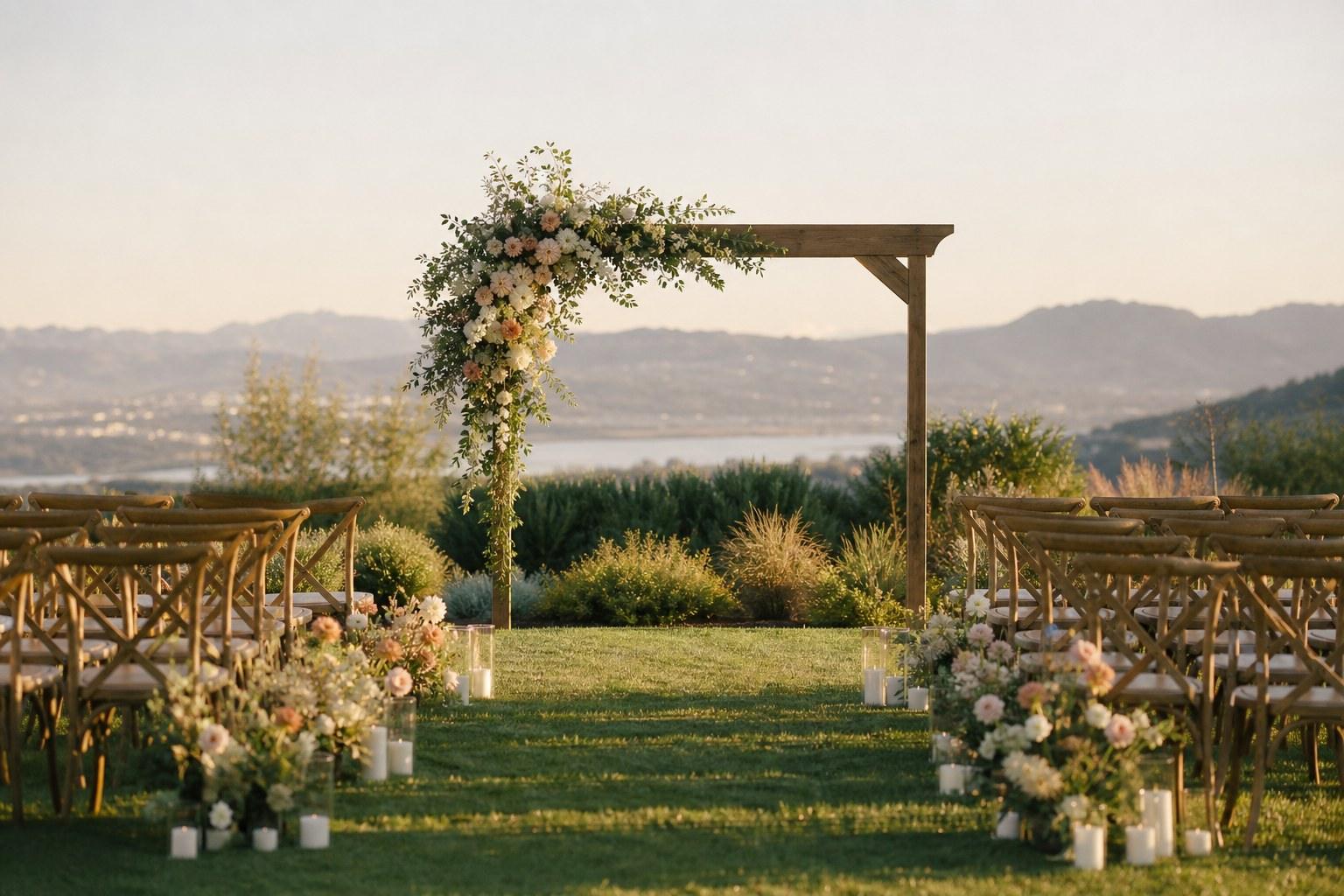
A run of the same element down both sides — pillar candles in hurricanes, low arrangements, lanterns, potted greenery — creates rhythm. Rhythm reads as intentional. Two large arrangements at the top of the aisle with nothing between them reads as a budget that ran out.
Mind the walking width
Whatever you place, someone in a long dress and someone who may use a mobility aid has to pass between it. Leave a genuinely comfortable walking width, and keep anything at ankle height either weighted or far enough back to survive a gust and a train.
Design the last three metres hardest
The end of the aisle is where the couple stands for the whole ceremony and where nearly every photograph is taken. If you have limited budget, spend it there and let the rest of the aisle be clean.
Backdrop options and when to use each
| Backdrop | Works best when | Watch out for |
|---|---|---|
| Timber or metal arch | You need a clear frame in an open outdoor space | Wind load; needs weighting or staking |
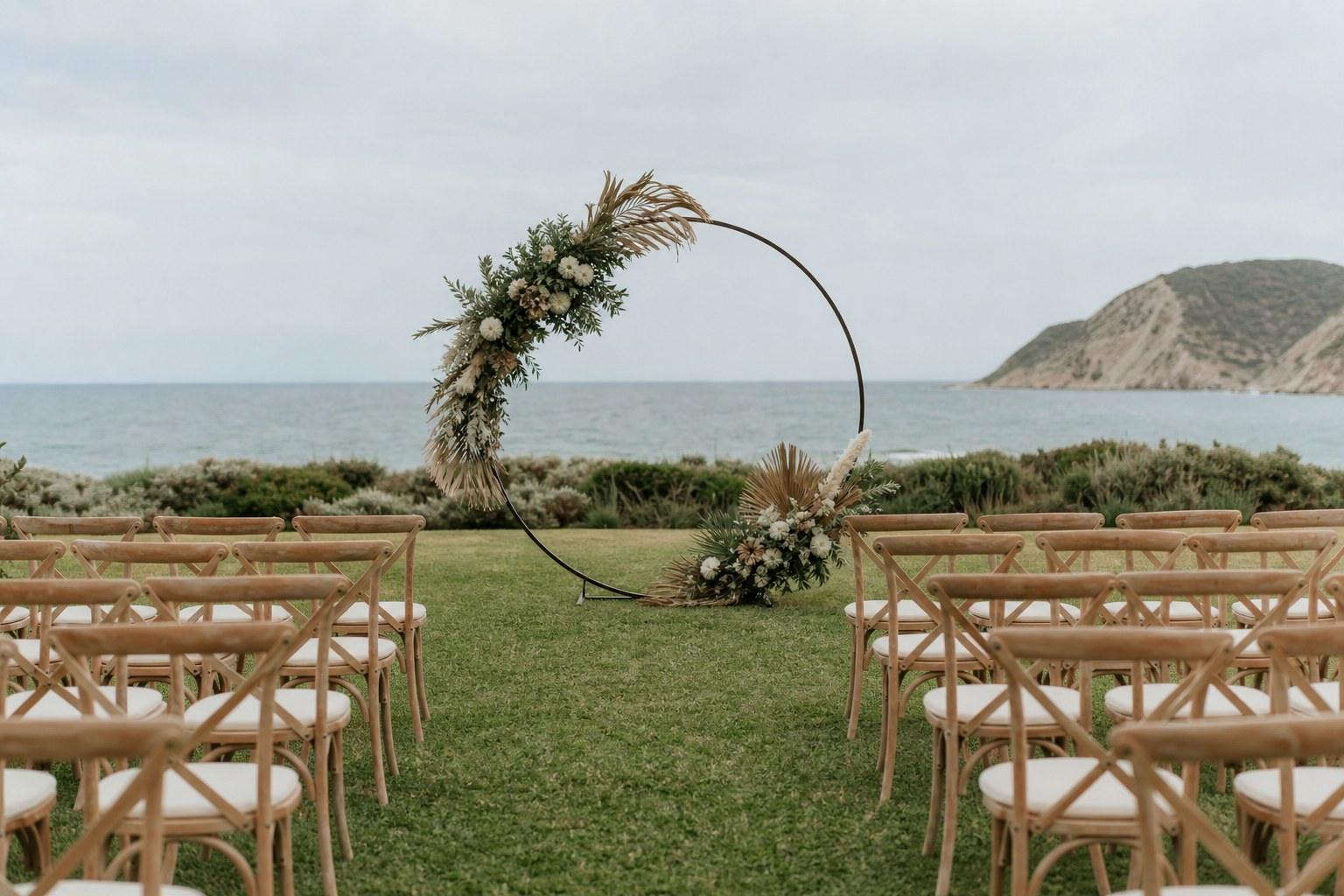
| Circle or moon gate | The couple wants a modern, graphic look | Reads thin on camera unless the florals are asymmetric and generous |
| Plinth pair | Budget is tight or the view must stay clear | Can look sparse without height variation |
| Fabric or draping | Indoor spaces with an ugly wall or harsh light | Creasing, and any breeze at all |
| Ground meadow / no structure | Beach, clifftop and garden ceremonies | Gets lost from the back rows; keep it wide |
| Existing architecture | Chapels, ruins, colonnades, grand doorways | Over-adding — the building is the design |
Whatever you choose, check three things with the venue before you promise it: what can be fixed to the ground or the wall, what time you can access the space, and whether the ceremony area is used for anything else that day — a turnaround into a reception changes everything about how you build.
Seating, signing table and the details guests actually touch
Guests spend the ceremony looking at three things: the couple, the person next to them and the chair in front. Style accordingly.
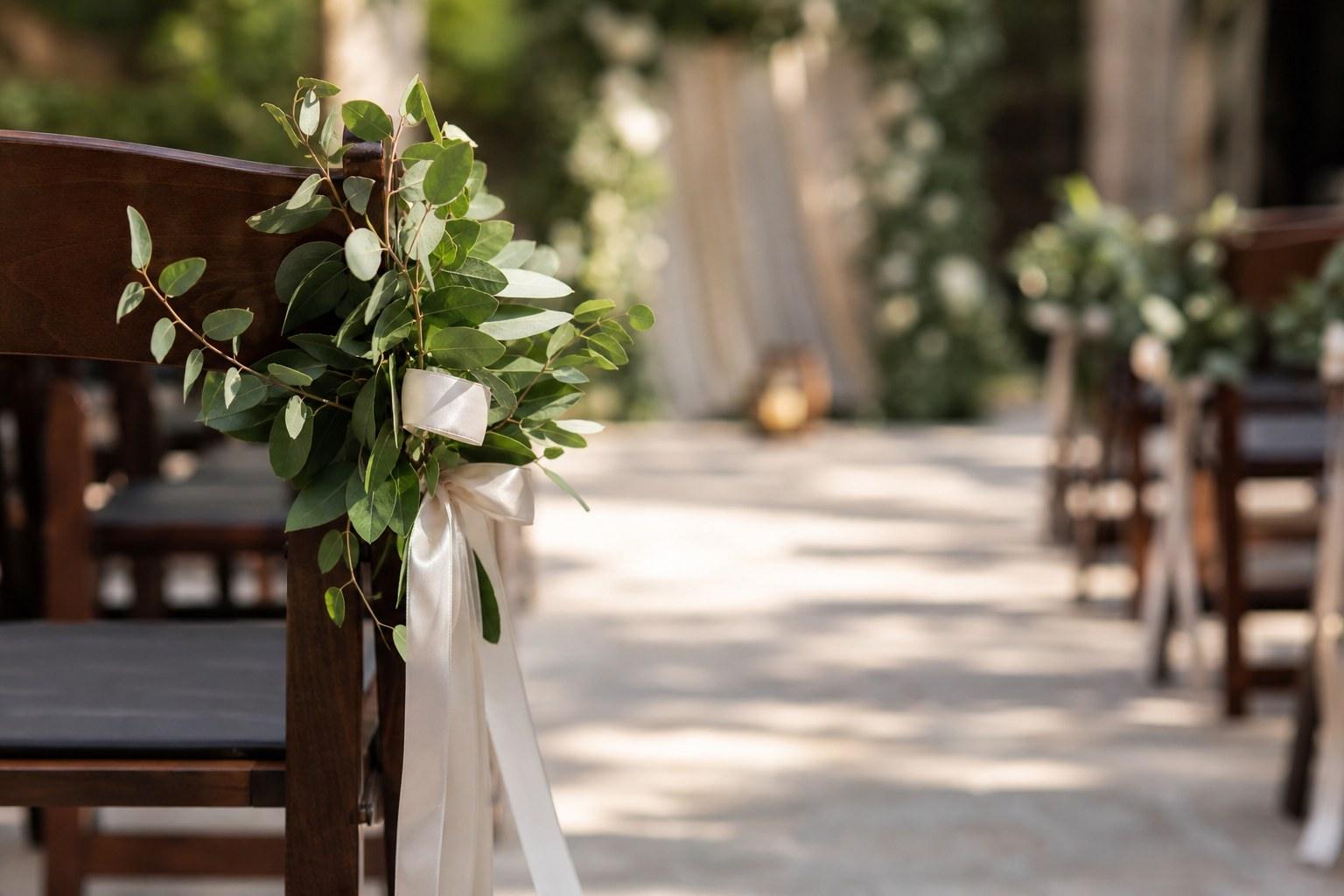
- Chairs: style the aisle-end chairs of the first few rows only. Styling all of them costs a fortune and photographs almost identically.
- Front row: reserve it visibly. A subtle marker prevents the awkward reshuffle that delays the whole ceremony.
- Signing table: small, uncluttered, and positioned so the signing shot has a clean background. A cloth, a low arrangement and a good pen.
- Programmes and welcome signage: if the venue is confusing, signage is styling. If it is obvious, skip it.
- Shade, water and blankets: unglamorous, and the detail guests remember most in extreme weather.
Build order: how to set up a ceremony without panicking
The single biggest difference between a calm install and a chaotic one is doing things in the right sequence. Structures first, soft elements last.
- Confirm the exact ceremony position with the celebrant — sun direction and sound both depend on it.
- Set the backdrop or arch and secure it before anything is attached.
- Lay the aisle and set the chairs to the final layout.
- Install florals from the top of the structure down, so falling debris lands on nothing finished.
- Place candles, lanterns and ground styling last.
- Walk the aisle yourself, then check the frame from the photographer’s position.
- Photograph your own set-up before guests arrive — that is your portfolio image, and nobody else will shoot it empty.
That last point matters more than it sounds. The clean, guest-free image of your ceremony set is the one you will use to win work for years.
The mistakes worth avoiding
- Building symmetrical florals on an asymmetric structure — the eye reads the mismatch instantly
- Using unweighted lightweight vessels outdoors
- Blocking the couple’s faces with a tall central arrangement
- Styling a colour palette that fights the venue’s carpet, wall or chair colour
- Forgetting the ceremony pack-down window — if elements move to the reception, plan the crew for it
- Promising a floral volume you have not costed for stems, labour and conditioning
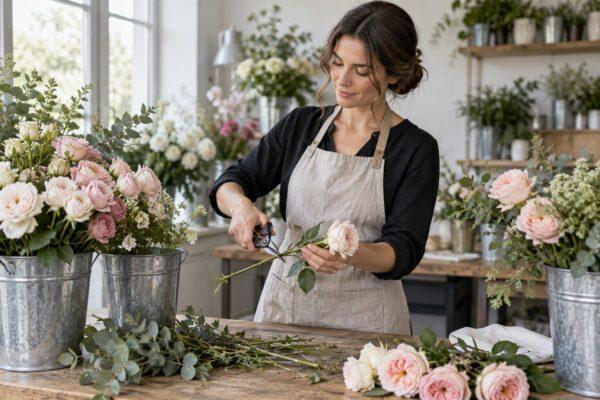
The floral point is the one that catches people. If you are quoting installations, you need to understand mechanics and conditioning as well as design — which is why many stylists pair their styling training with the Certificate in Floral Design.
Turning ceremony styling into paid work
Ceremony styling is one of the easiest services to sell as a standalone, because couples who are not ready to hire a full stylist will still pay for the space they say their vows in. It is also the fastest way to build a portfolio: smaller install, lower risk, high-impact photographs.
If you are starting out, learn the design language first — proportion, palette, texture, focal points and how to translate a couple’s vague brief into something buildable. The Certificate in Wedding Styling covers that process end to end, and the Advanced Certificate adds the planning and business layers for stylists who want to run bigger installs and bigger teams.
Ready to style ceremonies people photograph?
Learn design principles, mood boarding, sourcing, installation and on-site execution with globally recognised online certification you can study at your own pace.
Frequently asked questions
How long does it take to style a wedding ceremony?
It depends on the install, not the guest count. A simple aisle with candles and a few arrangements can be done in under an hour with a small team; a full floral arch, draping or a built structure needs several hours plus access before the venue’s usual set-up window. Always ask the venue what time you can get in, then work backwards from the ceremony start with a buffer.
What is the difference between a ceremony backdrop and an arch?
An arch is one type of backdrop — a freestanding frame the couple stands under or in front of. A backdrop is anything that frames them: a circle, a pair of plinths, a fabric panel, a floral meadow on the ground, or an existing feature of the venue you enhance rather than replace.
Do I need a florist to style a ceremony?
Not always, but you need to be honest about the line. Placing candles, styling chairs, positioning plinths and dressing a signing table is styling. Building a large floral installation is floristry, and it needs mechanics, conditioning and structural knowledge. Many stylists train in both so they can quote either way.
How do I style a ceremony outdoors when it might be windy?
Assume it will be. Weight everything, choose greenery and blooms that hold up in movement, avoid tall unsupported taper candles, secure fabric at multiple points, and have a fallback plan you can execute in twenty minutes. Talk to the venue about their prevailing conditions rather than guessing from photographs.
How much should ceremony styling cost?
There is no single answer — it depends on your market, the size of the install, hire stock, labour and travel. What matters is that you price the whole job: design time, sourcing, transport, set-up, pack-down and the crew you need. Costing a job properly is a skill you can learn, and it is what separates a profitable stylist from a busy one.