A micro wedding budget is broken down by guest-driven costs (food, drink, seating, stationery, favours) and fixed costs (venue hire, photography, celebrant, attire, planning), then rebalanced towards the experience the couple values most. Because the guest count is small, fixed costs take up a bigger share of the total — so planners help couples decide where to splurge and where a smaller wedding genuinely saves.
Couples often arrive assuming a small wedding means a small spend. Sometimes it does. Often, it means the same spend on fewer people — with better food, nicer wine and a venue they’d never consider for a crowd. Understanding how a micro wedding budget really works lets you set realistic expectations, design better packages and protect your own fees.
What is a micro wedding budget?
A micro wedding is usually a small celebration with a short guest list of close family and friends — larger than an elopement, smaller than a traditional wedding. The budget covers the same broad categories as a big wedding, but the balance between them changes dramatically.
The key shift is this: when guest numbers drop, some costs fall with them and some barely move at all. That’s why simply scaling down a traditional budget template doesn’t work.
Fixed vs variable costs in a micro wedding
Start every budget conversation by splitting costs into two buckets. It’s the single most useful frame you can give a couple.
| Cost type | Examples | How it behaves with fewer guests |
|---|---|---|
| Fixed costs | Photography, videography, celebrant, attire, hair and make-up, planner, rings, some venue fees | Stays roughly the same whether there are twelve guests or a hundred |
| Variable (per-guest) costs | Catering, drinks, chairs and tableware, stationery, favours, transport | Falls as the guest list shrinks |
| Semi-variable costs | Flowers and styling, venue hire, entertainment, cake | Scales partly — fewer tables, but design ambition often rises |
Once couples see this, the lightbulb goes on. They understand why their photographer’s fee doesn’t halve with the guest list — and why they can now afford the chef’s tasting menu.
How planners break down a micro wedding budget
Here’s a step-by-step approach you can use with every micro wedding client.
1. Start with the total and the guest count
Ask for a realistic total budget and a firm guest number before anything else. Make sure the couple knows whether the figure includes your fee, attire, rings and the honeymoon. Those details change everything.
2. Identify the top three priorities
Micro weddings are about intention. Ask the couple to rank what matters most — food, photography, location, fashion, an experience for guests. The top three get a generous share; everything else is kept lean.
3. Allocate fixed costs first
Price photography, celebrant, attire, hair and make-up and planning first, because these won’t flex much. This tells you how much is left for everything guest-driven.
4. Calculate per-guest costs
Work out a per-head figure for food, drink, seating and tableware, stationery and favours, then multiply by the guest count. Seeing a per-guest number helps couples decide whether to add or trim names.
5. Allocate design and experience
Flowers, styling, entertainment and cake come next. In a micro wedding, design budgets often go further — one long table can be dressed far more lavishly than fifteen round ones.
6. Hold a contingency
Always build in a contingency line for surprises, such as extra delivery fees, weather backups or last-minute guests. Small budgets have less room to absorb shocks.
Where a micro wedding saves money
- Catering and drinks: the biggest saver, because it scales directly with guest numbers.
- Venue options: restaurants, private dining rooms, galleries and homes may have lower minimum spends than large function venues.
- Furniture and hire: fewer chairs, tables and place settings.
- Stationery and favours: fewer pieces to design, print and post.
- Time: a shorter planning window can be possible, though not always.
Where couples often choose to upgrade
The flip side of saving on volume is the freedom to upgrade quality. Many micro wedding couples redirect money into:
- Chef-led menus, wine pairings or premium bar service
- A more exclusive venue or a private hire they couldn’t afford for a crowd
- High-end photography and film
- Lavish florals and styling on a single long table
- Guest experiences — welcome dinners, accommodation, activities or gifts
- Couture attire and accessories
Your role is to help couples upgrade on purpose, not by accident. A budget that creeps item by item can end up larger than a traditional wedding with nothing to show for it.
Questions to ask in the micro wedding budget conversation
Money talk can feel awkward, especially when couples are excited about a small, relaxed celebration. A few well-chosen questions make it easier and give you everything you need to build a realistic plan.
- Who is contributing to the budget, and does anyone expect a say in how it’s spent?
- Is the guest list truly fixed, or might it grow once family hear about it?
- What would make this day feel worth every cent to you?
- What could you happily skip without missing it?
- Are you planning any other events — a welcome dinner, a later party, a honeymoon — from the same pot?
- How do you feel about paying more for fewer, better things?
Listen closely to the answers. A couple who says the food is everything will be far happier with a chef’s table and simple styling than with a lavish floral installation and a standard menu. Write their priorities at the top of the budget document so every decision gets checked against them. It also gives you a gentle, professional way to push back when a new idea threatens to blow the budget — simply ask whether it serves one of the top three.
Presenting the budget to couples
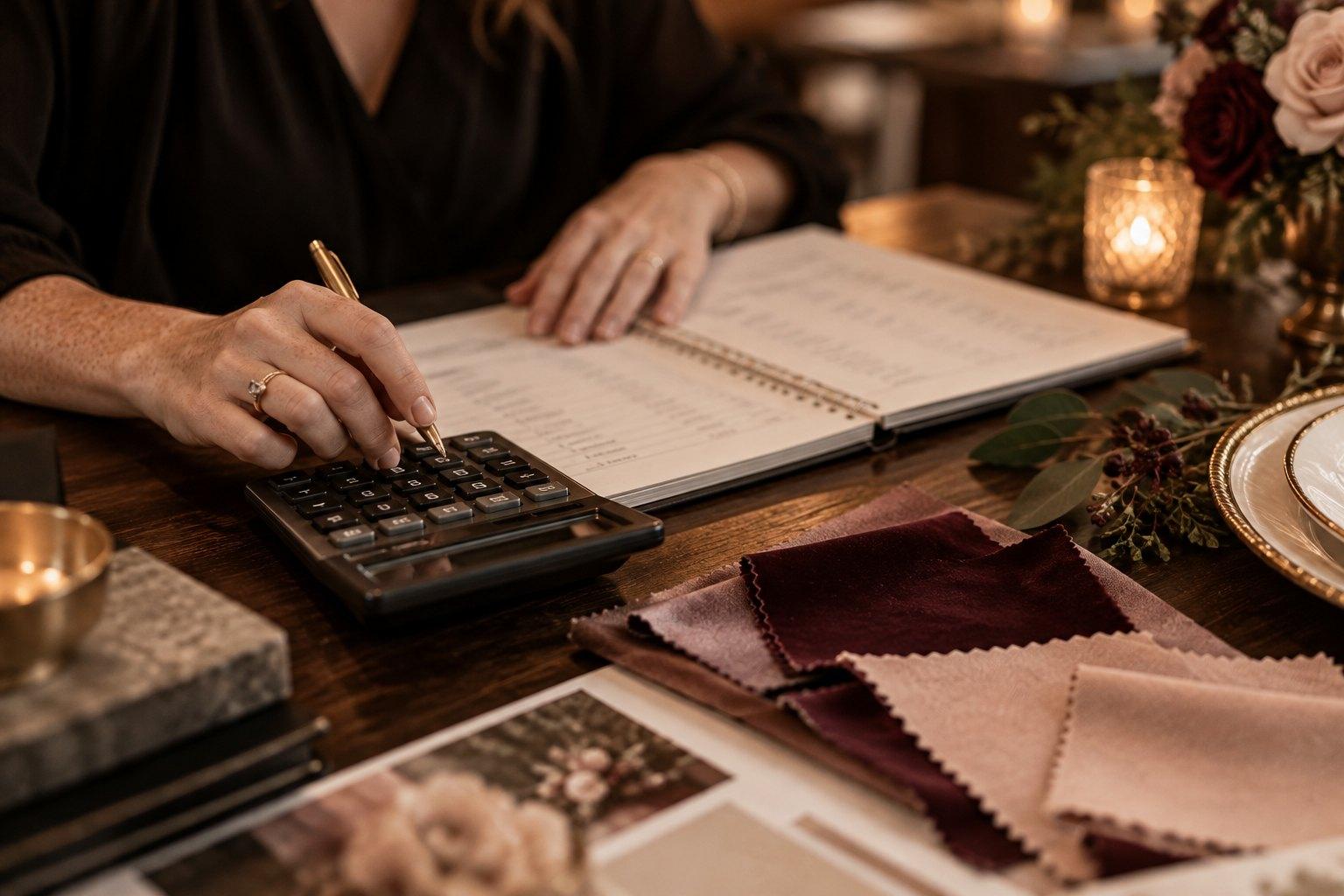
Give couples a clear, visual budget document. Show fixed, variable and semi-variable costs in separate sections, with a per-guest figure and a running total. Include a column for estimated costs, actual quotes and paid-to-date. Update it after every vendor booking. A clean spreadsheet or budget template builds trust — you’ll find ready-made wedding planning templates in our shop if you’d rather not build your own.
Pricing your planning services for micro weddings
Here’s the trap: planners sometimes discount heavily because the wedding is small. But vendor research, design, contracts and coordination take nearly as long for twenty guests as for a hundred and twenty. Some parts — like seating plans and RSVP chasing — are lighter. Others, like sourcing an unusual venue or creating a luxury guest experience, can be heavier.
Price micro wedding planning on the time and expertise involved. Many planners offer dedicated micro wedding packages with a clearly defined scope, so couples know exactly what’s included. If you need help with tax, deposits or how to structure payments, check with your accountant.
Common micro wedding budget mistakes
- Assuming everything scales down — fixed costs don’t.
- No priorities set, so money spreads thinly across everything.
- Forgetting hidden costs like delivery fees, service charges, corkage, travel and permits.
- Adding guests late, which pushes per-guest costs up fast.
- No contingency, leaving zero room for surprises.
- Undercharging for planning because the guest list is short.
Micro wedding budgets for destination couples
Micro and destination weddings overlap more and more. If a micro wedding is abroad, add travel for the couple, vendor travel and accommodation, local permits, currency fluctuations and transfers to the budget. Couples may also cover some guest costs, such as a welcome dinner or transfers. Advise couples to check legal and tax considerations for weddings abroad with the relevant authorities and their own advisers.
For budget worksheets, planning checklists and frameworks for small-format weddings, the Micro, Intimate & Destination Wedding Handbook by Jac Bowie is a practical companion. For full training, our micro wedding planning course covers budgets, venues, vendors, guest experience and packaging your services profitably.
Frequently asked questions
Is a micro wedding always cheaper?
Not always. Per-guest costs fall with a smaller guest list, but fixed costs like photography, attire and planning stay similar, and many couples choose to upgrade quality.
What costs don’t change in a micro wedding?
Photography, videography, the celebrant, attire, hair and make-up, rings and planning fees stay roughly the same regardless of guest count.
How do planners break down a micro wedding budget?
Planners set the total and guest count, rank the couple’s priorities, allocate fixed costs first, calculate per-guest costs, then allocate design and experience and hold a contingency.
Should planners charge less for micro weddings?
Not automatically. Much of the planning work takes similar time regardless of guest numbers, so price on scope, time and expertise with a clearly defined package.
Where can I learn to plan micro weddings?
The Wedding Academy’s Certificate in Intimate, Micro & Destination Weddings is studied online and covers micro wedding budgets, venues, vendors, guest experience and packages.
Want to help couples plan small weddings that feel luxurious — and run a profitable business doing it? Study online at your own pace with The Wedding Academy’s Certificate in Intimate, Micro & Destination Weddings.