Couples don’t hire a logo. They hire a person. Before they ever send an enquiry, they’re scrolling your website and your socials trying to answer one quiet question: do I trust this human with the biggest day of my life?
That’s why wedding planner brand photography is one of the smartest things you can invest time in. A considered set of brand images shows couples who you are, how you work and what it feels like to be looked after by you — long before the discovery call.
Whether you’re a planner, stylist or florist, here’s how to plan a brand shoot that actually sells your business — from brand words and shot lists to briefing a photographer and putting every image to work.
Why wedding planner brand photography matters
Wedding services are personal and high-trust. Couples are handing you their budget, their families and their nerves. Good brand photos do a few important jobs at once:
- They build trust before the first conversation. A warm, real face on your About page makes reaching out feel easy.
- They show how you work, not just what you’ve made. Portfolio shots show finished weddings; brand shots show you doing the work.
- They make your website look like a business. Consistent, on-brand imagery signals that you take your craft seriously.
- They feed your socials. A bank of images means you’re never scrambling for something to post.
- They’re ready when opportunities land. Press features, podcast guest spots, speaker bios, venue partner pages and styled shoot credits all ask for a professional headshot — usually by tomorrow.
Personal branding is a big theme in The Wedding Business & Marketing Handbook by Jac Bowie — her practical guide to marketing and running a wedding business, available as a fillable PDF ebook (with a paperback on Blurb). It’s part of the ten-book Wedding Academy Handbooks series.
How to plan a brand photoshoot for your wedding business
The biggest mistake is booking a photographer and “seeing what happens”. Planners plan. Treat your own shoot like a client’s wedding — brief first, logistics second, pretty pictures third.
Start with three to five brand words
How do you want couples to feel when they land on your website? Calm and organised? Bold and editorial? Relaxed and fun? Pick a small handful of words and use them as a filter for every decision — location, outfit, lighting, poses, props.
Picture your ideal couple
Your brand photos aren’t really about you — they’re about the couple you want to attract. A planner known for luxury destination weddings needs a different look from a stylist who loves relaxed garden celebrations or a florist who does wild, garden-gathered installations. Ask yourself: what would my dream client need to see to think “she gets it”?
Decide where every image will be used
This is the step most people skip — and it’s why so many brand shoots produce gorgeous images that don’t actually fit anywhere. Before the shoot, list every place you need imagery:
- Website hero: wide, landscape images with clean negative space on one side so your headline and button can sit over the top.
- Socials: vertical crops for feeds, stories and Reels covers — ask your photographer to shoot portrait as well as landscape.
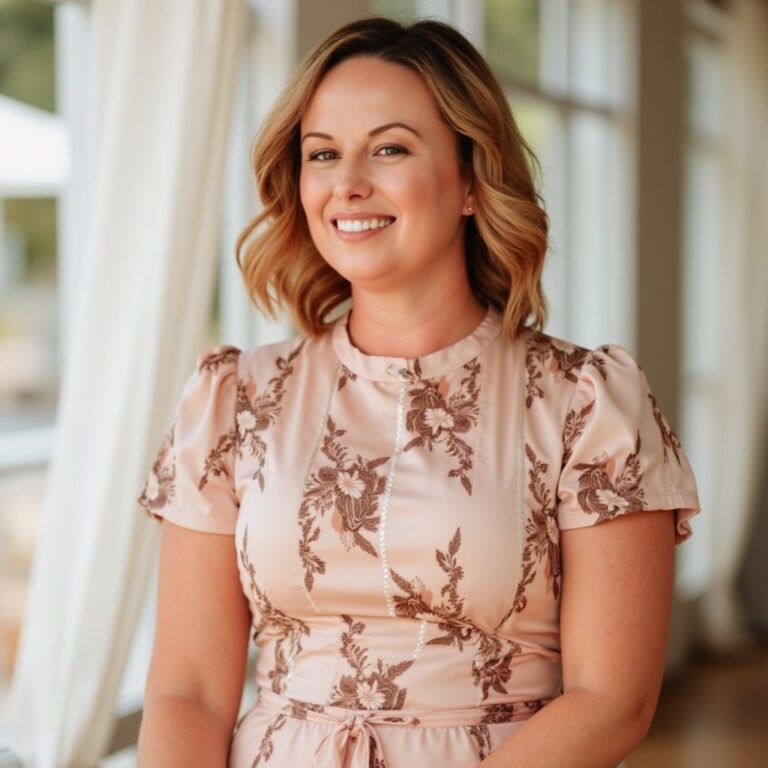
- Press and speaker bios: a clean, well-lit headshot on a simple background that crops well to a square or circle.
- About page: something warm and personal — you laughing, mid-conversation, looking like someone couples would enjoy spending a year with.
- Service pages: working shots that match each service you sell.
Your brand photoshoot shot list
Write the shot list yourself, then share it with your photographer. It keeps the day focused and makes sure you leave with images for every job — not forty versions of the same smile.
Headshots
Get a few variations: a classic, approachable headshot; a slightly more editorial one; and a couple with different expressions and crops. Shoot them early, while your hair, makeup and energy are fresh.
Working shots
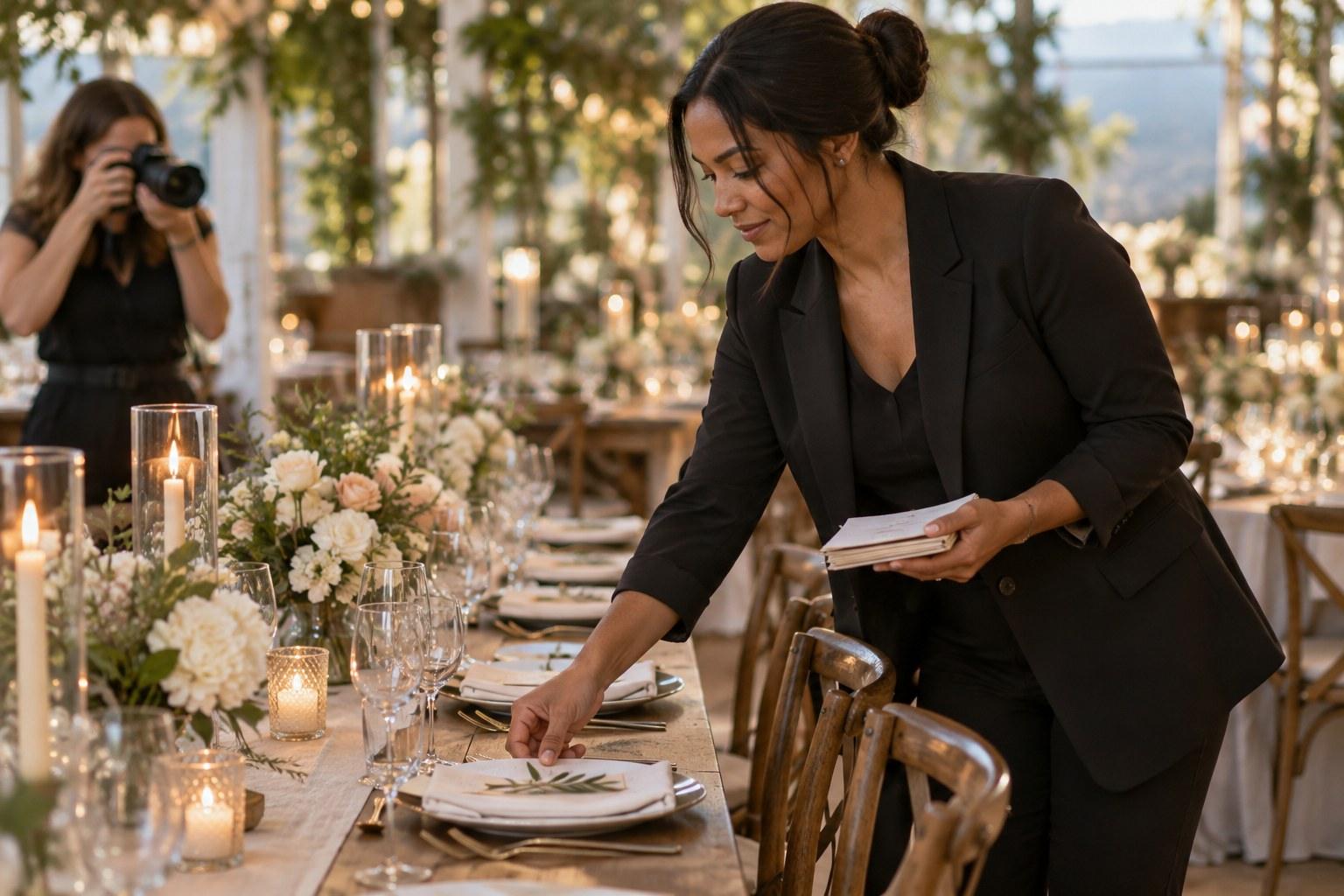
These are your hardest-working images. A planner reviewing a timeline or walking a venue. A stylist adjusting place settings. A florist building a centrepiece or conditioning stems. They show couples exactly what they’re paying for.
Details and flatlays
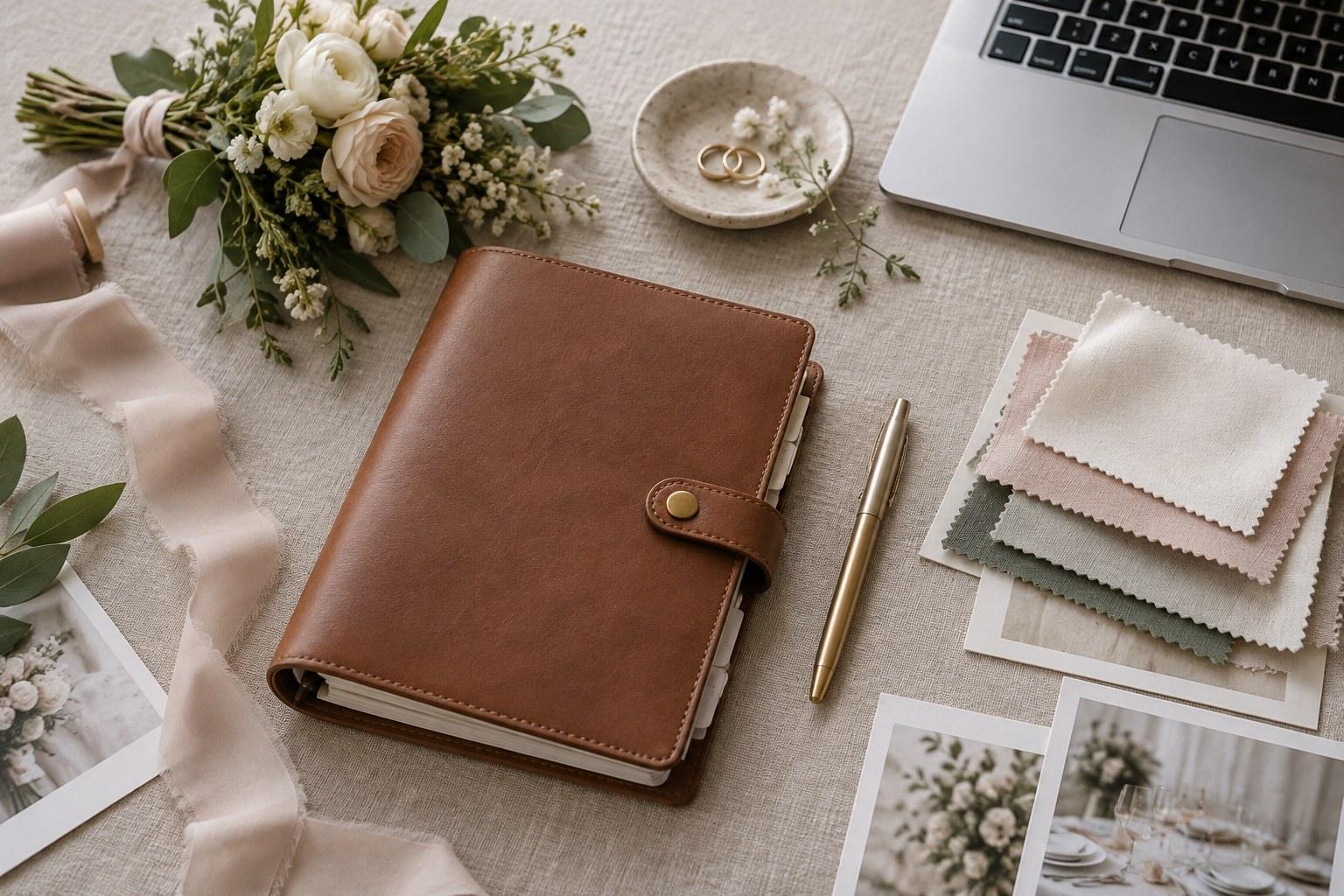
Your planner and pen, fabric swatches, ribbon, a posy, stationery samples, your laptop corner. Flatlays are brilliant for blog headers, social carousels and website backgrounds — and they’re useful when you need an image that isn’t your face.
Behind the scenes
Loading a car with florals, steaming a tablecloth, sitting cross-legged on the floor with a seating chart. Real, slightly messy moments make you relatable — and they’re gold for stories and Reels.
With clients or models
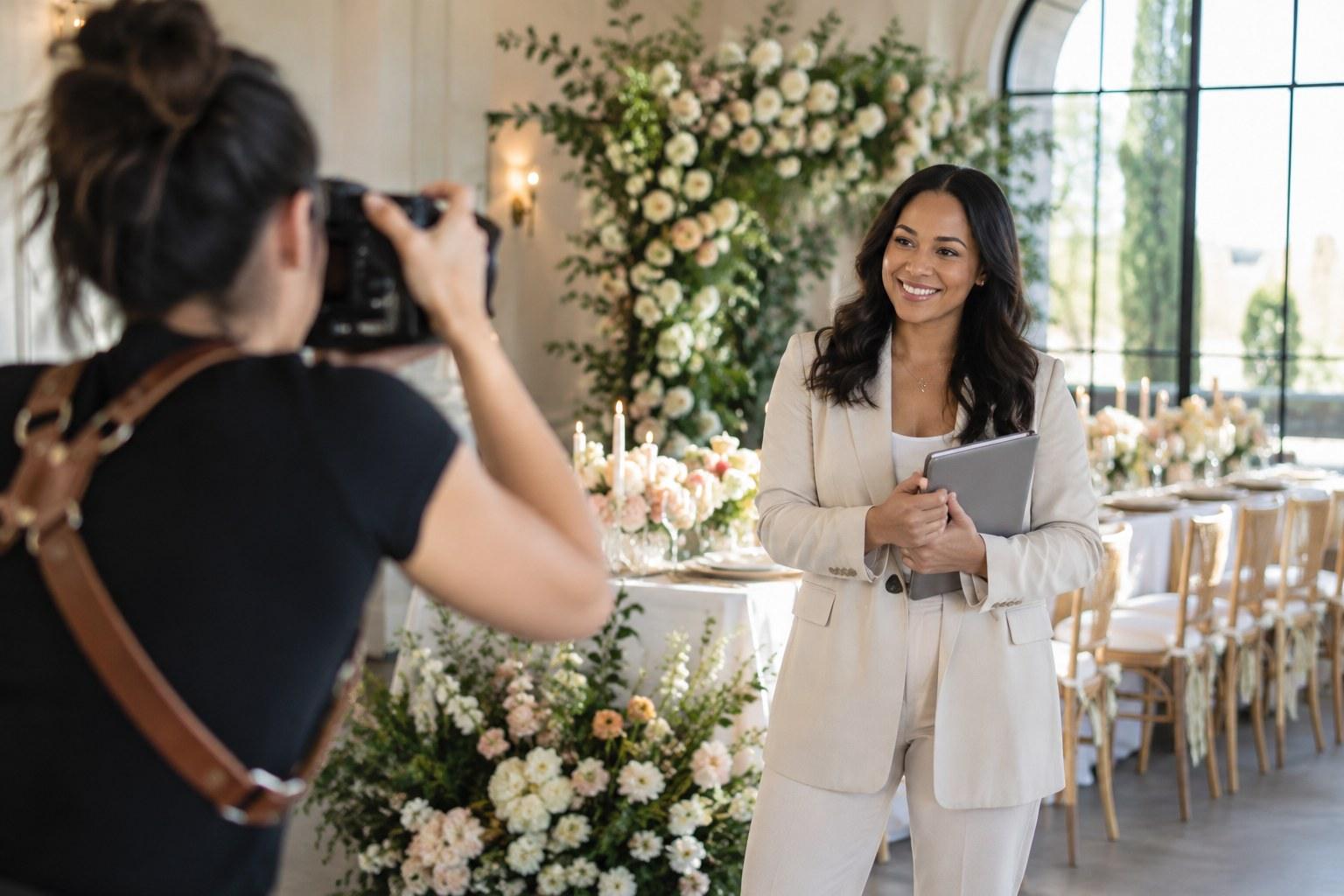
Couples want to imagine working with you, so show it. Shoot a consultation scene, a styling walkthrough or a bouquet handover. Use willing past clients or models — and get written consent from everyone who appears in the images.
Brand photography planner: image types at a glance
| Image type | Where you’ll use it | Tip |
|---|---|---|
| Classic headshot | Press, speaker bios, LinkedIn, directory profiles | Simple background, soft light, crops cleanly to a square |
| Landscape hero | Website homepage and banners | Leave negative space on one side for your headline and button |
| Working shot | Service pages, About page, socials | Show the real task you sell — styling, planning, building florals |
| Detail / flatlay | Blog headers, carousels, quote graphics | Use props in your brand palette; no readable client details |
| Behind the scenes | Stories, Reels, newsletters | Candid beats posed — let the photographer roam |
| With clients or models | Homepage, testimonials section, sales pages | Get written consent from everyone pictured |
| Vertical crops | Instagram, Pinterest, Reels covers | Ask for portrait-orientation versions of your favourite set-ups |
Choosing locations, wardrobe and props
Locations that tell your story
A venue you already work with is ideal — it looks like the real thing, and many venues are happy to host if you tag them and share the images with them (ask first, and agree what they can use). Your studio or workspace shows where the magic happens. A favourite café works well for relaxed “consultation” scenes. Two or three locations is plenty.
Wardrobe and props that match your palette
Dress like you do on your best workday — polished, comfortable and true to your brand words. Pull colours from your brand palette so the images sit naturally on your website. Bring a couple of outfit changes for variety, and avoid busy prints and big logos that date quickly. Props should be things you genuinely use: your planner, swatches, scissors, ribbon, stems, stationery.
Want help defining your brand, your ideal client and how you show up online? That’s exactly what the Certificate in Wedding Business & Marketing walks you through, step by step.
Finding and briefing a brand photographer
Not every great wedding photographer is a great brand photographer, and vice versa. Look for someone whose portfolio already includes personal branding work in a style that matches your brand words — light and airy, moody and editorial, bright and colourful. If you can’t picture your images sitting in their portfolio, keep looking.
Ask about usage rights — and get it in writing
Photographers usually keep copyright and grant you a licence to use the images. Ask exactly what that licence covers: your website, socials, print, paid ads, press, and whether you can supply images to venues or publications. Get the answer in your contract, not in a chat message.
Agree deliverables and timeline
Clarify how many edited images you’ll receive, in what orientations and file sizes (web and print), how they’ll be delivered and when. Then send a brief: brand words, ideal couple, shot list, usage, locations and a mood board.
On the day of your brand shoot
Run it like a wedding day. Write a simple run sheet with locations, set-ups and outfit changes. Pack a kit — props, steamer, lint roller, safety pins, snacks, water, a mirror. Arrive early to set up the first scene.
Then relax into it. Give yourself real tasks: actually style the table, actually tie the bouquet, actually talk to your “client”. Movement looks far more natural than posing. Check a few frames on the back of the camera early so you can adjust, then trust your photographer and keep going.
How to use your brand photos once they’re delivered
- Refresh your website first. New hero image, a warm About page, working shots on every service page.
- Update every profile. Socials, directories, LinkedIn, email signature, venue partner listings — same headshot everywhere so you’re instantly recognisable.
- Build a social content bank. Sort images into folders by type and pair them with captions, tips and stories so you always have something ready to post.
- Prepare a press kit. A short bio plus a headshot and a couple of working shots, ready to send the moment someone asks.
- Refresh regularly. Your style, your services and your face all evolve. Plan a top-up shoot every year or two so your images still look like you.
Brand imagery is one part of a bigger marketing picture, and Jac’s Wedding Business & Marketing Handbook sits alongside the rest of the series if you want to go deeper — see all ten handbooks.
Brand photography mistakes wedding pros make
- Only using selfies. Fine for a quick story; not fine as the face of a premium service.
- Relying on stock that doesn’t look like you. Couples can tell — and it creates a disconnect when they meet the real you.
- Using one headshot for years. If you’ve changed your hair, your style or your brand, your photos need to catch up.
- No landscape images for the web. A beautiful portrait shot rarely works as a website hero. Plan for both orientations.
If you’re building your business from scratch, pair your marketing skills with solid industry training — the Certificate in Wedding Planning covers the planning craft, and the Advanced Certificate in Wedding Planning, Styling and Business brings planning, styling and business together.
Wedding planner brand photography FAQs
What should a wedding planner wear for brand photos?
Wear what you’d wear on your best workday — polished, comfortable and true to your brand. Choose colours from your brand palette, bring a couple of outfit changes, and skip busy prints or large logos that date quickly.
How many brand photos do I need for my wedding business?
Work from your usage list rather than a number. Make sure you have headshots, landscape hero images for your website, working shots for each service, details and flatlays, and vertical crops for socials — then add enough variety to keep your feed fresh.
Where should I hold a brand photoshoot as a wedding planner?
A venue you already work with (with permission), your studio or workspace, and a café for relaxed consultation scenes all work well. Two or three locations that match your brand words is usually plenty.
Who owns the copyright to my brand photos?
Usually the photographer keeps copyright and grants you a licence to use the images. Ask exactly what the licence covers — website, socials, print, ads, press, sharing with venues — and make sure it’s written into your contract.
How often should I update my brand photography?
Refresh whenever your look, services or brand change, and plan a top-up shoot every year or two so your website and socials still look like the person couples will meet.
Ready to build a brand couples trust and a marketing plan that brings in bookings? Enrol in the Certificate in Wedding Business & Marketing and start showing up like the professional you are.