Ask any planner who’s worked abroad what nearly went wrong, and it’s rarely the weather or the flights. It’s the florist who heard “a few candles” and brought four. The caterer who read “vegetarian” and served fish. The venue that understood “ceremony at four” as four in the morning on the contract template, or the fourth of the month. A destination wedding language barrier doesn’t usually announce itself — it hides inside a friendly “yes, no problem” and shows up on the day.
The good news: you don’t need to be fluent in five languages to plan beautifully overseas. You need systems that make misunderstanding hard. Here’s how experienced destination planners communicate clearly with local vendors — from the first enquiry to the last song.
Why the destination wedding language barrier is really an assumption problem
Vocabulary is the easy part. The real risk is that both sides fill gaps with their own assumptions — and both feel confident they understood. Watch for these four danger zones:
- Timing. “Early evening”, “after dinner” and even “on time” mean different things in different places. So does the 24-hour clock versus am/pm.
- Quantities. “A few”, “lots”, “full” and “lush” are not numbers. Neither is “enough for the tables”.
- Styling words. “Rustic”, “boho”, “natural”, “neutral” and “elegant” carry wildly different pictures from one culture — and one vendor — to the next.
- Dietary needs. Vegetarian, vegan, gluten-free, halal, kosher and allergy are not interchangeable, and some don’t translate cleanly at all. An allergy is a safety issue, not a preference.
Once you see the language barrier as an assumption barrier, the fix becomes obvious: replace every vague word with something that can’t be misread — a number, a photo, a date in words, a diagram.
Choosing vendors when you don’t speak the local language
Your communication load is decided the moment you book. Pick the right team and half the translation work disappears.
Look for bilingual coordinators first
Many venues used to hosting international couples have a coordinator who works comfortably in English or your working language. Ask directly in the first email: who will be my day-to-day contact, and which languages do they work in? Then check the answer on a call, not just in polished emails that may have passed through a translation tool.
Partner with a local planner
A trusted local planner or coordinator is often the single best investment in a destination wedding. They know the vendors, the customs, the paperwork and the unwritten rules — and they can speak to the baker’s nephew who’s actually doing the delivery. Be clear about roles in writing: who briefs which vendor, who signs off changes, and who is the on-site lead.
Check reviews and ask for references
Read reviews specifically from couples or planners who came from overseas. Did they mention communication? Ask vendors for references from international clients and actually contact one or two. “How easy were they to reach, and did what you asked for match what arrived?” tells you more than any portfolio.
How to write a vendor brief that survives translation
Your brief is the most important document you’ll send. Write it so that even a rough machine translation comes out clear.
- Use short, plain sentences. One idea per sentence. No idioms, no jokes, no “we’re thinking maybe something along the lines of”. Write “Ceremony chairs: 40. White. In 5 rows of 8.”
- Number everything. Numbered lists make it easy for a vendor to reply “Item 6 — not possible” instead of a vague paragraph you have to decode.
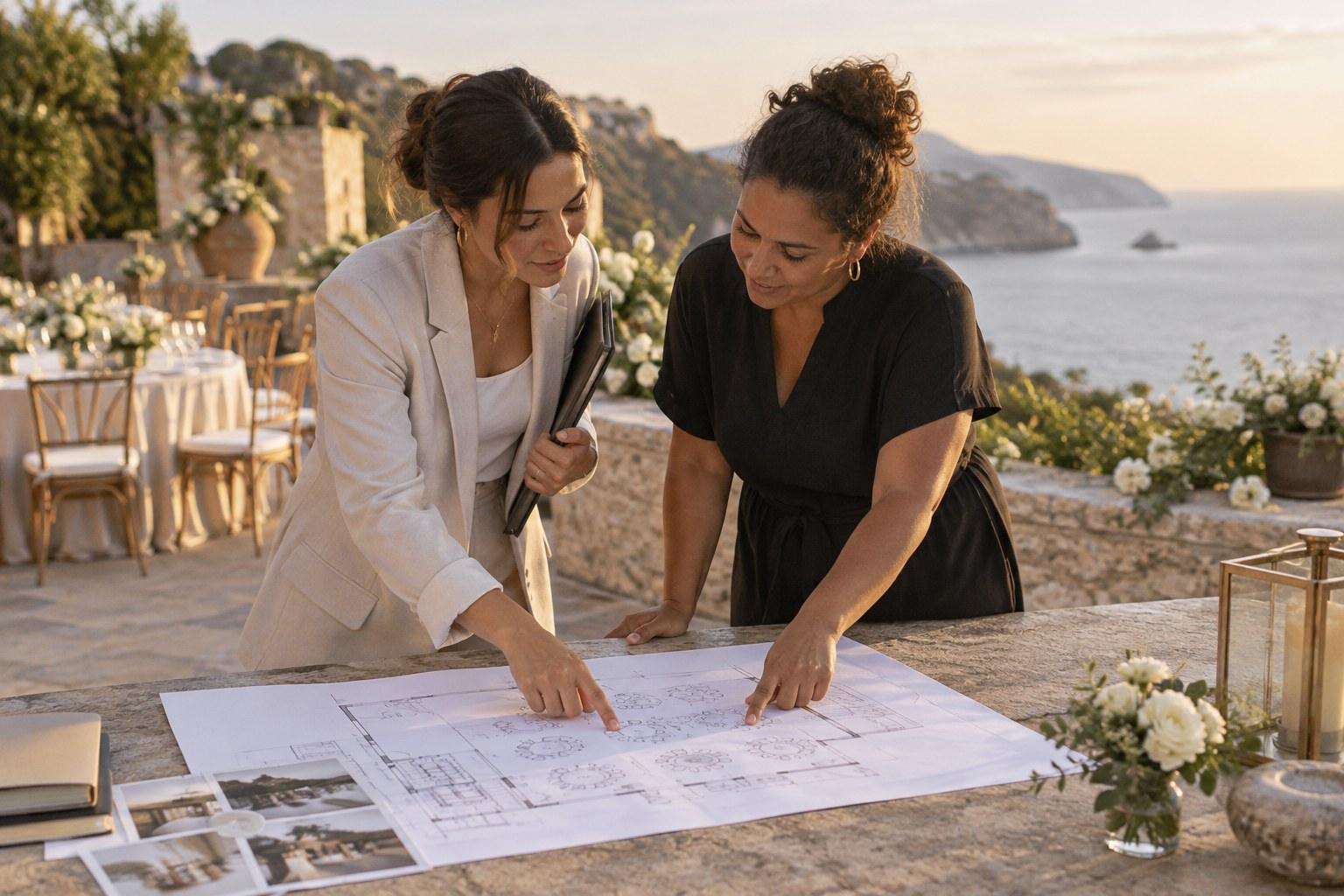
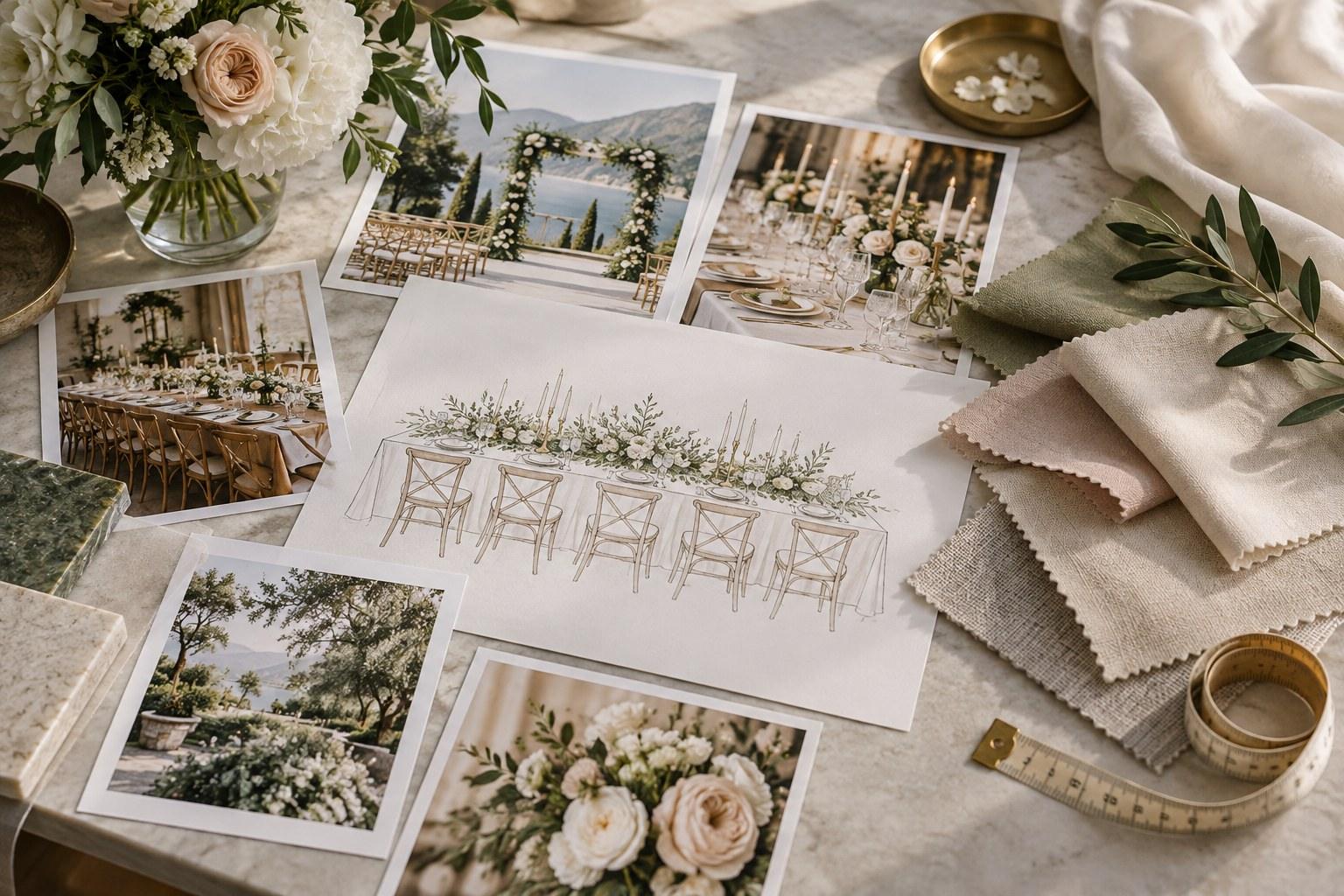
- Show, don’t describe. Attach reference photos, sketches, floor plans and a moodboard. Label each image with what matters: “this colour”, “this height”, “NOT this style”.
- Spell out units and measurements. Write “120 centimetres” or “4 feet”, not “1.2” or “4′”. State which system you’re using and stick to it.
- Write dates unambiguously. 03/04 is March in some countries and April in others. Write “Saturday 3 April” with the year in full, every time.
- Use the 24-hour clock alongside am/pm for every key time — “16:00 (4pm)”.
It feels blunt to write this way. That’s the point. Clear beats charming when a translation tool sits between you and the person stacking your chairs.
Translation for destination weddings: what to pay for and what to app
Use professional translation for anything binding
Contracts, cancellation terms, ceremony and legal paperwork, allergy information and anything involving money deserve a professional translator — or at minimum a trusted bilingual person with no stake in the deal. A free app is not the place to discover what a penalty clause really says.
Use translation apps for everyday messages — carefully
Apps are brilliant for quick logistics: “We arrive at 10:00. Is the side gate open?” They are unreliable with nuance, tone, slang and industry terms — “charger plate”, “runner”, “first look” and “send-off” can come out as nonsense. Keep app messages short and literal, and avoid them for anything emotional or contractual.
Confirm understanding by asking them to repeat it back
“Yes” can mean “I understand”, “I heard you” or “I’d rather not say no”. So don’t ask “Is that clear?” Ask: “Can you confirm the number of tables, the delivery time and the colour of the linen?” When the vendor writes it back in their own words, you’ve caught the misunderstanding before it costs anything.
Running video meetings with overseas vendors
Video calls beat email for anything complicated — you can share your screen, point at the floor plan and see a puzzled face before it turns into a problem. A few habits make them work:
- Bring a translator or bilingual contact for the important ones, and brief them on wedding terms beforehand.
- Send a short numbered agenda in advance so the vendor can prepare or translate it.
- Speak slowly, pause often and cover one decision at a time.
- Share visuals on screen rather than describing them.
- Within a day, send a written follow-up listing every decision as a numbered point, and ask the vendor to reply confirming each one.
That written follow-up is your record. If it isn’t in writing and confirmed, treat it as not agreed.
Contracts, deposits and currency abroad
Never sign something you can’t read. Ask for the contract in a language you understand, or have the local-language version professionally translated before signing — and check which version is legally binding if there are two. Local laws on contracts, deposits and cancellations can differ from what you’re used to, so where the stakes are high it may be worth getting advice from a local legal professional.
Be precise about money: which currency, the total amount, the deposit amount, due dates (written in words), accepted payment methods and who covers transfer fees. Get each payment receipted in writing. Currency confusion is a language barrier too.
Cultural norms that shape communication
Language is only half of it. Communication styles differ, and the same message can land as efficient in one place and rude in another.
- Directness. Some cultures say no plainly; others avoid it. Learn to read “we will try” or “it may be difficult” as a polite no.
- Response times. A slow reply isn’t always disinterest. Agree expected response times early, and build buffer into your timeline.
- Working hours and holidays. Check local public holidays, religious observances, long lunch breaks and weekend customs before you set deadlines or book deliveries.
- Relationship first. In many places, a warm greeting and a little small talk matter before business. Skip them and you may get slower, cooler service.
- Learn key phrases. Hello, please, thank you, sorry, and “can you show me?” in the local language buy enormous goodwill.
Respect is the universal language. Vendors who feel respected go out of their way to make your wedding work. This is the kind of on-the-ground judgement we teach in the Certificate in Intimate, Micro & Destination Weddings — because destination planning is a relationship business as much as a logistics one.
Destination wedding communication tools: who owns what
| Communication risk | Tool or fix | Who owns it |
|---|---|---|
| Vague quantities and styling words | Numbered brief with photos, sketches and exact counts | You, the lead planner |
| Date and time confusion | Dates written in words, 24-hour clock with am/pm | You, on every document |
| Misread contract terms | Professional translation; local legal advice where needed | You and the couple |
| Dietary and allergy errors | Professionally translated dietary list matched to guest names | You, confirmed by the caterer |
| Decisions lost after calls | Written numbered follow-up, vendor confirms each point | You, within a day of the call |
| On-the-day miscommunication | Bilingual point person, visual run sheet, radios | Local planner or venue coordinator |
| Guests lost or confused | Bilingual signage and welcome information | You, with the stationer |
On the day: closing the language gap in real time
Everything you’ve written is tested in a few fast-moving hours. Set yourself up for it:
- A bilingual point person. One named person — your local partner or the venue coordinator — relays instructions to vendors and staff. Everyone knows who it is.
- A visual run sheet. Times in 24-hour format, a floor plan, photos of the setup and simple icons. A picture of the cake table travels further than three paragraphs.
- Radios or a shared channel. Agree simple, consistent words for key cues — “ceremony start”, “entrance”, “speeches” — so nobody has to translate under pressure.
- Printed backups of the brief, contacts and run sheet in both languages.
Helping guests across the language barrier
Your guests face the same gap. Use signage and welcome information in the relevant languages — the couple’s, the guests’ and the local one where it helps. Include transport times, the venue address written so a local driver can read it, key phrases, emergency contacts and a map. If families speak different languages, consider bilingual ceremony programmes or a short spoken welcome in both. It’s a small touch that makes everyone feel included.
For checklists, templates and planning frameworks you can take overseas, the Micro, Intimate & Destination Wedding Handbook is a practical companion. And if you’re building core planning skills first, the Certificate in Wedding Planning is the foundation — or go further into styling and the business side with the Advanced Certificate in Wedding Planning, Styling and Business.
Destination wedding language barrier FAQs
How do you communicate with wedding vendors who speak a different language?
Use short, plain sentences, numbered lists and plenty of visuals — photos, sketches and floor plans. Write dates in words and spell out measurements. After every call, send a written summary and ask the vendor to confirm each point in their own words.
Do I need a translator for a destination wedding?
For contracts, legal paperwork, allergy information and important meetings, a professional translator or trusted bilingual contact is strongly recommended. For quick everyday logistics, translation apps can work if you keep messages short and literal.
Are translation apps reliable for wedding planning?
They’re useful for simple messages but unreliable with nuance, tone and industry terms. Never rely on them for contracts or dietary and allergy details, and always confirm understanding by asking the vendor to repeat key details back.
Should a destination wedding contract be in my language?
Ideally, yes — or have it professionally translated before you sign, and check which language version is binding. Local rules can differ, so for high-stakes agreements consider advice from a local legal professional.
How do you avoid miscommunication on the wedding day abroad?
Name one bilingual point person, give every vendor a visual run sheet with 24-hour times and a floor plan, use radios with agreed cue words, and carry printed backups in both languages.
Ready to plan weddings anywhere in the world with confidence? The Certificate in Intimate, Micro & Destination Weddings gives you the systems to do it. 🌍