Every florist knows the feeling. The wedding was beautiful, the couple cried happy tears, the reception is packed down — and you’re standing at the back of the van looking at buckets of unused stems, a bin full of trimmed foliage and a pile of foam bricks that will never be used again. 🌿
Wedding flower wastage isn’t just an environmental question. It’s a profit question, a reputation question and, honestly, a craft question. Every stem you buy and bin is money you paid for and didn’t get paid for. Every arrangement that wilts before the speeches is a design that cost you twice.
The good news? Most waste is predictable — which means most of it is fixable. Here’s how professional wedding florists reduce waste across the whole job, from the first quote to the last bucket, without compromising a single design.
Where wedding flower wastage actually happens
Before you fix anything, get honest about where the waste comes from. For most florists, it isn’t one big leak — it’s lots of small ones across the workflow. The common culprits:
- Over-ordering. Buying “a few extra bunches just in case” without a clear reason, then never touching them.
- Poor conditioning. Stems that weren’t cleaned, cut or hydrated properly, so they flop before they ever reach a design.
- Losses in transport. Snapped heads, bruised petals and arrangements that tip over on a tight corner.
- Designs that hide most of each stem. Cutting a long, expensive stem down to a stub so only the bloom shows.
- Single-use mechanics. Foam, cable ties, plastic wrap and tape that go straight in the bin after one event.
- Leftovers after the event. Perfectly good arrangements thrown out because nobody planned what happens next.
How to reduce flower waste by ordering smarter
The cheapest stem to waste is the one you never bought. Ordering is where the biggest savings live, and it all starts with your recipes.
Write accurate floral recipes for every design
A floral recipe is a stem-by-stem breakdown of each design: how many focal flowers, secondary flowers, fillers and foliage stems go into one bridal bouquet, one centrepiece, one buttonhole. Once you have reliable recipes, you multiply by quantity and you have an order — not a guess.
Build your recipes from real practice, not vibes. Make a sample, count what went in, and record it. The next time you quote a similar centrepiece, you’ll know exactly what it takes. This is a core skill we teach inside the Certificate in Floral Design, because accurate recipes protect both your margins and your sanity.
Add buffer stems on purpose, not by accident
You do need some spares — blooms arrive damaged, a head snaps, a design needs one more stem to balance. The difference is intention. Decide your buffer per variety based on how fragile it is, write it into the order, and know where those spare stems will go if they’re not needed. A buffer is a plan. “Grab another box” is not.
Choose hardy varieties and buy local where it suits
Some flowers are divas. They bruise if you look at them, collapse in heat and need replacing mid-event. Others hold for days. When a design allows it, lean on the hardy options — and save the delicate showstoppers for where they’ll be seen up close.
Buying from local growers can help too, where it suits the brief and the stems available. Fewer handling steps between field and bucket often means fresher product and fewer losses.
Processing and conditioning: stop losing stems in the bucket
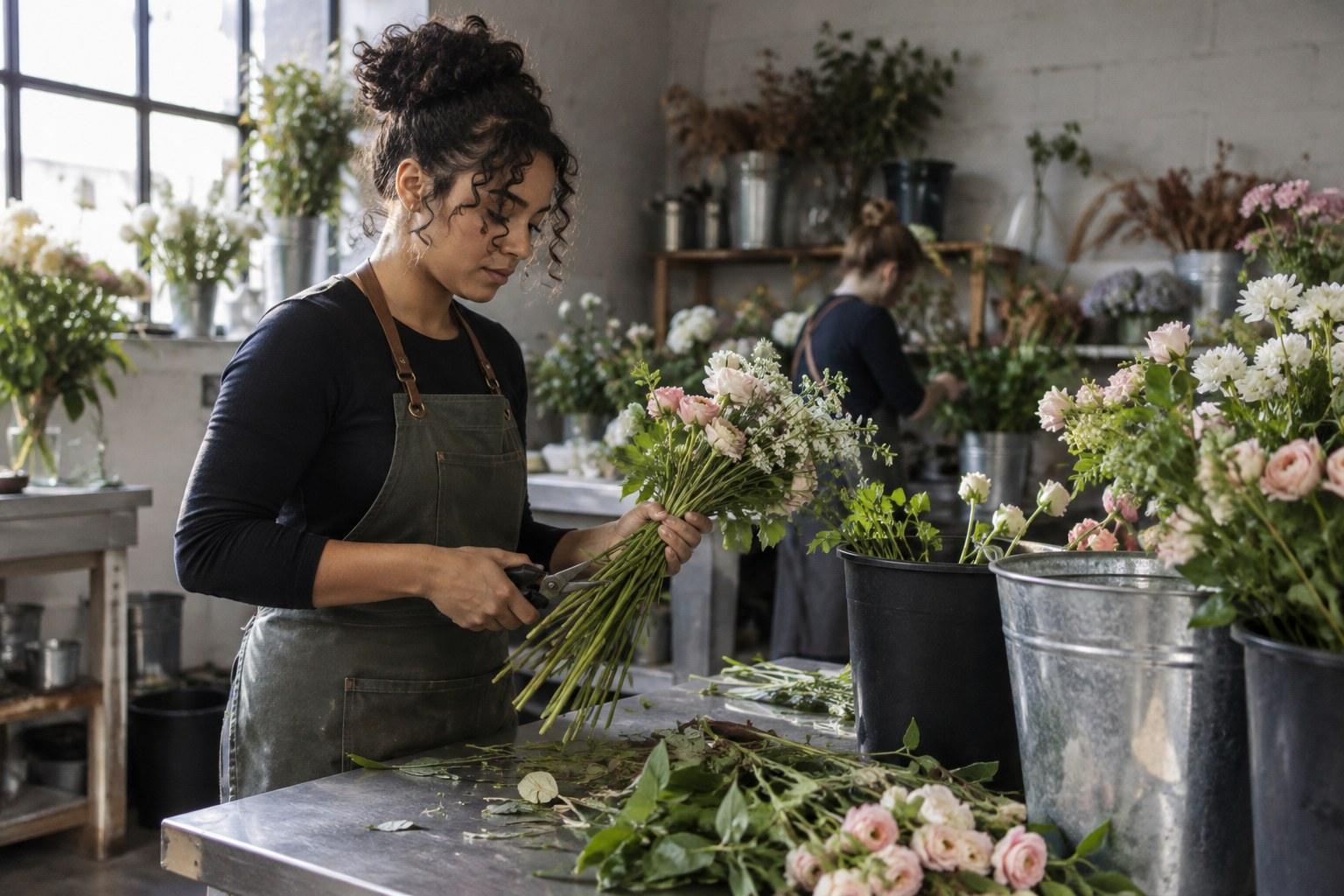
Bad conditioning quietly kills more flowers than anything else. You can order perfectly and still lose a chunk of your stock if processing is rushed.
- Clean buckets, every time. Bacteria in dirty buckets block stems from drinking. Scrub and rinse between uses.
- Clean, sharp cuts. Use sharp tools and cut at an angle so stems can take up water. Crushed stems drink poorly.
- Strip below the waterline. Leaves sitting in water rot fast and foul the bucket for everything else.
- Hydrate properly. Give stems time to drink before you design with them — don’t process and arrange in the same rushed hour.
- Cool storage. Keep flowers somewhere cool, out of direct sun and away from heat sources, and away from ripening fruit.
- Handle less. Every time a bloom is picked up, moved or squeezed into a bucket, it risks damage. Plan your workflow so stems move as few times as possible.
Transport deserves the same care. Pack arrangements so they can’t shift, carry water where you can, and build fragile pieces on site if the drive is long. A snapped bouquet at the venue door is waste and stress.
Designing for less waste without cutting corners
Sustainable wedding floristry isn’t about making smaller, sadder designs. It’s about designing smarter, so more of what you buy actually shows up in the finished piece.
Use the whole stem
Tight, low designs often cut stems right down, which means you’re paying for length that ends up on the floor. Looser, more natural shapes let stems keep their length and movement. Off-cuts and side shoots can go into buttonholes, cake flowers or small bud vases instead of the bin.
Go foliage-forward
Foliage-forward designs use greenery as a feature, not just filler. They tend to be hardy, generous and textural — and they let a smaller number of focal blooms do a lot of visual work. Many couples love the relaxed, garden feel they create.
Reusable vessels and mechanics
Build up a hire stock of vessels, urns, bud vases and frames you own and reuse — less disposable packaging, every single event.
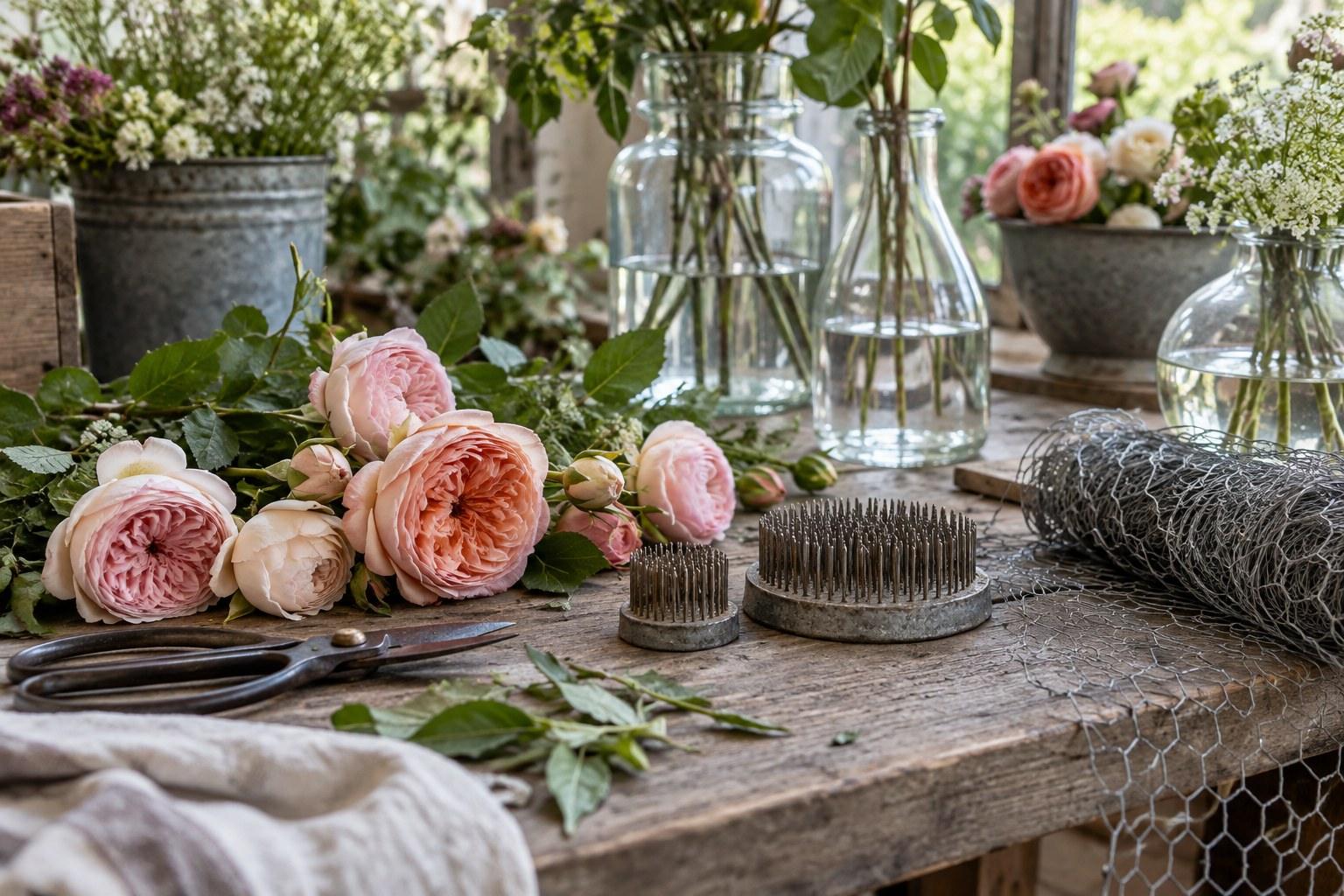
The bigger question for many florists is floral foam. Plenty of florists are choosing to move away from single-use foam where they can, and there are good reusable alternatives worth learning:
- Chicken wire — scrunched into a vessel or shaped over a frame, it holds stems securely and can be reused many times.
- Pin frogs (kenzan) — heavy metal pins that anchor stems in low bowls; they last for years.
- Water tubes — keep individual stems hydrated in installations, arches and hanging pieces.
- Grid tape and stem grids — simple structures across a vessel’s mouth that keep stems in place.
None of these is a perfect swap for every design, and each needs practice. Large installations in particular take planning without foam. But building your confidence with foam-free mechanics gives you more options — and a clear answer when a couple asks.
Wedding flower waste fixes at a glance
| Waste source | Fix | When in the workflow |
|---|---|---|
| Over-ordering | Tested floral recipes, stem counts per design, planned buffer per variety | Quoting and ordering |
| Fragile varieties failing | Choose hardy varieties where the design allows; keep delicate blooms for close-up pieces | Design consultation |
| Poor conditioning | Clean buckets, sharp cuts, stripped stems, hydration time, cool storage | Processing on delivery |
| Transport damage | Secure packing, water sources, building fragile pieces on site | Packing and delivery |
| Hidden or trimmed stems | Looser designs that keep stem length; reuse off-cuts in small pieces | Design and build |
| Single-use mechanics | Chicken wire, pin frogs, water tubes, reusable vessels and frames | Design and build |
| Duplicate arrangements | Move ceremony pieces to the reception | Proposal and on the day |
| Leftovers after the event | Guests take flowers home, donate, dry or press, compost green waste | Pack-down and after the event |
Repurposing wedding flowers on the day
One of the easiest wins is designing arrangements to work twice. Ceremony pieces — aisle arrangements, welcome sign florals, arbour clusters — can often move to the reception as bar flowers, cake table pieces or sweetheart table decoration. Bridesmaids’ bouquets can sit in vases on the head table.
The trick is planning it from the proposal stage. Design the pieces so they’re easy to move, agree who moves them (you, your team or the venue staff), and build the move into the timeline. Couples love it because they get more impact from the same flowers.
This is where florists, stylists and planners really need to work together. If you’re interested in how floral fits into the wider look of the day, the Certificate in Wedding Styling covers the bigger design picture.
What to do with wedding flowers after the event
Leftover flowers don’t have to become landfill. Have a plan before the day, put it in your proposal, and confirm it with the couple and venue.
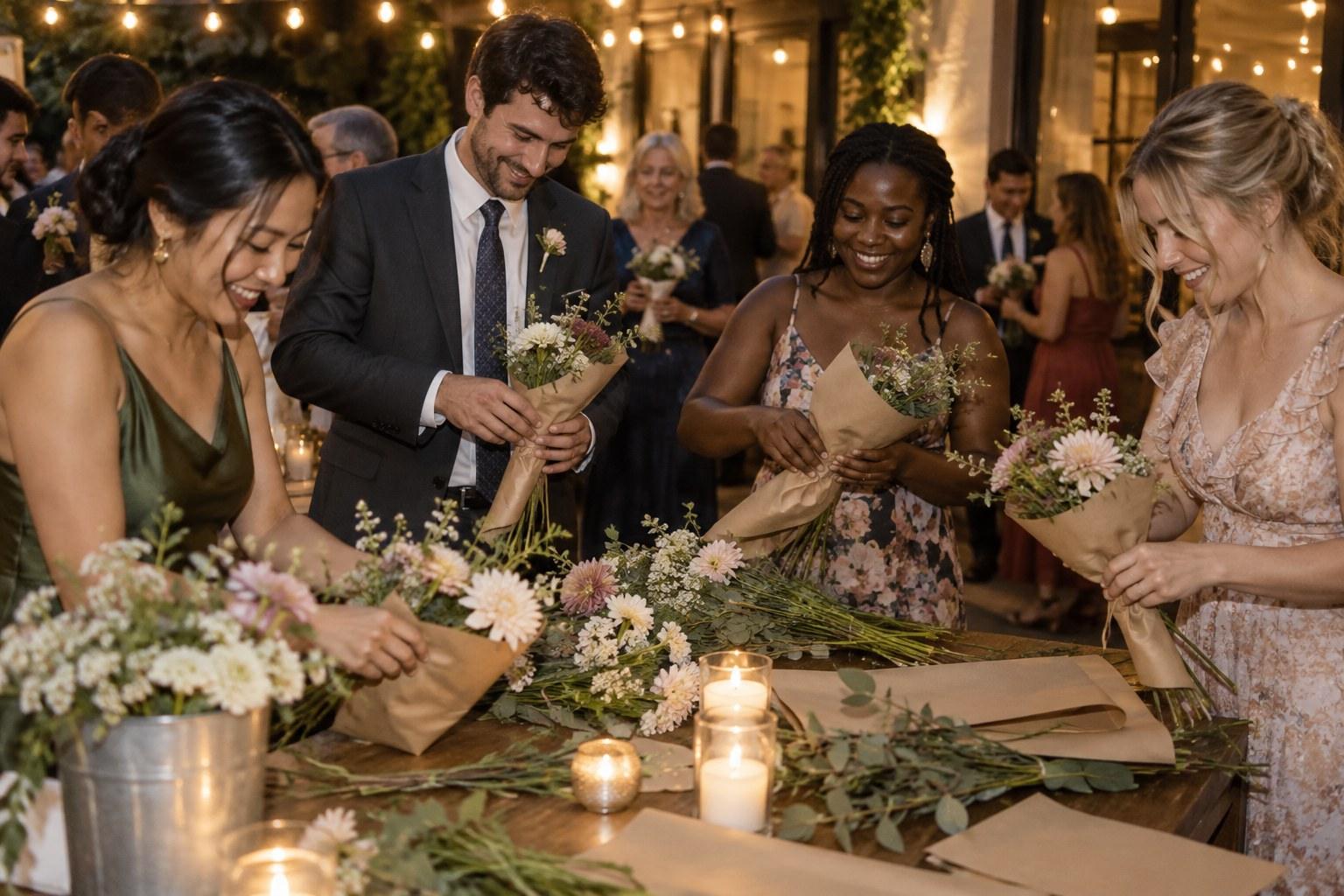
- Guests take flowers home. Provide paper or twine near the exit and let guests wrap a small bunch from the tables. It’s a lovely final touch.
- Donate. Some community organisations, aged care homes or hospitals may accept flowers — always check their rules first, as many have restrictions.
- Dry or press. The bridal bouquet, or a few meaningful stems, can be dried or pressed as a keepsake. Some florists offer this as a service.
- Compost green waste. Strip anything non-organic — wire, ties, tape — and compost what’s left.
Talking to couples about sustainable wedding flowers — without preaching
Couples don’t want a lecture. They want beautiful flowers and a florist they trust. So lead with the benefits they care about: designs that look abundant, pieces that work twice, flowers that go home with their guests.
Offer choices rather than rules. “We can build this in a reusable vessel with chicken wire, or I can show you a foam-free option for the arch” lands far better than a speech. Some couples will care deeply about sustainability; others won’t mention it. Meet them where they are, and let your process do the quiet work in the background.
Track your own waste to improve your recipes
You can’t improve what you don’t notice. After each wedding, jot down what was left over, what failed, and why. Which variety arrived damaged? Which design used fewer stems than the recipe said? Which buffer went untouched?
Feed those notes straight back into your recipes and ordering. Over time, your quotes get tighter, your orders get leaner and your waste shrinks — without anyone noticing a difference in the designs. If you want a practical companion for building recipes, processing and running jobs, grab the Wedding Florist’s Handbook.
And if you’re ready to build those skills properly — design, mechanics, recipes and the business side of floristry — the Certificate in Floral Design is the place to start. Planning to grow beyond flowers? The Advanced Certificate in Wedding Planning, Styling and Business takes you into the full wedding picture.
Wedding flower wastage FAQs
How do florists reduce wedding flower wastage?
Mostly through planning. Accurate floral recipes, intentional buffer stems, careful conditioning, reusable mechanics, arrangements that work twice on the day and a clear plan for leftovers all cut waste without changing how the designs look.
What can I use instead of floral foam for wedding flowers?
Common reusable alternatives include chicken wire, pin frogs, water tubes and grid tape or stem grids. Each suits different designs, so practise with them before a wedding — especially for large installations.
Can wedding flowers be reused from the ceremony to the reception?
Yes, and it’s one of the simplest ways to reduce waste. Design ceremony pieces so they’re easy to move, agree who will move them, and build the move into the wedding timeline.
What happens to wedding flowers after the wedding?
With a plan, they can go home with guests, be donated where an organisation accepts them, be dried or pressed as keepsakes, or have non-organic materials removed and be composted.
How many extra stems should a florist order for a wedding?
There’s no single number. Set a buffer per variety based on how fragile it is and how it’s used, write it into your order, and track what’s left over after each wedding so you can refine it next time.