Foam-free florals aren’t just a trend — they’re a technique. And once you’ve learned it properly, you’ll wonder why you ever reached for a soaked green brick in the first place.
For years, floral foam was the default mechanic in wedding work. Soak it, tape it, stab stems into it, done. But more florists are moving away from it, and more couples are asking about it in their first consultation. So if you’re building a wedding floristry business — or you’re already in one and quietly still buying foam by the box — this is your practical guide to the floral foam alternatives working florists actually use, which ones suit which designs, and what to watch out for on the day.
Why wedding florists are looking for floral foam alternatives
Traditional floral foam is a plastic-based product. It’s designed for single use, it crumbles as you work it, and those crumbs break down into tiny plastic particles that end up in sink water, drains and bins. It doesn’t compost, and once it’s been used, there’s not much you can do with it except throw it away.
That’s sat uncomfortably with a lot of florists for a long time — it’s hard to talk about seasonal, local, beautiful flowers while sending a bin bag of plastic dust to landfill after every wedding. Couples are paying attention too. Many want their wedding to feel considered, and “how do you keep your flowers alive without foam?” is now a genuinely common question.
Here’s the honest bit: going foam-free isn’t harder, it’s different. Foam lets you place stems anywhere at any angle. Foam-free mechanics make you think about structure, water and movement from the start. The result is usually looser, more natural design — the style a lot of couples are asking for anyway.
The best floral foam alternatives for wedding florists
There’s no single replacement for foam. There’s a toolkit. The skill is knowing which mechanic to pick for which piece.
Chicken wire and reusable wire netting
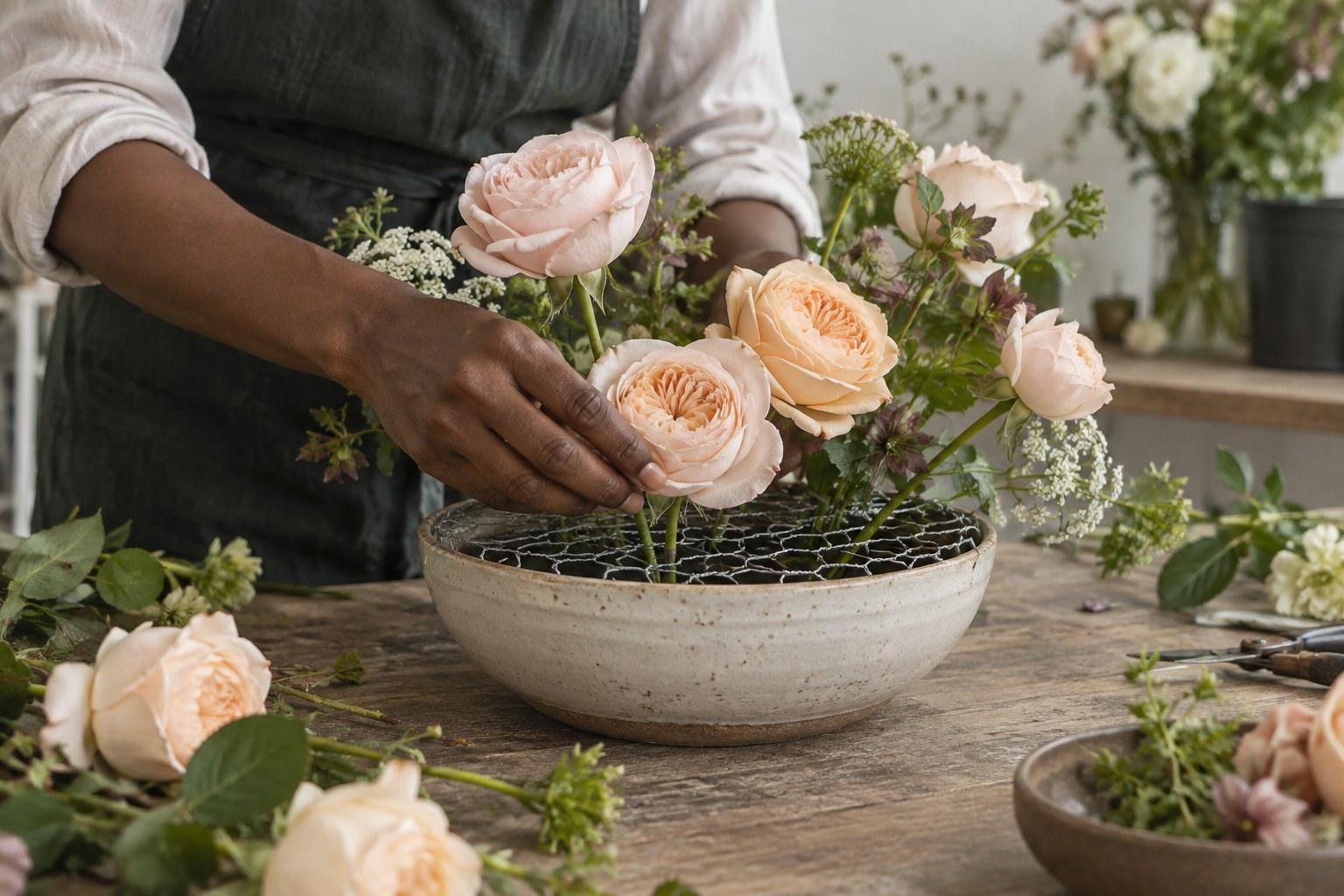
This is the workhorse. A loosely scrunched ball or pillow of chicken wire pressed into a vessel gives you dozens of little anchor points at different heights. Stems lock in place, sit in water, and you can angle them out over the lip in a way that looks effortless. Secure it with tape or ties so it doesn’t shift, and pick a gauge that’s easy to shape. Coated or reusable netting is gentler on hands and vessels and can be cleaned and used again and again.
Flower frogs and kenzans (pin holders)
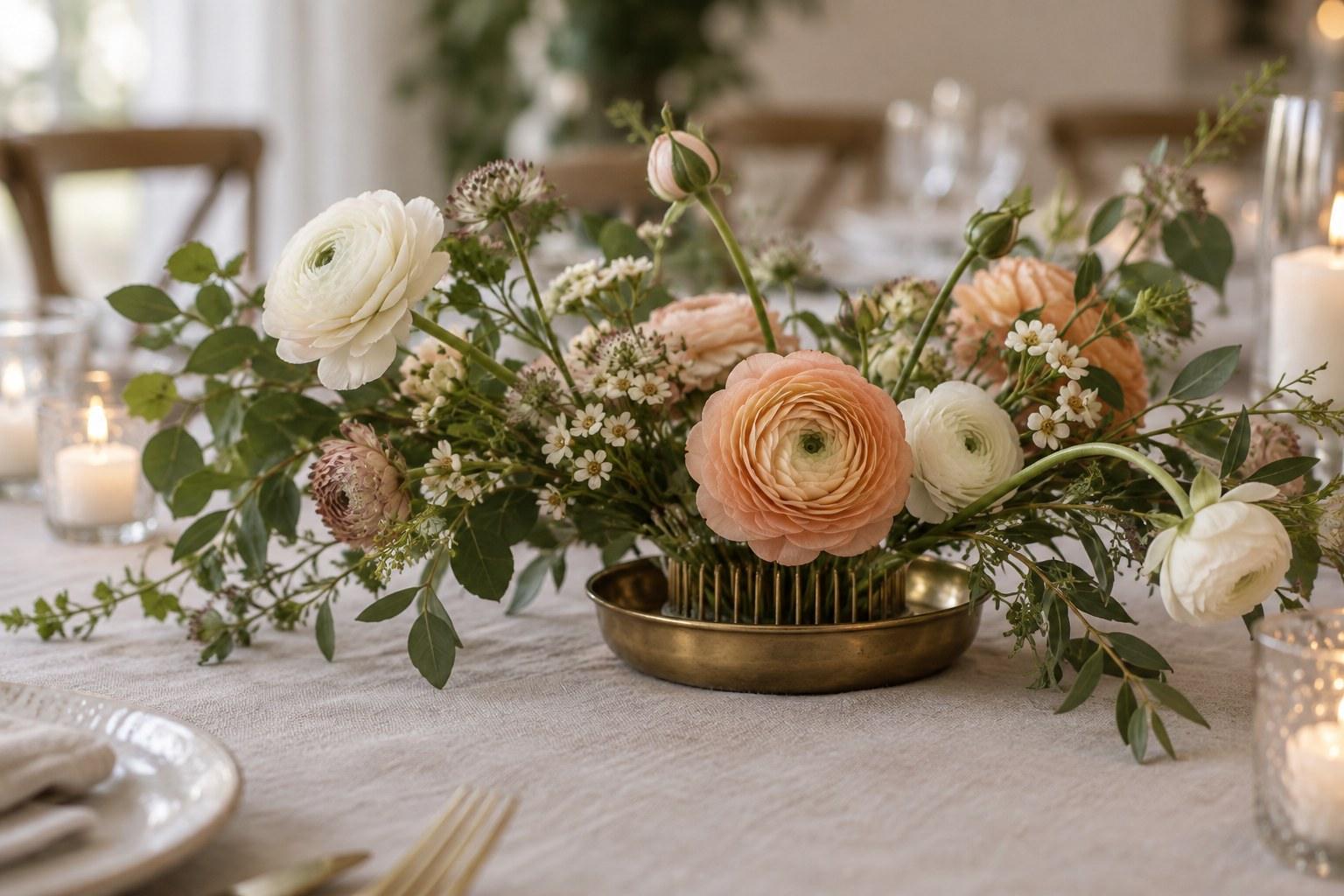
A kenzan is a heavy base covered in sharp metal pins; a flower frog can be pins, a cage or a grid. Push or impale stems onto it and they stand where you put them. They’re brilliant for low, airy centrepieces in shallow dishes, ikebana-inspired work and anything where you want visible negative space. Pair a frog with a little chicken wire on top for extra hold in fuller designs. Secure the frog to the vessel with florist putty — on a clean, dry surface, before you add water.
Tape grids across vase mouths
Clear or green waterproof tape laid in a criss-cross grid across the top of a vase is the fastest foam-free mechanic there is. Each square holds a few stems upright and spaced. It works best in vases with a defined lip, for medium arrangements, and when you need to build a lot of matching pieces quickly. Hide the tape edge under the rim or with foliage.
Water tubes and vials
Small tubes with a rubber cap let individual stems drink when there’s no vessel at all — think floral arches, cake flowers, chair ends and suspended pieces. Wire or tie them into place, tuck them behind foliage, and keep spares filled for top-ups. Rinse and reuse them; they’re one of the most cost-effective mechanics in your kit.
Moss — and its own sourcing caveats
Damp moss wrapped in chicken wire is a classic foam-free base for installations, wreaths and garlands. It holds moisture, it’s natural and it can often be composted afterwards. But be honest with yourself about where it comes from: bagged moss may be harvested from the wild, and some is dyed or treated. Ask your supplier how it’s sourced, look for responsibly harvested or cultivated options, and don’t assume “natural” automatically means “sustainable”.
Reusable mechanics like pillow cages
Pre-formed wire or plastic cages (often called pillows) are shaped to sit on plinths, mantels or the ends of tables. You fill them with chicken wire or moss and a water source, then design straight into them. They’re an investment you use season after season — a smart way to build a reusable inventory instead of a bin full of spent foam.
Branch armatures and natural structures
Twisted willow, birch, vines and woody branches can form a structure all on their own. Criss-cross branches inside a large urn and they become a grid; weave them through an arch frame and they become the bones of the design. Stems tuck into the gaps, often in tubes. It’s a very old technique, and it gives that wild, garden-grown shape couples love.
Sand, gravel or stones in vessels
For heavy branches and tall stems, weight at the base of an opaque vessel adds stability so large statement pieces don’t topple. Keep it clean, combine it with wire higher up for placement, and remember the extra weight when you’re carrying and loading.
Hidden water-holding vessels in installations
Big installations don’t have to be built on foam. Hide troughs, jars, buckets or lined containers inside the structure, fill them with chicken wire, and design out from them. The mechanics disappear under the flowers and the stems sit in proper water.
Compostable “foam-free” products
There are newer products marketed as compostable or plant-based alternatives to foam. Some florists find them useful for specific jobs. Before you sell them to a couple as the eco option, read the manufacturer’s claims carefully — check what “compostable” means for that product, whether it needs industrial composting, and how it should be disposed of. Pass on only what you can stand behind.
Learning to choose and combine these mechanics confidently is core floristry craft — it’s exactly the practical, hands-on thinking covered in the Certificate in Floral Design.
Floral foam alternatives compared: which technique to use
| Technique | Best for | Pros | Watch-outs |
|---|---|---|---|
| Chicken wire / reusable netting | Centrepieces, urns, large vessel arrangements | Reusable, flexible angles, stems sit in water | Secure it well; sharp edges can scratch vessels and hands |
| Flower frog / kenzan | Low centrepieces, shallow dishes, airy designs | Precise placement, lasts for years | Heavy; needs putty on a dry surface; less hold for very full designs |
| Tape grid | Bud vases, medium vases, repeated table pieces | Fast, cheap, easy to replicate | Single-use tape; needs a vase with a defined lip |
| Water tubes / vials | Arches, cake flowers, suspended pieces, chair ends | Hydrates individual stems anywhere; reusable | Small water supply; needs topping up and careful hiding |
| Moss in wire | Wreaths, garlands, installations | Holds moisture, natural look, often compostable | Check sourcing; can be messy and heavy when wet |
| Pillow cages | Mantels, plinths, table ends | Reusable inventory, quick to fill | Up-front cost; storage space |
| Branch armatures | Urns, arches, wild garden-style pieces | Natural structure, adds texture | Takes practice; stems often still need tubes |
| Sand / gravel | Tall branches, heavy statement stems | Stability for big pieces | Weight for transport; keep it clean for water quality |
| Hidden vessels | Large installations, floral meadows, ceremony features | Proper water supply, reusable containers | Plan the build early; vessels must be fully concealed |
Foam-free techniques for every wedding design
Bridal bouquets: no foam needed
A hand-tied bouquet is foam-free by default. Spiral the stems, bind them, keep them in water until the last possible moment and wrap the handle with ribbon. If a couple asks for a cascading shape, build the trailing elements into the hand-tie with naturally drooping stems and foliage rather than reaching for a foam bouquet holder.
Centrepieces
Chicken wire in a bowl or compote, a frog in a shallow dish, or a tape grid across a vase — pick based on the shape. Low and airy? Frog. Full and lush? Wire. Twenty identical pieces in a hurry? Tape grid. Clusters of bud vases need no mechanics at all.
Arches and installations
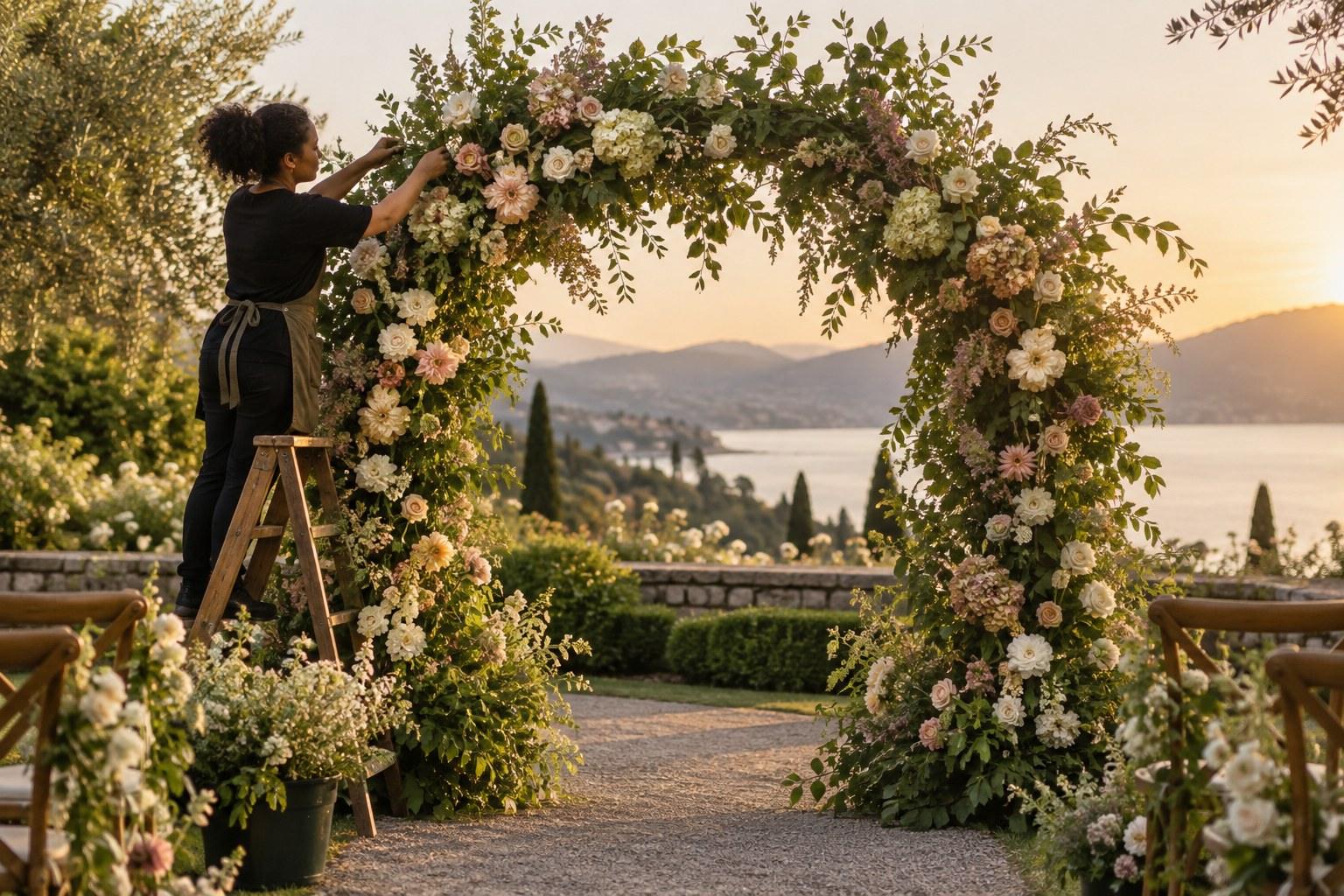
Wire your structure with chicken wire, moss or both, add hidden vessels or tubes for water, and design with hardy stems and foliage on the outer layers. Save delicate blooms for spots where you can hydrate them easily and add them last.
Suspended pieces
Hanging designs need lightweight mechanics: moss wrapped in wire, tubes, and robust foliage. Check rigging points and weight limits with the venue, and choose flowers that cope well out of water for the duration.
Buttonholes and corsages
These have always been foam-free — wired and taped stems, or small natural bindings. Condition flowers well beforehand and choose varieties that hold up out of water.
If you’re also designing the wider look — tablescapes, ceremony spaces, the whole room — the Certificate in Wedding Styling pairs naturally with floral work.
Hydration, transport and set-up without foam
Foam-free work changes your logistics, so plan for it:
- Hydration: stems in water generally drink better than stems in a block, but small reservoirs like tubes run dry. Condition everything well and build in top-up time.
- Longevity: choose hardy stems for pieces with limited water — installations, suspended work, anything outdoors in the heat.
- Transport: water slops. Use crates, non-slip mats and part-filled vessels, then top up on site.
- Set-up time: large installations often need to be finished on site. Talk to the venue — and the planner — early about access times so your schedule is realistic.
- Bump-out: reusable mechanics come home with you. Allow time to collect, clean and store them.
Working closely with the planner on timings is half the battle — understanding how a wedding planner runs the day makes you a much easier florist to hire again.
How to talk to couples about foam-free florals
Don’t make it a lecture. Make it part of how you work. Mention it in your process, explain the look it creates, and be honest about the trade-offs — a few designs might take a different shape without foam. Couples value a florist who knows why they do things, not just what they do. And it becomes a genuine point of difference in your marketing, so long as every claim you make is one you can back up.
Ready to build the mechanics, design and business skills to work this way from day one? The Certificate in Floral Design is where to start. 🌿
Floral foam alternatives FAQs
What can I use instead of floral foam?
The most common floral foam alternatives are chicken wire or reusable netting, flower frogs and kenzans, tape grids, water tubes, moss wrapped in wire, pillow cages and branch armatures. Most florists combine several depending on the design.
Why is floral foam bad for the environment?
Traditional floral foam is a plastic-based, single-use product. It crumbles into tiny plastic particles as you work it, and it doesn’t compost, so used foam generally ends up as waste.
Do flowers last as long without floral foam?
They can. Stems sitting in proper water often drink well. The key is conditioning, choosing hardy varieties for low-water pieces, and topping up tubes and vessels before the event.
How do you make a wedding arch without floral foam?
Cover the frame in chicken wire, add moss and hidden water vessels or tubes, then design with hardy foliage and stems first. Add delicate blooms last, where you can keep them hydrated.
Are compostable floral foams a good alternative?
Some florists use them for specific jobs. Check the manufacturer’s claims carefully — what “compostable” means for that product and how to dispose of it — before you promote it to couples.
Foam-free floristry is a skill you can learn, practise and sell. Take the next step and build it properly.