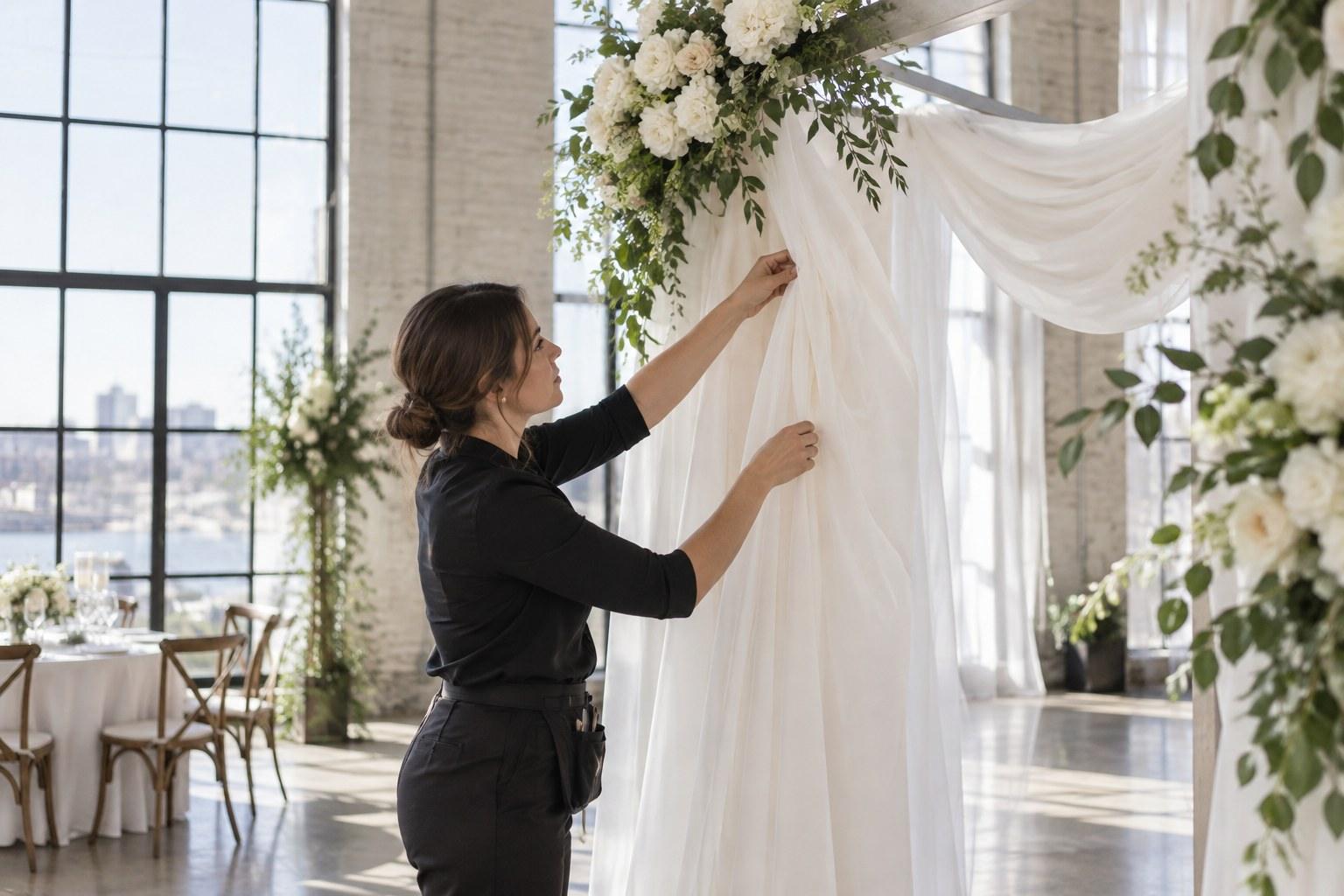
A stunning ceremony focal point can instantly elevate a venue—or it can sag, shift, and dominate every portrait for all the wrong reasons. Mastering wedding backdrop styling requires more than just pinning beautiful textiles to a freestanding structure; it demands a solid grasp of engineering, fabric physics, and spatial awareness. When you walk into an empty room, you are not just looking at aesthetics—you are calculating weight loads, anchoring points, and how midday sun or interior spotlights will hit translucent layers.
Too many setups look incredible on mood boards yet fail the moment a gentle draft passes through a historic ballroom or an outdoor terrace. If a structure wobbles when someone walks past, or if a heavyweight velvet curtain pulls a lightweight aluminum pipe out of plumb, your design collapses. Professional backdrop installation is entirely about hidden mechanics—securing the load so that your visual statement remains pristine, rigid, and completely photogenic from the first guest arrival to the final dance.
Understanding these technical fundamentals separates hobbyists from professional stylists who can walk into any venue and deliver flawless results. Whether you are building an architectural arch, hanging yards of heavy velvet, or rigging cascading florals, your installation must survive real-world conditions without breaking a sweat.
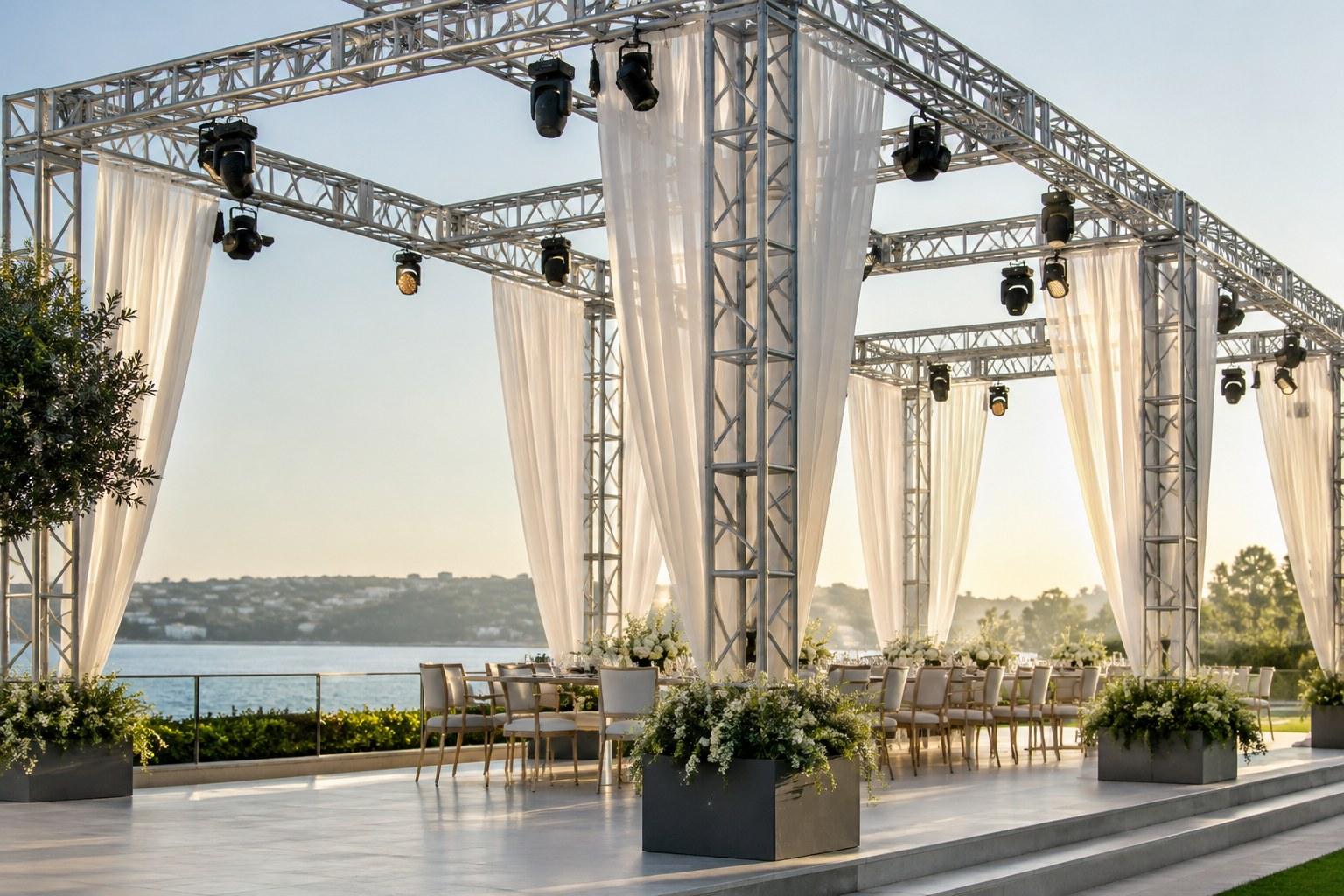
Frame Selection and Structural Integrity
Before you choose a single yard of fabric or select a single bloom, you must evaluate your structural support system. Aesthetics mean nothing if your frame lacks the structural backbone to hold your vision upright.
Aluminium Trusses Versus Pipe-and-Drape Systems
Lightweight pipe-and-drape kits are easy to transport, but they have severe load limits. If you hang dense damp florals or heavy textured fabrics from a standard telescopic upright, the crossbar will inevitably bow in the middle. For grander installations involving substantial weight, upgrade to modular box trusses or heavy-gauge steel uprights that lock securely into weighted baseplates.
Weight Distribution and Ballasting
Physics dictates that any vertical structure with fabric acting as a sail will catch air currents. If you build a backdrop outdoors or in a drafty heritage hall, you must calculate ballast requirements. Always use flat steel baseplates weighing at least fifteen kilograms, and supplement them with hidden sandbags positioned directly over the plate centers. Never rely on the venue’s antique furniture or decorative pillars to anchor your freestanding structures.
Fabric Physics: Tension, Weight, and Drape
Different textiles behave in completely unpredictable ways once they are suspended in the air. Mastering fabric choice is a core pillar of professional wedding backdrop styling that every designer must master.
| Fabric Type | Ideal Weight & Tension | Best Use Case | Common Pitfall |
|---|---|---|---|
| Chiffon & Voile | Light tension, flowing drape | Soft, romantic, layered looks | Sags drastically when wet or windy |
| Heavy Velvet | High tension, robust frame required | Luxurious, dramatic focal walls | Pulls lightweight pipes out of alignment |
| Raw Silk | Medium tension, gentle pinning | Textured, organic backdrops | Shows water spots and handles creases poorly |
| Matte Polyester | Versatile tension, easy clamping | Clean geometric backdrops | Can look cheap under direct flash photography |
Rigging Floral Mechanics to Structures
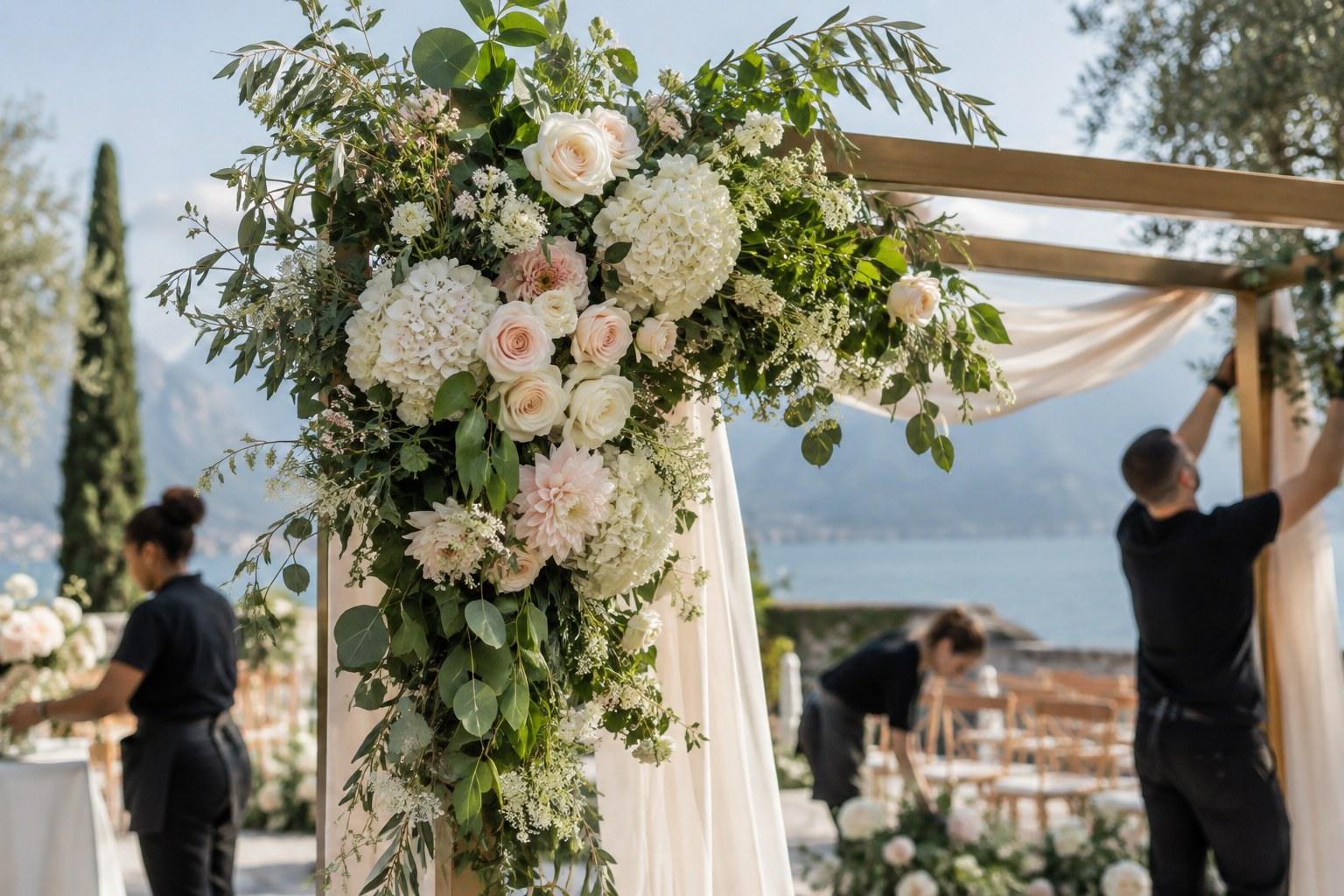
Suspending botanical installations from a backdrop frame introduces entirely new safety challenges. Floral foam holds significant water weight, meaning your arrangements become heavier as the event draws closer. Never clamp floral mechanics directly onto smooth metal pipes without a friction base, or the entire arrangement will slide downward during the ceremony.
Instead, use rubberized gripping tape or pre-built wire mesh armatures that clamp securely around the frame before any stems go in. Distribute the weight symmetrically across the structure to prevent lateral torque that can pull your vertical supports off balance.
Common Installation Mistakes That Ruin Photos
Even experienced designers occasionally fall victim to physics traps during tight load-in windows. Recognizing these pitfalls before you arrive on-site saves your reputation and protects your equipment.
The Sagging Header Problem
A horizontal crossbar spanning more than three metres without central support will inevitably bow under the weight of fabric and florals. That downward curve instantly warps the entire geometry of your design. Always use a rated vertical support leg in the center for wider installations—or step up to a box truss system that distributes tension evenly across multiple load-bearing points.
Ignoring Light Transmission and Shadow Play
A translucent chiffon or raw silk panel looks airy and delicate in daylight, but when placed in front of harsh architectural uplighting or direct evening spotlights, it turns completely see-through. Suddenly, the venue’s emergency exit signs, wall sockets, or tangled rigging cables are broadcasting directly behind the couple. Always test your fabric opacity under the exact lighting conditions you will face during the ceremony.
If you discover that your textile is too sheer, layer an opaque backing lining behind the feature fabric, or reposition your lighting plan so fixtures wash the structure from the front rather than casting silhouettes from behind.
Building a Reliable Professional Toolkit
Executing high-end designs requires physical gear that goes far beyond what retail craft stores provide. Your kit should feature heavy-duty spring clamps in multiple sizes, professional zip ties, clear fishing line for floating elements, leather work gloves, a heavy mallet, a digital laser measure, and gaffer tape that matches common flooring and staging finishes.
Having the right hardware on hand turns a potential disaster into a minor adjustment. When a venue manager refuses to let you drill into historic plaster, your weighted baseplates and tension cables become your best friends. Preparation is the single biggest differentiator between an amateur setup that requires constant babysitting and a professional installation that stands rock-solid for hours.
To master the complete methodology behind stunning visual concepts, spatial planning, and advanced design execution, explore the Certificate in Wedding Styling. You will learn how to turn raw venue spaces into breathtaking backdrops while protecting your operational margins and creative reputation.
If you want to understand how spatial layouts and vendor timelines intersect with your visual installations, pairing your styling education with the Certificate in Wedding Planning gives you total control over the entire event ecosystem. True design excellence lives at the intersection of aesthetic vision and flawless technical execution.
FAQs
How do you keep a wedding backdrop from swaying in the wind?
Anchor your base plates with hidden stage weights or sandbags that match the floor finish. For outdoor installations, calculate wind resistance and use guy lines or internal bracing to prevent swaying.
What is the best fabric for a seamless wedding backdrop?
Heavyweight linen, matte velvet, and dense matte polyester work best because they absorb light gracefully without creating harsh glares in professional photography. Avoid cheap synthetics that reflect flash photography and reveal wrinkles easily.
How do you attach heavy florals to a pipe-and-drape frame?
Never pierce structural aluminum frames with screws. Instead, use specialized rigging clamps, load-rated truss hooks, or independent armature stands positioned behind the main structure to support heavy floral weights.
What size should a ceremony backdrop be for standard photography?
A standard ceremony backdrop should be at least 2.4 to 3 meters wide and roughly 2.4 meters high to frame a couple comfortably without looking dwarfed by high ceilings.