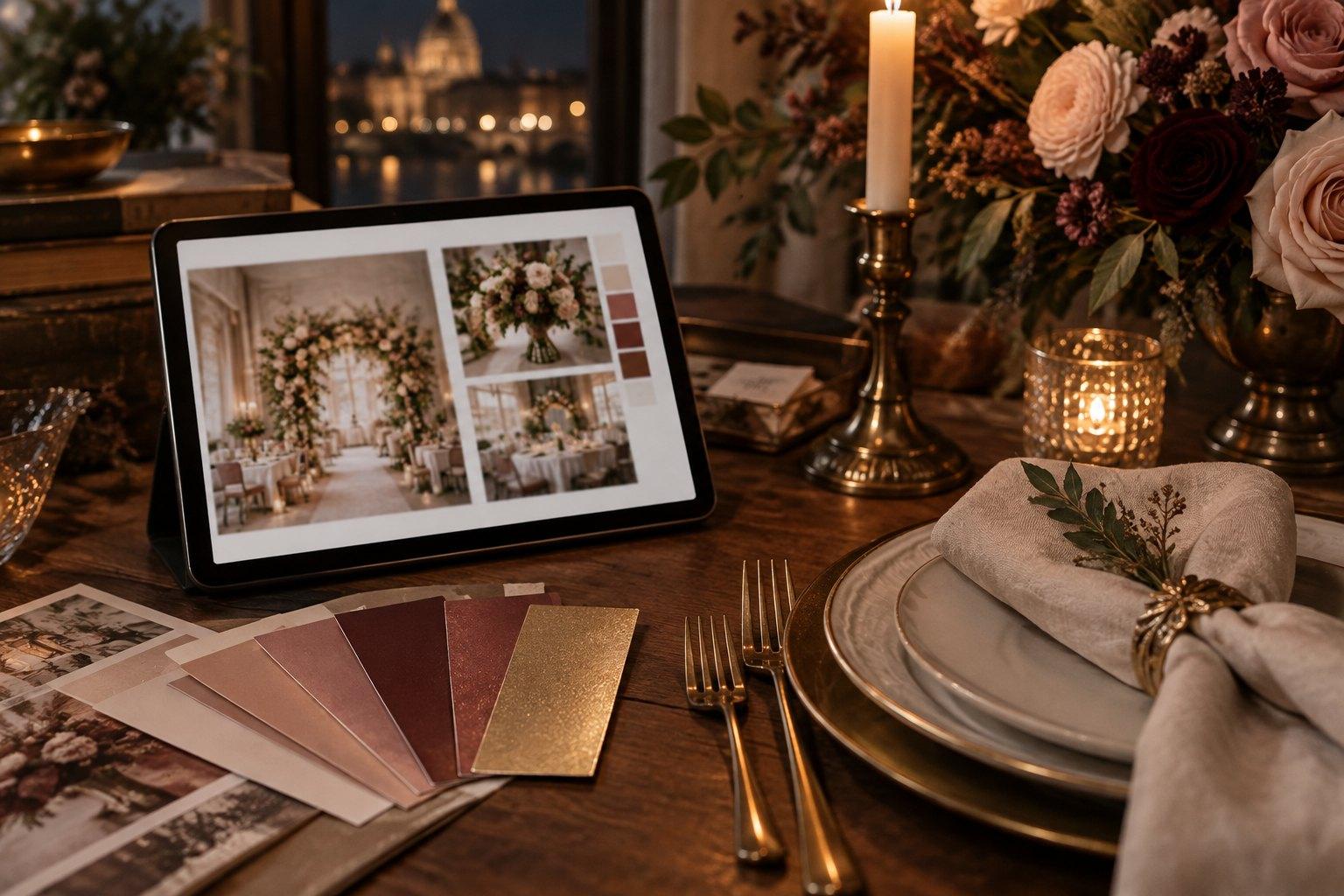
The Wedding Stylist’s Handbook (Volumes 1 & 2) by Jac Bowie is a two-volume guide to wedding styling: Volume 1 builds your eye — design principles, the stylist’s toolbox, colour and the materials of décor — while Volume 2 turns that eye into real weddings, covering light, flowers, tables, spatial planning, install day and the business of styling. The ebook brings both volumes together in one file, with fillable worksheets throughout.
If you’re thinking of buying this wedding stylist handbook, you probably want to know exactly what you’re getting before you commit. This is that tour — what each volume covers, how the worksheets work, who it suits and how it fits alongside formal training.
What is The Wedding Stylist’s Handbook?
It’s a practical, full-colour reference for anyone who designs wedding spaces — or wants to. It’s built on The Wedding Academy’s Certificate in Wedding Styling and written by Jac Bowie, owner and CEO of The Wedding Academy, which has been teaching wedding professionals online since 2004.
It isn’t a coffee-table book of pretty pictures, though there’s plenty to look at. It’s designed to be used: read a chapter, complete the worksheet, apply it to a real wedding or a styled shoot.
Volume 1: building the stylist’s eye
Volume 1 is about the foundations — the way a stylist sees, thinks and chooses. If you’re new to styling, this is where your eye gets trained.
The stylist’s eye
This section starts with what a wedding stylist actually does — which is broader than most people expect — then helps you find your inspiration and your signature style. It covers the rules and elements of design, so you can explain why a room works rather than relying on instinct alone.
The stylist’s toolbox
Here you’ll learn to think in categories: hard goods (furniture, props, structures), soft goods (linen, drapes, cushions), live goods (flowers and greenery), graphics, and the guest experience as a whole. This framework changes how you build a concept and a quote.
Colour
The colour section moves from the colour wheel to harmonies and palettes, metallics and — crucially for wedding work — how colour reads in photographs. Palettes come with real hex codes you can copy straight into your design files, which is handy for mood boards and stationery briefs.
Décor and materials
This part covers the materials stylists work with every week: candles and candlelight, paper, print and signage, fabric and draping, and installations and fabrication. It’s where design meets practicality — what looks beautiful, what’s safe and what survives a long wedding day.
Volume 2: turning design into real weddings
Volume 2 takes your trained eye into the venue. It’s more applied, more logistical and very business-minded.
Light and flowers
Lighting can make or break a room, so this section helps you understand it properly and brief it clearly. It also covers how to talk about flowers with florists and couples, plus trees, greens and floral style — essential for stylists who work alongside floral designers rather than doing the flowers themselves.
The table
The table is where guests spend most of the reception, and this section treats it accordingly: creating a centrepiece, tabletop design, building mood boards and a set of signature tablescapes to learn from.
Space and production
This is the bit many styling books skip. It covers venues and marquees, floor and spatial planning, the difference between design and production, and the realities of install day and pack-down. If you’ve ever wondered how stylists transform a room in a narrow access window, this is the answer.
The business of styling
The final section covers clients, proposals and contracts, pricing your designs and your hire stock, building a portfolio, marketing and getting your work published. For many stylists, this is the section that turns a creative hobby into a viable business. Contract and tax details vary by country, so treat the guidance as a framework and check specifics with your own lawyer or accountant.
The Style Library
At the back of the book is the Style Library: a set of fully worked looks ranging from opulent luxury and garden romance to industrial loft and whimsical colour. Each one shows how the principles come together into a complete, cohesive concept.
Why is the handbook split into two volumes?
Styling is two skills living in one job. The first is design — seeing, choosing and combining colour, texture, light and scale into a concept that feels like the couple. The second is production — turning that concept into a quote, a floor plan, a load-in schedule and a room that’s finished before the first guest walks in.
Splitting the handbook this way mirrors how most stylists actually grow. You develop your eye first, often through styled shoots and friends’ events. Then you hit the practical wall: how do I price this, how many hours does the install take, what happens when the venue changes the access time? Volume 2 is written for that moment.
If you already have a strong design background — interiors, fashion, visual merchandising — you may find yourself skimming parts of Volume 1 and living in Volume 2. If you’re brand new, read them in order.
Volumes 1 and 2 at a glance
| Volume 1 | Volume 2 | |
|---|---|---|
| Focus | Building your eye | Applying it to real weddings |
| Main topics | Design principles, the stylist’s toolbox, colour, décor and materials | Light and flowers, the table, space and production, the business of styling |
| Best for | Beginners and anyone refining their design thinking | Stylists ready to quote, install and grow |
| Worksheets | Inspiration audits, palette builders | Lighting briefs, floor plans, production schedules, pricing calculators |
How the worksheets work
Worksheets run right through the handbook, and in the ebook they’re fillable — you type straight into them on screen, save your copy and print a fresh set whenever you need one. They work in common PDF apps on computer and tablet.
Examples include inspiration audits, palette builders, lighting briefs, floor plans, production schedules and pricing calculators. The idea is simple: every worksheet should end up as something you use in your business, not a box you tick once. There’s also a separate, lighter workbook file of the worksheets that’s easy to print for each client.
You can be printing your own palette builder within minutes of downloading. Prefer to try before you buy? Read a free chapter, worksheets included.
Who is the wedding stylist handbook for?
- Aspiring wedding and event stylists who want a structured foundation.
- Working stylists who want stronger design, colour and pricing skills.
- Planners, florists and venue teams who want to design the whole room rather than just one part of it.
- Career changers from interiors, retail display, hospitality or fashion who already have an eye and want the wedding-specific knowledge.
It’s probably not for you if you only want quick inspiration — a mood board app will do that. This book is for people who want to style weddings properly and get paid for it.
Is the handbook the same as the Certificate in Wedding Styling?
No — and that’s a common question. The book is built on the Certificate in Wedding Styling and is yours to keep as a reference and workbook. The course is structured study with assignments and tutor feedback, and finishing it earns you a certificate of completion from The Wedding Academy.
Many stylists use both: the course to learn in sequence with feedback, and The Wedding Stylist’s Handbook as the reference that lives on their desk long after they’ve finished. If you want to combine styling with planning, the Advanced Certificate in Wedding Planning, Styling & Business covers both.
How to get the most from the book
- Work through Volume 1 in order — the design foundations shape everything in Volume 2.
- Complete the palette and inspiration worksheets before you build your portfolio, so your work has a recognisable style.
- Use Volume 2 as a working manual — return to the production and pricing chapters before every quote and install.
- Recreate one Style Library look as a styled shoot to practise turning concept into reality.
See the rest of the Wedding Academy handbook series on the books page.
Frequently asked questions
What does The Wedding Stylist’s Handbook cover?
Volume 1 covers the stylist’s eye, the stylist’s toolbox, colour, and décor and materials. Volume 2 covers light and flowers, the table, space and production, and the business of styling, plus a Style Library of complete looks.
Is the ebook both volumes?
Yes. The Wedding Stylist’s Handbook ebook contains the complete contents of Volume 1 and Volume 2 in one PDF, with fillable worksheets.
Who wrote The Wedding Stylist’s Handbook?
Jac Bowie, owner and CEO of The Wedding Academy, which has trained wedding professionals online since 2004.
Is the handbook the same as the styling course?
No. The book is built on the Certificate in Wedding Styling and works as a reference and workbook. The course adds structured study, assignments and tutor feedback.
Can I read part of the book first?
Yes. You can read a free chapter, worksheets included, on The Wedding Academy website.
The handbook gives you the reference — the course gives you the structure, feedback and confidence to style real weddings. Learn design, colour, tablescapes, production and pricing step by step with the Certificate in Wedding Styling, taught 100% online by The Wedding Academy.