Great dessert table styling comes down to three decisions: a clear focal point, deliberate changes in height, and florals that frame the food without touching it. Get those right and a dessert table becomes one of the most photographed corners of the wedding — get them wrong and it looks like a buffet that wandered in from another event.
Here’s how professional wedding stylists plan dessert tables, from the first sketch to the final petal.
What makes good dessert table styling?
A dessert table isn’t just a place to put sweets. It’s a feature moment — usually one of the few areas guests deliberately walk over to, photograph and linger beside. That means it needs to work on three levels at once:
- From across the room — a strong silhouette and focal point that draws people in.
- Up close — beautiful detail in the desserts, vessels and florals.
- Practically — easy for guests or staff to serve from, safe for food, and stable for the whole event.
The stylist’s job is to balance all three. Pretty but impractical frustrates caterers. Practical but flat disappoints the couple.
Start with the layout
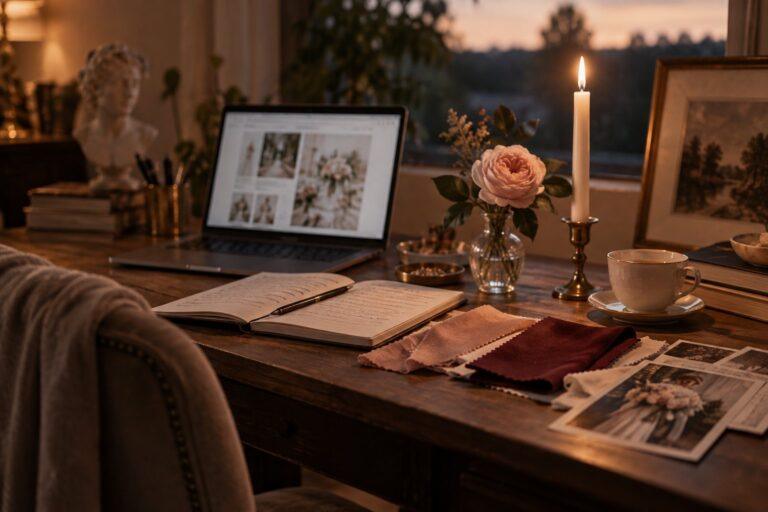
Before you think about flowers or colour, sketch the table from the front. Decide the table length, where it sits in the room, and what’s behind it. A dessert table pushed against a blank wall needs a backdrop; one positioned in front of a window or feature wall may need very little.
Choose your focal point
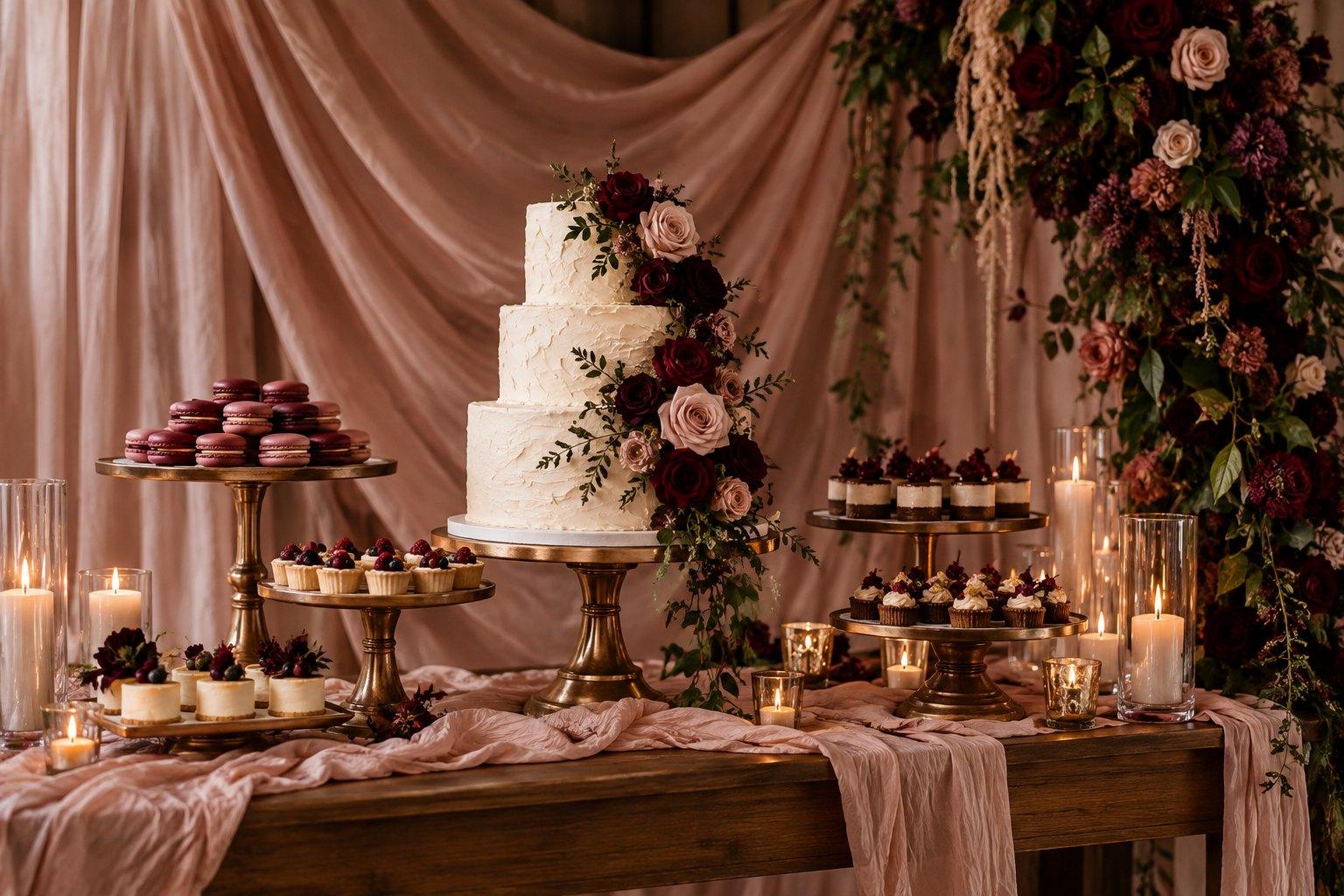
Almost every successful dessert table has one hero. Usually it’s the wedding cake, placed centrally or slightly off-centre. If there’s no cake — plenty of couples choose a dessert spread instead — make the tallest or most dramatic element the hero: a croquembouche, a stacked cheese wheel tower or a statement floral piece.
Symmetrical or asymmetrical?
Symmetry feels formal, classic and calm — matching stands either side of a central cake. Asymmetry feels relaxed, modern and editorial — the focal point set off-centre, balanced by a floral cascade or a cluster of smaller items on the other side. Both work. Choose based on the couple’s overall style and stick with it.
| Layout style | Feels like | Works best for |
|---|---|---|
| — | — | — |
| Symmetrical | Formal, classic, balanced | Ballrooms, black-tie, traditional weddings |
| Asymmetrical | Relaxed, editorial, modern | Garden, warehouse, boho and contemporary styles |
| Tiered or stepped | Abundant, generous | Large dessert spreads with many items |
| Minimal | Clean, gallery-like | Small numbers of statement desserts |
Height: the secret to a styled dessert table
Flat tables look like catering. Height creates interest, guides the eye and lets every dessert be seen. Aim for at least three distinct levels across the table:
- Low — platters, boards and trays sitting directly on the table.
- Mid — cake stands, pedestal plates and small risers.
- High — the cake on a tall stand, tiered stands, or a floral arrangement rising behind.
Use risers under the tablecloth — sturdy boxes, crates or purpose-made plinths — to create stepped platforms. Covered in the same linen, they look seamless and give you instant layers. Mix stand heights in odd numbers and groupings; a run of identical stands at the same height looks rigid.
Stability matters as much as style
Every riser and stand must be level and stable. Tables get bumped, guests lean in and staff reach across. Check that cake stands are rated for the weight they’re holding, that the table itself is sturdy, and that the heaviest items sit on the most stable surfaces. A collapsing cake is a story nobody wants to tell.
Florals: framing the food safely
Florals soften a dessert table, tie it into the wider wedding palette and add the luxury feel couples love. But flowers and food need careful handling.
- Keep flowers off the food — use florals beside and around desserts, not directly on them, unless the cake maker and florist have agreed a food-safe approach.
- Know which flowers are unsuitable — some popular blooms and foliage are toxic, and many commercially grown flowers are treated. When in doubt, keep them away from anything edible.
- Use barriers on cakes — if fresh flowers are going on a cake, the cake maker should decide how stems are wrapped or inserted. That’s their call, not yours.
- Hydrate discreetly — arrangements need water sources that won’t leak onto linen or desserts.
Where to place dessert table florals
A cascade spilling from the cake stand down to the table, a low garland running along the front edge, a statement arrangement on one end to balance an off-centre cake, or a floral backdrop behind the whole table — each creates a different mood. Pick one or two placements rather than scattering small posies everywhere; restraint keeps the desserts as the star.
Colour, linen and backdrop
Pull the dessert table into the overall palette. If the reception is cabernet and blush, echo it in the linen, florals, candles and even the sugar work or macarons. Coordinate with the cake maker early so the desserts and the décor are designed together rather than clashing on the day.
Linen should be pressed and floor-length on the front and sides — exposed table legs undo a beautiful design. Backdrops can be draped fabric, a greenery wall, an arch, a timber panel or a simple framed mirror. Keep the backdrop quieter than the desserts; it’s a frame, not the picture.
Working with caterers and cake makers
The dessert table is a team effort. Before the day, agree on:
- Delivery and set-up times — who arrives first, and when the cake goes in place.
- Temperature and timing — buttercream, chocolate and fresh cream don’t love warm rooms or direct sun; position the table accordingly.
- Serving plan — is it self-serve, staffed, or plated after the cake cutting? This changes how accessible items need to be.
- Labelling — dietary and allergen information needs to be clear and accurate. Styled signage cards work beautifully, but the content must come from the caterer.
- Pack-down — who removes stands, platters and florals, and when.
A step-by-step set-up order
On the day, work in a sequence so you’re never moving heavy pieces around finished food:
- Position and level the table, then add risers.
- Dress the table with pressed, floor-length linen.
- Install the backdrop and any large florals behind the table.
- Place empty stands and platters, adjusting heights and spacing.
- Let the cake maker and caterer place the food.
- Add small florals, candles and signage last, then step back and check the table from across the room.
A quick photo on your phone at this stage shows gaps and imbalances your eye misses up close.
Common dessert table styling mistakes
- Everything at the same height.
- Too many small items with no clear focal point.
- Florals crowding or touching food.
- A busy backdrop competing with the desserts.
- Poor lighting — a dessert table in a dark corner disappears in photos. Add candlelight or ask the venue about spot lighting.
- Forgetting the cake-cutting moment — leave space for the couple to stand and for the photographer to work.
Build your dessert table toolkit
Stylists who do dessert tables well keep a ready kit: risers in several heights, a collection of cake stands and pedestal plates in coordinating finishes, glass cloches, linen in neutral tones and a box of small vessels for florals. Over time, that inventory becomes part of what you offer clients.
For a deeper reference on styling principles, layout and running a styling business, The Wedding Stylist’s Handbook (Volumes 1 & 2) by Jac Bowie is a helpful companion. And if you’d like to understand the floral side more deeply, the Certificate in Floral Design pairs well with styling skills.
The bottom line
Dessert table styling is a small project that shows off big skills: composition, height, colour and collaboration. Pick a hero, build in layers, frame the food with florals placed safely, and coordinate early with the people making the desserts. That’s how you create a table guests can’t stop photographing.
Frequently asked questions
How do you style a wedding dessert table?
Choose a focal point such as the cake, decide on a symmetrical or asymmetrical layout, build at least three height levels with risers and stands, then add florals and linen in the wedding palette without letting flowers touch the food.
How do you add height to a dessert table?
Place sturdy risers under the tablecloth to create stepped platforms, then use cake stands, pedestal plates and tiered stands of varied heights. Check everything is level and stable.
Can you put fresh flowers on a wedding cake?
Only with the cake maker’s agreement and their preferred food-safe method. Many flowers are toxic or treated, so keep florals beside desserts rather than on them unless the cake maker approves.
What backdrop works for a dessert table?
Draped fabric, a greenery wall, an arch, a timber panel or a mirror all work. Keep the backdrop quieter than the desserts so it frames them rather than competing.
Who sets up the wedding dessert table?
Usually the stylist sets up the table, stands and décor, while the cake maker and caterer place and handle the food. Agree timings and responsibilities in advance.
Ready to design dessert tables, tablescapes and feature moments couples can’t stop photographing? The Certificate in Wedding Styling teaches you composition, colour and the business of styling — 100% online, at your own pace.