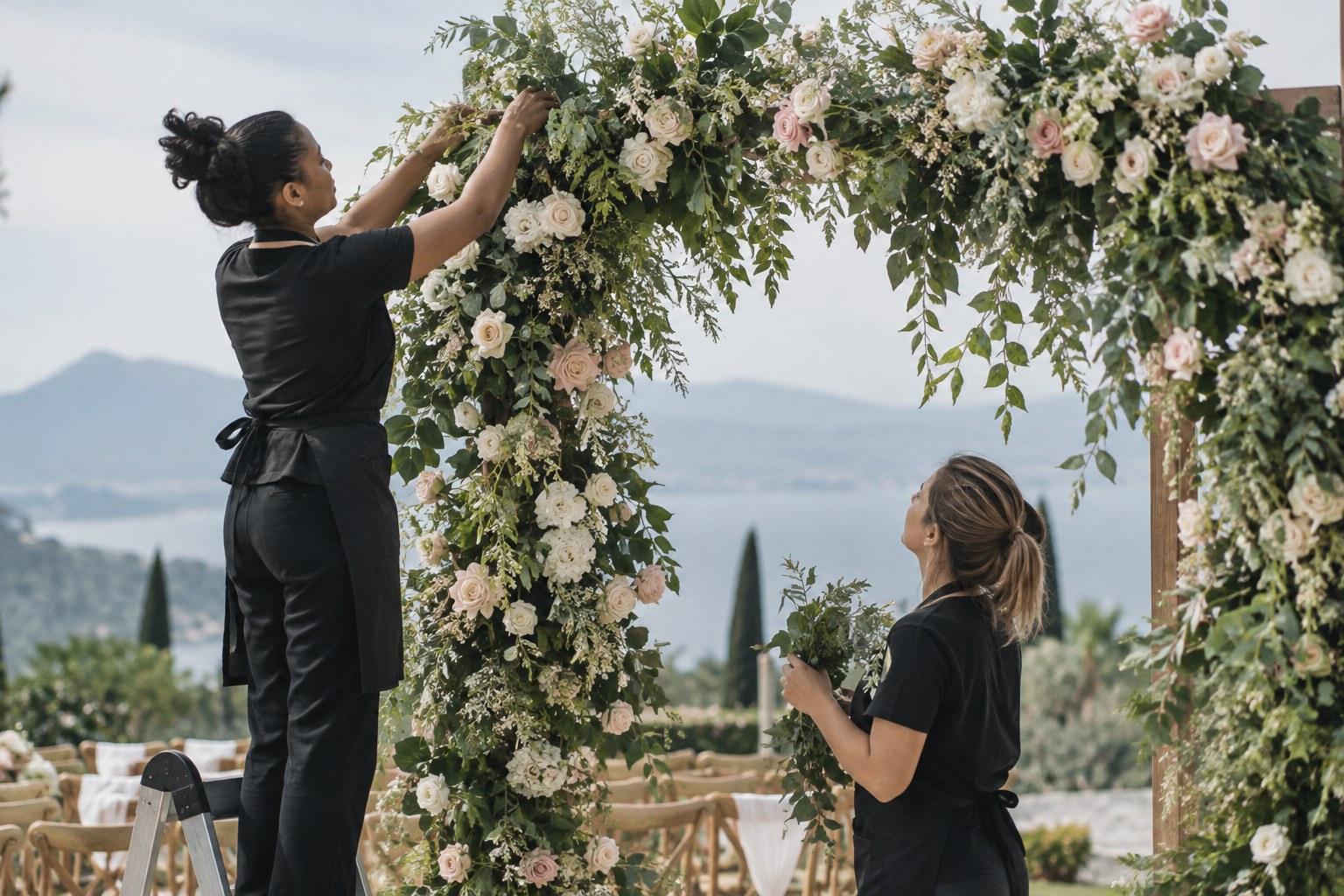
Hanging a cloud of stems from a ballroom ceiling looks effortless from the guest’s perspective, but the secret to gravity-defying design isn’t magic—it is precise wedding floral installation mechanics. When you commit to overhead work, you cross the line from standard floral styling into structural engineering, where safety and support override pure aesthetics every single time. If you want to execute breath-taking pieces without risking a catastrophic structural failure on event day, you have to look past the flowers and master the hidden framework holding everything together.
If your design education stopped at color theory and spiral hand-ties, you are walking into high-risk territory when a client requests a floating floral ceiling or a suspended arbor. Wishful thinking, extra zip ties, and a prayer will not save a ten-kilogram soaked foam structure swinging directly over a head table. You need absolute mechanical literacy, a deep respect for weight loads, and a clear understanding of how gravity interacts with your materials over time. Rigging is not an optional add-on skill—it is the non-negotiable foundation of high-end floral artistry that protects everyone in the room.
Let’s break down the essential gear, weight calculations, venue assessment protocols, and physical forces required before you ever touch a single stem. By shifting your focus from purely artistic composition to rigorous technical execution, you protect your clients, your business, and your professional reputation. Let’s examine what it takes to build overhead installations that stay securely where you put them, handling dynamic forces, environmental shifts, and tight timelines with total professional confidence.
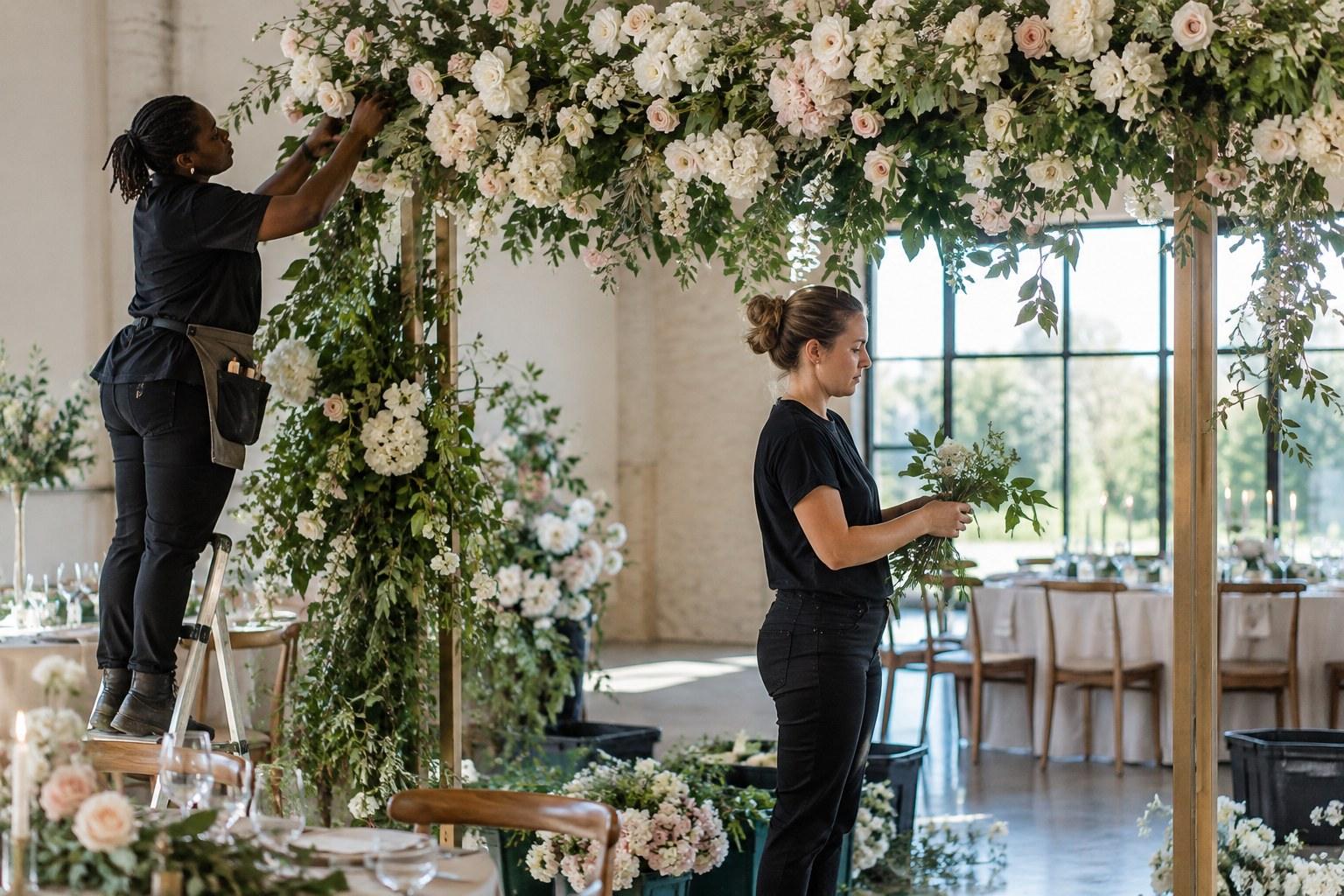
Assessing Venue Infrastructure for Wedding Floral Installation Mechanics
Before you design a single hanging piece, you need to understand the structural reality of the room. Not every ceiling is created equal, and not every venue manager will know the exact weight limit of their overhead beams. You must take responsibility for evaluating the physical space long before load-in begins. Walk through the venue with a critical eye—look up, locate anchor points, and identify what is structural versus what is purely decorative or cosmetic drywall. Assuming a ceiling can hold weight is the fastest way to invite disaster into your business.
Identifying Load-Bearing Points and Rigging Options
Your primary goal is locating certified load-bearing points. Exposed timber beams, steel trusses, and permanent architectural hooks are your best friends. Drop ceilings, suspended acoustic tiles, and decorative drapery tracks are absolute enemies—they will fail under weight, regardless of how light you think your arrangement is. Always request a structural rigging plan from the venue. If they cannot guarantee that a ceiling point can hold a specific static and dynamic load, you must bring a freestanding truss system or modify your design plan entirely to protect the safety of the event space.
Working with Venue Technicians and Rigging Safety
Never rig directly to venue architecture without explicit permission and, when necessary, sign-off from an on-site building engineer or licensed rigger. Many high-end venues require third-party rigging companies to handle the actual attachment to ceiling points for liability reasons. Build these costs into your client proposals from day one. Communication is your best tool here—clarify who holds ultimate responsibility for overhead safety before you sign any service agreements or order materials. Establishing clear boundaries with venue staff ensures smooth load-ins and zero last-minute surprises.
Selecting the Right Rigging Hardware and Substrates
The materials you use to anchor your flowers matter just as much as the blooms themselves. Using flimsy wire or degrading rope is a fast track to disaster. You need professional-grade rigging hardware rated for overhead lifting—not items sourced from the local craft store bargain bin. Invest in industrial-strength carabiners, steel cable (aircraft wire), rated turnbuckles, and heavy-duty zip ties that resist UV degradation and snapping under pressure. Every component in your rigging chain must be rated for overhead use and checked regularly for wear and tear.
Comparing Structural Substrates for Hanging Work
Choosing the correct substrate dictates how your piece will hold moisture, distribute weight, and maintain its shape over a long day. Here is how standard options compare when mapped against technical performance:
| Substrate Material | Weight Capacity | Moisture Retention | Best Use Case |
|---|---|---|---|
| Welded Steel Frames | Very High | None (requires attached vessels or tubes) | Large-scale suspended clouds, massive chandeliers, structural arches |
| Chicken Wire / Poultry Netting | Moderate | None (used for mechanics, not hydration) | Lightweight organic meadows, cascading stairways, pliable framing |
| Floral Foam Cages (Reinforced) | Moderate to High (when fully supported) | High (water-saturated foam) | Dense floral clusters requiring direct hydration in a suspended format |
| Living Willow / Branch Frameworks | Variable | Low to Moderate | Rustic organic installations, textural woven structures |
Understanding Weight Distribution and Physics
Water adds immense, deceptive weight to floral arrangements. A foam cage that feels manageable when dry can triple in weight once saturated with water and packed with dense stems. When designing overhead pieces, you must calculate the total wet weight before determining how many suspension points are required. A single-point hang creates a pendulum effect, allowing the piece to twist and sway with air currents, whereas a multi-point suspension distributes the load evenly and stabilizes the design against movement.
Understanding physics goes hand in hand with broader certificate in wedding styling principles, where visual balance must align perfectly with structural reality. If an installation looks visually top-heavy or unbalanced, it is likely experiencing uneven weight distribution that could strain your rigging hardware on one specific side. Always test your balance on the ground before raising any piece into the air, and make sure your suspension lines are adjusted to keep the installation perfectly level throughout the entire event.
Common Mistakes in Wedding Floral Installation Mechanics
Even experienced designers sometimes fall into traps when rushing to complete complex installs on a tight timeline. Avoiding these common errors will save your business from costly liability issues, damaged property, and ruined event spaces.
- Ignoring water weight: Forgetting to calculate the heavy burden of saturated foam, wet moss, and fresh stems, leading to snapped lines or sagging structures.
- Skipping redundancy: Relying on a single attachment point or a single zip tie instead of implementing backup safety lines that catch the piece if the primary fastener slips.
- Trusting decorative drop ceilings: Anchoring weight to acoustic tile grids or sprinkler pipes, which can cause catastrophic room flooding or structural collapse.
- Rushing the installation phase: Trying to rig overhead pieces in a crowded room with tight timelines instead of pre-constructing components on the ground.
- Failing to test tension: Neglecting to perform a stress test on your rigging hardware before adding delicate blooms and expensive greenery.
Step-by-Step Execution on Event Day
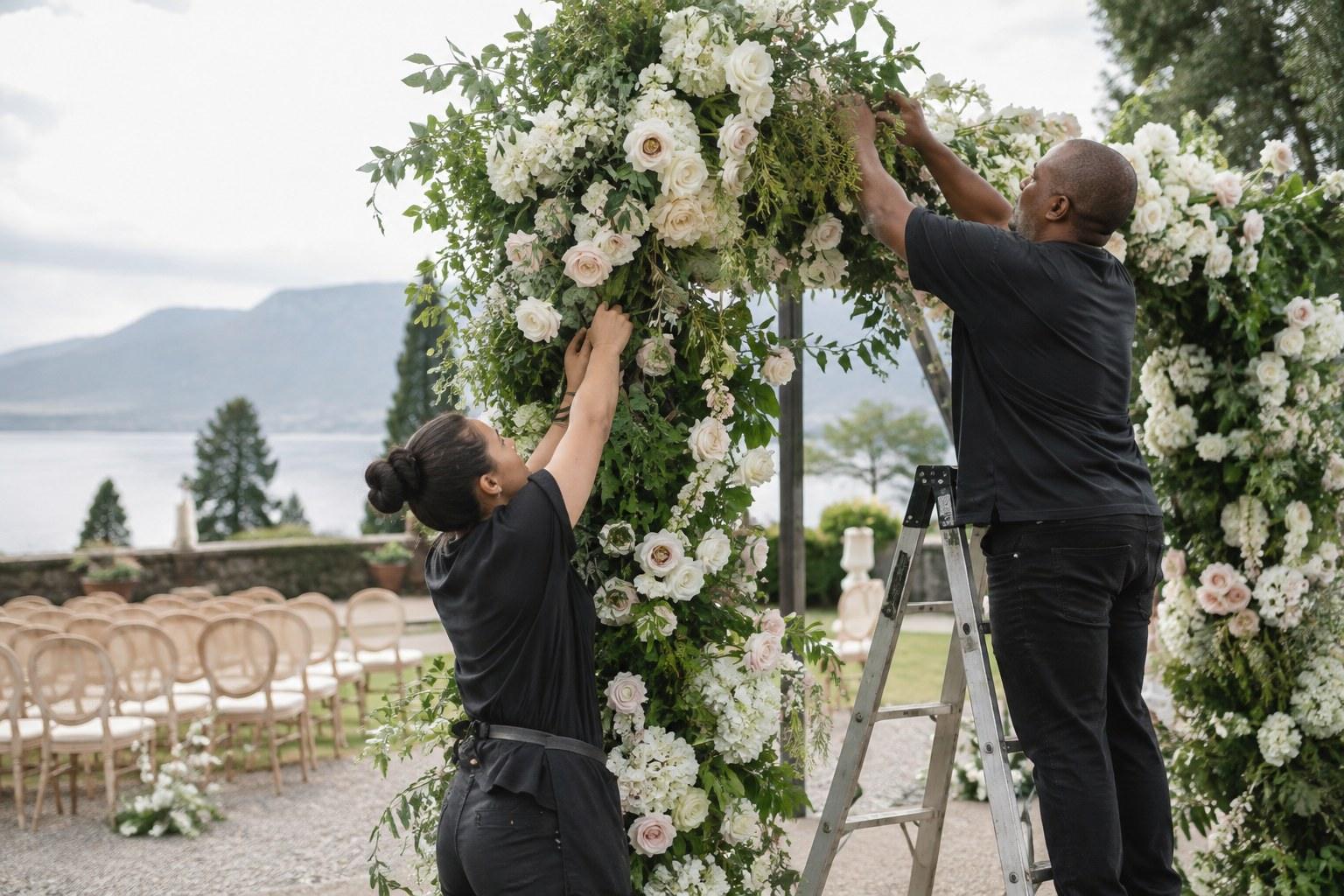
Execution requires a calm, methodical approach. First, build and test your structural framework on the ground where you can easily spot weak points and adjust balance. Next, secure all primary and secondary rigging hardware to the venue’s approved anchor points using a stable ladder or hydraulic lift, ensuring every carabiner is locked and every knot or clamp is secure. Attach your pre-built foundational frames to the rigging lines while keeping the piece low to the ground if possible, allowing you to add the majority of your foliage and heavier stems before hoisting the entire structure into its final position.
Once the framework is safely lifted to height, complete your final styling touches, fill in any awkward gaps, and check all safety lines one last time before guests enter the space. Teamwork is essential during this phase—never attempt a complex overhead install entirely alone. Designate specific roles so one person manages the lift and safety checks while another oversees the aesthetic adjustments. Clear communication between everyone on the installation team prevents accidents and ensures a streamlined setup process.
Master Professional Techniques From the Ground Up
Mastering structural mechanics changes how you pitch to clients, how you price your labor, and how confidently you operate on event days. When you understand the engineering behind your art, you stop crossing your fingers and start executing with absolute authority. If you are ready to transition from basic arranging to building complex, high-impact structural designs safely and professionally, explore our comprehensive certificate in floral design program and elevate every aspect of your floral business.
FAQs
How much weight can a typical venue ceiling hold?
Never assume a ceiling can hold weight. Always request a certified structural load plan from the venue management or bring a freestanding truss system if weight ratings cannot be guaranteed.
What hardware is safest for hanging floral installations?
You need professional-grade, overhead-rated hardware including industrial carabiners, steel aircraft wire, rated turnbuckles, and secure cable clamps. Never rely on craft store supplies or single zip ties for structural support.
How do you prevent floral foam from sagging when suspended?
Floral foam must always be fully encased in heavy-duty wire cages, supported from underneath by solid mesh or frames, and securely tied to primary suspension points so the weight does not rely on the foam crumbling.
Should florists rig their own overhead installations?
Florists can handle ground rigging and aesthetic styling, but attaching directly to architectural ceiling points often requires venue approval or a licensed third-party rigging professional for liability and safety compliance.
How do you calculate the wet weight of a floral arrangement?
Weigh your dry framework first, then calculate the added weight of fully saturated floral foam, wet moss, and dense bunches of fresh stems. Water easily triples the total hanging weight of an arrangement.