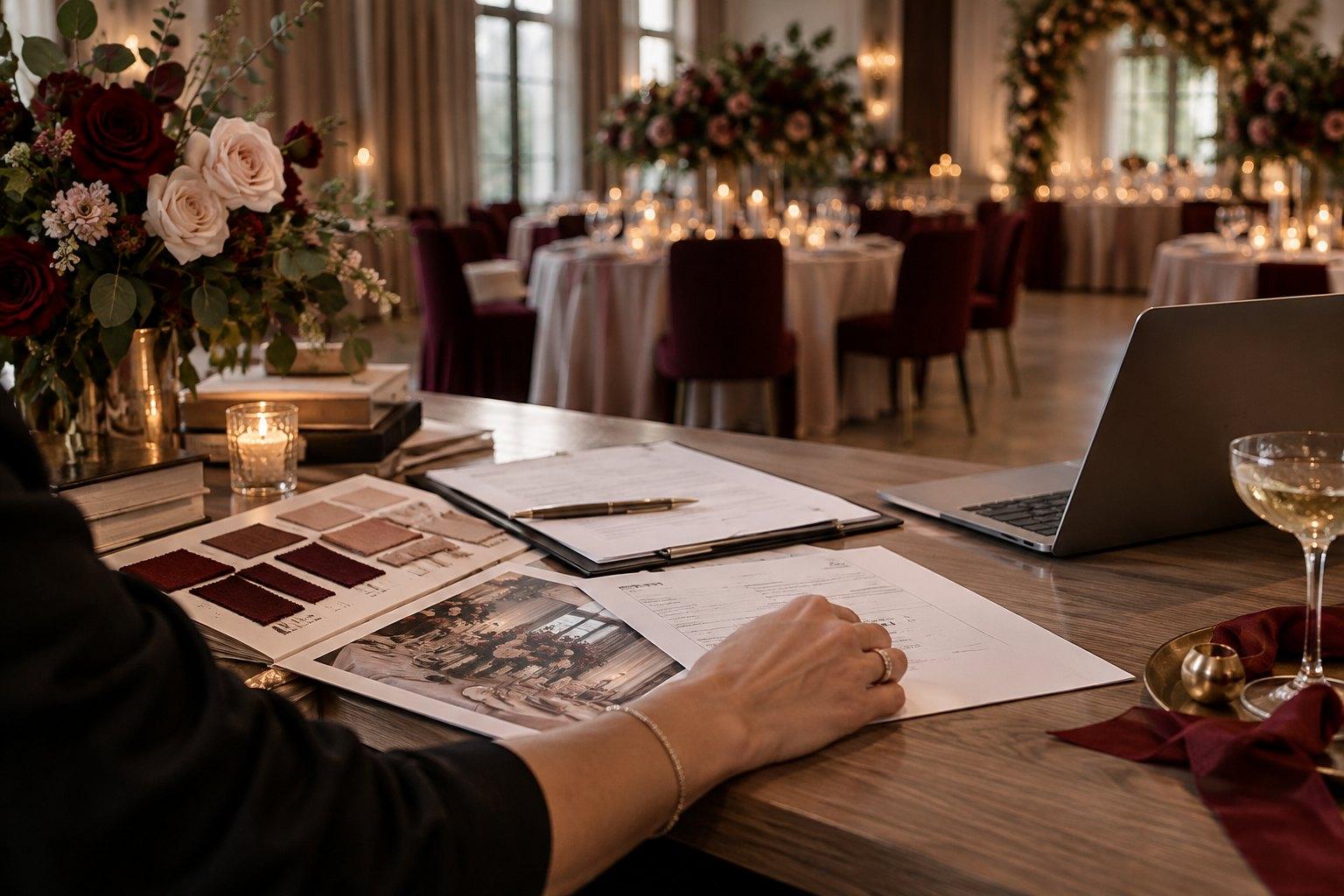
In the wedding planner vs coordinator debate, the difference comes down to timing and scope: a wedding planner is involved from early in the journey, helping with budgets, venues, suppliers and design, while a wedding coordinator usually steps in during the final weeks to confirm details and run the wedding day itself. A planner shapes the wedding; a coordinator executes it.
The terms get used interchangeably — by couples, venues and even professionals — which causes real confusion about what’s included and what’s expected. If you’re a couple deciding who to hire, or an aspiring professional deciding which services to offer, this guide breaks down the wedding planner vs coordinator question clearly: roles, responsibilities, how they overlap, and how to package each service.
Wedding planner vs coordinator: the quick comparison
| Wedding planner | Wedding coordinator | |
|---|---|---|
| When they start | Often many months before the wedding | Usually in the final weeks |
| Main focus | Shaping the whole wedding: vision, budget, venue, suppliers, design | Confirming plans and running the day |
| Supplier role | Researches, recommends and books suppliers | Confirms and coordinates suppliers already booked |
| Budget | Builds and manages the budget | Works within decisions already made |
| Design input | Often significant, or works with a stylist | Usually minimal — executes the existing plan |
| Wedding day | Often runs the day, or has a team who does | Runs the day |
| Client contact | Ongoing, regular | Concentrated near the end |
What does a wedding planner do?
A wedding planner is a guide for the entire journey. Depending on their package, a planner may:
- Run discovery sessions to understand the couple’s vision and priorities
- Build a realistic budget and track spending
- Research and shortlist venues, then attend site visits
- Recommend, negotiate with and book suppliers
- Review supplier contracts and manage payment schedules
- Develop the design concept or collaborate with a stylist
- Manage guest logistics such as accommodation and transport
- Create the timeline, floor plan and run sheet
- Lead the rehearsal and manage the wedding day
The planner’s real value is decision support. They help couples avoid costly mistakes, find the right suppliers and stay calm through months of choices.
What does a wedding coordinator do?
A wedding coordinator — often called a day-of coordinator, on-the-day coordinator or month-of coordinator — takes the couple’s existing plan and makes sure it happens smoothly. Typical responsibilities include:
- A handover meeting to review everything the couple has organised
- Reviewing supplier contracts and confirming details with each supplier
- Spotting gaps or problems in the plan
- Building or refining the run sheet and floor plan
- Running the ceremony rehearsal
- Managing suppliers, timing and setup on the day
- Cueing key moments and solving problems quietly
- Overseeing pack-down
The name “day-of” is a little misleading. Good coordinators almost always start several weeks before the wedding, because you can’t run a day you haven’t prepared for.
What about venue coordinators?
Here’s where couples often get confused. Many venues have their own coordinator or event manager. They’re brilliant — but their responsibility is usually the venue: its spaces, staff, food and drink service and rules. They may not manage outside suppliers, the wedding party, the ceremony timeline or the couple’s personal items.
A couple’s own planner or coordinator works for them, across every supplier and every part of the day. Explaining this distinction clearly is one of the most useful things you can do in a consultation.
Full planning, partial planning and coordination
In practice, most professionals offer a range of services rather than choosing between “planner” and “coordinator”. A common structure looks like this:
Full planning
From early on to the final dance. The planner handles the budget, venue, suppliers, design, logistics and wedding day. Best for couples who are time-poor, planning from a distance or simply want expert guidance throughout.
Partial planning
The couple has started — maybe the venue and a few suppliers are booked — and the planner steps in partway through to fill gaps, guide design and take over management. Best for couples who’ve made progress but feel stuck or overwhelmed.
Wedding coordination
The couple plans everything themselves, and the coordinator steps in near the end to confirm, refine and run the day. Best for organised couples who’ve enjoyed planning but want to be guests at their own wedding.
Destination or multi-event packages
Extra services for weddings abroad or celebrations spanning several days. If that’s a niche that appeals, the Certificate in Intimate, Micro & Destination Weddings covers those specialist skills.
Inside a coordinator’s handover meeting
The handover meeting is the heart of any coordination package, and it’s worth understanding in detail. This is where the couple hands you everything they’ve organised — and where you discover what’s missing. A thorough handover usually covers:
- Every supplier booking, with contracts, contact details and what’s been paid
- The draft timeline and any fixed times (ceremony start, venue access, transport)
- Floor plans, seating plans and guest numbers
- Styling plans and any items the couple is supplying themselves
- Family dynamics, wedding party roles and special requests
Come prepared with a checklist and expect to find gaps: a supplier with no arrival time, a timeline with no buffer, a missing wet-weather plan. Present those gaps as easy fixes, not failures. The couple has done a huge amount of work — your job is to make it bulletproof.
How pricing structures usually differ
Without getting into numbers, the logic is simple. Full planning involves the most hours over the longest period, so it’s usually the most substantial investment. Partial planning sits in the middle. Coordination is typically the most accessible, though it should still reflect the real preparation hours involved — not just the wedding day. Many planners price on time and complexity rather than a percentage of the wedding budget, but approaches vary.
Which one should a couple hire?
Couples can ask themselves a few honest questions:
- Do we have the time and energy to plan? If not, a full planner makes sense.
- Do we know where to start? If the venue and supplier world feels overwhelming, a planner’s guidance is invaluable.
- Are we planning from far away? A local planner can be the couple’s eyes and ears.
- Have we already done most of the planning and enjoyed it? A coordinator may be all that’s needed.
- Do we want to relax on the day? Every couple benefits from someone running the day — whichever service they choose.
Which should you offer as a new wedding professional?
If you’re starting your business, coordination can be a smart entry point. It builds wedding-day experience, introduces you to suppliers and venues, and creates portfolio content — all with a shorter commitment than full planning.
But don’t underestimate coordination. Taking over someone else’s plan is genuinely hard. You’ll inherit unclear contracts, forgotten suppliers and timelines that don’t add up — and you’ll need to fix them diplomatically, without making the couple feel they’ve done it wrong. Strong planning knowledge makes you a better coordinator.
Over time, many professionals add partial and full planning as their confidence and reputation grow. Others build a whole business around coordination because they love the energy of the day. Both are valid paths.
How to define your services clearly
Confusion about the difference between planning and coordination leads to scope creep — the couple who booked coordination but expects you to find a florist and design the tables. Protect yourself and your clients with:
- Clear package names and descriptions on your website and proposals.
- A detailed inclusions list — what’s covered, and what isn’t.
- A start point for coordination packages (for example, the date of your handover meeting).
- Wedding-day hours and what happens if the day runs longer.
- A written contract — have yours reviewed by your own lawyer.
- An upgrade path — if a coordination client needs more help, offer partial planning as an add-on.
Skills every planner and coordinator needs
Whichever services you offer, the core skills overlap: organisation, supplier management, timeline building, communication, problem solving and calm leadership on the day. Planners add budgeting, design direction and long-term client relationship management.
The Certificate in Wedding Planning covers both sides — planning a wedding from the first consultation and running it on the day — studied 100% online at your own pace. For checklists and planning tools you can use whichever service you offer, see The Wedding Planner’s Handbook by Jac Bowie.
Frequently asked questions
What is the main difference between a wedding planner and a coordinator?
A wedding planner is involved from early on, helping with budgets, venues, suppliers and design, while a wedding coordinator usually starts in the final weeks to confirm details and run the wedding day.
Is a day-of coordinator only there on the wedding day?
Usually not. Most coordinators start several weeks before the wedding to review contracts, confirm suppliers and build the run sheet, then manage the day itself.
Is a venue coordinator the same as a wedding coordinator?
No. A venue coordinator typically focuses on the venue’s spaces, staff and services, while a couple’s own coordinator manages all suppliers and the full wedding-day timeline on the couple’s behalf.
Can one person be both a planner and a coordinator?
Yes. Many professionals offer full planning, partial planning and coordination packages, and most planners also coordinate the weddings they plan.
Should new wedding professionals start with coordination?
Coordination can be a great entry point for building wedding-day experience and supplier relationships, but it still requires strong planning knowledge to fix gaps in a couple’s existing plan.
Ready to plan and coordinate weddings with confidence? Learn the full process — from first consultation to final dance — with The Wedding Academy, online and at your own pace.