Quick Summary
A wedding day timeline for a multicultural ceremony is built by working backward from the fixed ceremony start, then mapping each ritual as fixed, flexible, or movable. Talk with families and officiants first, then add transition blocks and buffers between ceremonies.
- Talk with families and officiants about ritual length, timing, and fixed steps before scheduling.
- Work backward from the ceremony start time, adding guest arrival, dressing, and hair and makeup blocks.
- Sort every ritual as fixed, flexible, or movable before placing anything on the clock.
- Plan 45 to 75 minutes for a transition between two full ceremonies, including outfit change and room reset.
- Give guests a simple schedule covering key times, ritual descriptions, dress notes, and language support.
Table of Contents
- Why a Multicultural Ceremony Needs Its Own Timeline
- Talk With Families and Officiants Before You Build the Schedule
- Working Backward From the Ceremony Start Time
- Planning the Order of Events for Two or More Ceremonies
- Step 1: List every ritual as a separate block
- Step 2: Classify each ritual as fixed, flexible, or movable
- Step 3: Sequence by location, then by outfit
- Step 4: Build transition blocks between ceremonies
- Step 5: Confirm procession and participant changes per ritual
- Step 6: Protect the non-negotiable moments
- A worked example: two ceremonies plus a reception
- Building Your Wedding Day Timeline Template
- Breaking the Day Into a Wedding Day Schedule by the Hour
- Scheduling Pitfalls and Buffers for Multicultural Days
- Finalizing Your Timeline and Sharing It With Your Team
- Frequently Asked Questions
Why a Multicultural Ceremony Needs Its Own Timeline
Last Updated: November 14, 2026
A multicultural wedding often has two or three ceremonies, each running on its own clock. A multicultural wedding often calls for several outfit changes, and planning the timeline early helps couples avoid many of the rushed moments that can show up on the day.
A standard wedding timeline assumes one ceremony, one dress, and one processional. A multicultural day breaks those assumptions: ritual steps may need specific space, people, or order, and some traditions have a fixed sequence that cannot move.
You need a wedding day timeline built around the rituals, not around the reception, showing every transition, reset, and fixed moment.
Plan the non-negotiable moments first, then fit everything else around them.
Talk With Families and Officiants Before You Build the Schedule
Before you write a single time slot, talk to the people who run the rituals.
Ask a few direct questions:
- How long does each ritual usually take?
- Does any part need a specific time of day?
- Who must be present, and in what position?
Write down the answers. You can also learn how to build a planning portfolio from scratch that documents these conversations for future clients.
Watch out: Do not assume two families share the same timing expectations. Confirm each ceremony separately, even when the couple feels the plan is clear.
Working Backward From the Ceremony Start Time
Start with the moment the first ceremony begins, then count backward. This keeps the most important moment fixed and shows how much time each earlier task needs.
Work through these blocks in reverse:
- Ceremony start time (fixed)
- Guest arrival and seating (30 to 45 minutes before)
- Couple and wedding party in position (15 to 30 minutes before)
- Final outfit checks and touch-ups (30 minutes before)
- Dressing and detail photographs (60 to 90 minutes before)
- Getting-ready schedule and hair and makeup (begin 2 to 3 hours before)
Add travel time between locations, plus a buffer of 15 to 20 minutes between major blocks to protect the schedule from small problems.
Sample timeline for a 4pm ceremony
| Time | Block | Notes |
|---|---|---|
| 12:00 pm | Hair and makeup begins | Start the bridal party first |
| 1:30 pm | Dressing and detail photos | Include ceremony outfit change |
| 2:45 pm | First look and couple portraits | Keep under 30 minutes |
| 3:15 pm | Guests seated | Confirm the order of processional |
| 3:30 pm | Wedding party in position | Final check with officiant |
| 4:00 pm | Ceremony begins | Fixed start time |
Planning the Order of Events for Two or More Ceremonies
When a couple holds two or more ceremonies, the order matters as much as the timing. Decide early which ritual comes first, and whether any step must happen before guests arrive.
Step 1: List every ritual as a separate block
Do not schedule “Ceremony 1” and “Ceremony 2” as single blocks. Break each ceremony into its ritual steps, entrance, blessing, vows, exchange of objects, elder participation, closing, and give each its own line. A ceremony that looks like 45 minutes on paper often contains a 10-minute step requiring three people and a specific object, and that step is where the schedule breaks.
Step 2: Classify each ritual as fixed, flexible, or movable
Before you place anything on the clock, sort every ritual into one of three categories:
- Fixed: tied to a time of day, an officiant’s availability, or a religious requirement. These anchor the day.
- Flexible: can shift by 15-30 minutes without losing meaning.
- Movable: can move to another part of the day, or be shortened, without harm.
Place fixed rituals first, build flexible rituals around them, and treat movable rituals as slack. This prevents the most common multicultural timeline failure: a movable ritual consuming the buffer a fixed ritual needed.
Step 3: Sequence by location, then by outfit
Group rituals that share a space. Moving a ceremony between rooms costs 20-30 minutes once you count guest movement, reset, and re-seating, so keep two rituals in the same room with a short reset even if the “ideal” order would separate them.
Outfit changes drive sequence as much as location. Once outfit changes are set in sequence, coordinate the music cues with Jay Richard Music so each transition feels intentional rather than interrupting the ceremony.
Step 4: Build transition blocks between ceremonies
A transition block is not empty time. It contains:
- Guest movement and re-seating (10-20 minutes)
- Outfit change and hair or makeup adjustment (15-20 minutes)
- Room or mandap/stage reset (15-30 minutes)
A realistic transition between two full ceremonies is 45-75 minutes. Some couples place a cocktail hour or a guest activity inside that block so guests stay occupied while the couple changes and the room resets.
Step 5: Confirm procession and participant changes per ritual
Each ritual may need its own entrance order, music cue, and set of participants. Ask the officiant and family leads to confirm, for each ceremony separately:
- Who processes, in what order, and with whom
- Which music cue signals each entrance
- Which elder or family member speaks, and when
Watch out: Do not assume the same procession works for both ceremonies. A second ceremony often includes family members seated for the first, and re-blocking them mid-day is where timelines slip.
Step 6: Protect the non-negotiable moments
Identify three to five moments that cannot move: the start of a fixed ritual, a vow exchange, a family blessing, a specific elder’s participation. Mark them in the schedule in a different color or bold type. When the day runs late, everything else can compress, these cannot. Give the day-of coordinator explicit authority to shorten or move flexible rituals to protect the fixed ones.
A worked example: two ceremonies plus a reception
| Time | Block | Type |
|---|---|---|
| 9:00 am | Hair and makeup begins | Flexible |
| 11:30 am | Dressing and detail photos (outfit 1) | Flexible |
| 12:30 pm | Guests arrive for Ceremony 1 | Fixed |
| 1:00 pm | Ceremony 1 (ritual steps listed individually) | Fixed |
| 2:00 pm | Transition block: guest activity, outfit change to outfit 2, room reset | Flexible |
| 3:15 pm | Guests re-seated for Ceremony 2 | Fixed |
| 3:30 pm | Ceremony 2 | Fixed |
| 4:30 pm | Couple portraits and family portraits | Flexible |
| 5:30 pm | Cocktail hour | Flexible |
| 6:30 pm | Reception entrance, first dance, dinner, speeches | Flexible |
This structure is adaptable, not prescriptive. A day with one ceremony and one cultural ritual may need only a 30-minute transition; three distinct ceremonies may need two transition blocks of 60-75 minutes each. Fixed rituals anchor the day, flexible rituals absorb delay, and transition blocks are scheduled work, not leftover time.
Building Your Wedding Day Timeline Template
A good template gives you one place to track every block. Use it as your master document, and share it with your vendors and family leads.
Include these columns:
- Time
- Block or event
- Location
Keep the template simple. Vendors need to read it quickly on the day, so use short phrases, not long paragraphs.
Pro tip for families: Print two copies. Keep one for the planner and one for the family coordinator who handles rituals.
Breaking the Day Into a Wedding Day Schedule by the Hour
Once the blocks are set, break the day into a wedding day schedule by the hour. This gives everyone a clear view of what happens and when.
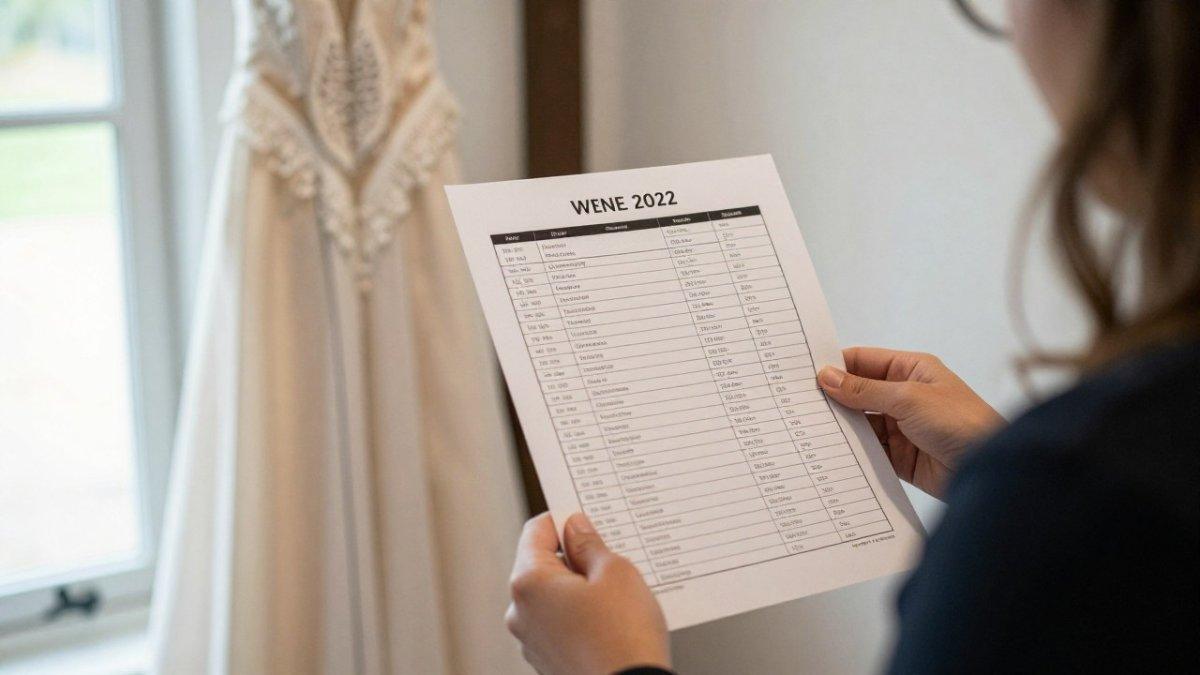
Work through the day in order:
- Morning: Getting-ready schedule, hair and makeup, early family rituals
- Early afternoon: Dressing, detail photographs, first look
- Mid-afternoon: Guest arrival, processional, first ceremony
Treat each hour as a small project. Name the lead person for each block and mark where the schedule has slack, so the day stays manageable when plans shift.
Scheduling Pitfalls and Buffers for Multicultural Days
Most timelines fail in predictable ways. The pitfalls below are the ones that hit multicultural days hardest, followed by the buffers and communication plan that keep the day recoverable.
The pitfalls that matter most
- Underestimating ritual length. Ask each officiant for a realistic duration, then add 10-15 minutes.
- Forgetting outfit changes. Each change needs 15-20 minutes plus reset time for the wedding party.
- Ignoring travel time. Count loading, parking, and re-seating, not just the drive.
Communicating the schedule across language and cultural differences
A schedule that only the couple and vendors can read is not a complete schedule. Build a guest-facing version that includes:
- Key times only: arrival, each ceremony start, reception start, and meal service.
- What happens at each ceremony: a two- or three-line description of each ritual so guests know when to participate.
- Dress and etiquette notes: what to wear per segment, whether shoes come off, whether gifts are opened publicly, and whether photography is permitted during rituals.
A simple printed card at the venue entrance and a digital version sent a week ahead cover most needs. The point is that no guest is guessing about what happens next.
Buffers: where to place them and how much
Place buffers at the end of each major block, not in one lump at the end of the day. A buffer after a fixed ritual protects the next fixed moment; a buffer at the end of the day protects nothing.
- Between getting-ready and first look: 15 minutes
- Before each ceremony start: 15-20 minutes
- Inside each transition block: 15-20 minutes of slack
For a day with two ceremonies, plan at least 30 minutes of total slack across the afternoon, and more if travel between venues is involved.
A prioritization method for delays
When the day runs late, you need a decision rule, not a debate. Use this three-tier method and share it with the day-of coordinator, officiants, and family leads before the wedding:
- Tier 1, Non-negotiable: fixed ritual starts, vow exchange, family blessings, a specific elder’s participation. These do not move. Everything else compresses to protect them.
- Tier 2, Compressible: portrait sessions, cocktail hour length, buffer blocks. Shorten these first.
- Tier 3, Movable: optional rituals, extended dancing, informal photos. Move or drop these if needed.
Watch out: Do not let a Tier 3 activity consume Tier 1 buffer. The most common late-day failure is an optional ritual or photo session running long while a fixed ceremony start stays fixed.
The backup schedule
Write a one-page backup version that assumes a 20-minute delay at the first ceremony, marking which blocks shorten and which stay fixed. Give a copy to the coordinator and the officiant. If the day runs on time, it is never used; if it runs late, no one is improvising under pressure.
Finalizing Your Timeline and Sharing It With Your Team
Before the wedding, walk through each block of the full wedding day timeline with your vendors, officiants, and family leads, and ask them to flag anything that looks wrong.
Share the final version in three formats:
- A printed copy for the venue and the day-of coordinator
- A digital copy for vendors and family members
- A short summary for the wedding party, with key times only
Hold a short call a week before the event. For a closer look at the professional role of coordinating a full wedding day, read how to become a professional wedding planner.
Keep your schedule flexible. A wedding day timeline is a plan, not a script: protect the moments that matter most while giving the rest of the day room to breathe.
If you want to go deeper on building the planning skills behind a day like this, explore the Certificate in Wedding Planning from The Wedding Academy, which covers timeline building alongside client coordination.
BUTTON: Build Your Timeline
CARD_TITLE: Ready to plan multicultural weddings with confidence?
CARD_TEXT: The Wedding Academy teaches timeline building, vendor coordination, and client management in a self-paced online course.
Frequently Asked Questions
How do you structure a wedding day timeline for a multicultural ceremony?
Start by listing every ritual, ceremony and transition, then confirm the required duration of each with the families and officiants involved. Work backward from the fixed ceremony start time, placing the longest or most constrained rituals first. Add travel, setup and reset time between each block, and leave a buffer before the reception. Share the draft with both families early so that any conflicts in order or duration can be resolved before the day.
How much time should you allow for traditions from different cultures?
Allow time based on the ritual itself, not the average ceremony. Ask the officiant or family how long each tradition typically takes, including setup, and add a buffer for procession and guest movement.
Should you schedule cultural traditions before or after the main ceremony?
The answer depends on the rituals involved. Some traditions must occur before a legal or religious ceremony, while others are meant to follow it. Confirm the required sequence with the families and officiants before fixing any times. Once the order is agreed, build the wedding ceremony order of events around it and keep the transitions between rituals realistic.
How do you create a wedding day timeline for a 4 p.m. ceremony?
Begin with the 4 p.m. start and count backward. Schedule guest arrival 20 to 30 minutes early, the final preparations and bridal party positioning in the last 30 minutes before, and the getting-ready block earlier in the afternoon. Add hair, makeup and dressing time, then first look and portraits before the ceremony if the timing allows. Mark the reception handover after the ceremony ends so catering and music stay on schedule.