Last Updated: November 4, 2026
Quick Summary
The wedding planner vs floral designer career path differs in focus: a wedding planner manages budgets, suppliers, and timelines, while a floral designer selects flowers and builds arrangements and installations. Planners typically earn $35,000 to $90,000 annually, while floral designers earn hourly or per-event rates.
- Floral designer employment is projected to decline 6% from 2025 to 2035.
- IBISWorld counted 58,141 U.S. wedding-planning businesses in its 2026 analysis.
- Entry-level planners earn $35,000 to $50,000 while handling 10 to 15 weddings per year.
- Assist on at least three events before charging clients as a new planner.
- Florists carry inventory risk that planners do not.
Table of Contents
- Wedding Planner vs Floral Designer Career Path: Key Differences
- Wedding Planner Job Description: What the Role Actually Involves
- Floral Designer and Florist Responsibilities: The Creative Side
- How to Become a Wedding Planner With No Experience
- Wedding Planner vs Floral Designer Career Path Salary Comparison
- Wedding Planner Duties Checklist: A Day in the Life
- Career Progression, Transferable Skills, and Business Ownership
- Choosing Your Wedding Career Path: Next Steps With The Wedding Academy
- Frequently Asked Questions
Wedding Planner vs Floral Designer Career Path: Key Differences
The wedding planner vs floral designer career path decision comes down to one question: do you want to run the logistics or shape the visuals? According to U.S. Bureau of Labor Statistics Occupational Outlook Handbook, floral designer employment is projected to decline 6% from 2025 to 2035, while IBISWorld’s 2026 industry analysis counted 58,141 U.S. wedding-planning businesses, a sector that grew at a 33.8% compound annual rate from 2021 to 2026. At The Wedding Academy, we train people for both routes, and we’ve watched thousands of career changers weigh the same trade-off.
Below, we break down responsibilities, training, salaries, and progression so you can pick with evidence instead of guesswork.
A wedding planner is a logistics professional who manages budgets, suppliers, and timelines, while a floral designer is a creative professional who selects flowers and builds arrangements and installations. The two roles collaborate constantly but demand different skills, schedules, and business models.
Wedding Planner Job Description: What the Role Actually Involves
A wedding planner job description centers on coordination: budgets, supplier contracts, timelines, and client communication. The planner is the person who keeps a 12-month project on schedule and absorbs problems before the couple notices them.
Core responsibilities and client-facing work
Client consultation drives everything else. Planners run discovery meetings, set budgets, present venue and supplier options, and manage expectations when a couple’s wish list outruns their numbers. Strong organizational skills matter more than artistic taste here.
Behind-the-scenes logistics and supplier management
Most of the job is invisible on the wedding day. Planners negotiate contracts, confirm vendor arrival times, build minute-by-minute timelines, and run rehearsal coordination. When a florist arrives late or a rental truck is stuck in traffic, the planner is the one rerouting.
Floral Designer and Florist Responsibilities: The Creative Side
Floral design is the visual half of the wedding industry, covering flower selection, arrangements, centerpieces, and on-site installation. The work is seasonal, physical, and portfolio-driven.
From flower selection to installation
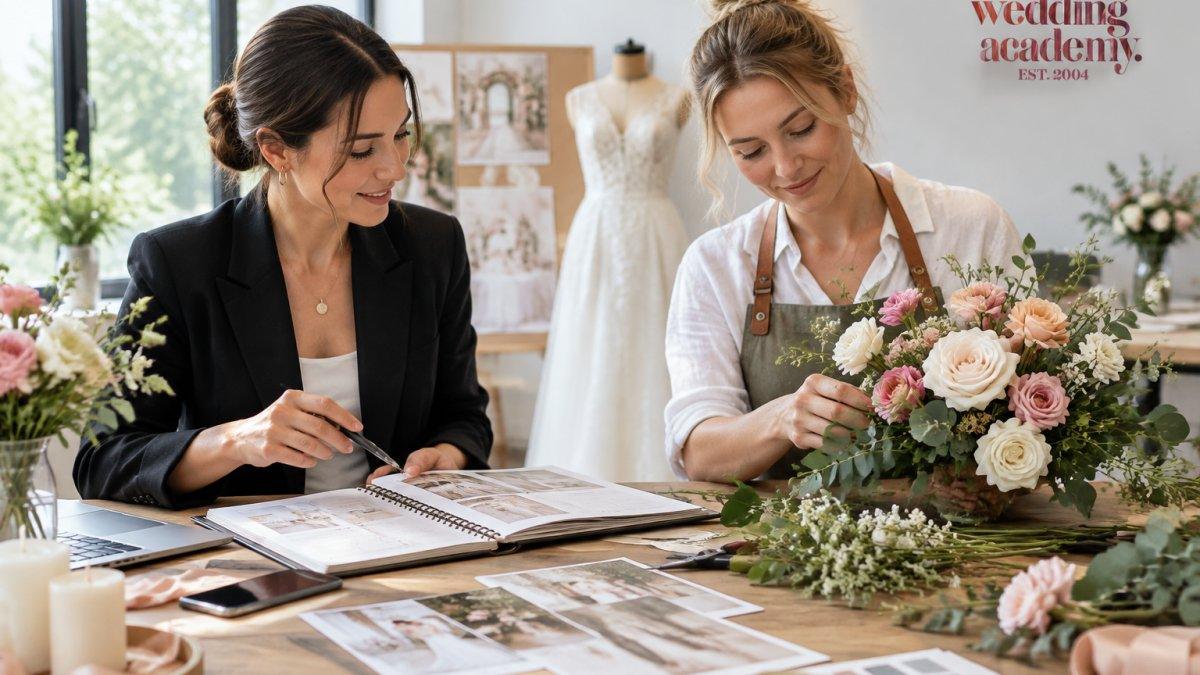
A floral designer moves through a clear sequence: mood boards and color palettes, stem sourcing with wholesalers, sample arrangements, then event-day setup. Installations for arches, aisles, and tablescapes often start before dawn. If this side appeals to you, our guide to the best online wedding floral design courses covers the training routes in detail.
Florists work with perishable materials on hard deadlines. That combination rewards people who plan carefully and stay calm when a shipment arrives with the wrong blooms.
How to Become a Wedding Planner With No Experience
You can become a wedding planner with no experience by combining structured training with hands-on exposure: a recognized certificate, shadowing or interning with working planners, and a small portfolio of assisted events. There is no single required route, and the Wedding Planning Institute notes that both independent business ownership and employment with an established planner are valid entry points.
Practical steps that work:
- Complete a formal certificate to learn budgeting and supplier management
- Volunteer or assist on at least three events before charging clients
- Build a portfolio from those events, with permission to photograph
- Start with partial planning or day-of coordination to limit risk
For a deeper walkthrough, see our article on how to become a professional wedding planner.
Wedding Planner vs Floral Designer Career Path Salary Comparison
The wedding planner vs floral designer career path salary picture differs sharply by business model. A Wedding Planning Institute 2026 salary guide reports average annual wedding-planner earnings of $35,000 to $90,000, with entry-level planners at $35,000 to $50,000 while handling 10 to 15 weddings per year.
Floral designers typically earn hourly or per-event rates, and income swings with season and order volume. Neither role pays a fixed salary in self-employment; both depend on pricing discipline.
| Factor | Wedding Planner | Floral Designer |
|---|---|---|
| Typical entry earnings | $35,000-$50,000 | Hourly or per-event |
| Main income driver | Per-wedding fee | Per-arrangement and installation fees |
| Employment outlook | Growing business count | 6% projected decline, 2025-2035 |
| Seasonality | Moderate | High |
| Startup costs | Lower | Higher, due to stock and equipment |
For a fuller profitability breakdown, read is wedding planning a profitable career.
Wedding Planner Duties Checklist: A Day in the Life
A wedding day for a planner is a schedule with no slack, but the job is not one day. The realistic workload runs across a 9-to-14-month planning timeline, and the day-of checklist is only the visible tip. Here is the checklist we teach, followed by what the rest of the calendar actually looks like.
- Confirm supplier arrivals against the timeline
- Walk the venue and check setup progress
- Distribute final payments and gratuities
- Run the ceremony cue sheet with the officiant
- Manage the transition to reception
- Handle any issue discreetly before the couple sees it
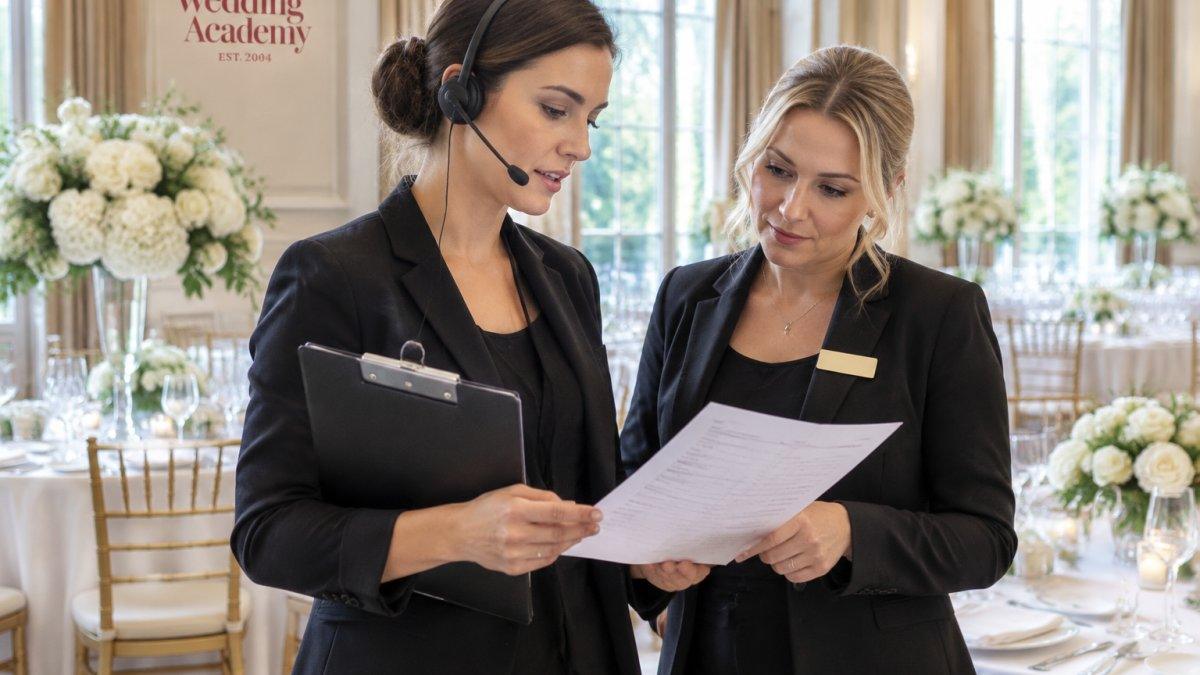
The planner’s workload across the planning timeline
A planner’s hours are typically front-loaded and back-loaded. Early months focus on client meetings, budgets, and supplier outreach; the final weeks are heavier with vendor calls and rehearsal coordination. Planners often run several overlapping projects, which is why calendar discipline matters.
The florist’s workload across the same timeline
Floral designers follow a different rhythm. Client consultations and mood boards happen months out, while the physical work compresses into the days before the event, often including pre-dawn installation for arches, aisles, and tablescapes. Setup days are physically demanding.
Peak-season hours and physical demands side by side
Both roles spike in peak season, but the shape of the spike differs. Planners carry long, moderate weeks across many months and then a concentrated event-week sprint. Florists carry shorter client-facing timelines but far more physical labor and perishable-material risk in the final days. A common pattern is that planners are managing people and information under pressure, while florists are managing materials and time under pressure. If you dislike physical work and early starts, floral design will feel harder than it looks; if you dislike constant client communication and negotiation, planning will.
New professionals in either role can underestimate admin, transport, and setup time, so pricing should account for these hours.
Career Progression, Transferable Skills, and Business Ownership
Progression in both paths follows a similar arc, but the rungs and the economics are concrete enough to map. The table below is the progression path we walk career changers through, followed by the business-ownership mechanics that decide whether the path pays.
| Stage | Wedding Planner | Floral Designer |
|---|---|---|
| Entry / assistant | Shadowing, day-of coordination, supplier research | Studio assistant, stem prep, delivery help |
| Lead | Owns client accounts, budgets, and timelines | Owns client designs, sourcing, and installation |
| Senior / specialist | Partial or full planning, larger budgets, venue relationships | Large installations, editorial and brand work, wholesale relationships |
| Independent / owner | Own planning business, pricing, contracts, marketing | Own studio or freelance floral business, inventory, transport, insurance |
Transferable skills between planning and floral design
Planners develop negotiation, project management, supplier management, and crisis handling. Floral designers develop color judgment, spatial design, sourcing, and perishable-inventory discipline. The overlap is larger than most people expect: both require client communication, timeline management, and vendor relationships. That overlap is why movement between the two is realistic. A planner who wants more hands-on creative work can move into floral design by building a portfolio through studio assisting and sample arrangements. A florist who wants to run larger events can move into planning by taking on partial planning or day-of coordination for existing floral clients. The fastest bridge is a hybrid role, such as design-and-coordination packages for smaller weddings, which lets you test both sides before committing. That hybrid experience can also sharpen a designer’s eye for how choosing wedding florist styles shapes the look and flow of an event.
Startup costs and operating expenses
Business ownership is where the paths diverge most on money. Planners and floral designers face different startup and operating costs, depending on tools, inventory, and transport needs. Both need contracts, pricing models, and cash-flow discipline, but florists carry inventory risk that planners do not.
Profitability and income variability
Neither role pays a fixed salary in self-employment. Planner income depends on per-wedding fees and the number of events booked; florist income depends on per-arrangement and installation fees and order volume. Seasonality hits florists harder, and regional demand shifts both roles. The practical rule is to price for the invisible hours: travel, admin, setup, and teardown.
For a fuller profitability breakdown, read is wedding planning a profitable career, and for the launch sequence on either route, see our guide to starting a wedding business with no experience.
Choosing Your Wedding Career Path: Next Steps With The Wedding Academy
Pick planning if you enjoy budgets, logistics, and supplier coordination. Pick floral design if you want to build with your hands and work visually. If you want to test the industry before committing, gaining wedding industry work experience first is the fastest way to find out which side fits.
The Wedding Academy has 11,000+ graduates and over 20 years of industry experience, with 100% online, self-paced certificate courses and lifetime access. Our Certificate in Wedding Planning and Certificate in Floral Design cover practical skills, including budgeting and supplier management. Pricing is listed on our website.
Frequently Asked Questions
Is a wedding planner a good career?
It can be, but the outlook varies by role. Planners handle logistics, budgets, and supplier management, so organizational skills matter more than artistic talent. The Wedding Academy’s Certificate in Wedding Planning covers these practical skills and can be completed while keeping a full-time job.
What is the difference between a wedding planner and a floral designer?
A wedding planner manages logistics, budgets, timelines, and vendor coordination. A floral designer creates floral arrangements, centerpieces, and installations. Some professionals combine roles, but each requires different training and daily workflows.
What is the average salary for a floral designer in the US?
The U.S. Bureau of Labor Statistics projects floral designer employment to decline 6% from 2025 to 2035. Floral designer pay varies by region, season, and whether you work freelance or for a shop.
Can a wedding planner also work as a floral designer?
Yes, some professionals offer both services, but each role demands distinct skills. Planning requires budget management, supplier coordination, and timeline organization; floral design requires flower selection, arrangement technique, and installation logistics. The Wedding Academy offers separate certificates in Wedding Planning and Floral Design, and its courses are self-paced so you can study while keeping a full-time job.
The wedding industry rewards people who prepare properly. If you are ready to move from interest to qualification, browse the courses at The Wedding Academy and start building the career that matches how you actually like to work.