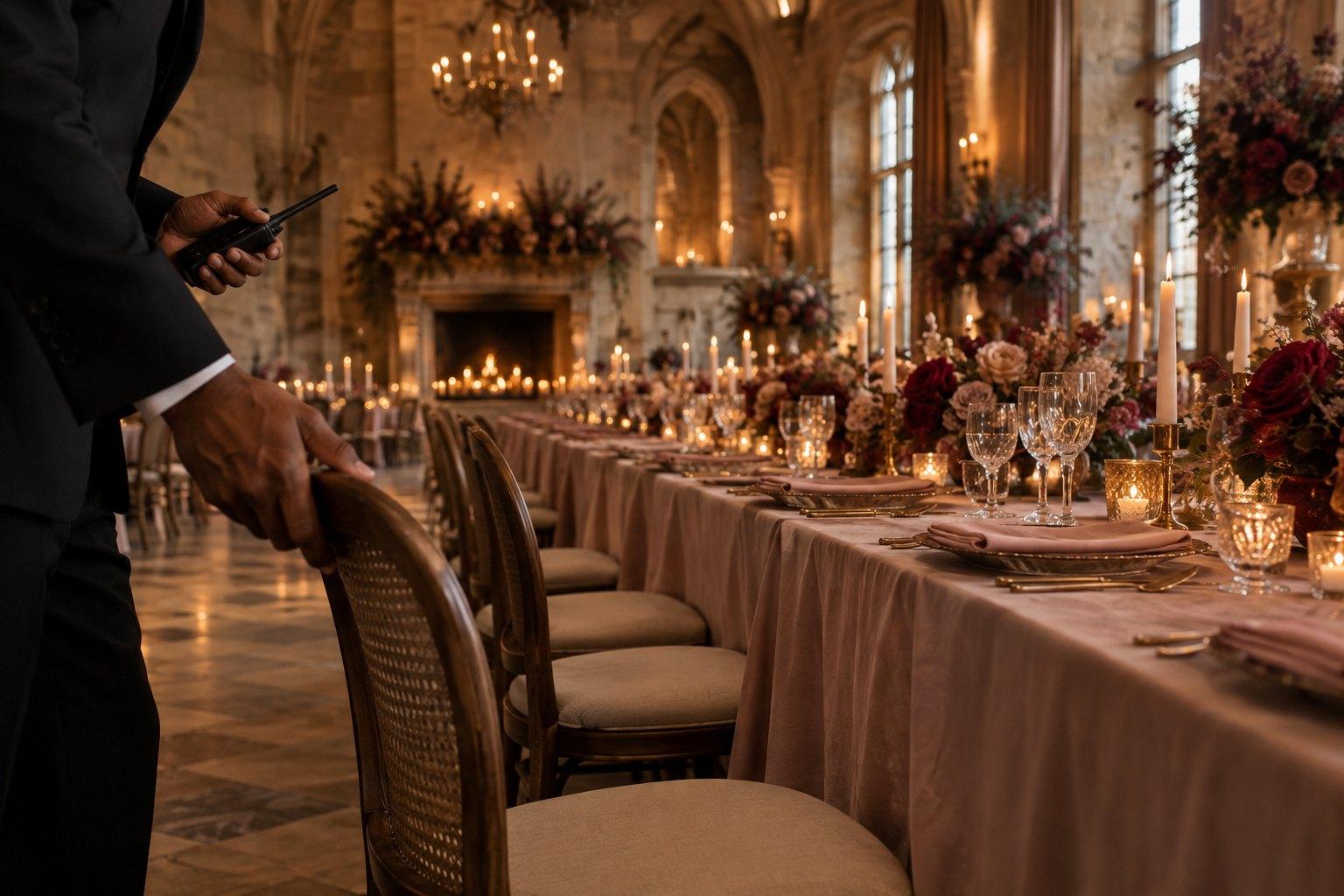
A wedding venue manager earns referrals by making every stage feel effortless: a fast, useful reply to the enquiry, a show round that helps couples picture their day, clear packages and contracts, a run sheet suppliers trust and a calm plan B. Couples recommend venues for how the whole experience felt — and suppliers recommend venues that make their jobs easier.
Your venue might have the best view for miles, but views don’t write reviews. People do. This guide walks through the referral-building moments of a wedding venue manager’s job, from first enquiry to post-wedding follow-up, and how The Wedding Venue Handbook by Jac Bowie helps you turn them into a system your whole team can follow.
What does a wedding venue manager actually do?
The role varies by venue type and size, but most wedding venue managers — or wedding coordinators at venues — juggle three jobs at once:
- Sales: handling enquiries, running show rounds, managing holds and release dates, writing proposals and closing bookings.
- Planning: working with each couple on menus, layouts, timings and the venue’s house rules in the lead-up to the wedding.
- Operations: running the day itself — staff, suppliers, room flips, timings, weather calls and anything that goes wrong.
Do all three well and referrals follow. Do one badly and the others can’t save it.
Stage 1: The enquiry — where referrals start
Couples often contact several venues at once. The ones that stand out reply quickly, answer the actual question and make the next step obvious. A good enquiry response includes availability for their date, the key information they need to decide — capacities, what’s included, the shape of your packages — and a clear invitation to visit.
Build an enquiry-to-booking pipeline so nothing slips: every enquiry logged, every follow-up scheduled, every hold given a clear release date.
Stage 2: The show round
The show round is where couples fall in love — or don’t. The best venue managers don’t just walk couples through rooms; they help them see their wedding happening there.
How to run a show round couples remember
- Ask before you show. Find out guest numbers, style and priorities first, then tailor the route.
- Walk the day in order. Arrival, ceremony, drinks, reception, dancing, farewell.
- Show the plan B. Couples relax when they see the wet-weather option looks good too.
- Talk logistics honestly. Access times, noise limits, curfews and supplier rules.
- Leave them with something. A clear summary and next steps by email.
Stage 3: Packages, contracts and deposits
Confusion is the enemy of good reviews. Packages and rate cards should be easy to understand, with clear inclusions, minimum spends where relevant and transparent extras. Contracts should explain deposits, payment schedules, cancellation terms and house rules in plain language. Have your contracts reviewed by your own lawyer — requirements vary by country and region.
The clearer you are at booking, the fewer awkward conversations you’ll have later.
Stage 4: Planning with the couple
Between booking and the wedding, couples need guidance — not just a menu PDF. Venue managers who understand wedding planning make this phase far smoother. That might mean recommending a sensible timeline, advising on floor plans and room flips, flagging allergens and dietary needs early and introducing trusted suppliers.
This is where planning skills give venue teams an edge. The Certificate in Wedding Planning teaches the timelines, supplier management and on-the-day coordination that make venue coordinators confident advisers rather than order-takers.
Wedding venue manager checklist: the referral moments
| Moment | What referral-worthy looks like |
|---|---|
| Enquiry | Fast, specific reply with a clear next step |
| Show round | Tailored tour, honest logistics, plan B shown |
| Booking | Clear package, plain-language contract, deposit schedule explained |
| Planning | Proactive timeline, floor plan and menu guidance |
| Final details | Function sheet and run sheet shared with all suppliers |
| Wedding day | Calm coordination, on-time flips, quiet problem-solving |
| After | Thank-you, review request, supplier feedback |
Stage 5: Function sheets and run sheets
Your function sheet tells your team what’s happening. Your run sheet tells everyone — staff, caterers, photographers, musicians, stylists, florists — when it’s happening. Share both with suppliers well before the day, confirm access and pack-down times, and walk your duty manager through the timings.
Suppliers talk to each other constantly. A venue known for clear, accurate run sheets and realistic access windows becomes a venue they actively recommend to couples.
Stage 6: The wedding day and the plan B
On the day, a great venue manager is calm, visible when needed and invisible when not. Key responsibilities include:
- Room flips — turning a ceremony space into a reception space quickly and quietly.
- The weather call — agree in advance who makes the wet-weather decision and by what time, then make it early and communicate it clearly.
- Timing — keeping speeches, food service and dancing on track without rushing anyone.
- Incidents — from a missing supplier to a guest who’s unwell. Have procedures ready and follow local licensing and safety rules.
Stage 7: After the wedding
The wedding ends; the relationship shouldn’t. Send a warm thank-you, ask for a review at the right moment, share feedback with suppliers and run a short post-event review with your team. What went well? What would you change? These small habits compound into reputation. Keep a simple log of what you learn from each wedding — the flip that ran long, the supplier who went above and beyond, the question every couple asks — and update your templates once a month so the next wedding benefits.
Why venues quietly lose referrals
Most venues don’t lose recommendations through one disaster. They lose them through small, repeated frictions that couples and suppliers remember:
- Slow or generic enquiry replies that make couples chase for basic information.
- Hidden extras that appear after booking — cake cutting, corkage, extra staff, cleaning — without being explained upfront.
- A different contact every time the couple calls, so nobody knows their wedding.
- Unrealistic access windows that force stylists and florists to rush or work around guests.
- Last-minute run sheets that leave suppliers guessing.
- A plan B that looks like an afterthought — a bare function room the couple never saw at the show round.
- Silence after the wedding. No thank-you, no review request, no supplier debrief.
Each fix is simple on its own: an enquiry template, a transparent inclusions list, a named coordinator, realistic access times, a run sheet deadline, a styled wet-weather space and a post-wedding checklist. Written down and followed by the whole team, they become a system — and systems are what make referrals consistent rather than lucky.
Building a preferred supplier list that helps everyone
A preferred supplier list isn’t just a referral network — it’s quality control. Choose suppliers who know your venue, respect your rules and treat couples well. Review the list regularly, and be transparent with couples about how it works. When suppliers love working at your venue, they send couples your way.
Inside The Wedding Venue Handbook
The Wedding Venue Handbook by Jac Bowie is written for venue owners, managers and coordinators. It covers:
- The venue business — how venues make money, venue types and models, and who does what in a venue team.
- Selling the venue — enquiries and the sales pipeline, holds and release dates, show rounds, packages, rate cards, minimum spends, contracts and deposits.
- Marketing a venue — positioning, photography, your website, local search, reviews, directories, preferred suppliers and styled shoots.
- Spaces, design and food — capacities, floor plans and room flips, power and access, house rules, menus, allergens and bar packages.
- Operations and the wedding day — planning with the couple, function sheets and run sheets, weather calls, plan B, licensing, noise and curfews.
- Growing the venue — every couple and culture, accessibility, micro and weekday weddings, forecasting and profit.
It includes fillable workbook pages for pricing, pipelines, run sheets, rosters and forecasts, plus a Venue Toolkit of templates and checklists. Want a preview? Read a free chapter, or see the full series on the books page.
Frequently asked questions
What makes a wedding venue get referrals?
Clear, fast communication, show rounds tailored to each couple, transparent packages, run sheets suppliers trust, calm wet-weather calls and thoughtful follow-up. Couples and suppliers recommend venues that make the whole experience feel easy.
What skills does a wedding venue manager need?
Sales, wedding planning knowledge, operations and people skills. Understanding timelines, supplier management and on-the-day coordination is especially valuable.
Is there a handbook for wedding venue managers?
Yes. The Wedding Venue Handbook by Jac Bowie covers selling, marketing, operating and growing a wedding venue, with fillable worksheets and a Venue Toolkit.
Should venue coordinators study wedding planning?
It helps. Venue coordinators who understand planning give better advice, build smoother timelines and work more confidently with suppliers. The Certificate in Wedding Planning covers these skills online.
Who should make the wet-weather call?
Agree in advance with the couple who makes the decision and by what time, then make the call early and communicate it clearly to everyone involved.
The best wedding venue managers think like planners. Learn the timelines, supplier management and on-the-day coordination that turn good weddings into referral-worthy ones with the Certificate in Wedding Planning, taught 100% online by The Wedding Academy since 2004.