The best wedding floristry books for a beginner don’t just show you beautiful arrangements — they teach you how wedding work actually runs: conditioning, mechanics, stem counts, recipes, quoting and the wedding week itself. If you’re serious about becoming a wedding florist, read one practical handbook cover to cover before you buy your first box of flowers.
That’s the short answer. The longer one is below, because the floristry shelf is crowded and most of what’s on it was written for people who want to admire flowers, not people who want to be paid to deliver them on a deadline, in a venue they’ve never seen, to a couple who has been dreaming about this bouquet for years.
Here’s how to choose a wedding floristry book, which types are worth your money, and how to actually learn from one instead of letting it look pretty on the coffee table. 🌿
What to look for in a wedding floristry book
Flip any floristry book open in a shop and it will look gorgeous. That’s the problem — gorgeous is easy to photograph. What you need to check is whether the book will still be useful at 6am on a wedding morning when your buckets are lined up and the bouquet has to be in the bride’s hands by noon.
Before you buy, run it past this list:
- Written by people who work in weddings. Event and retail floristry share skills, but weddings have their own rhythm — consultations, proposals, deposits, timelines, set-up windows, bump-out. A book written from inside the wedding industry will talk about all of it.
- Process and recipes, not just inspiration. Look for stem counts, ingredient lists and step-by-step builds. If a bouquet appears with no explanation of how it was made, it’s a mood board, not a lesson.
- Foam-free mechanics. Modern wedding work leans heavily on chicken wire, pin frogs, tape grids and reusable structures. A book that only teaches foam is teaching you yesterday’s methods.
- Worksheets or workbook pages. Reading about flowers and planning with flowers are different skills. Pages you can fill in — recipes, order sheets, quotes — turn passive reading into practice.
- Current. Wedding styles, sustainability expectations and client communication have all moved on. Check that the book reflects how weddings run now.
If a book ticks most of those boxes, it’s a working tool. If it ticks none, enjoy it — but don’t mistake it for training.
Types of wedding floristry books: inspiration, handbooks and flower guides
Almost every floristry book falls into one of three camps. You’ll probably end up owning one of each, but they do very different jobs — and only one of them teaches you to run a wedding.
| Book type | What it gives you | Best for | Limitation |
|---|---|---|---|
| Inspiration book | Styled photography, colour stories, design ideas and a sense of what’s possible | Building your eye, finding your style, mood boarding | Rarely explains how designs were built, what they cost or how long they took |
| Practical wedding florist handbook | Conditioning, mechanics, recipes, stem counts, timelines, quoting and business systems | Aspiring wedding florists who want to work, not just admire | Asks you to do the work — reading alone won’t build hand skills |
| Flower identification guide | Varieties, characteristics, vase life and handling notes | Learning your ingredients and talking confidently with growers and wholesalers | Tells you about flowers, not how to design, price or deliver a wedding |
Inspiration books are wonderful for training your eye — and a trained eye matters. But if your shelf is all inspiration, you’ll know exactly what you want to make and have no idea how to make it twenty times over for a bridal party, on budget, so it survives a warm ceremony and a long reception.
Flower identification guides are the reference you’ll reach for again and again. They’re a supporting text, though, not a starting point. Start with the handbook. Add the others as your skills grow.
What a good wedding florist handbook should cover
A proper wedding florist handbook should walk you from the first flower to the final invoice. At minimum, look for:
- Design principles — colour, shape, movement, scale and proportion, so you can explain your choices instead of guessing.
- Flower knowledge — how to buy, condition and store stems so they look their best on the day, not the day before.
- Personal flowers — bridal bouquets, bridesmaids, buttonholes, corsages and flower crowns.
- Ceremony and reception work — arbours, aisle pieces, centrepieces and installations, plus the mechanics that hold them up.
- The wedding from start to finish — consultation, proposal, ordering, prep, delivery, set-up and pack-down.
- The business side — recipes, costing, quoting and the systems that stop you working for free.
Why stem counts and recipes matter more than pretty pictures
Here’s the thing nobody tells beginners: quoting is where wedding florists win or lose. If you can’t break a bouquet down into stems, you can’t cost it. If you can’t cost it, you can’t quote it. And if you guess, you’ll either lose the job by overpricing or lose money by underpricing. A floral recipe — this many roses, this much foliage, this many accent stems — is the bridge between a design and a profitable business. Any wedding floristry book worth buying should teach you to write one.
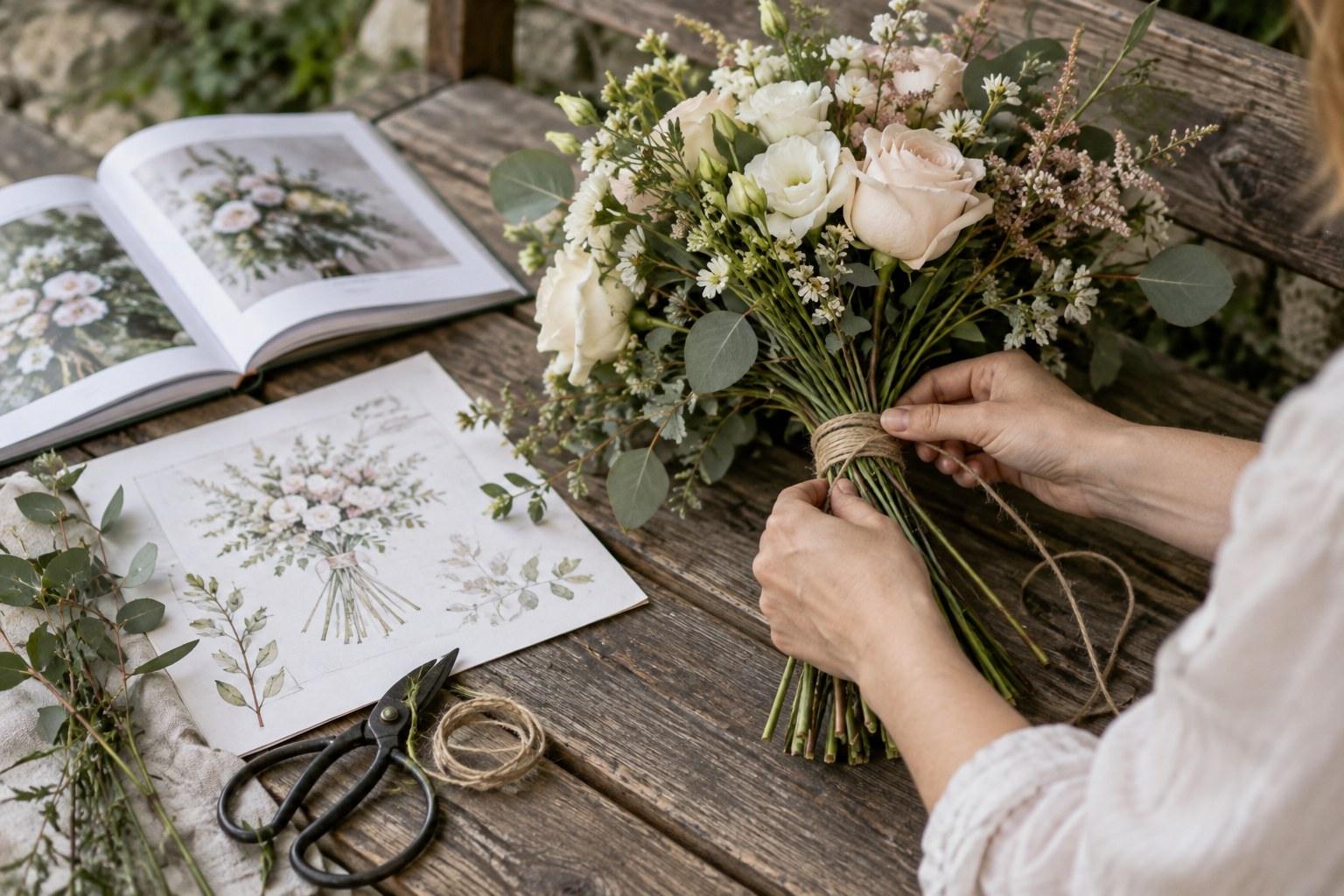
The Wedding Florist’s Handbook by Jac Bowie
We wrote our own because we kept seeing the same gap. The Wedding Florist’s Handbook is book three of The Wedding Academy handbook series, and it covers the whole job — from conditioning and mechanics through to bouquets, installations and quoting.
It’s built on our Certificate in Floral Design, and it’s organised as 20 chapters in six parts:
- The florist’s eye
- Knowing your flowers
- Personal flowers
- Ceremony and reception
- The wedding, start to finish
- The business of flowers
Inside you’ll find floral recipes, a flower library with 24 flower profiles, and 100 fillable worksheets — workbook pages designed to be used, not just read. The Wedding Florist’s Handbook ebook is a fillable PDF, so you can type straight into your recipes, order sheets and planning pages on screen.
It sits within an eight-book series by Jac Bowie covering planning, styling, floristry, business and more — you can browse the full Wedding Academy book series here. And if you’d like to see how we write before you commit, grab the free first chapter.
How to actually learn from a wedding floristry book
Buying the book is the easy bit. Plenty of aspiring florists read a handbook in a weekend, feel inspired, and never touch it again. Don’t be that person. Treat it like a course you’re setting for yourself.
Read one chapter a week
Slow down. One chapter a week gives you time to absorb it, practise it and come back with questions. Rushing through twenty chapters in a fortnight means you remember the pictures and forget the process.
Practise one recipe with supermarket or market stems
You don’t need a wholesale account to start. Grab a few bunches from the supermarket or a local market and build one recipe from the chapter you’ve just read. Swap varieties if you have to — the point is the method: conditioning, spiralling, binding, finishing. Count your stems as you go and write them down.
Photograph and critique your work
Take a photo from the front, the side and above. Then be honest. Is the shape balanced? Is the colour moving through the piece or sitting in clumps? Can you see mechanics you meant to hide? Compare your photo with the book’s version and write down three things you’d change next time. That critique habit is what separates people who practise from people who improve.
Keep a flower journal
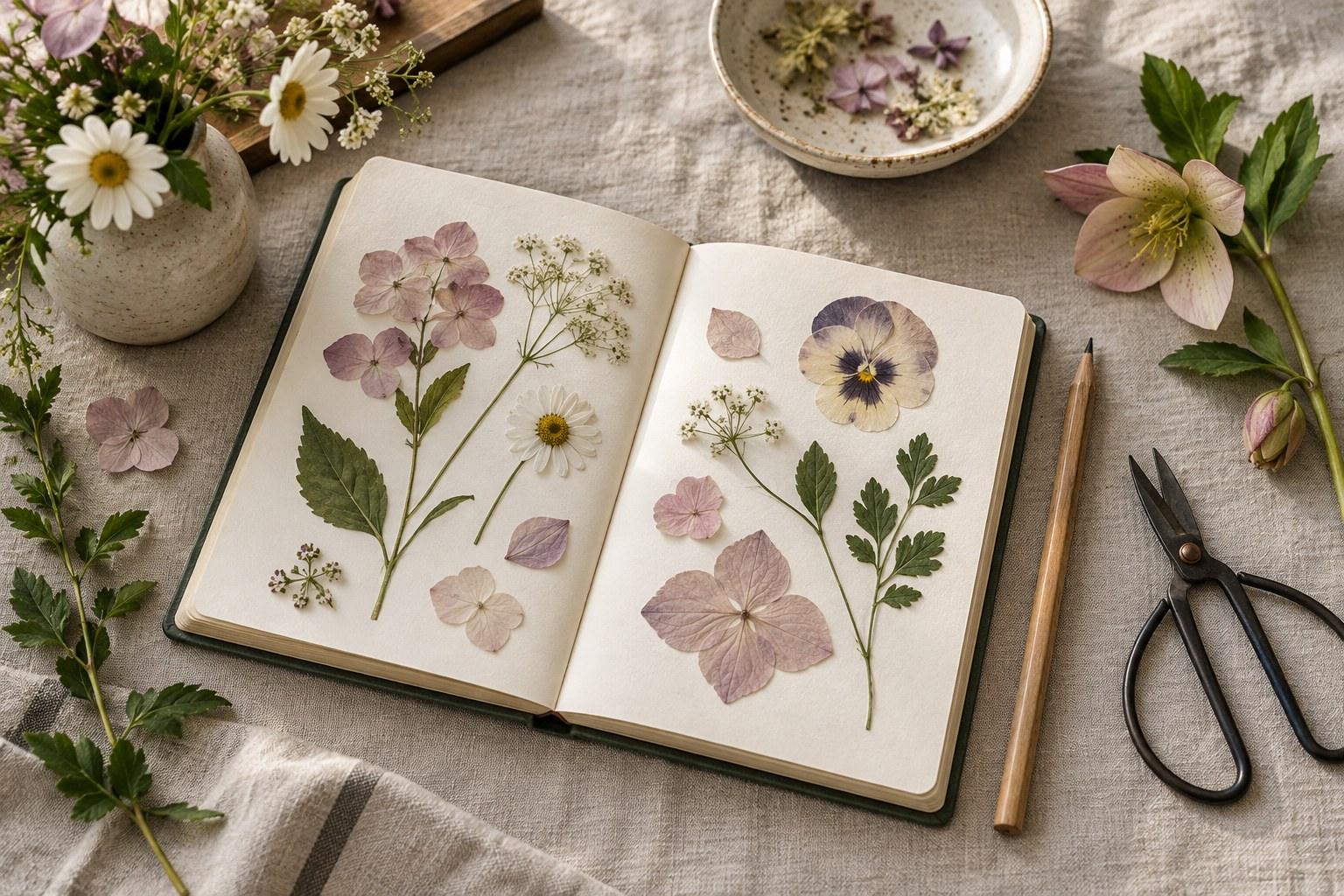
Every flower you handle, note it down: what it is, how you conditioned it, how long it lasted, how it behaved in a bouquet, what it paired well with. Over time, that journal becomes your personal flower library — and it’ll be far more useful to you than anything you can look up, because it’s built from your own hands-on experience.
When a floristry book stops being enough
A great book will take you a long way. It can teach you the theory, give you recipes and show you how a wedding runs. What it can’t do is look at your bouquet and tell you why the shape collapsed on one side, or that your buttonholes are too heavy, or that your quote is missing labour.
That’s where a course earns its place. Structured training gives you three things a book can’t:
- Feedback — someone experienced looking at your actual work and telling you what to fix.
- Assessment — deadlines and set tasks that push you to finish things, not just start them.
- A certificate — a credential you can put on your website and share with couples, venues and suppliers who want to know you’ve trained properly.
The smartest path is usually both: read the handbook to understand the job, then take a course to be assessed on it. Our Certificate in Floral Design is the course the handbook was built on, so the two work hand in hand. And if you’d like flowers to sit inside a wider creative skill set, the Certificate in Wedding Styling covers the whole look of the day — tables, installations, colour and props.
Wedding floristry books FAQs
What is the best wedding floristry book for beginners?
Look for a practical handbook rather than an inspiration book — one that covers conditioning, mechanics, recipes, stem counts, quoting and how the wedding week runs. Read it cover to cover before you start buying flowers in bulk.
Can you learn wedding floristry from a book?
You can learn the theory, the process and the business side from a good book, and you can build hand skills by practising its recipes. What a book can’t give you is feedback on your work, assessment or a certificate — that’s where a course comes in.
Should I buy an inspiration book or a practical floristry handbook first?
Start with the practical handbook. Inspiration books train your eye, but they rarely explain how designs are built or costed. Add inspiration and flower identification books once you understand the fundamentals.
What’s inside The Wedding Florist’s Handbook?
It has 20 chapters in six parts — the florist’s eye, knowing your flowers, personal flowers, ceremony and reception, the wedding start to finish, and the business of flowers — plus floral recipes, a flower library of 24 flower profiles and 100 fillable worksheets. The ebook is a fillable PDF.
Do I need a certificate to become a wedding florist?
A certificate isn’t the only route in, but it shows couples, venues and suppliers that you’ve trained and been assessed. Pairing a handbook with a structured course gives you both the knowledge and the credential.
Ready to move from reading about flowers to designing them for real weddings? Enrol in the Certificate in Floral Design and get the feedback, structure and certificate that turn a book on your shelf into a career. 💐