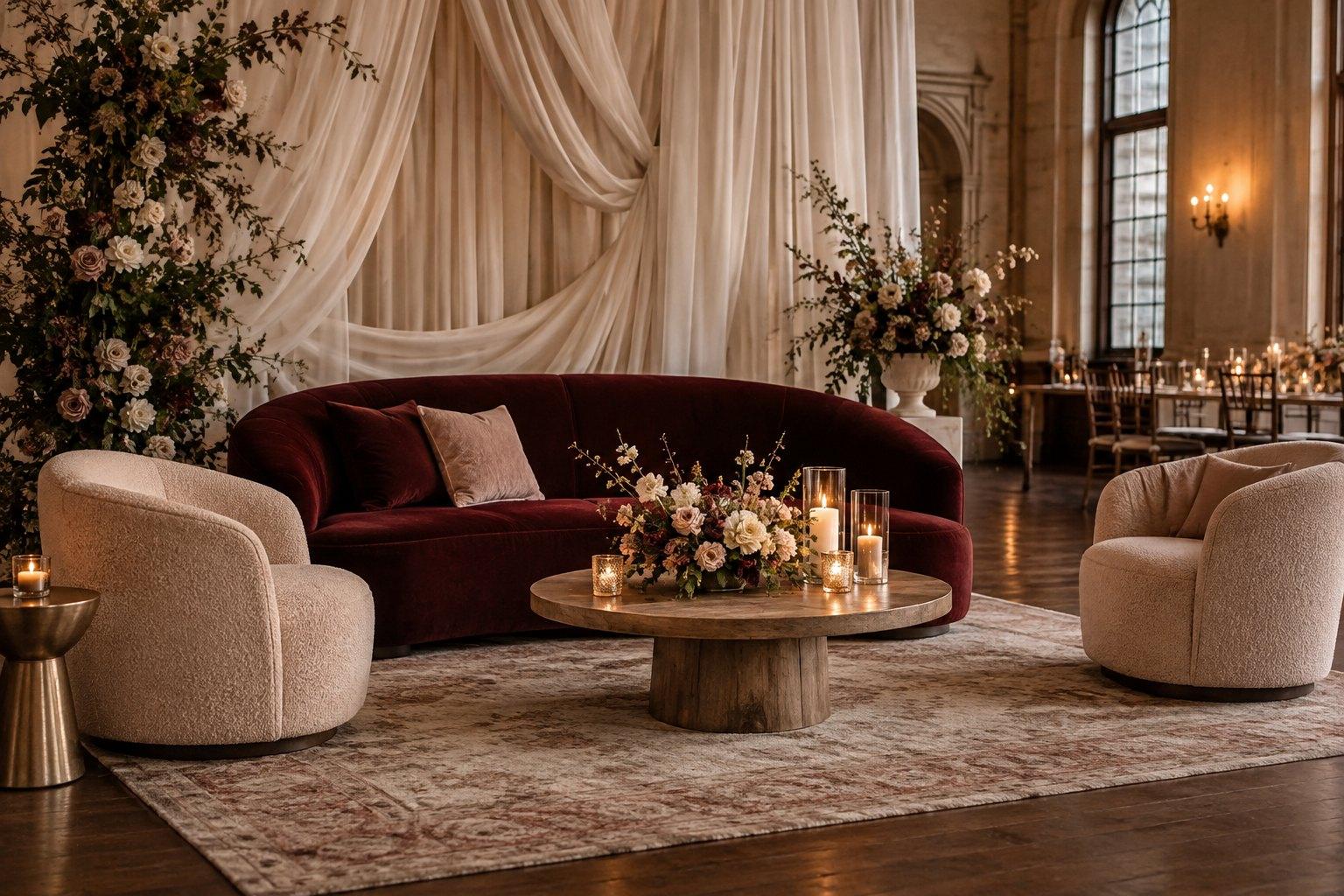
Wedding lounge furniture is used by stylists to divide large spaces into intimate zones, guide how guests move, create natural places to gather, and add texture and comfort that banquet tables can’t. A well-placed lounge area turns a cavernous room or an open lawn into somewhere people want to linger — and it gives older guests, people with mobility needs and anyone in heels somewhere comfortable to sit.
Done badly, a lounge is a few sofas pushed against a wall that nobody touches all night. Done well, it becomes the heart of the party. This guide covers how professional stylists use wedding lounge furniture to shape a room: planning zones, choosing pieces, getting scale right, layering textiles and lighting, and avoiding the classic mistakes.
Why wedding lounge furniture matters
Lounge areas aren’t just decoration. They solve real problems in a wedding space:
- They create intimacy. Large rooms can feel empty and echoey. Lounge groupings break the space into human-scale pockets.
- They control flow. Furniture can quietly direct guests from the entrance to the bar, or keep a path clear to the dance floor.
- They support different energy levels. Not everyone wants to dance all night. Lounges give quieter guests a place to talk.
- They improve comfort and accessibility. Soft, supportive seating is welcome for elderly guests, pregnant guests and anyone who needs a break.
- They photograph beautifully. Lounge vignettes give photographers natural, styled spaces for candid shots.
Where lounge areas work best at a wedding
Before choosing a single piece, decide what the lounge is for. Its purpose shapes its location, size and style.
| Location | Purpose | Styling notes |
|---|---|---|
| Ceremony or arrival area | Somewhere to wait and mingle as guests arrive | Light, open groupings that don’t block sightlines |
| Cocktail or drinks area | Encourage conversation while the couple has portraits | Several small clusters near the bar and food stations |
| Edge of the reception | Rest space close to the action | Face seating towards the dance floor or speeches |
| Near the dance floor | A place for dancers to catch their breath | Durable fabrics, side tables for drinks |
| Outdoor terrace or garden | A relaxed, separate atmosphere | Weather-appropriate fabrics, rugs to define the zone |
| Late-night chill-out corner | Wind-down space as the night goes on | Low lighting, deep sofas, soft throws |
How stylists use furniture to shape a room
Zoning: creating rooms within a room
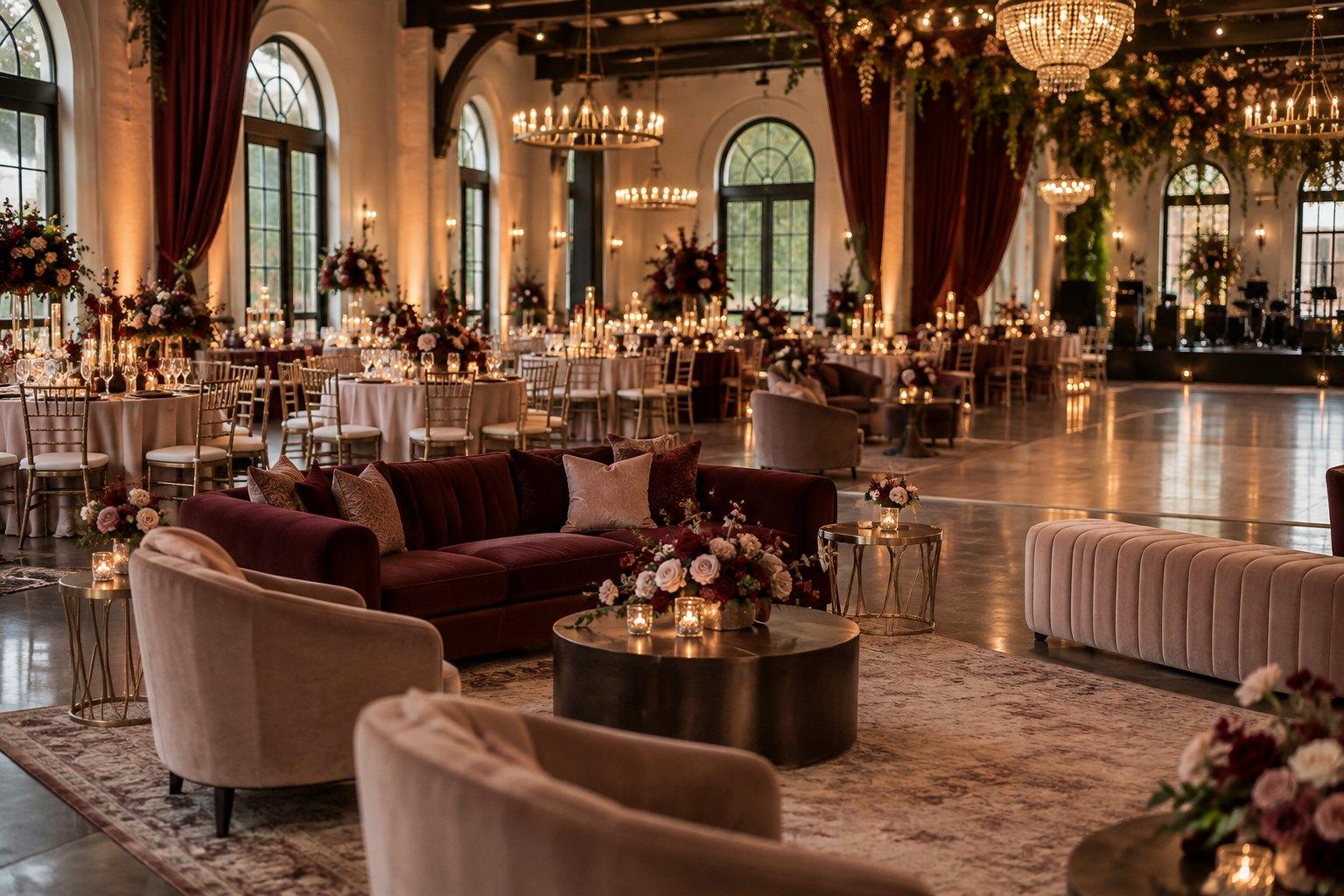
Think of lounge furniture as soft walls. A sofa with its back to the walkway creates an edge. A pair of armchairs facing each other defines a conversation spot. A rug anchors the whole grouping and tells guests “this is a space”. Stylists use these tools to carve a big venue into zones — arrival, bar, lounge, dining, dance — that each feel deliberate.
Directing guest flow
Furniture placement can nudge guests where you want them to go. A lounge grouping on either side of a pathway creates a natural corridor. A lounge near the bar draws people to the edges, freeing up space in the middle. Always walk the floor plan in your head — or better, in the room — to check guests can move freely, especially with a drink in hand.
Filling awkward spaces
Every venue has them: the empty corner, the oversized foyer, the weird alcove under the stairs. A lounge grouping instantly makes these spaces look intentional. It’s one of the easiest ways to make a room feel styled from edge to edge.
Choosing wedding lounge furniture: the key pieces
Sofas and loveseats
The anchor of most lounge groupings. Choose shapes that suit the overall design — curved, low-slung pieces for a modern look; button-tufted Chesterfields for heritage or classic venues; rattan or cane for relaxed outdoor settings.
Armchairs and occasional chairs
Use them in pairs to frame a sofa, or in clusters of three or four for conversation circles. Mixing chair styles can work beautifully if you keep a consistent colour or material thread.
Ottomans, poufs and benches
Flexible, light and great for filling gaps. Poufs are perfect for casual or boho schemes; upholstered benches work well along walls or behind sofas.
Coffee tables and side tables
Guests need somewhere to put drinks. Every seat should be within reach of a surface. Coffee tables also give stylists a stage for florals, candles and small decor moments.
Rugs
The secret weapon. A rug defines a zone, adds warmth, softens acoustics and ties mismatched pieces together. Outdoors, rugs turn a patch of lawn into a room.
Backdrops and dividers
Screens, draped frames, greenery walls or shelving units create a backdrop that gives the lounge a sense of enclosure — and makes a perfect photo spot.
Getting scale and proportion right
The most common lounge mistake is scale. A single loveseat in a ballroom looks lost. An enormous sectional in a small room feels cramped. Stylists consider:
- Ceiling height. Taller rooms can handle higher-backed pieces, taller arrangements and backdrops.
- Room size. Large spaces often need several lounge groupings rather than one oversized area.
- Guest numbers. Lounges don’t need to seat everyone — dining seating does that — but they should be generous enough to be used.
- Clearances. Leave enough space around groupings for guests, staff and trays to pass comfortably. Check fire exits and pathways with the venue.
- Sightlines. Don’t block views of the ceremony, the couple, the speeches or the dance floor.
Measure the space during your site visit and draw lounge areas on the floor plan before you hire anything. A floor plan with accurate furniture dimensions saves you from on-the-day surprises.
Colour, texture and materials
Lounge furniture is a chance to bring depth to your design. Layering texture — velvet, linen, leather, bouclé, rattan, timber — makes a space feel rich and inviting.
Working with the palette
Lounge pieces can carry the wedding’s colour story at a larger scale than florals or stationery. A deep cabernet velvet sofa makes a bold statement; neutral linen pieces let the florals and lighting lead. Cushions and throws are an easy, affordable-feeling way to bring in accent colours without hiring coloured furniture.
Matching the venue’s character
The best lounges feel like they belong. Heritage venues suit classic shapes and rich fabrics. Industrial warehouses pair well with leather, metal and timber. Garden venues call for natural materials. Coastal venues lean towards light, airy textures.
Lighting your lounge area
Lighting is what makes a lounge feel like a destination rather than a furniture showroom. Consider:
- Candles on coffee tables and side tables (check venue rules on open flame — LED candles are a useful alternative)
- Table and floor lamps for a warm, residential feel
- Festoon or string lights overhead to define the zone outdoors
- Uplighting on backdrops or greenery walls to add depth
Plan where power is available and how cables will be hidden or taped down safely.
Styling details that bring a lounge to life
- Florals in low arrangements that don’t block conversation
- Books, framed photos or personal objects that tell the couple’s story
- Throws for outdoor or evening lounges
- Coasters and small trays to protect hired furniture
- Greenery in planters to soften edges and screen awkward views
Keep it curated. Too many small decor items can feel cluttered and end up knocked over by guests.
Common wedding lounge mistakes to avoid
- Placing lounges too far from the action — guests won’t walk to an isolated corner.
- Too few surfaces — guests balancing drinks on the floor is not a good look.
- Delicate fabrics near the bar or dance floor — spills happen. Discuss cleaning and damage terms with your hire supplier.
- Blocking pathways or exits — always confirm the layout with the venue.
- Forgetting setup and pack-down time — lounge furniture is bulky and needs loading access and crew.
- Lounges that look staged but aren’t comfortable — sit on everything before you commit.
Working with furniture hire suppliers
Most lounge pieces are hired. Build strong relationships with local hire companies, confirm availability early, request exact dimensions and fabric details, and confirm delivery, setup and collection times in writing. Check what’s included — delivery, placement, collection — and what the terms are for damage or cleaning, according to their contract.
Learning to style spaces like a professional
Shaping a room with furniture is a core styling skill — it combines design principles, spatial planning and an understanding of how guests actually behave. It’s at the heart of the Certificate in Wedding Styling, studied 100% online at your own pace. For deeper design principles, styling checklists and practical worksheets, explore The Wedding Stylist’s Handbook (Volumes 1 & 2) by Jac Bowie. Want to combine styling with planning and business skills? Take a look at the Advanced Certificate.
Frequently asked questions
Where should a lounge area go at a wedding?
Lounge areas work well in cocktail areas, at the edges of the reception space, near the dance floor and on outdoor terraces. Place them close enough to the action that guests actually use them, without blocking pathways or sightlines.
How much lounge seating does a wedding need?
Lounges don’t need to seat every guest, since dining seating does that. Aim for enough groupings to feel inviting and well used, scaled to the size of the room and guest count.
What furniture is used in wedding lounge areas?
Common pieces include sofas, loveseats, armchairs, ottomans, poufs, benches, coffee tables, side tables, rugs and backdrops or dividers.
How do stylists make a large venue feel more intimate?
Stylists use lounge groupings, rugs, backdrops, lighting and greenery to divide large spaces into smaller zones that feel human-scale and inviting.
Should lounge furniture match the wedding colour palette?
It should complement it. Neutral pieces let florals and lighting lead, while statement colours bring the palette in at a larger scale. Cushions and throws are an easy way to add accent colours.
Ready to design wedding spaces guests never want to leave? Learn professional styling — from floor plans and furniture to colour, lighting and tablescapes — with The Wedding Academy, online and at your own pace.