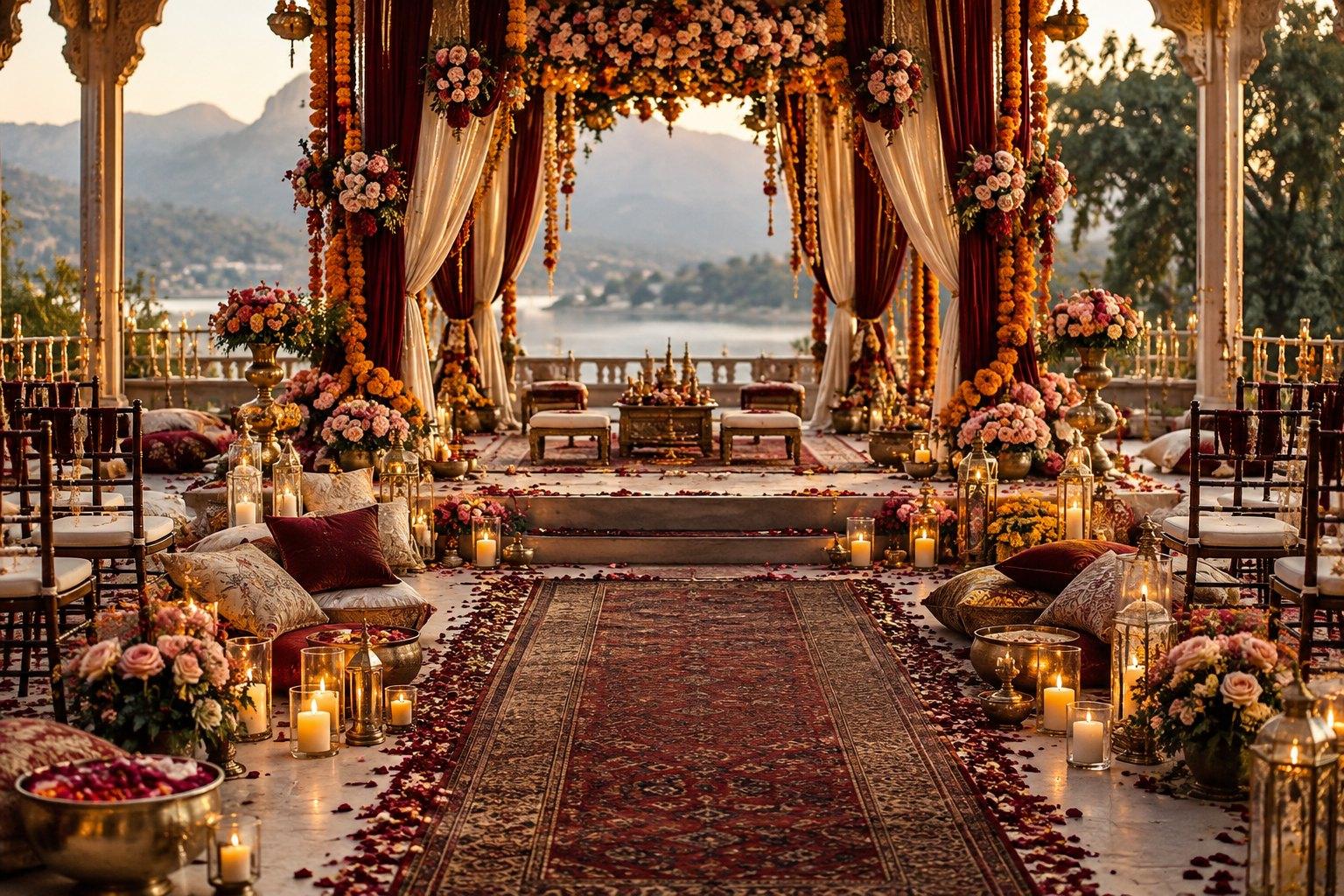
Multicultural wedding planning means designing one wedding that honours two (or more) cultures, faiths or family traditions — without making either side feel like a guest at someone else’s event. For planners, the work comes down to asking the right questions, researching respectfully, building a realistic timeline around every ritual, and managing family expectations with diplomacy.
It’s some of the most rewarding work in the industry. It’s also where assumptions do the most damage. This guide covers how professional planners approach multicultural wedding planning: discovery, ceremony design, food, timing, suppliers and the delicate art of keeping two families feeling equally valued.
Why multicultural wedding planning needs a different approach
Every wedding involves compromise, but cross-cultural weddings layer in extra complexity:
- More ceremonies or events. Some traditions involve pre-wedding rituals, multi-day celebrations or separate religious and civil ceremonies.
- Different ideas of what a wedding is. One family may expect an intimate dinner; the other an open-door celebration for hundreds.
- Languages. Guests may not share a common language, which affects ceremony, speeches and signage.
- Food and drink rules. Dietary laws, alcohol customs and preparation requirements can shape the entire catering brief.
- Family roles. Who walks with whom, who speaks, who hosts and who pays can carry deep cultural weight.
None of this is a problem. It’s simply more to plan — and a planner who handles it well becomes invaluable.
Start with discovery, not assumptions
The most important rule: never assume you know how a culture celebrates. Traditions vary enormously between countries, regions, communities and individual families. Two couples from the same background may want completely different weddings.
Questions to ask the couple
- Which traditions matter most to each of you personally — and which matter most to your families?
- Are there rituals that must happen, and others that are optional?
- Will there be one ceremony, two ceremonies, or a blended ceremony?
- Who needs to be consulted on decisions — parents, grandparents, religious leaders?
- What languages will guests speak, and will translation be needed?
- Are there dietary, alcohol or dress requirements we must respect?
- Is there anything from either tradition that you’d prefer to leave out?
That last question matters. Couples sometimes feel pressure to include everything. Giving them permission to choose — and helping them explain those choices to family — is part of your role.
Research respectfully
After the conversation, do your homework. Speak with the couple’s officiants or religious leaders, read reputable sources, and ask the couple to connect you with a family member who can explain specific rituals. Where you’re unsure, ask. “Can you walk me through what happens during this part, and what you’d like it to feel like?” is always better than guessing.
Designing a blended or dual ceremony
There are three common ways couples bring traditions together.
| Approach | How it works | Best for |
|---|---|---|
| Two separate ceremonies | Each tradition gets its own ceremony, often on different days or at different times | Couples with significant religious requirements on both sides |
| One blended ceremony | Elements from both traditions are woven into a single ceremony | Couples wanting one shared moment with all guests together |
| Main ceremony plus rituals | One core ceremony with cultural rituals added at the reception or pre-wedding events | Couples who want to include traditions without lengthening the ceremony |
Tips for a blended ceremony
- Choose an officiant who can hold both traditions — or arrange for co-officiants.
- Explain rituals as they happen. A short narration or printed programme helps every guest feel included.
- Balance airtime. Families notice if one tradition gets twenty minutes and the other gets two.
- Check legal requirements. Religious ceremonies aren’t always legally recognised everywhere, and civil requirements differ by country. Confirm with the relevant registry or marriage authority.
Timeline and logistics for multicultural weddings
Multicultural weddings often run longer, involve more events and need more changeover time. Plan for:
- Outfit changes. Many couples wear different attire for different ceremonies. Build in time — and a private, well-lit room with mirrors.
- Venue changeovers. Moving from a ceremony setup with floor seating to a banquet layout takes time and crew.
- Sacred items and setup. Some rituals require specific items, structures or arrangements. Confirm who supplies them and who sets them up.
- Open flame and incense. Several traditions involve fire. Check venue rules and local regulations early.
- Prayer times or auspicious timings. Some families choose times based on religious or astrological guidance. Build the run sheet around these fixed points first.
A detailed run sheet is non-negotiable. Share it with every supplier, and walk through it with family representatives so everyone knows what’s happening when.
Planning multi-day multicultural celebrations
Some couples spread their celebrations across several days — a pre-wedding ritual with close family, a religious ceremony, a civil ceremony and a big reception. Treat each event as its own mini-project with its own guest list, run sheet, supplier list and budget line, then map them together on one master schedule.
Watch for overlaps: suppliers working back-to-back days, outfits that need steaming between events, and family members who are expected at everything. Build rest into the schedule for the couple, too. Multi-day weddings are joyful, but they’re also exhausting, and a planner who protects the couple’s energy is a planner they’ll recommend to every friend who gets engaged.
Food, drink and dietary requirements
Catering is often where cultural expectations are strongest. Food can be a statement of hospitality and respect, and getting it wrong can cause real hurt.
- Ask whether any food must be prepared to particular religious standards, and find caterers experienced in those requirements.
- Discuss alcohol openly. Some families won’t serve it; others see it as central to celebration. A compromise might be an alcohol-free ceremony with a bar later, or separate events.
- Consider dual menus or a shared menu that draws from both cuisines. Food stations can work beautifully here.
- Label dishes clearly for dietary needs and allergens.
- Think about serving styles — some cultures expect abundance and sharing platters; others expect plated courses.
Managing families with diplomacy
This is the part nobody puts in a brochure. When two families have different expectations, the planner often ends up as translator, mediator and peacekeeper.
Set the decision-making rules early
Agree with the couple who has final say on what. Then stick to it. When a parent asks you to change something, you can gently say, “I’ll take that to the couple — they’re making the final calls.”
Give both families visible roles
Readings, blessings, escorts, speeches and hosting duties can all be shared. When each family sees itself represented, tension softens.
Communicate in everyone’s language
Where possible, provide programmes, signage and key information in the languages guests speak. A bilingual MC can make a reception feel truly shared.
Choosing suppliers for a multicultural wedding
Your usual supplier list might not cover every need. Look for:
- Officiants experienced in interfaith or cross-cultural ceremonies
- Caterers who understand specific dietary laws and cuisines
- Musicians or DJs who can play music from both traditions — and read a mixed dance floor
- Photographers who know which ritual moments matter and where to stand without intruding
- Hair and makeup artists experienced with different hair textures, skin tones and traditional styles
- Stylists and florists who understand the symbolism of colours and flowers in each culture
Ask suppliers directly about their experience, and brief them thoroughly on the order of rituals and anything they should avoid.
Styling with cultural meaning
Colours, flowers and symbols can carry very different meanings across cultures — a colour that signals celebration in one tradition may signal mourning in another. Before finalising the palette, check meanings with the couple. Blending decor elements, from textiles to table settings, can create a design that feels like both families at once. If styling is your passion, the Certificate in Wedding Styling covers design principles you can apply to any cultural brief.
Building the skills to plan any wedding
Multicultural weddings reward planners with strong systems: thorough discovery, detailed run sheets, careful supplier briefing and confident communication. Those foundations are at the heart of the Certificate in Wedding Planning, studied 100% online. For practical checklists and planning tools you can adapt to any couple, see The Wedding Planner’s Handbook by Jac Bowie.
Frequently asked questions
How do you plan a wedding with two cultures?
Start with detailed discovery: ask the couple which traditions matter to them and their families, research respectfully, decide between separate, blended or combined ceremonies, and build a timeline and catering plan that honours both sides.
How long should a multicultural wedding ceremony be?
It depends on the traditions involved. A blended ceremony may be similar in length to a standard ceremony, while including several rituals or two full ceremonies can take much longer. Plan the timeline around the couple’s must-have elements.
Do I need to be an expert in every culture to plan multicultural weddings?
No. You need curiosity, respect and good questions. Learn from the couple, their families and officiants, and work with suppliers experienced in the relevant traditions.
How do planners handle family disagreements?
Agree early with the couple on who makes final decisions, give both families visible roles, and redirect requests to the couple rather than deciding yourself.
Is a religious ceremony legally binding everywhere?
Not always. Legal recognition varies by country and region, so check with the relevant registry or marriage authority.
Ready to plan weddings that make every family feel at home? Build the planning, communication and coordination skills you need with The Wedding Academy — online and at your own pace.