Flower conditioning is the process florists use to prepare cut flowers after delivery so they drink properly, open evenly and last as long as possible — usually re-cutting stems, removing lower foliage and resting the flowers in clean water in a cool place before they’re designed. It’s the unglamorous step that decides whether a bouquet still looks fresh at the last dance.
Skip conditioning and even beautiful, expensive flowers can wilt, bruise or open unevenly. Do it well and you buy yourself time, reliability and far fewer emergencies. Here’s how professional wedding florists condition and process their flowers.
Why flower conditioning matters for weddings
Cut flowers have usually travelled a long way before they reach your workroom. They may have been out of water, packed tightly in boxes and exposed to changes in temperature. They arrive thirsty and stressed.
Conditioning helps flowers recover. It’s especially important for weddings because:
- Many designs — buttonholes, corsages, bouquets and installations — spend hours out of water.
- Wedding flowers often need to be at a precise opening stage on a specific day.
- There’s no second chance; the timeline is fixed.
The basic flower conditioning process
Most flowers follow the same core routine. Specific varieties need extra care, which we’ll cover below.
1. Unpack and inspect straight away
Open boxes as soon as flowers arrive. Check quantities against your order, look for damage, and note anything that needs replacing. Leaving flowers boxed while you finish another job is one of the quickest ways to lose stems.
2. Prepare clean buckets
Clean buckets matter more than most people realise. Bacteria in dirty buckets blocks stems and shortens vase life. Wash buckets thoroughly between uses and fill them with fresh, cool water and flower food mixed to the manufacturer’s directions.
3. Strip lower foliage
Remove leaves that would sit below the waterline. Submerged leaves rot and encourage bacteria. On roses, remove damaged outer guard petals only if they’re bruised — they protect the bloom in transit.
4. Re-cut the stems
Using sharp, clean snips or a floristry knife, cut stems at an angle. A clean, angled cut increases the surface area for drinking and stops the stem sitting flat on the bottom of the bucket. Blunt tools crush stems and reduce water uptake.
5. Hydrate in a cool, dim place
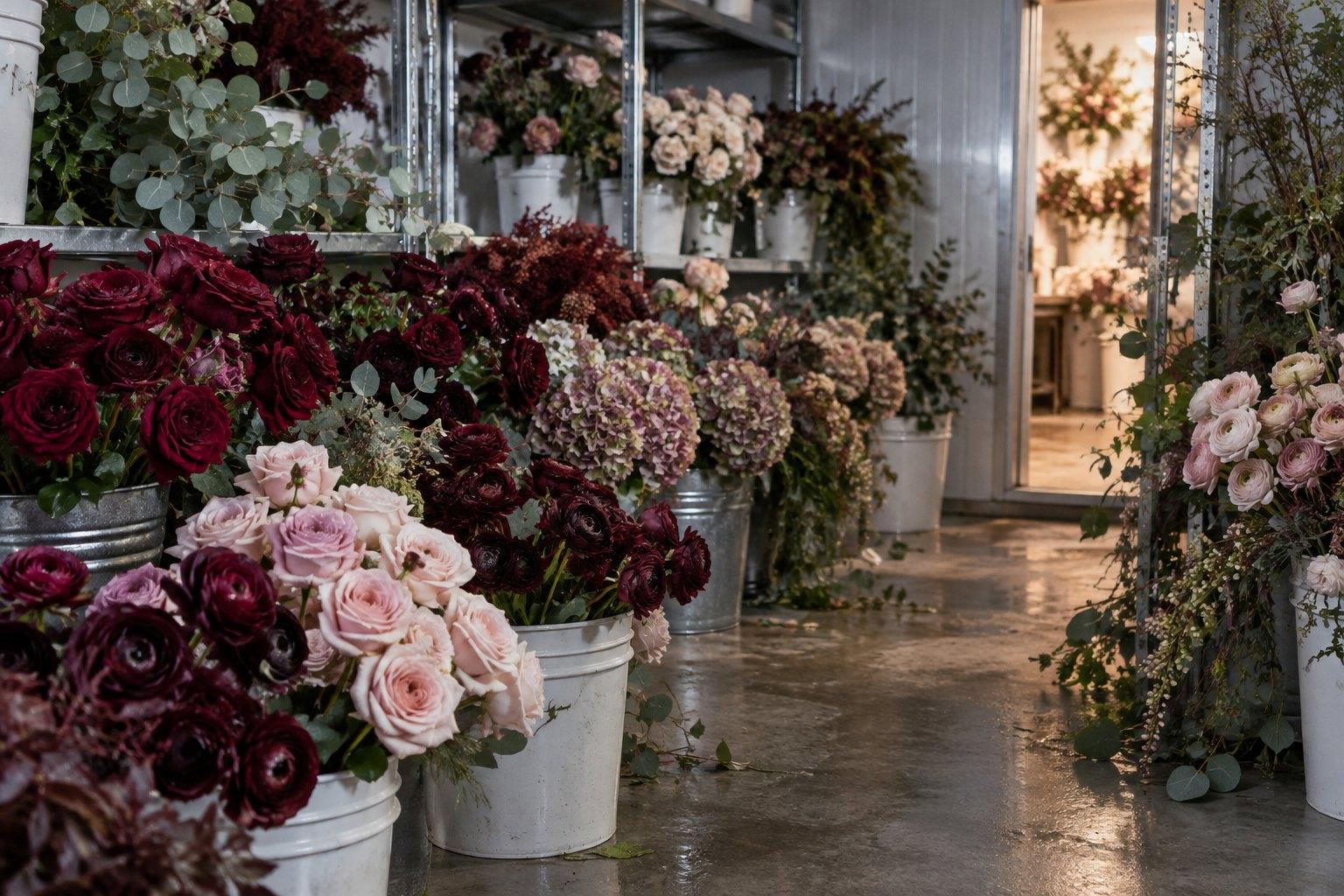
Place stems straight into the prepared buckets and let them drink for several hours, ideally overnight, in a cool space out of direct sun and away from heat sources. A dedicated cool room is ideal; a cool, shaded area works if that’s what you have.
Conditioning by flower type
Different flowers have different needs. A good florist adapts the process rather than treating every stem the same.
| Flower type | Examples | Conditioning tips |
|---|---|---|
| — | — | — |
| Woody stems | Lilac, viburnum, blossom branches | Cut at a sharp angle; some florists add a short vertical slit at the base |
| Sap-producing stems | Euphorbia, poppies | Seal the stem end as recommended for the variety; wear gloves where sap irritates skin |
| Bulb flowers | Daffodils, narcissus | Condition separately first — their sap can shorten the life of other flowers |
| Thirsty heads | Hydrangea | Can drink through the petals; misting or brief submerging helps revive them |
| Soft stems | Tulips, anemones | Keep cool and upright; tulips continue to grow and bend toward light |
| Roses | Garden and standard roses | Remove lower leaves and thorns gently, re-cut and hydrate fully |
| Foliage | Eucalyptus, ruscus, pittosporum | Strip lower leaves, re-cut and hydrate like flowers |
When you’re working with a variety for the first time, ask your wholesaler or grower for their advice. They know their product better than anyone.
Controlling opening stage before the wedding
Getting flowers to the perfect stage on the wedding day is part science, part experience.
- To encourage opening — keep flowers in a slightly warmer room, in fresh water, out of direct sun. Some florists gently open rose petals by hand for a fuller look.
- To slow opening — keep flowers cool and in low light.
- Order timing — work backwards from the wedding date, allowing enough time for flowers like peonies or garden roses to open, and for conditioning before you design.
Keep notes on how each variety behaves in your workroom. That record is invaluable when planning future weddings.
Conditioning without a cool room
Plenty of florists start out without a dedicated cool room, and that’s fine — you just need to be more deliberate. Choose the coolest, darkest room you have, away from appliances, windows and anything that heats up during the day. Keep buckets off warm floors and out of drafts from heaters. A thermometer helps you understand how your space behaves across the day.
Time your orders more tightly, too. Without cool storage, flowers open faster, so you have less room for error. Order hardy varieties where you can, plan for delivery close to design day and avoid holding finished designs for long. As your business grows, investing in proper cool storage is one of the best upgrades you can make for consistency.
Keeping flowers away from ethylene
Ethylene is a natural gas released by ripening fruit, decaying plant material and some flowers. Many flowers are sensitive to it and age faster when exposed. Keep your conditioning area clear of fruit, remove dead leaves and spent blooms promptly, and keep buckets and benches clean.
Processing schedule for a wedding
A clear schedule keeps the workroom calm. Every florist builds their own, but a common framework looks something like this:
- Several days before — flowers that need time to open arrive and are conditioned.
- A few days before — most flowers and foliage arrive, are inspected, stripped, re-cut and hydrated.
- The day before — designs that travel or sit in water are made; buttonholes and corsages may be made now or on the morning.
- The wedding day — final touches, misting, packing and delivery.
Adjust this to the varieties you’re using, your storage and the size of the wedding.
Keeping designed flowers fresh
Conditioning doesn’t stop once the design is made. To keep finished wedding flowers looking their best:
- Use reliable water sources — vases, water tubes or soaked mechanics, depending on the design.
- Mist lightly where appropriate, avoiding flowers that spot with water.
- Store finished designs cool until delivery.
- Transport carefully — keep the vehicle cool and secure designs so they can’t tip or crush.
- Shield from heat and sun at the venue wherever you can, and brief the planner or venue team on simple care.
Common flower conditioning mistakes
- Leaving flowers boxed for too long after delivery.
- Using dirty buckets or old water.
- Cutting with blunt tools that crush stems.
- Leaving leaves below the waterline.
- Storing flowers near fruit or heat.
- Mixing daffodils or other sap-heavy stems straight in with other flowers.
- Not allowing enough time for flowers to open before design day.
Build conditioning into your business systems
Conditioning is part of your craft and part of your workflow. Build it into your quotes as labour time, your schedule as fixed steps and your workroom setup as dedicated space. It’s one of those skills that clients never see but always benefit from.
The Wedding Florist’s Handbook by Jac Bowie covers floristry techniques and the business systems behind a successful floral service, making it a useful reference for building good habits. And if you’re thinking about how flowers fit into the wider look of a wedding, the Certificate in Wedding Styling is a natural companion to floristry training.
The bottom line
Flower conditioning is the foundation of fresh, reliable wedding flowers. Unpack promptly, use clean buckets, strip and re-cut stems, hydrate in a cool place, adapt to each variety and schedule your processing around the wedding date. Master it and every design you make starts from the strongest possible place. To learn it properly alongside professional design techniques, explore the Certificate in Floral Design.
Frequently asked questions
What does conditioning flowers mean?
Conditioning is preparing cut flowers after delivery so they hydrate well and last longer — typically stripping lower leaves, re-cutting stems at an angle and resting them in clean water with flower food in a cool place.
How long should flowers condition before a wedding?
Most florists allow flowers to drink for several hours, ideally overnight, before designing. Varieties that need to open, such as peonies or garden roses, need extra days built into the schedule.
Why do florists cut stems at an angle?
An angled cut increases the surface area for water uptake and stops the stem sitting flat on the bottom of the bucket, helping flowers drink more efficiently.
Should daffodils be conditioned separately?
Yes. Daffodils and narcissus release sap that can shorten the life of other flowers, so they’re usually conditioned on their own first.
How do you keep wedding flowers fresh on the day?
Use reliable water sources, mist lightly where suitable, store designs cool until delivery, transport carefully and keep flowers out of heat and direct sun at the venue.
Ready to handle wedding flowers with professional confidence, from delivery to the last dance? Enrol in the Certificate in Floral Design and learn floristry techniques and business skills 100% online.