A wedding styling proposal gets approved when it does three things clearly: shows the couple their wedding through visuals they can picture, explains what’s included and why, and makes the next step effortless. Most rejected proposals don’t fail on design — they fail on clarity, confidence or follow-up.
If you’ve ever sent a beautiful document and heard nothing back, this one’s for you. Here’s how professional stylists structure, present and follow up a styling proposal so couples say yes.
What is a wedding styling proposal?
A styling proposal is the document — and conversation — that turns a consultation into a booking. It translates everything you learned about the couple into a design concept, an itemised scope and a quote. It’s part creative pitch, part business document.
A strong proposal answers the questions every couple is silently asking:
- Do you understand us and what we want?
- What will our wedding actually look like?
- What exactly are we paying for?
- Can we trust you to deliver it?
- What happens next?
If your proposal answers all five, approval becomes the natural next step.
Before the proposal: the consultation does the heavy lifting
You can’t write a winning proposal from a two-line enquiry. The consultation is where you gather the raw material. Ask about the venue, guest numbers, budget, must-haves, dislikes, the feeling they want guests to have, and the moments they care about most.
Listen for the words they use. If a couple keeps saying “relaxed”, “warm” and “not too fussy”, your proposal should echo that language back. Couples approve proposals that sound like them.
Get the budget on the table
Many stylists avoid the money conversation and then design something the couple can’t afford. Ask for a working budget early, explain that it helps you design realistically, and design to it. A proposal that blows the budget doesn’t get approved; it gets ghosted.
How to structure a wedding styling proposal
A clear, consistent structure makes your proposal easy to read and easy to say yes to. Here’s a format that works for most styling businesses.
| Section | What it includes | Why it matters |
|---|---|---|
| — | — | — |
| Welcome and summary | A short personal note recapping their vision | Shows you listened |
| Design concept | Concept name, story, palette and mood | Sells the feeling, not just the items |
| Visuals | Mood boards, sketches, samples or renders by area | Helps them picture the day |
| Scope by area | Ceremony, reception, feature areas, signage, lighting | Clarity on what’s included |
| Investment | Itemised or packaged pricing, with options | Removes uncertainty |
| Logistics | Set-up, pack-down, venue requirements, timing | Builds trust in your process |
| Next steps | How to book, deposit, timeline to confirm | Makes yes effortless |
Lead with the concept, not the price list
Open with the story. Give the design a short name if it suits your style, describe the mood in a few evocative sentences and introduce the palette. You’re helping the couple love the idea before they see the numbers — not hiding the numbers, just ordering things so the value makes sense.
Show it, area by area
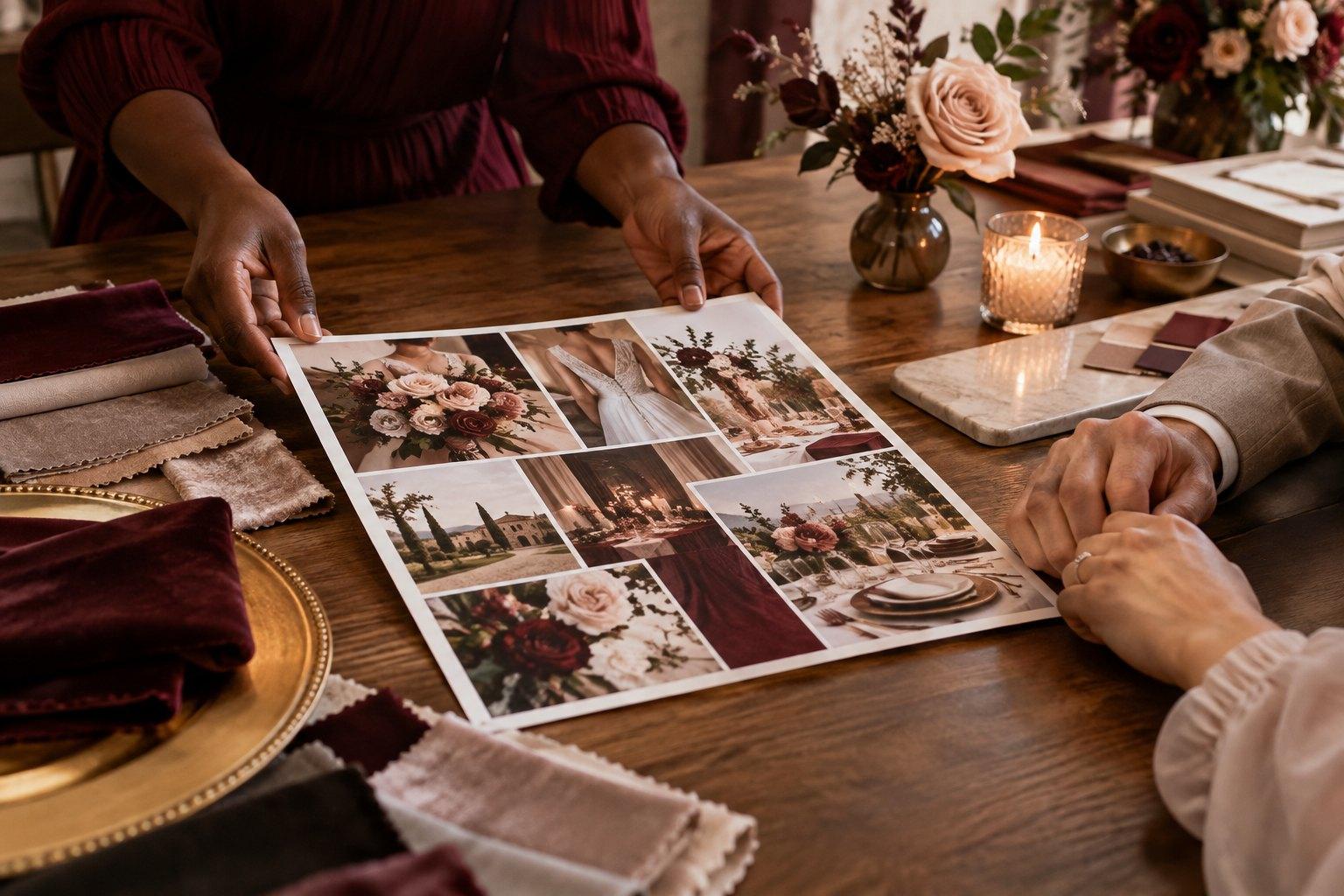
Couples struggle to imagine a whole wedding at once. Break your visuals into zones: ceremony, entrance, reception tables, head table, dessert or bar area, lounge, signage. For each, show a mood board or sketch and a short list of what’s included. Where you can, use images of your own previous work alongside inspiration — and be honest about which is which.
Make the investment section crystal clear
Ambiguity kills approvals. List what’s included in each area, note anything that’s an add-on, and spell out what’s not included, such as venue fees, florals from another supplier or extra labour for late finishes. Offering two or three tiers — essential, signature and luxe, for example — gives couples a sense of control and often lifts the final choice.
Let the proposal look like your work
Your proposal is a styling sample in its own right. If it’s cluttered, inconsistent or full of mismatched fonts, couples will quietly wonder what their reception will look like. Use generous white space, a consistent colour palette, high-quality images and short paragraphs. Keep it to a length someone can read over coffee — a proposal that takes an hour to get through rarely gets read at all.
Add a short “about us” page near the end with your approach, the services you offer and a couple of portfolio images. Couples are booking a person, not just a document, so let a little of your personality show.
Presenting your styling proposal: in person, on video or by email?
Whenever you can, present the proposal live — in person or on a video call — rather than just emailing a PDF. A live presentation lets you tell the story, read reactions, answer questions in the moment and handle hesitation before it hardens into a no.
Tips for a strong presentation:
- Keep it to the point — walk through the concept and key visuals; don’t read every line item aloud.
- Bring tangible samples — linen, a sample place setting, candle holders or ribbon make the design feel real.
- Pause for reactions — ask “How does that feel?” after each area, then adjust.
- Have options ready — if they flinch at a cost, show a swap rather than a cut.
- Agree the next step before you finish — a booking date, a revision call or a deposit deadline.
Then send the written proposal straight afterwards so they can review it calmly together.
Handling revisions without losing control
Most couples will want to tweak something. That’s healthy — it means they’re engaged. But without boundaries, revisions can spiral. State in your proposal how many rounds of revisions are included before booking, and what triggers a re-quote. Keep every change in writing and send an updated version with the date clearly noted, so nobody is approving an outdated design.
Following up: where most proposals are really won
Couples are busy, and a proposal can easily sit unopened in an inbox. A polite, well-timed follow-up isn’t pushy; it’s professional.
- Send a short check-in a few days after the proposal, inviting questions.
- If you hear nothing, follow up again about a week later with something useful — a styling idea, a venue tip or a reminder of your availability for their date.
- Be honest about date availability without inventing pressure. If another enquiry comes in for their date, it’s fair to let them know.
- If they decline, ask kindly what influenced their decision. The answer will sharpen your next proposal.
Common wedding styling proposal mistakes
- Sending a price list with no story or visuals.
- Showing inspiration images that are far beyond the couple’s budget.
- Vague scope — “styling for reception” means nothing to a couple.
- No clear next step or booking instructions.
- Hiding labour, delivery and pack-down costs until later.
- Too many options, which leaves couples overwhelmed and stalled.
- Missing terms. Your contract and terms and conditions should accompany or follow the proposal; for legal wording, check with your own lawyer.
Build a proposal system you can reuse
You shouldn’t build every proposal from scratch. Create a branded template with your standard sections, a library of mood board layouts, a costed inventory list and a bank of descriptions for common styling elements. Then you only customise the concept and visuals for each couple.
The Wedding Academy’s templates shop has ready-made business documents that can help you get organised faster. For a deeper grounding in the design and business side of styling, The Wedding Stylist’s Handbook (Volumes 1 & 2) by Jac Bowie is a practical reference to keep on your desk. And the Certificate in Wedding Styling covers consultations, concept development and quoting as part of a complete styling education.
The bottom line
A wedding styling proposal gets approved when it’s personal, visual, transparent and easy to act on. Lead with the story, show the design area by area, make the investment crystal clear, present it live where you can and follow up like a professional. Do that consistently and your approval rate will follow.
Frequently asked questions
What should a wedding styling proposal include?
A personal summary, the design concept and palette, visuals for each area, a clear scope of what’s included, itemised or tiered pricing, logistics such as set-up and pack-down, and simple next steps to book.
How do you present a styling proposal to a couple?
Present it live in person or on video where possible, walk through the concept and visuals area by area, bring tangible samples, pause for reactions, offer swaps if something feels too costly and agree a next step before finishing.
How many options should a styling proposal offer?
Two or three clear tiers usually work best. They give couples a sense of choice without overwhelming them.
How do you follow up a wedding styling proposal?
Check in a few days after sending, then follow up again about a week later with something useful. Be honest about date availability without inventing urgency.
How do you handle revisions to a styling proposal?
State how many revision rounds are included before booking, keep every change in writing and send dated updated versions so everyone approves the same design.
Want to run consultations, build concepts and present proposals with real confidence? The Certificate in Wedding Styling teaches the design and business skills professional stylists use every day — 100% online, at your own pace.