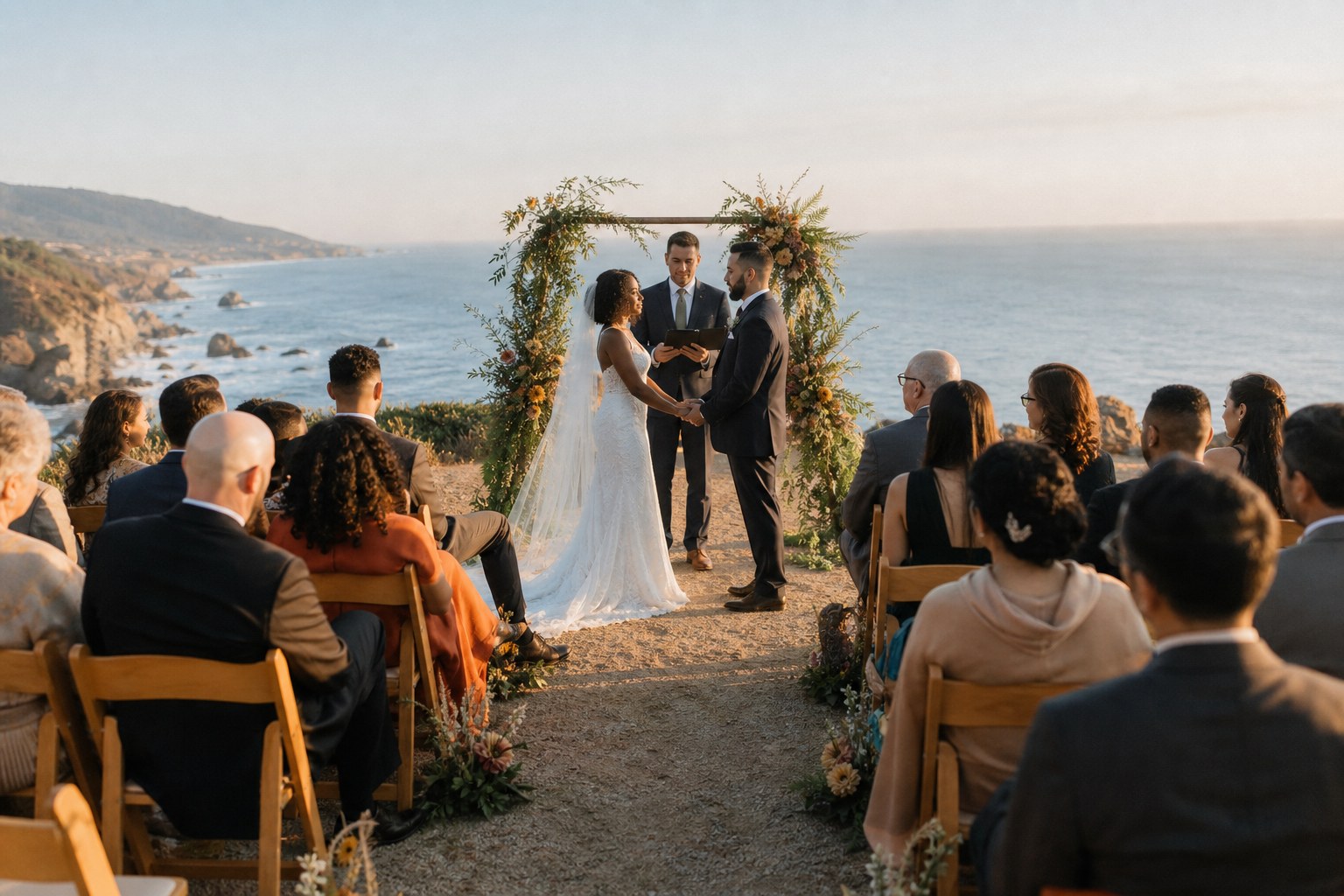
Micro weddings aren’t a downgrade. They’re a different brief — and if you plan them like a 150-guest wedding with fewer chairs, you’ll get it wrong every time.
Twenty guests changes everything: the pacing, the venue options, the budget maths, the emotional temperature of the day. Done well, an intimate wedding feels like the best dinner party of your clients’ lives. Done badly, it feels like a small version of something bigger — and everyone can tell.
This is your practical guide to micro wedding planning: what actually defines one, how to structure the day, where the money really goes, and how to build it into a profitable part of your business. If you want the full framework, the Certificate in Intimate, Micro & Destination Weddings was built for exactly this style of event.
What is a micro wedding?
A micro wedding is a full wedding — ceremony, celebrant, styling, food, photography, the lot — held for a very small guest count, typically somewhere between around ten and forty people.
It is not an elopement. An elopement is usually the couple plus witnesses, often built around the location and the experience. It is not a “small wedding” that got cut down either. A micro wedding is deliberately designed to be small, and that intention is what makes it work.
Why couples choose it: they want to spend real time with every guest, they want to redirect budget into quality rather than quantity, they have family across multiple countries, or they simply don’t want a spotlight on a stage. Your job is to design for those motivations, not to sell them a shrunken traditional day.
The micro wedding planning mindset shift
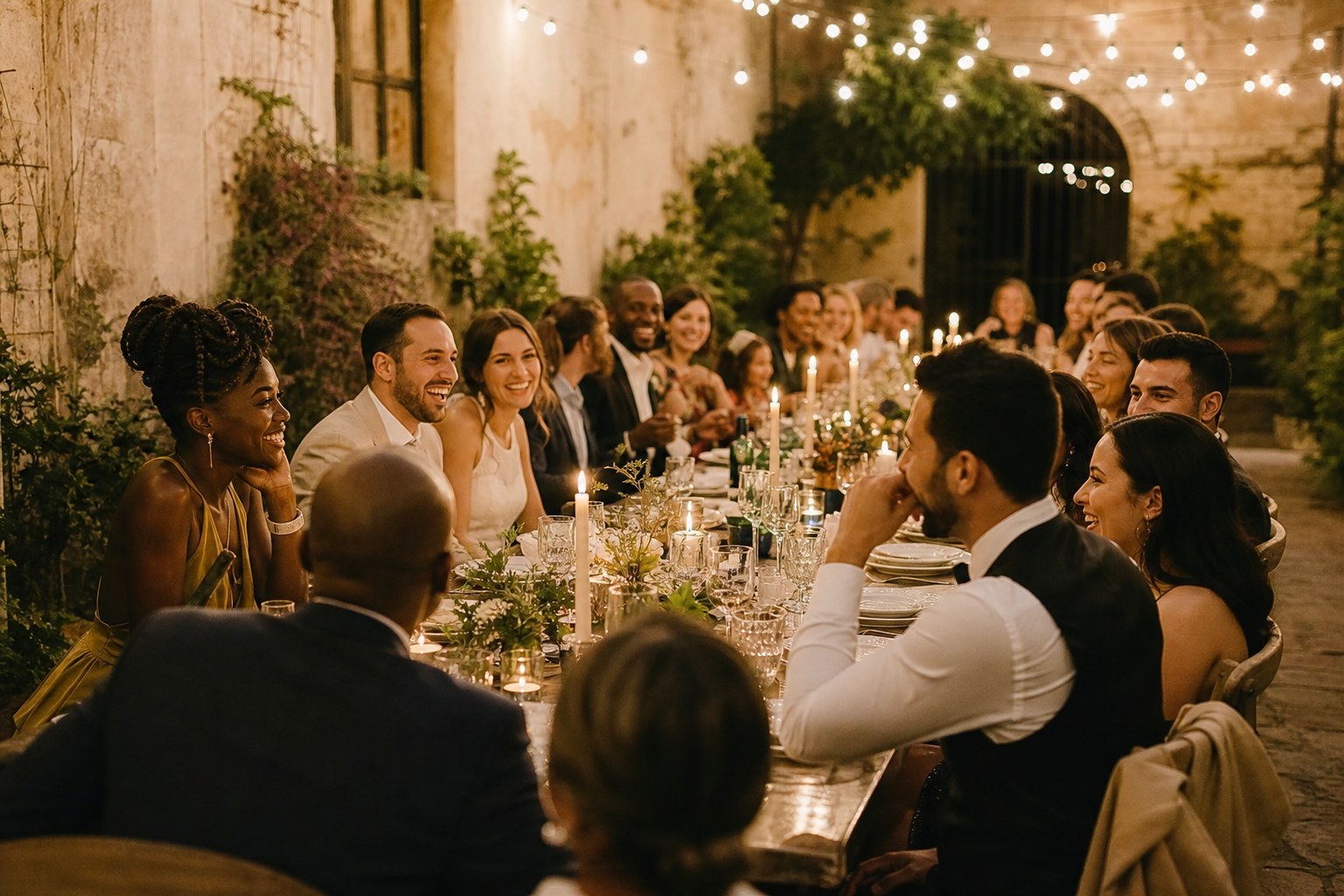
With 150 guests, you manage crowds. With 20, you manage intimacy — and intimacy is far less forgiving. Every detail is at eye level. There’s no back row. Nobody is hiding at table 14 while the speeches drag.
Detail is closer, so quality matters more
Guests will pick up the menu card. They’ll notice the glassware, the linen, the way the candles are placed. Fewer items means each one has to hold up under inspection. This is where budget gets redistributed: fewer centrepieces, better everything.
Silence is a real risk
Twenty people can’t fill a room with ambient noise the way a hundred can. Consider room size carefully, use music thoughtfully, and never seat a small group in a cavernous space. Cosy beats grand at this guest count, almost always.
Pacing has to be tighter and softer at once
Traditional wedding structure — long cocktail hour, three-course sit-down, formal speech block, dance floor — can sag with a small group. Micro weddings do better with a shorter, warmer arc: ceremony, immediate celebration, a long unhurried meal, and one or two genuine moments rather than a run of formalities.
How to plan an intimate wedding step by step
- Nail the “why”. Ask why they chose small. Their answer sets the entire design brief — connection, place, food, calm, or all four.
- Lock the guest list first. With micro weddings the list is the budget. Get it firm and get it early, because every added person shifts venue options.
- Find a venue that suits the scale. Private dining rooms, boutique properties, villas, chef’s tables, gardens, restaurant buyouts, heritage cottages. Big ballrooms are usually the enemy.
- Design one long table if you can. A single shared table is the signature of a great micro wedding. Everyone hears everything. Nobody is stranded.
- Elevate the food and beverage. Small numbers make plated, chef-led or family-style service far more achievable — and it’s what guests remember.
- Rethink the run sheet. Fewer formalities, longer transitions, more room to breathe. Build the timeline around the meal, not the dance floor.
- Give guests an experience, not just a seat. Welcome drinks the night before, a group breakfast, a guided walk. Small groups can do things big groups can’t.
- Brief every supplier on the tone. Photographers, celebrants and bands all work differently for 20 people. Say it out loud in the briefing.
Micro wedding budgets: where the money actually goes
The biggest myth in micro wedding planning is that small automatically means cheap. Guest-driven costs do fall — catering, hire, stationery, cake, favours. But fixed costs don’t care how many people show up.
Photography, videography, celebrant, hair and makeup, attire, venue hire minimums, music, planning fees and travel are largely the same whether you have 20 guests or 200. That means the per-guest figure on a micro wedding is often much higher, even when the total is lower — and couples need that explained early, kindly and clearly.
Set expectations at the first meeting. Show them which line items scale with headcount and which don’t. Then help them redeploy the savings into the things they’ll actually feel: better food, better wine, a longer photography package, a memorable location.
Venue selection for intimate weddings
Venue is the single biggest lever on whether a micro wedding feels intentional. Ask these questions before you shortlist anything:
- Is there a minimum spend or minimum guest count that makes a small group uneconomical?
- Does the space feel full and warm at this headcount, or echoey and empty?
- Can ceremony, meal and celebration happen in one property so nobody has to convoy?
- Is there a wet-weather option that is genuinely beautiful, not just dry?
- Can guests stay on site, turning the day into a weekend?
- Are external suppliers permitted, and what are the access and pack-down constraints?

Styling a micro wedding so it doesn’t feel sparse
The trap is spreading a big-wedding styling plan thinly across a small room. Instead, concentrate. Pick two or three focal moments and commit to them properly: the ceremony backdrop, the table, and one hero detail.
Layer instead of scatter — candlelight at varying heights, textured linen, considered glassware, low lush greenery running the length of the table. Tighten the room with drapes, screens, plants or furniture so the group reads as a full space. And use lighting like a professional: a warm, contained pool of light will do more for atmosphere than any amount of extra décor. If styling is where your heart is, the Certificate in Wedding Styling goes deep on exactly these decisions.
Should you specialise in micro and destination weddings?
It’s one of the smartest positioning plays available to a planner right now. Micro and destination weddings overlap heavily — couples who go small often go somewhere beautiful — and that combination attracts clients who value expertise over the lowest quote.
Specialising also gives you a genuine marketing angle. “Wedding planner” is a crowded search term. “Intimate coastal weddings” or “micro weddings in Tuscany” is a niche you can actually own. Pair it with strong wedding business and marketing skills and you have a service that’s memorable, referable and priced on value.
Fair warning: small doesn’t mean easy. Fewer guests, same contracts, same logistics, same weather risk, plus travel, cultural and legal considerations when it’s abroad. Charge for the expertise, not the headcount.
Common micro wedding mistakes to avoid
Most micro weddings that fall flat fail for the same handful of reasons, and every one of them is preventable at the planning stage.
Booking a venue built for hundreds. A twenty-guest wedding in a grand ballroom reads as an under-attended event, no matter how good the styling is. Match the room to the group.
Keeping the full formality run. Grand entrance, cake cutting, bouquet toss, garter, first dance, six speeches — with twenty people it can feel like a performance for an audience that’s already sitting close enough to touch you. Keep the moments that mean something and cut the rest.
Letting the guest list creep. “Just a few more” is how a micro wedding becomes a mid-size wedding with a micro budget and a venue that no longer fits. Cap it and hold the line.
Under-briefing the photographer. Small weddings need a documentary, unobtrusive approach. A shot list built for a big day will interrupt the very intimacy the couple chose.
Forgetting the guests are travelling for this. When someone flies across the world for a twenty-person wedding, a single three-hour event can feel thin. Add a welcome dinner or a next-morning breakfast and the whole thing lands differently.
Discounting your own fee. Fewer guests does not mean less planning. Contracts, timelines, supplier management and risk are all still there — often with travel on top.
Your micro wedding planning checklist
- Guest list confirmed and capped before venue search begins
- Venue that flatters the guest count, with a beautiful wet-weather plan
- One long table or a single shared dining moment
- Food and beverage upgraded as the centrepiece of the day
- Shortened, warmer run sheet with fewer formalities
- Two or three concentrated styling moments, not thin coverage
- Suppliers briefed specifically on intimate-scale working style
- Per-guest cost conversation had early and honestly
- An extra guest experience beyond the wedding day itself
Get those right and you’ll produce the kind of wedding people talk about for years — and the kind of portfolio that books more of the same. 🤍
Micro wedding FAQs
How many guests is a micro wedding?
There’s no fixed rule, but micro weddings generally sit between around ten and forty guests — small enough that everyone can share one table or one room comfortably.
What’s the difference between a micro wedding and an elopement?
An elopement is usually just the couple and witnesses, centred on the experience. A micro wedding is a complete wedding with guests, styling, catering and a full supplier team — just at a small scale.
Are micro weddings cheaper to plan?
The total is often lower because guest-driven costs fall, but fixed costs like photography, celebrant, attire and planning don’t shrink — so the cost per guest is frequently higher.
How do planners charge for micro weddings?
Usually a flat fee or package rather than a percentage of spend, because the workload is driven by complexity and logistics rather than guest numbers.
Do I need training to specialise in micro and destination weddings?
It’s not mandatory, but structured training covers the logistics, legal and cultural considerations, supplier sourcing at distance and pricing models that make this niche profitable rather than exhausting.