Everyone in this industry started with nothing. No portfolio, no supplier contacts, no idea what a bump-in schedule was. The planners whose work you’re saving on Instagram right now were, at some point, sitting exactly where you are — googling how to become a wedding planner with no experience and quietly wondering whether “no experience” was a polite way of saying “no chance”.
It isn’t. Wedding planning has no licensing body, no compulsory degree and no gatekeeper deciding who gets in. What it has instead is a very high bar for competence — because you’re handling other people’s money, families and one non-repeatable day. So the real question isn’t “will someone let me in?” It’s “how do I get good enough, fast enough, that people trust me with it?”
Here’s the honest path — the skills, the first jobs, the portfolio, the pricing conversation and the mistakes that cost beginners their first year.
Can you become a wedding planner with no experience?
Yes — but let’s be precise about what “no experience” means. You almost certainly have transferable experience and you’re discounting it. Have you run a project with a fixed deadline? Managed a budget that wasn’t yours? Handled a furious customer without escalating it? Coordinated suppliers, built a spreadsheet people actually used, kept a room calm when the plan fell apart?
That’s the job. Weddings simply add emotional stakes, an immovable date and a cast of suppliers you don’t employ. Teachers, nurses, hospitality managers, retail leads, executive assistants and parents make excellent planners because the core muscles — logistics, diplomacy, calm under pressure — are already built.
What you’re genuinely missing is industry-specific knowledge: how venues contract, how catering minimums work, how a run sheet is structured, what a stylist needs from you, what happens at 4pm when the celebrant is stuck in traffic. That gap is closeable — and closing it deliberately is what the Certificate in Wedding Planning exists to do.
What skills do you need to become a wedding planner?
Strip away the aesthetics and the role is mostly project management wearing nice shoes. The skills that matter:
- Logistics and sequencing — building a timeline backwards from the ceremony and knowing what depends on what.
- Budget literacy — tracking quotes, deposits, balances and the creep that happens between them.
- Supplier management — briefing clearly, chasing politely, holding people to contract without burning the relationship.
- Client communication — setting expectations early, saying no kindly, writing emails that end conversations rather than start three more.
- Emotional regulation — families are complicated and the day is loaded. Your steadiness is part of the product.
- Design fluency — you don’t have to style it yourself, but you must be able to speak the language and brief a stylist or florist properly.
- Business basics — contracts, insurance, pricing, marketing. Skipping these is the most common reason new planners quit.
How to become a wedding planner with no experience: the step-by-step path
1. Get the knowledge before you get the client
Learning on a real couple’s wedding is a terrible plan for them and a nerve-shredding one for you. Structured training gives you the vocabulary, the documents and the sequence so your first client meeting sounds like a professional rather than an enthusiast. Certification isn’t legally required — but it shortcuts the two years of guessing, and it gives couples something concrete to trust.
2. Decide what kind of planner you are
Full planning, partial planning, on-the-day coordination, styling-led, elopements and micro weddings, destination work. You don’t have to commit forever, but pick a starting lane. “I plan weddings” is unsellable; “I coordinate relaxed, outdoor weddings for couples who’ve booked their own suppliers and need someone to run the day” books.
3. Assist on real weddings — as many as you can stand
Nothing replaces being in the room. Approach established planners, venue coordinators and stylists in your area and offer to assist. Be specific about what you bring — a full day, your own transport, flat shoes, a willingness to carry chairs and say nothing clever. Show up early, do the unglamorous jobs well, and never pitch the couple. Do that a handful of times and you’ll have referees, contacts and a realistic sense of what the day actually demands.

4. Build a portfolio without real weddings
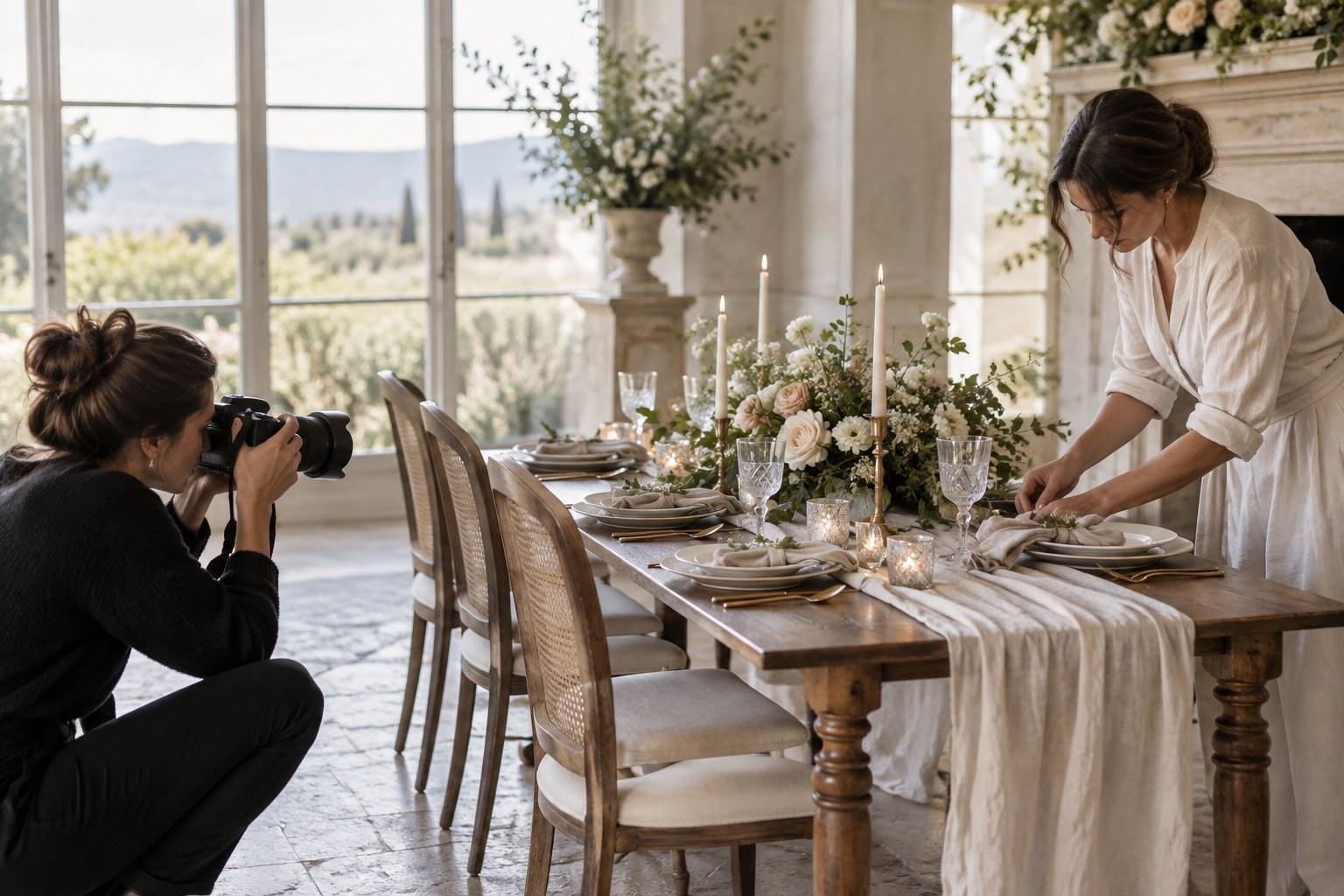
The chicken-and-egg problem: couples want to see weddings, you need a couple to have weddings. Break it with work you create. Styled shoots — organised properly, with a photographer, a florist, a venue and a clear creative brief — produce publishable images and teach you supplier coordination at the same time. Mock planning projects (a full timeline, budget, floor plan and mood board for an invented brief) show your process, which is what full-planning clients are really buying.
Be honest in your captions. Label styled shoots as styled shoots. Getting caught passing a shoot off as a wedding will cost you more than the shoot ever earned.
5. Set up the boring business bones
Register your business the way your country requires, get appropriate insurance, and write a contract before you take a single deposit. Open a separate bank account. Decide how you invoice and when. None of this is exciting and all of it is the difference between a business and an expensive hobby. If this is the part that intimidates you, it’s covered in depth in the Certificate in Wedding Business & Marketing.
6. Take a first paid job you can absolutely deliver
Start with on-the-day coordination rather than full planning. Shorter scope, clearer deliverables, less risk — and it’s the fastest way to get real weddings in your portfolio and real reviews on your page. Deliver it beyond expectation, ask for a testimonial while the glow is still on, and get permission to use the photographer’s images.
Ways to get wedding planning experience, compared
| Route in | What you gain | What it costs you | Best for |
|---|---|---|---|
| Assisting an established planner | Real day-of experience, contacts, a referee | Unpaid or low-paid time, weekends | Absolute beginners with free Saturdays |
| Venue or hospitality events role | Operations knowledge, supplier relationships, income | Fixed hours, less creative control | Career changers who need to keep earning |
| Styled shoots | Portfolio images, creative direction practice | Your time and often some budget | Building a visual brand from zero |
| Friends’ and family weddings | End-to-end practice, honest feedback | Blurred boundaries if you don’t contract it | Testing your process before you charge |
| Structured certification | Frameworks, templates, credibility, confidence | Study time and course fees | Anyone who wants to skip the guessing |
Most people who succeed use two or three of these at once — studying while assisting, shooting a portfolio piece between paid shifts. It’s not linear, and it doesn’t need to be.
How to get your first wedding planning clients
Your first bookings rarely come from strangers on Google. They come from people who already know you exist. So tell them. Announce what you’re doing, clearly and repeatedly, to your own network — and specify who you help, not just what you do.
- Suppliers first. Photographers, celebrants and florists talk to engaged couples constantly. Meet them, be useful, be memorable for being easy to work with.
- Venues second. Smaller and dry-hire venues often need coordinators and keep recommendation lists. Ask what they need from a planner, then be that.
- Show your process publicly. Post the run sheet thinking, the floor plan logic, the “here’s what I’d do differently” notes. Process content builds trust faster than pretty reposts.
- Have one page that converts. Services, who you’re for, a portfolio and an obvious enquiry button. That’s it.
What do you say when a couple asks how many weddings you’ve done?
Tell the truth, then redirect to competence. “You’d be one of my first full-planning clients. I’ve trained through a formal certification, I’ve assisted on weddings this season, and here’s the exact process and documents I’ll use for yours.” Confidence plus honesty reads as professional. Vagueness reads as a risk.
What new wedding planners get wrong
- Working without a contract because it felt awkward to send one. It will feel far more awkward later.
- Pricing from fear. Charging almost nothing attracts the clients who demand the most and refer the least.
- Saying yes to every scope. Undefined services are how you end up chasing linen hire at midnight for free.
- Building the brand before the skill. A gorgeous logo won’t save a run sheet that doesn’t work.
- Comparing your first year to someone else’s tenth. That planner’s polish took a decade you haven’t lived yet.
How long does it take to become a wedding planner?
Faster than you’d expect to be working, slower than you’d like to be established. Study can run alongside a full-time job. Assisting fits into weekends. A first coordination booking can happen while you’re still learning. Building a business that consistently books the couples you want is a multi-season project — and the planners who get there are the ones who treat year one as training paid for by real work, not as failure to be instantly booked out.
If you want the fastest credible route, do it in parallel: study the Certificate in Wedding Planning while you assist, then broaden into styling and business with the Advanced Certificate in Wedding Planning, Styling and Business once you know which parts of the job you love most.
How to become a wedding planner with no experience: FAQs
Do you need a qualification to become a wedding planner?
No — wedding planning isn’t a licensed profession, so no qualification is legally required. What a certification does is give you the frameworks, templates and industry knowledge you’d otherwise spend years assembling, and it gives couples a concrete reason to trust someone without a long client list.
How do I get wedding planning experience with no clients?
Assist established planners and stylists on real wedding days, take shifts at a venue, organise styled shoots with local suppliers, and run full mock planning projects with real documents. Each one gives you either skills, images or contacts — usually all three.
Can I become a wedding planner while working full time?
Yes, and most people do. Weddings happen at weekends, study can be done in the evenings, and on-the-day coordination is a weekend service. Keep your income while you build skill, portfolio and enquiries — then transition when the bookings justify it.
What should my first wedding planning service be?
On-the-day coordination. The scope is contained, the deliverables are clear, the couple has already chosen their suppliers, and you get real wedding experience with lower risk than full planning. It’s the cleanest first offer for a new planner.
How do I sound credible when I’m brand new?
Lead with process, not history. Show your timeline structure, your budget tracker, your supplier brief and your contingency thinking in the consultation. Be upfront that they’d be an early client, and be specific about your training and the weddings you’ve worked on. Preparation is what credibility actually looks like.
Start where you are
No experience isn’t a disqualification — it’s just a starting line, and every planner you admire crossed it. Get the knowledge, get onto real wedding days, build the portfolio you don’t have yet, and charge like someone who intends to still be doing this in ten years. 💍