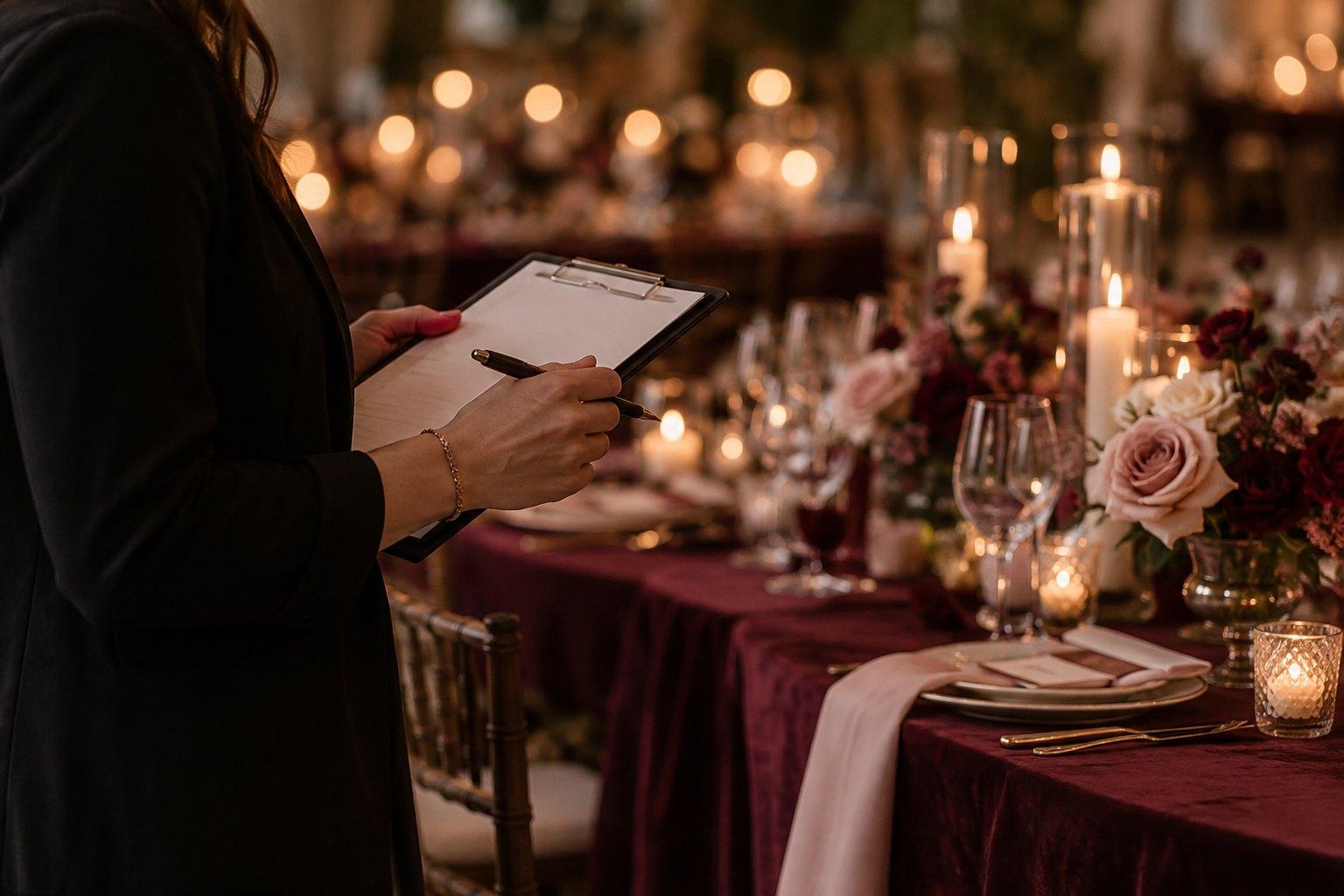
A wedding contingency plan is a written set of backup decisions for the things most likely to go wrong on the day — weather, vendor no-shows, timing blowouts, illness, lost items and tech failures. Professional planners build one for every wedding, agree it with the couple in advance, and carry it in their run sheet so nobody has to make a panicked decision at 3pm with a hundred guests watching.
Here’s the honest truth: something always goes sideways. A strap snaps, a shuttle bus is late, the sound system crackles during the vows. Couples rarely remember the hiccup — they remember whether you handled it calmly. This guide walks through exactly what a professional wedding contingency plan covers, how to write one, and the kit that turns “oh no” into “already sorted”.
What is a wedding contingency plan?
Think of it as Plan B, written down before anyone needs it. A good contingency plan answers three questions for each risk:
- What’s the trigger? The specific point at which you switch to the backup — for example, “if the forecast at 9am shows a high chance of rain at ceremony time”.
- What’s the backup? The alternative space, supplier, item or timing.
- Who decides and who acts? Named people, with phone numbers, so there’s no confusion on the day.
The key difference between an amateur and a professional is that last point. Amateurs have ideas. Professionals have pre-agreed decisions — the couple has already signed off on the wet-weather layout, so you’re not chasing them for an answer while they’re having their hair done.
The six risks every planner prepares for
Every wedding is different, but most problems sort into six buckets. If your plan covers these, you’ve covered the vast majority of what can realistically happen.
1. Weather
Outdoor ceremonies are gorgeous — until they aren’t. Your weather plan should name the indoor or covered alternative, the decision time, who makes the call, and how the setup crew, florist and stylist are told. Don’t forget heat as well as rain: shade, water stations, fans and a shortened ceremony standing time all belong here. Wind matters too — lightweight signage, candles and tall arrangements need weighting or a fallback position.
2. Vendor no-shows and late arrivals
Even brilliant suppliers get flat tyres. For each key vendor, note their arrival window, a backup contact (their second shooter, their business partner, their office), and what happens if they’re more than 30 minutes late. Keep a short list of trusted local suppliers you could call in an emergency for the critical roles — celebrant or officiant, photographer, music and transport.
3. Timeline slippage
Hair and makeup running over is the classic. Build buffers into the run sheet — 10 to 15 minutes before the ceremony, around portraits and before dinner service — and decide in advance what can be trimmed if you’re behind. Shorter group photo lists, a tighter cocktail hour or moving one speech to later in the night are typical pressure valves. We dig into timeline building in depth in the Certificate in Wedding Planning, because a realistic schedule prevents half of all problems before they start.
4. Health, accidents and guest issues
Fainting during a long standing ceremony, a cut finger at the cake table, a guest who’s had too much — these happen. Know where the venue’s first-aid kit is, who on the venue team is trained in first aid, and the address and access point for emergency services. Have a quiet plan for difficult guests, agreed with the couple: who approaches them, and where they’re taken.
5. Lost, forgotten or broken items
Rings left at home. A buttonhole crushed in the car. A hem that catches on a heel. Your plan should list who is holding each critical item and when it moves between people. Your emergency kit (more below) handles most physical fixes.
6. Technology and power failures
Microphones die, playlists glitch and power boards trip. Confirm a backup mic, charged batteries, a downloaded offline playlist, and where the venue’s power is controlled. If vows or speeches are being read from a phone, ask for a printed copy too.
How to write a wedding contingency plan, step by step
You don’t need fancy software. A clear document shared with the couple and key suppliers works beautifully. Here’s the process most professional planners follow.
Step 1: Run a risk walk-through at the venue
During your site visit, walk the full guest journey — arrival, ceremony, drinks, reception, exit. At each point, ask “what could go wrong here?” Look at uneven paths, power points, shelter options, toilets, parking and the loading dock. Write everything down.
Step 2: Rank the risks
Not every risk deserves equal attention. Score each one by how likely it is and how much damage it would do. A rain shower at an outdoor ceremony is likely and high impact — it gets a detailed plan. A meteor strike does not.
Step 3: Agree the backups with your couple
Present the main scenarios at a planning meeting and get decisions in writing. This is where couples feel genuinely looked after — and where you protect yourself, because the backup was their choice, not a surprise.
Step 4: Put it in the run sheet
A contingency plan stuck in your inbox is useless. Add a contingency section to the day-of run sheet, with triggers, backups and names, and brief your assistant or second coordinator on it.
A sample contingency plan table
Here’s a simple structure you can adapt for any wedding. Keep it to one page if possible — on the day you’ll be scanning it, not reading it.
| Risk | Trigger | Backup | Decision maker |
|---|---|---|---|
| Rain at ceremony | Forecast checked at 9am shows likely rain | Move to covered terrace; florist relocates arch | Planner with couple’s pre-approval |
| Photographer late | Not on site 30 min before start | Call studio backup; second shooter covers prep | Planner |
| Hair and makeup overrun | More than 15 min behind schedule | Trim group photo list; shorten drinks by 10 min | Planner |
| Mic failure | Mic cuts during ceremony or speeches | Backup handheld from DJ kit | DJ or MC |
| Rings forgotten | Not with best person at final check | Spare bands from emergency kit for ceremony | Planner |
The planner’s emergency kit
A well-stocked kit solves the small physical problems that would otherwise derail a moment. Common contents include:
- Sewing kit, safety pins, fashion tape and a small lint roller
- Stain remover pen, tissues, blotting papers and spare hair pins
- Pain relief, plasters, antihistamines and hand sanitiser (check any guest allergies)
- Scissors, gaffer tape, cable ties, fishing line and a mini toolkit
- Phone chargers, spare batteries and a power bank
- Lighter, spare tealights and a small fire-safe snuffer
- Bottled water, snacks and mints for the couple and wedding party
- Printed copies of the run sheet, vendor list, vows and speeches
- Umbrellas, spare flat shoes and a couple of blankets
Pack it the night before, check it against a list, and keep it with you — not in your car three car parks away.

Communication: the real backbone of contingency planning
The best backup in the world fails if nobody knows it’s happening. Professional planners set up simple communication rules for the day:
- One point of contact. Every supplier knows to come to you (or your named assistant), not the couple.
- One group channel for suppliers — a group message or radio channel for real-time updates.
- A calm script for the couple. If something changes, tell them the solution, not the problem. “We’re moving the ceremony to the terrace, everything’s set up, it looks beautiful” lands very differently from “it’s going to rain, what do you want to do?”
Calm is contagious — and so is panic.
Contracts, insurance and the legal side
Some contingencies are about paperwork, not props. Check your supplier contracts for what happens if they cancel or can’t attend, and make sure your own contract explains what your role is when things change. Many planners carry business insurance such as public liability, and many couples take out wedding insurance — the right cover depends on where you work, so check with a local insurance broker, and have your contracts reviewed by your own lawyer.
Learning to think like a professional planner
Contingency planning isn’t pessimism — it’s care. It’s the quiet confidence that lets you enjoy the day alongside your couple, because you already know what you’ll do if the sky opens. It’s also a skill that improves with structure: the more weddings you plan with a solid framework, the faster you’ll spot risks and the calmer you’ll be.
If you want ready-made frameworks for checklists, run sheets and supplier management, The Wedding Planner’s Handbook by Jac Bowie pulls together practical tools you can use on real weddings. And if you’re ready to build these skills properly, the online wedding planning course covers contingency planning alongside timelines, budgets, supplier management and client care. Want to compare options first? Browse every program on our wedding courses page.
Frequently asked questions
What should a wedding contingency plan include?
It should cover the most likely risks — weather, vendor delays or no-shows, timeline slippage, health incidents, lost or broken items and technology failures — with a trigger, a backup and a named decision maker for each.
When should a planner create the contingency plan?
Start during the venue site visit, refine it as suppliers are booked, and finalise it with the couple at the final planning meeting, usually a few weeks before the wedding, so it’s ready for the run sheet.
Should the couple see the full contingency plan?
Couples should approve the major backups, such as the wet-weather layout, but they don’t need every small detail. Share what they need to feel confident and keep the operational detail with you and your suppliers.
What goes in a wedding planner’s emergency kit?
Typical items include a sewing kit, safety pins, fashion tape, stain remover, first-aid basics, scissors, gaffer tape, chargers, spare batteries, printed run sheets, water, snacks and umbrellas.
Can I learn contingency planning online?
Yes. The Wedding Academy’s Certificate in Wedding Planning is studied 100% online and covers risk planning alongside timelines, budgets, supplier management and running the wedding day.
Ready to become the planner who stays calm when everything changes? Learn the frameworks professional planners use for timelines, suppliers and wedding-day problem solving — at your own pace, from anywhere in the world.