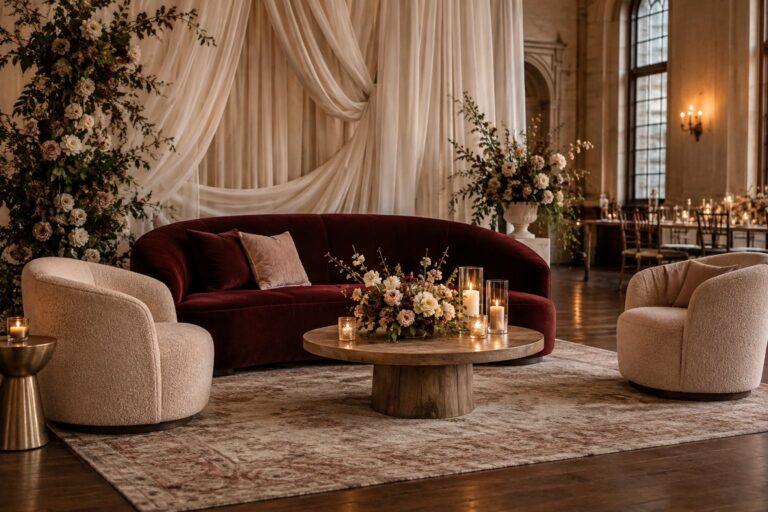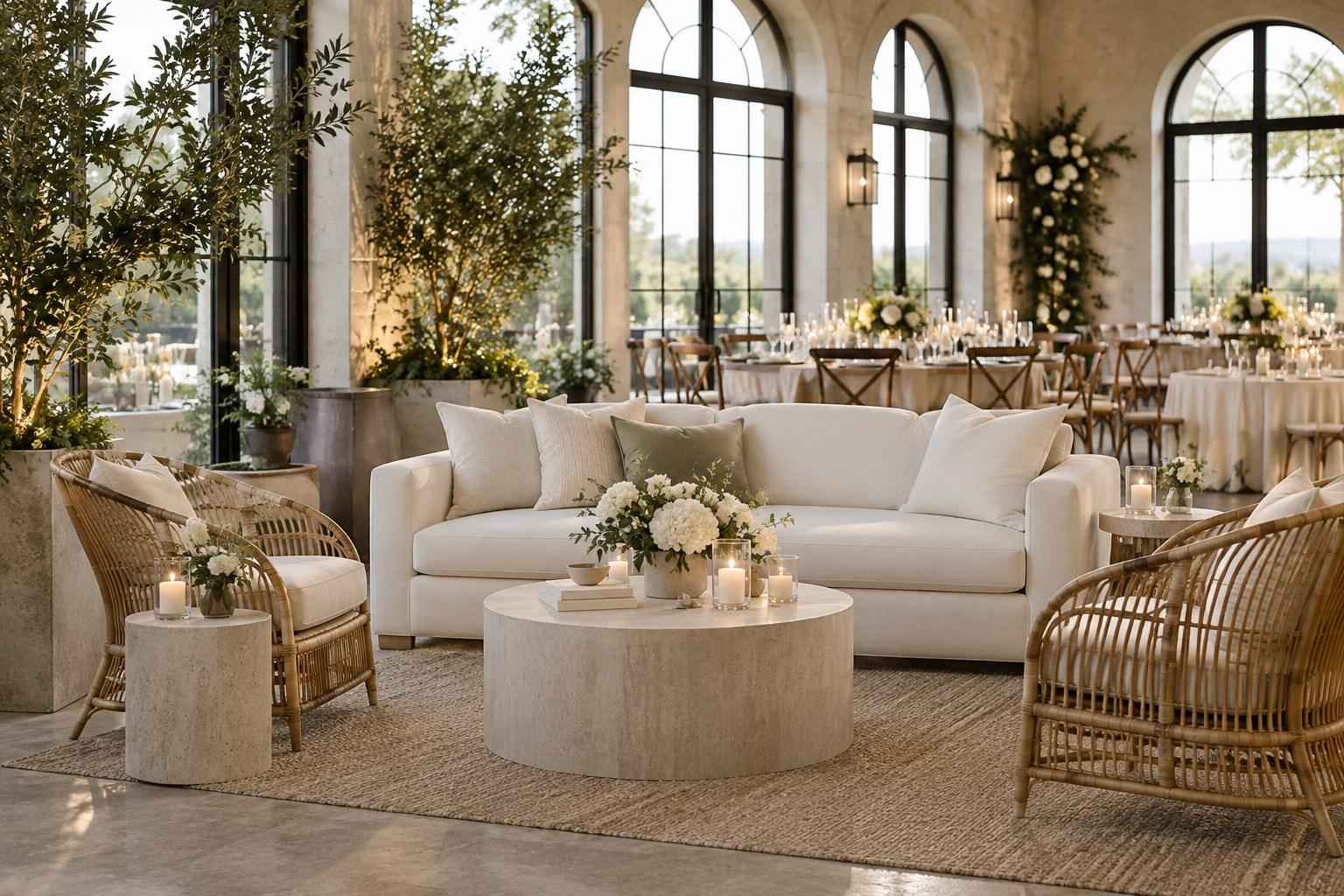
The lounge setting looked perfect on the mood board. Then the sofa arrived, didn’t fit through the venue door, and spent the reception parked in a corridor next to the bins. Every experienced stylist has a version of that story — and almost none of them come down to bad taste. They come down to a booking that skipped a few boring questions.
Designing a lounge vignette is creative work. Booking the furniture to build it is logistics. They’re different skills, and this post is about the second one: a practical wedding furniture hire checklist for the lounge settings, bars, ceremony chairs, tables, plinths and arbours you’ll hire again and again across your career.
Wedding furniture hire starts with the floor plan, not the catalogue
Before you request a single quote, you need two things locked: a scaled floor plan of the space and a confirmed guest count.
The guest count tells you how many seats, how many tables and how much lounge seating actually makes sense. The floor plan tells you where it all goes — and, just as importantly, where it can’t go. Mark the fixed elements first: entrances, fire exits, the bar, the dance floor, the band or DJ, power points, service doors and the accessible route through the room. Only then start placing furniture.
A lounge setting that blocks the path from the kitchen to the tables isn’t a styling feature. It’s a service problem with cushions on it. Reading a room this way — design and flow together — is a core skill we teach in the Certificate in Wedding Styling.
Venue rules to check before you book furniture hire
The venue decides what’s physically possible, so get its rules in writing before you commit to anything with the hire company. Ask the venue coordinator about:
- Access and load-in times — when suppliers can arrive, and whether another event is bumping out before yours
- Loading dock or parking — where the truck can stop, and how far it is from the room
- Lifts and stairs — lift dimensions and weight limits, and how many flights if there’s no lift
- Floor protection — whether trolleys need rubber wheels, whether heavy pieces need protective mats, and what’s banned on polished timber or lawn
- What the venue already supplies — chairs, tables, bars, umbrellas, staging
That last-but-one point saves real money for your clients. Plenty of venues include tables and chairs in their package, and some contracts restrict outside furniture altogether. Find out before you quote your couple for a full hire order they don’t need — or can’t use.
Measure everything (yes, the doorways too)
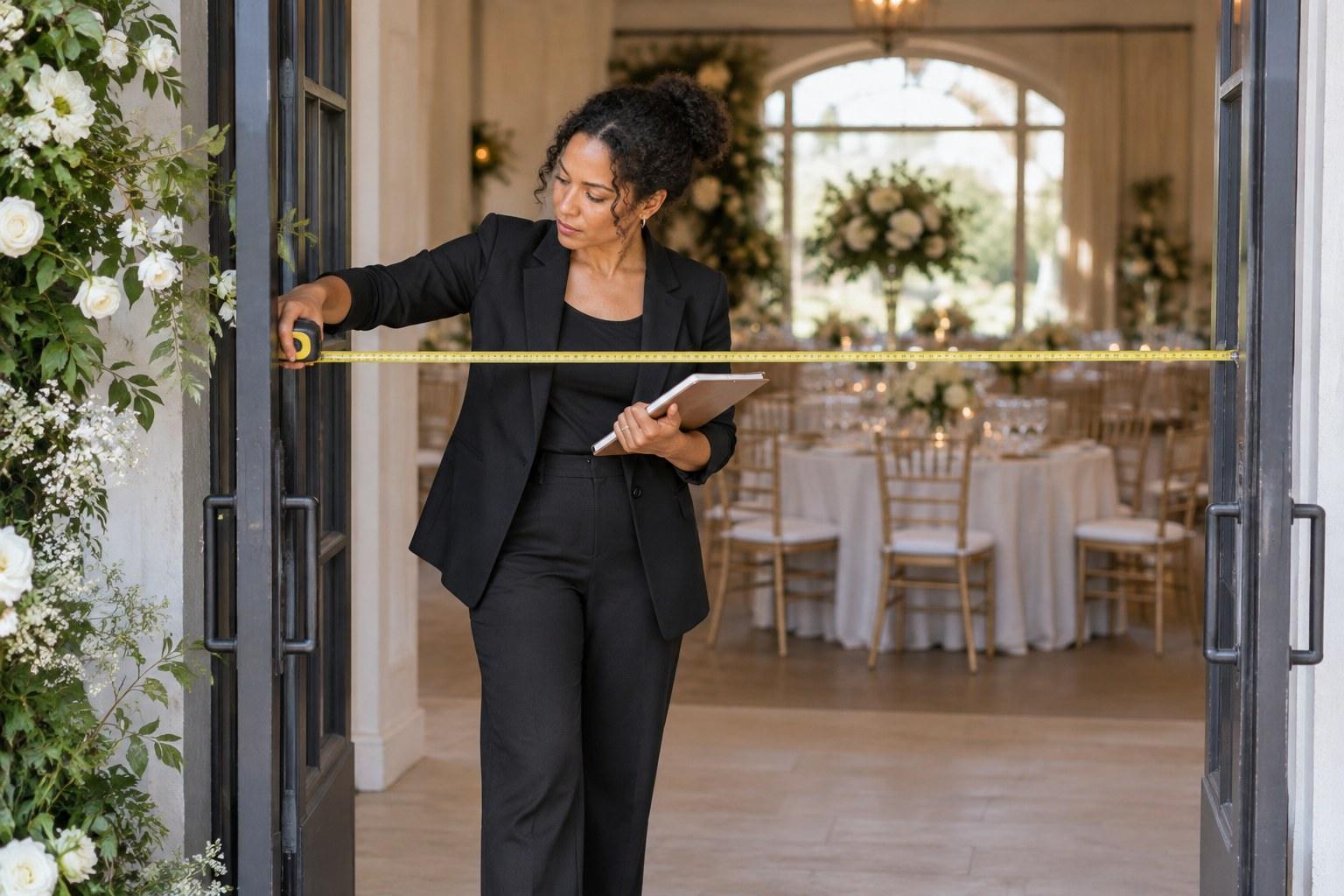
A tape measure is the most underrated tool in a stylist’s kit. On your site visit, measure:
- Doorways, corridors and turns — the narrowest point on the route from truck to room is the one that matters
- Lift interiors, including the diagonal, for long pieces like bar fronts and banquet tables
- Ceiling heights under any arbour, backdrop or tall plinth arrangement
- The actual floor space available for lounge zones once walkways are kept clear
Then ask the hire company for the dimensions of every piece. Check table sizes against your linen — a cloth that’s perfect on one trestle size will look short or puddle on another. Check chair widths against table lengths so you know how many genuinely fit along a long table without guests bumping elbows.
See the actual stock, not the catalogue render
Catalogue images are often shot on brand-new pieces in a studio — or aren’t photos at all. What arrives at your wedding is whatever is currently in the warehouse, after however many events it’s already done.
So ask for recent photos of the real pieces you’re booking, or better still, visit the warehouse. Look for:
- Condition — scuffs, wobbles, stains on upholstery, chips on painted timber, worn cushions
- Matching finishes — do all forty chairs share the same timber tone, or are they from different batches?
- Consistency across items — does the “natural” rattan on the armchairs actually match the “natural” on the side tables and the bar?
- Colour under real light — a cream that reads warm on screen can look grey in a dim reception room
Quantities and spares: count twice, add a buffer
Build your hire order from the floor plan, line by line, not from memory. Then add sensible spares for anything that’s easy to damage or easy to need: a couple of extra ceremony chairs for late additions, an extra cocktail table, a spare cushion or two. Ask the hire company whether spares can come on a “return unused” basis or are charged regardless — the answer changes how many you order.
Don’t forget the bits that make furniture usable: chair cushions, bar back shelving, table leaf extensions, plinth tops, arbour bases or weights.
Delivery, collection and who’s on site
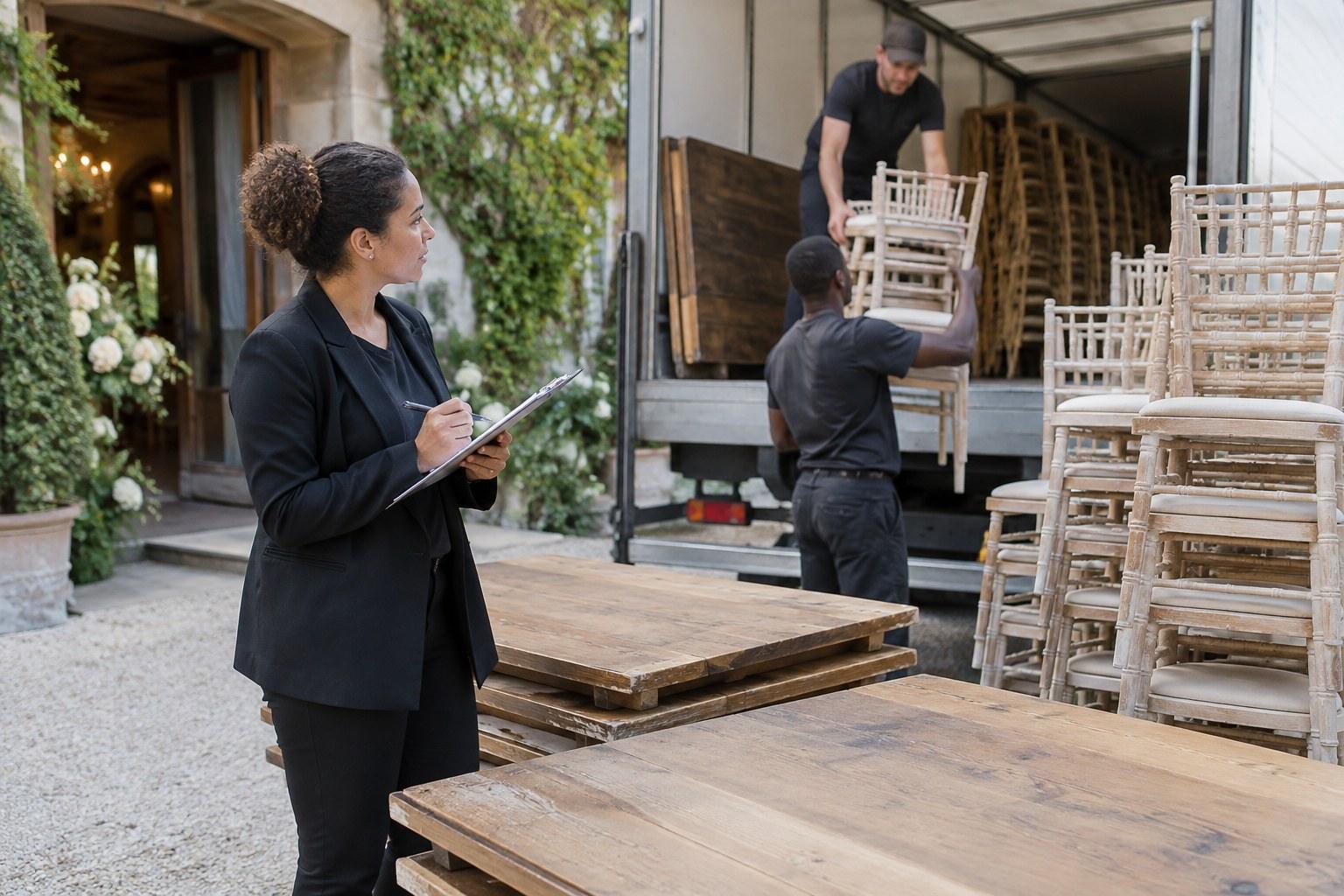
Your hire booking needs exact windows, not “morning of.” Confirm the delivery window, the collection window and whether either costs more outside standard hours. Match both to the venue’s access times — if the venue only opens at noon and the hire company only delivers before ten, you’ve got a problem to solve now, not on the day.
Then name a person. Someone from your team must be on site to meet the truck, check the order and sign for it. If that’s not going to be you, brief your assistant with the order sheet and the floor plan in hand.
Set-up vs drop-only
Some hire companies place every piece to your floor plan. Others drop stock at the loading dock and leave. Know which you’ve booked, because drop-only means your team is carrying sofas, building bars and unstacking chairs — and that changes your staffing, your timeline and your quote to the couple.
Damage, breakage and cleaning terms
Read this section of the hire agreement properly. Find out what counts as damage versus normal wear, how cleaning is handled (wine on a linen sofa, wax on a timber table, grass on chair legs), and how disputes are resolved. Ask whether the company does a condition check at delivery, and take your own dated photos of anything already marked when it arrives.
Outdoor furniture hire: plan for rain, wind and heat
Outdoor ceremonies and garden lounges need a weather plan, wherever in the world the wedding is. Ask the hire company:
- Rain: Which pieces can’t get wet? Upholstered lounges and some timber finishes need cover or an indoor fallback.
- Wind: How are arbours, backdrops and tall plinths secured? Do they come with weights, or is that on you?
- Heat and sun: Do dark or metal pieces get too hot to sit on? Will finishes fade or soften in direct sun?
- Ground: Will chairs sink into lawn or sand? Is flooring or matting available?
Agree the wet-weather call with your couple and the venue in advance — who makes it, by when, and what moves where.
Insurance, liability, payment and cancellation
Ask the hire company what insurance they hold, and whether the venue requires suppliers to show certificates of cover. Ask who’s liable if a guest is injured by a piece of furniture, and who’s liable if furniture is damaged while it’s in your care. Requirements differ between countries and states, so check your own business insurance with a local broker rather than assuming you’re covered.
Then the money questions: deposit, when the balance is due, any bond, and what happens if the wedding is postponed, downsized or cancelled. Make sure these terms line up with your own contract with the couple, so you’re never left holding a hire bill your client isn’t obliged to cover.
Your wedding furniture hire checklist at a glance
| Check | Why it matters | Question to ask the hire company |
|---|---|---|
| Dimensions of every piece | Furniture has to fit doors, lifts, linen and the floor plan | “Can you send exact measurements for each item on my order?” |
| Real stock photos | Catalogue images may not show current condition or finish | “Can you send recent photos of the actual pieces, or can I visit the warehouse?” |
| Matching finishes | Mixed batches make a styled scene look accidental | “Will all the chairs and tables come from the same batch and finish?” |
| Delivery and collection windows | They must match venue access times | “What are your exact windows, and do they change outside standard hours?” |
| Set-up or drop-only | Changes your staffing and timeline | “Do your crew place furniture to my floor plan, or drop at the dock?” |
| Damage and cleaning terms | Avoids disputes after the wedding | “What counts as damage, and how is cleaning handled and charged?” |
| Weather suitability | Some pieces can’t handle rain, wind or sun | “Which items are outdoor-safe, and how are tall pieces weighted?” |
| Insurance and liability | Venues may require proof of cover | “Can you supply your certificate of insurance to the venue?” |
| Payment and cancellation | Must align with your client contract | “What are your deposit, balance and cancellation terms?” |
Confirm everything in writing before the wedding
Set yourself a fixed confirmation point — a set number of days before every wedding, written into your workflow — and send the hire company one final email covering the itemised order, quantities, delivery and collection windows, site contact names and numbers, venue access instructions and the floor plan. Ask them to reply confirming it. Verbal changes made on the phone don’t exist until they’re in that thread.
For more of the checklists and supplier systems stylists rely on, the Wedding Stylist’s Handbook is a practical companion to keep on your desk.
Don’t forget the bump-out plan
The wedding ends; the furniture doesn’t vanish. Plan the bump-out as carefully as the bump-in: who stacks and stages the furniture for collection, where it waits, whether the venue needs the room cleared by a curfew, and who checks the count before the truck leaves. Note any damage then and there, with photos, and send a short summary to the hire company the next working day.
This is the unglamorous side of styling — and it’s exactly what makes clients and venues trust you with the glamorous side. Inside the Certificate in Wedding Styling you’ll learn both: how to design spaces that feel considered, and how to run the supplier logistics that get them built on time.
Want to coordinate the whole day as well as style it? The Certificate in Wedding Planning covers supplier management and run sheets end to end, and the Advanced Certificate in Wedding Planning, Styling and Business brings planning, styling and the business side together.
Wedding furniture hire FAQs
What should I ask a wedding furniture hire company before booking?
Ask for exact dimensions of every piece, recent photos of the real stock, delivery and collection windows, whether they set up or drop only, their damage and cleaning terms, which items are outdoor-safe, their insurance details, and their deposit and cancellation terms. Get every answer in writing.
How do I know if hire furniture will fit in the venue?
Measure the narrowest point on the route from the truck to the room — doorways, corridors, turns and the lift interior — and compare it to the dimensions the hire company sends. Then place every piece on a scaled floor plan with walkways kept clear.
Does the venue supply tables and chairs?
Many venues do, and some restrict outside furniture altogether. Always ask the venue what’s included and what’s permitted before you build a hire order, so your couple isn’t paying for items they already have or can’t use.
Who is responsible for damaged hire furniture at a wedding?
It depends on the hire agreement and your contracts with the couple and venue. Read the damage terms before booking, photograph pieces on arrival, and check your own insurance with a local broker so you know where liability sits.
When should wedding furniture hire be confirmed?
Pick a fixed point in your workflow — a set number of days before each wedding — and send a final written confirmation covering the itemised order, quantities, windows, site contacts and floor plan. Ask the hire company to reply confirming every detail.
Ready to style weddings with the confidence of someone who’s already checked the doorways? Start your training today. 🪑