
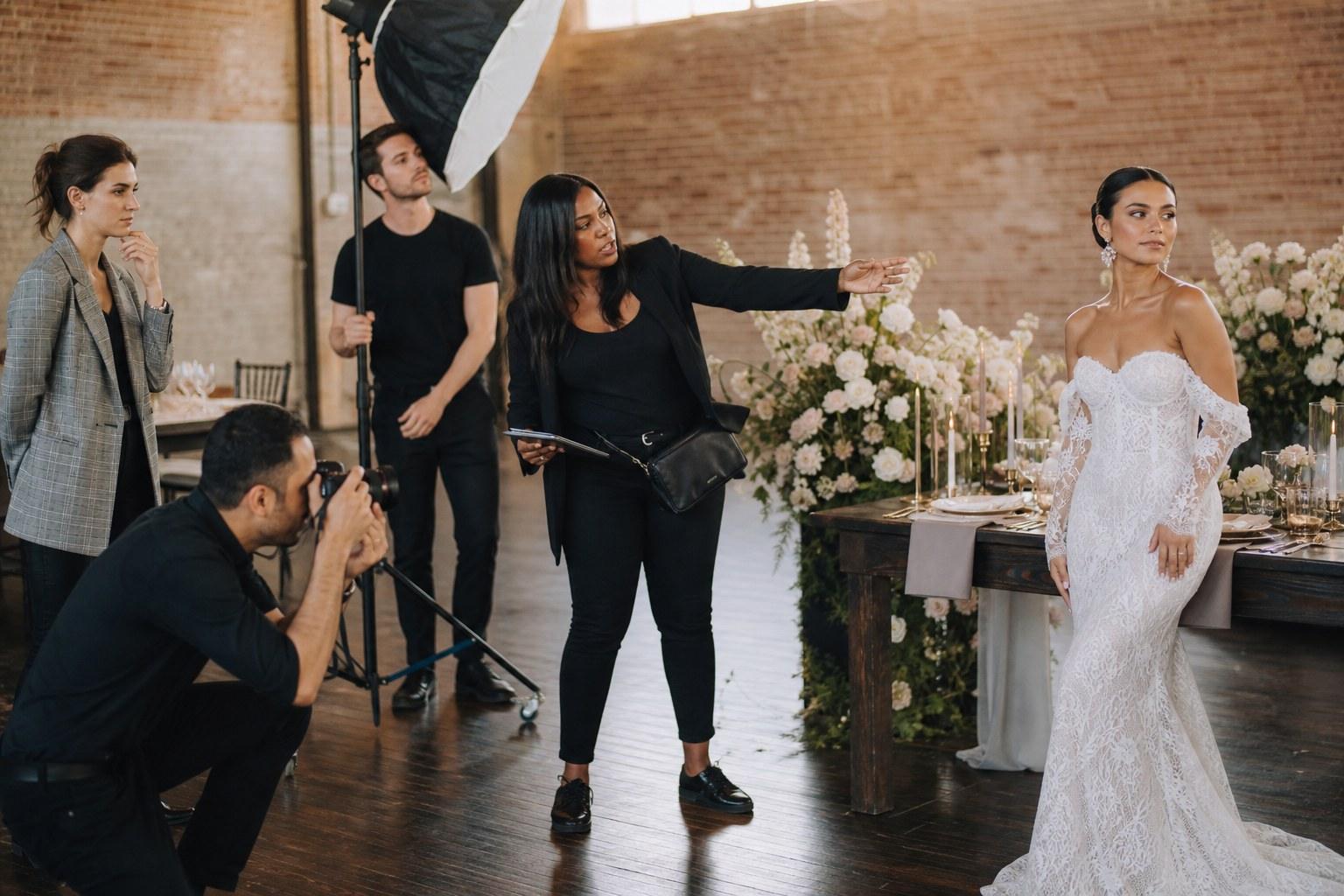
Every new wedding planner hits the same wall. Couples want to see weddings you have planned. You cannot plan weddings until couples book you. It is the most circular problem in the industry, and it stops a lot of talented people before they start.
Here is the thing: the wall is not as solid as it looks. A portfolio is not a trophy cabinet of past clients — it is a demonstration that you can be trusted with the most expensive, most emotional day of someone’s life. There are several ways to demonstrate that, and only one of them requires you to already have paying clients.
This is how to build a portfolio that gets you booked when your booking history is empty.
What a portfolio is actually for
A couple looking at your work is answering four questions, in this order:
- Does this person’s taste match ours?
- Have they handled something like our day before?
- Are they organised, or just aesthetic?
- Do I like them enough to spend a year in their inbox?
Notice that only the second question is about experience — and even that is about resemblance, not volume. If your portfolio answers taste, competence and personality convincingly, a thin booking history is much less of a problem than you think.
It also means a gallery of pretty photographs is only doing a quarter of the job. The organised part — the part couples pay a planner for — needs to be visible too.
Five ways to build real portfolio work from scratch
1. Assist an established planner
The fastest and most honest route. You learn on real days, under pressure, with somebody experienced making the calls. You see how suppliers actually behave, how run sheets survive contact with reality, and how a professional handles the moment something breaks.
Approach planners properly: be specific about what you can do, be honest that you are learning, offer availability rather than asking for a job, and be genuinely useful on the day. Ask afterwards what you may share and how you should describe your role.
2. Organise a styled shoot — and lead it
A styled shoot gives you images and, more importantly, gives you a project to run. If you concept it, write the brief, source the suppliers, build the schedule and run the day, you have demonstrated the exact skills a couple is buying.
- Start with a concept you can articulate in one sentence
- Build a mood board and a supplier list before you approach anyone
- Agree usage rights, credits and publication expectations up front
- Run it on a schedule — treat it like a wedding day, not a hangout
- Deliver everything you promised, on time, afterwards
3. Coordinate a friend or family wedding properly
Not as a favour in a nice dress — as the coordinator, with a real run sheet, supplier contact list and a documented plan. Ask for a written testimonial and permission to use the photographs. One well-run real day is worth a great deal of credibility.
4. Volunteer with events adjacent to weddings
Charity galas, community festivals, corporate events and open days all build the same muscles: timelines, suppliers, contingency, people management. Frame them accurately as event experience — it demonstrates competence even though it is not a wedding.
5. Publish your thinking
Write the run sheet. Publish the budget framework. Explain how you would handle a rain plan for a specific local venue. Planning content proves the invisible skill that photographs never show, and it ranks in search while it does it.

How to present the work you have
Presentation does more work than volume. A handful of projects, framed as case studies, outperforms a big untidy gallery every time.
| Section | What to include |
|---|---|
| The brief | What the couple or concept wanted, in their words where possible |
| The challenge | The genuine constraint — a tight venue turnaround, a remote site, a small budget |
| What you did | Your actual role, listed plainly and honestly |
| The detail | One or two process artefacts: a floor plan, a timeline extract, a palette |
| The images | Six to twelve edited images, credited to the photographer |
| The outcome | A testimonial, a supplier quote, or what the couple said afterwards |
Two rules that are not negotiable. Credit the photographer on every image, every time — it is their copyright and the industry notices. And describe your role accurately. “Styling assistant” presented honestly earns more respect than “planner” presented dishonestly, and the truth always comes out at the next supplier meet-up.
A 90-day plan to go from nothing to a real portfolio
Vague ambition does not produce work. Dates do. If you are starting with an empty page, this is a realistic sequence.
- Weeks 1–2: decide your positioning — the couples you want, the style you love, the area you work in. Write it in one sentence.
- Weeks 3–4: email ten local planners and stylists offering to assist. Ten, not two. Expect most not to reply.
- Weeks 5–6: concept a styled shoot and build the mood board and supplier list.
- Weeks 7–8: lock the shoot — venue, date, suppliers, usage agreement, schedule.
- Weeks 9–10: run the shoot, and photograph the process as well as the result.
- Weeks 11–12: build the website: three project pages, an about page, services and one clear call to action.
- Ongoing: publish one planning article a fortnight and say yes to every assisting day you are offered.
At the end of it you will not have a decade of weddings. You will have proof of taste, proof of process and proof that you finish what you start — which is what a couple is really looking for.
Where the portfolio lives
Instagram is a discovery tool. Your website is where the decision happens, and it needs to do more than look nice.
- A homepage that states what you do, where you work and who you are for
- Individual project pages, not one endless scroll
- An about page with your face and a real reason you do this work
- Clear service descriptions so couples know what they can buy
- One obvious next step on every page
- Testimonials from anyone credible — couples, suppliers, venues, the planner you assisted
Keep the images consistent in tone. A portfolio that jumps between warm film, cold digital and heavy filters reads as borrowed rather than developed.
What to leave out
- Images you did not have permission to use
- Weddings where your contribution was minimal
- Anything blurry, badly lit or shot on your phone in bad light
- Stock photography pretending to be your work
- Screenshots of praise with no context
- Twelve near-identical shots of the same tablescape
Ruthlessness here reads as taste. Whatever your weakest project is, it becomes the ceiling of what a couple expects from you.

The credibility that is not photographs
While you build visual work, build the other kind of proof at the same time. Certification, supplier relationships and demonstrable process all reassure a couple who cannot see a long client list.
Training is a legitimate and honest credibility signal — it says you learned this deliberately rather than guessed. The Certificate in Wedding Planning covers the planning process couples are actually paying for, the Certificate in Wedding Styling builds the design language your visual work needs, and the Certificate in Wedding Business & Marketing covers presenting and selling all of it. For planners who want the whole picture in one qualification, the Advanced Certificate in Wedding Planning, Styling and Business pulls the three together.
Then keep shooting. Every styled shoot, every assisted wedding, every event you run is another project page — and in a year the circular problem will have quietly solved itself.
Ready to build a career, not just a portfolio?
Learn planning, styling and the business behind them with globally recognised online certification you can study at your own pace — and get the skills your portfolio needs to prove.
Frequently asked questions
How do I build a wedding planner portfolio with no clients?
With work you create rather than work you wait for: styled shoots, assisting established planners, second-shooting the coordination of a friend’s wedding, and detailed case studies of planning problems you have solved. A portfolio proves capability — it does not have to prove a long client list.
Are styled shoots enough to get booked?
They get you taken seriously, but on their own they can read as fantasy. Mix them with evidence of real-day competence: run sheets, floor plans, timelines, behind-the-scenes images and testimonials from suppliers who have worked alongside you.
Can I use photos from weddings I assisted on?
Only with permission, and only described honestly. Ask the lead planner and the photographer, credit both, and state your actual role — assistant, coordinator, stylist. Claiming someone else’s lead work is the fastest way to lose an industry reputation you have barely built.
How many weddings should be in a portfolio?
Fewer, better. Three to five strongly presented projects that show range beat fifteen thin galleries. Couples do not count your weddings; they look for one that resembles the day they are imagining.
Do I need a website, or is Instagram enough?
Instagram is where people find you; a website is where they decide. You need somewhere you control that explains what you do, who you do it for, shows the work in context and makes enquiring obvious. Social profiles alone leave your business at the mercy of an algorithm.



