A good wedding styling course online teaches you the whole working method — design concepts, colour and moodboards, ceremony and reception styling, sourcing and hire, client briefs and quoting, and setting up and packing down. It should also teach you the business side, so you can style real weddings for paying couples — not just pretty Pinterest tables.
That’s the short answer. The longer one matters, because “styling course” can mean anything from a weekend of centrepiece tutorials to a structured qualification that walks you from first client enquiry to the last box loaded back into the van. If you’re about to spend your time and money learning this craft, you deserve to know what you should actually come out with.
So here’s what a solid online styling course covers, what you won’t get from YouTube and Pinterest alone, how online study really works week to week, and the questions to ask before you enrol anywhere — including with us.
What do you actually learn in a wedding styling course online?
Think of styling as three skills stacked on top of each other: design (making it beautiful and coherent), production (making it happen on the day, on time, inside a venue’s rules) and business (making it pay). A course that only teaches the first one leaves you with a lovely mood board and no idea how to quote it. Here’s how the learning usually breaks down.
Design concepts and moodboards
Every styled wedding starts with a concept — a clear idea of the feeling the couple wants, translated into something you can show them and build from. You learn to take a vague brief (“relaxed but elegant, not too boho”) and turn it into a moodboard with direction: textures, shapes, scale, lighting and mood. This is where you stop copying and start designing.
Colour palettes that hold together
Colour is where amateur styling gives itself away. You learn how to build a palette with a lead colour, supporting tones and accents, how colour reads differently under candlelight versus daylight, and how to keep linen, florals, stationery and signage talking to each other instead of fighting.
Tablescapes and layering
Tablescapes are the bread and butter of the job. A good course teaches layering — base linen, runners, chargers, napkins, glassware, cutlery, candles, florals, place cards — and the practical rules behind it: sightlines across the table, enough space for plates and elbows, candle height versus conversation, and what the caterer needs you to leave alone.
Ceremony and aisle styling
Ceremonies have their own logic. You learn to frame the couple for photographs, style an aisle without creating a trip hazard, work with arbours and backdrops, and plan the ceremony-to-reception flip when the same space has to transform while guests are at drinks.
Installations and backdrops
Statement pieces — hanging installations, floral walls, draping, signage, lounge areas — are where styling gets ambitious. You learn to scope them properly: weight, rigging points, venue permissions, build time and how many hands it really takes. It’s the difference between a showstopper and a safety incident.
Sourcing, hire versus buy and building a prop inventory
Should you buy fifty candle holders or hire them? A solid course helps you think through cost per use, storage, cleaning, breakages and transport, so your inventory grows deliberately instead of swallowing your garage. You also learn to source from hire companies and suppliers without blowing your margin.
Working with venues, florists and planners
Stylists rarely work alone. You learn where your role starts and stops alongside the venue coordinator, the planner and the florist — who brings what, who sets what, and who’s responsible when something goes missing. If florals are part of what you want to offer, a dedicated Certificate in Floral Design sits naturally beside styling.
Client consultations, proposals and quoting
This is the part most self-taught stylists skip — and it shows in their bank balance. You learn to run a consultation that draws out what the couple actually wants, write a proposal that sells the vision, and quote in a way that covers hire, labour, transport, setup time and your design fee, not just the items on the table.
Bump-in and bump-out logistics
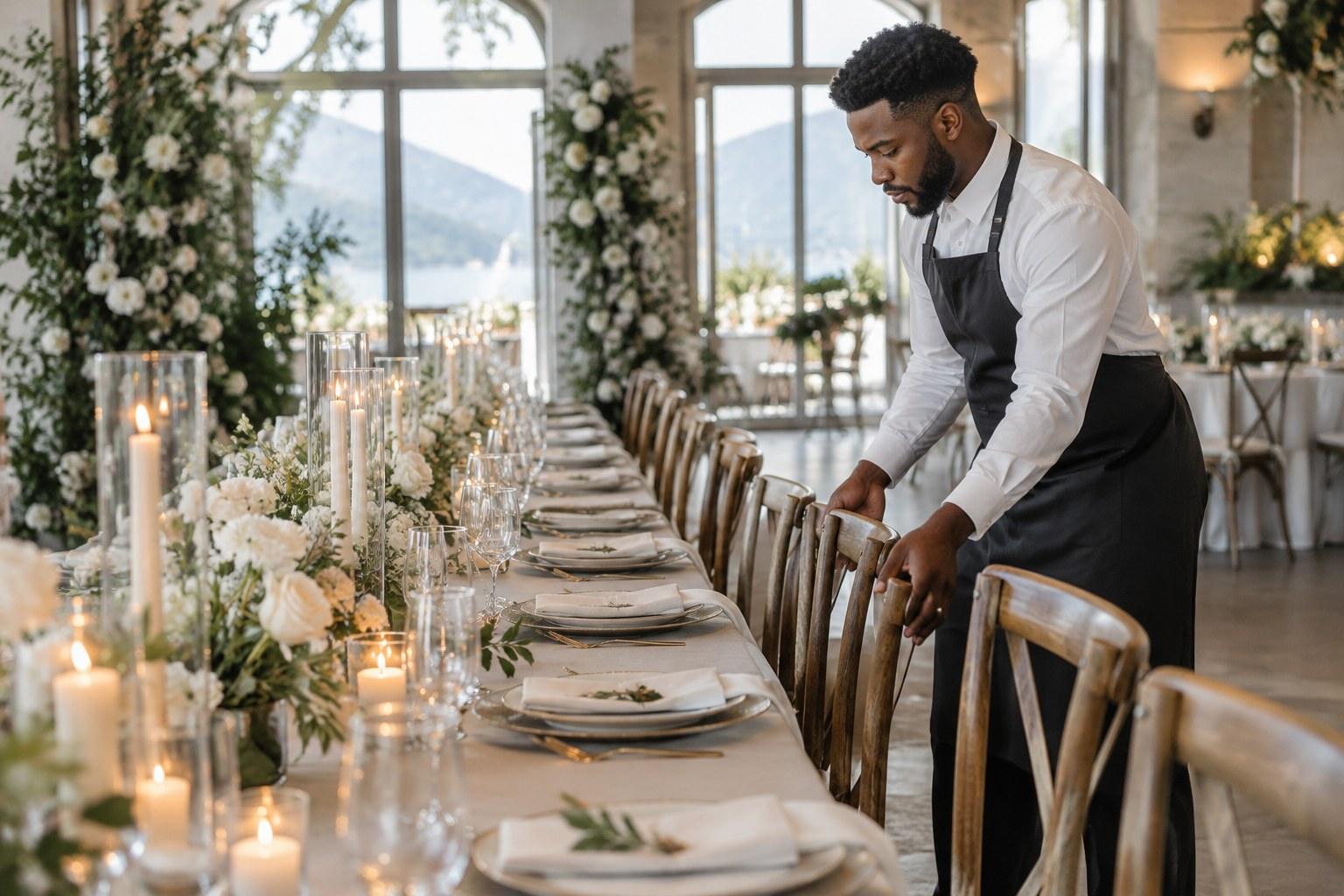
The glamorous part of the day is about fifteen minutes long. The rest is logistics: run sheets, packing lists, labelled crates, access times, loading docks, team briefings and getting every last tealight out before the venue’s deadline. You learn to plan the setup and pack-down as carefully as the design.
Building a portfolio and starting your styling business
Finally, you learn how to turn skills into work — styled shoots, collaborations, photographing your own set-ups, pricing your packages, contracts, insurance considerations and getting your first enquiries. A course without this is a hobby class.
One more thing worth knowing: these skills compound. The stylist who can build a clear concept quotes faster, because she already knows what’s in the room. The stylist who understands bump-out designs differently, because she’s thinking about how every piece gets packed. That’s why a structured course teaches them together — each module makes the others easier.
Wedding styling course: what you learn vs why it matters on a real wedding
Here’s the same content laid out as a checklist. Use it to compare any course you’re considering.
| What you learn | Why it matters on a real wedding |
|---|---|
| Concepts and moodboards | The couple signs off on a clear vision before you spend a cent on hire |
| Colour palettes | Linen, florals, stationery and signage look intentional, not accidental |
| Tablescapes and layering | Tables look generous in photos and still work for guests and caterers |
| Ceremony and aisle styling | The couple is framed well, guests can move safely, the flip runs on time |
| Installations and backdrops | Big pieces are scoped, approved by the venue and built safely |
| Sourcing and hire vs buy | Your inventory earns its keep and your quotes protect your margin |
| Working with suppliers | No gaps or double-ups between you, the florist, the planner and the venue |
| Consultations, proposals and quoting | You win the booking and actually make money on it |
| Bump-in and bump-out | You set up calmly, pack down on time and keep your venue relationships |
| Portfolio and business setup | You can attract, book and serve paying clients — repeatedly |
What you don’t get from YouTube and Pinterest alone
Let’s be honest — free content is brilliant for inspiration, and you should absolutely keep scrolling. But it has gaps you’ll feel the moment a real couple hands you a real budget:
- Structure. Videos teach whatever’s trending, in whatever order the algorithm serves it. A course builds skills in sequence so the business side connects to the design side.
- Feedback. Nobody on Pinterest tells you your palette is muddy or your centrepiece blocks every sightline. Assessment does.
- Assessment. Having to submit work forces you to actually do the thing — not just save it to a board.
- A credential. A certificate gives couples, venues and planners a reason to take you seriously when your portfolio is still small.
- The unglamorous stuff. Quoting, contracts, run sheets and pack-down rarely go viral, but they’re what keep you in business.
If you’d like a taste of the practical side before committing to a full course, the Wedding Stylist’s Handbook ebook is a solid, affordable place to start.
And don’t underestimate the confidence piece. Plenty of naturally talented people never charge properly because they’re not sure they’re “allowed” to call themselves a stylist. Working through a structured course, submitting work and finishing with a certificate tends to settle that question — you know what you know, and you can explain your process to a couple without apologising for it.
How studying wedding styling online works in practice
Online study suits styling better than most people expect. You read and watch the material when it suits you — early mornings, lunch breaks, after the kids are in bed — and you apply it with your hands at home.
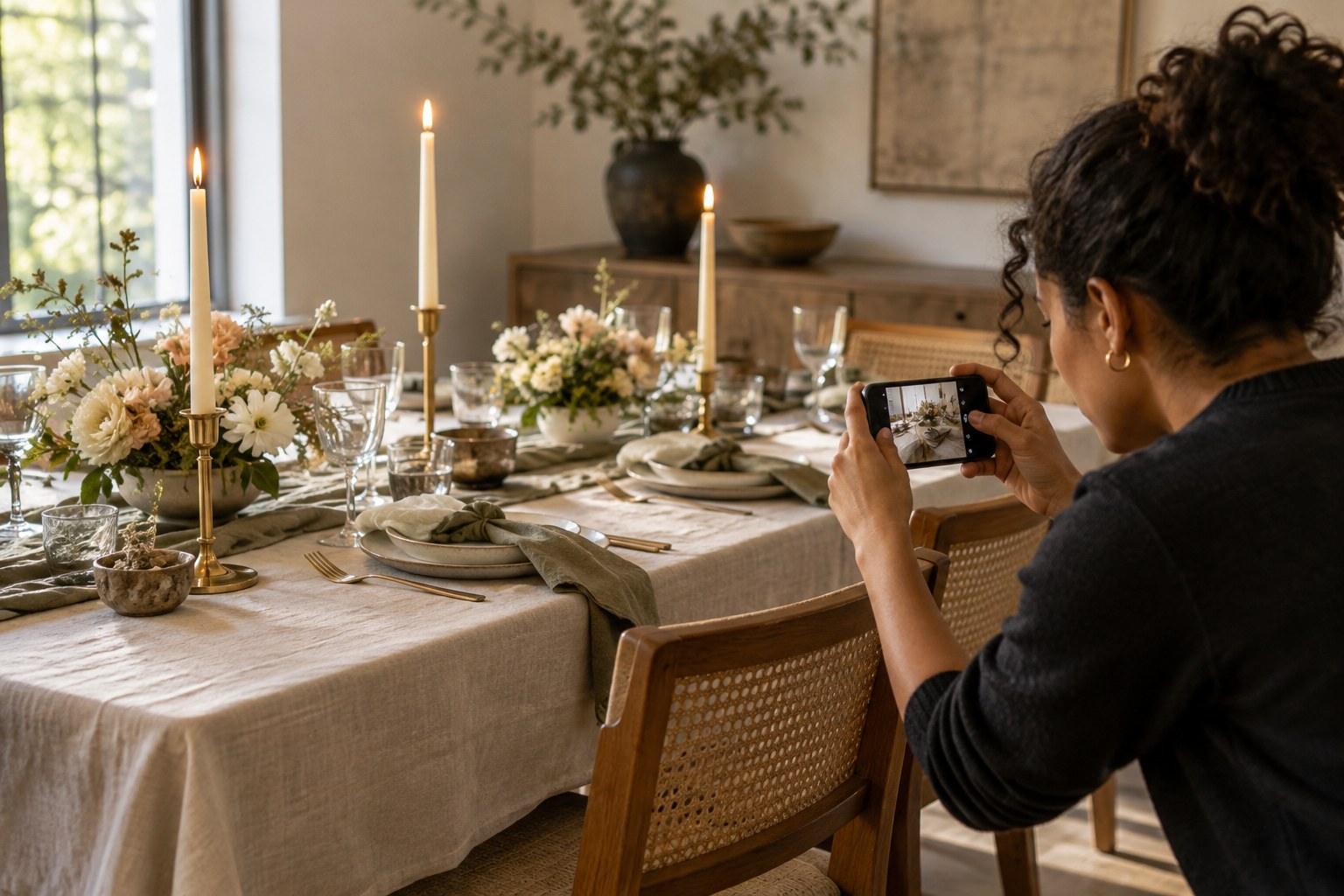
In practice, that looks like this: you learn the principles of layering, then set a practice tablescape on your dining table with what you already own plus a few op-shop finds. You photograph it in good light, critique it, adjust it and photograph it again. You build a moodboard for an imaginary couple, then cost it. Over time those exercises become your first portfolio images — and your first proof to clients that you can deliver.
The Wedding Academy has been teaching since 2004 and is 100% online, so you can study from anywhere around work and family. Our Certificate in Wedding Styling is built around that idea: covering the design and the business side of styling in a format you fit into your own life, rather than the other way around.
Who an online wedding styling course suits
- Career changers who’ve always been the friend everyone asks to style the party — and want to find out whether it can be a real job.
- Event professionals — coordinators, venue staff, hire companies — who want to add styling as a paid service instead of doing it for free.
- Florists who keep getting asked “can you do the rest of the room too?”
- Wedding planners who want to offer design and styling packages, not just logistics. If you want planning, styling and business together, look at the Advanced Certificate in Wedding Planning, Styling and Business.
What it doesn’t suit: anyone hoping to skip the practice. Online study gives you the method and the structure — you still have to set the tables.
Questions to ask before you enrol in any wedding styling course
Whichever provider you choose, ask these before you hand over your details:
- Who wrote it? Is the content created by people who’ve actually styled weddings and run a business — or assembled from blog posts?
- Is it current? Styling moves quickly. Ask when the material was last updated.
- Is it practical? Will you produce real work — moodboards, tablescapes, proposals, quotes — or just read about them?
- Is there a certificate? And is it assessed, or do you just get it for clicking through?
- Is there business content? Quoting, contracts, pricing and marketing should be in there. If they’re not, budget for a second course.
Ask us the same questions, too. We’d rather you enrol knowing exactly what you’re getting into the Certificate in Wedding Styling than discover a gap halfway through.
Wedding styling course online FAQs
Can you really learn wedding styling online?
Yes. The theory — concepts, colour, layering, logistics, quoting — transfers perfectly to online study, and you build the hands-on skill by styling practice tablescapes at home, photographing them and refining your work as you go.
Do you need a qualification to be a wedding stylist?
Generally there’s no legal requirement to hold a qualification to work as a wedding stylist. A certificate does give you structured skills and a credential that helps couples, venues and planners trust you while your portfolio is still growing.
Do I need my own props to start a wedding styling course?
No. You can practise with what you already own and hire items as you need them. A good course teaches you when hiring makes more sense than buying, so your inventory grows deliberately.
Does a wedding styling course cover the business side?
A good one should — consultations, proposals, quoting, contracts and getting clients. Check the course outline for business content before you enrol, because design skills alone won’t keep a styling business running.
Who is a wedding styling course online best for?
Career changers, event professionals adding styling as a service, and florists or planners who want to offer full design packages. It suits anyone willing to put the theory into practice at home.
Ready to style real weddings — the beautiful part and the business part? Enrol in our online Certificate in Wedding Styling and start building your method, your portfolio and your styling business from home. ✨