Every wedding florist eventually has the same moment. The couple has signed off on a gorgeous palette, the proposal is approved, the deposit has cleared — and then you place the order and find out the exact stem you promised isn’t available from anyone you buy from. Not in that colour, not in that quantity, not this week.
That moment is why wedding flower sourcing is a real professional skill, not an admin task you squeeze in after the design work. Where your flowers come from decides how fresh they arrive, how long they last on the day, what they cost you, and how many sleepless nights you spend before a wedding.
Here’s an honest guide to where wedding flowers actually come from, the trade-offs between local and imported blooms, and the systems that keep you calm when the market doesn’t cooperate.
Where do wedding florists source their flowers?
Most working florists build a mix of sources that shifts with the wedding, the palette and what’s growing nearby. These are the main routes.
Local growers and flower farms
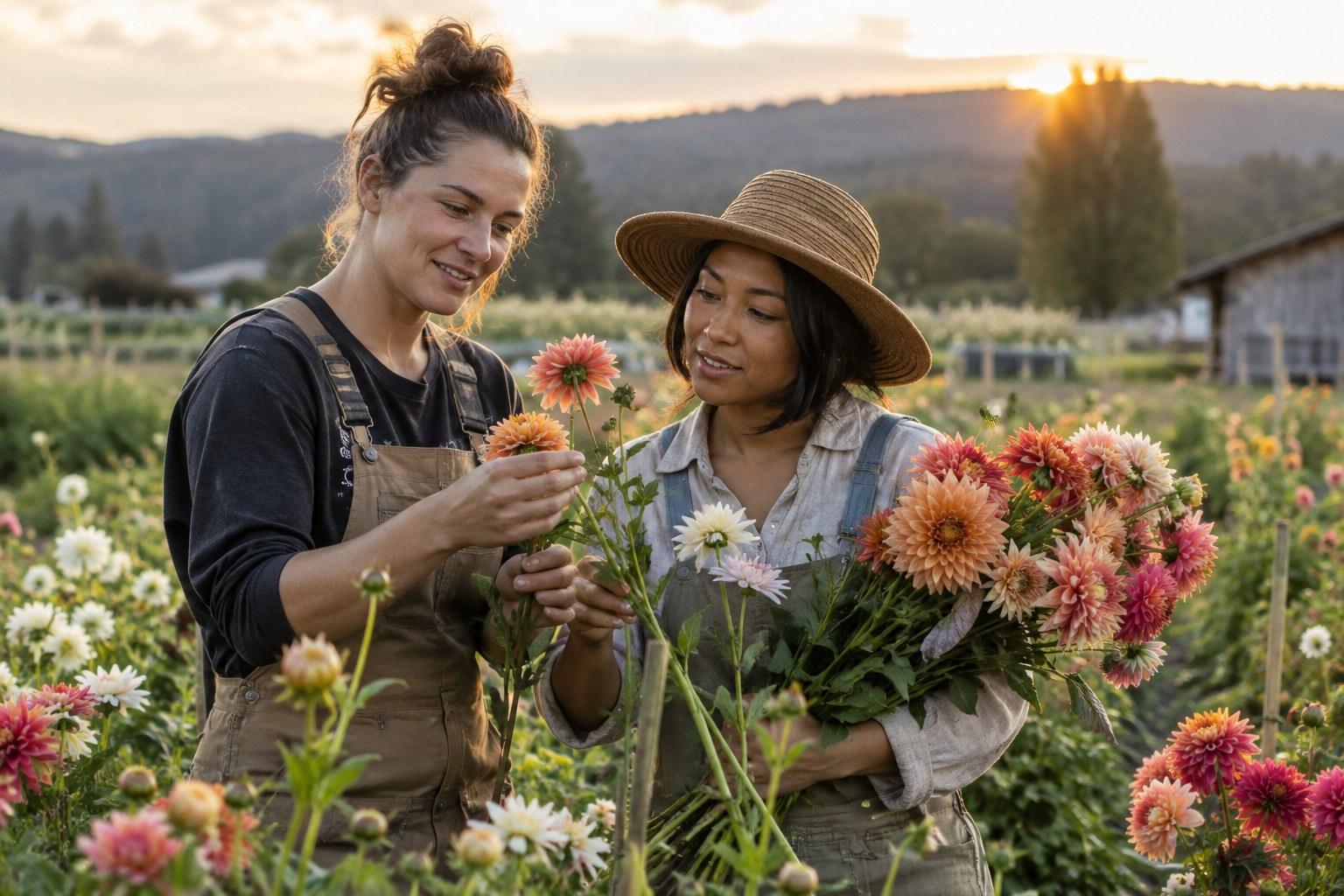
Buying directly from a grower near you usually means stems cut very recently, with less time spent in boxes and cool rooms. You also get things wholesalers rarely carry — scented garden roses, wild foliage, small-batch varieties. The catch? Supply depends on weather, pests and what the farmer planted months ago. Quantities can be limited and colour can vary from week to week.
Flower markets
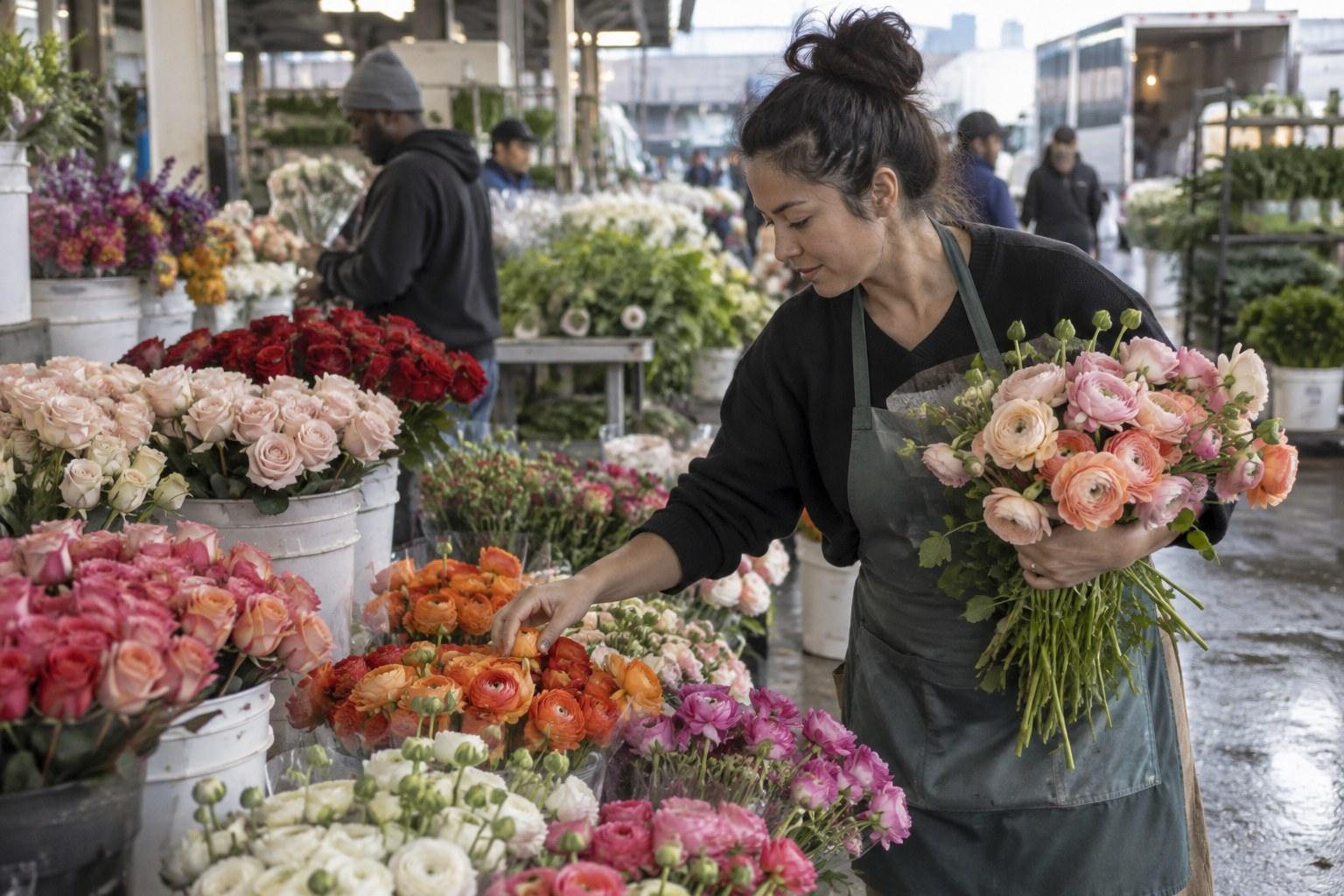
Early-morning markets let you see, touch and choose your stems in person. That’s a huge advantage when colour matters — the “blush” on a supplier list and the blush in the bucket are not always the same thing. Markets are brilliant for top-ups and inspiration, but for volume, you pre-order.
Wholesalers
Wholesalers are the backbone of most wedding work. They consolidate product from many growers — local and overseas — so you can place one order and get consistent stems in the quantities a big wedding needs. A good rep will tell you what’s arriving, what’s looking poor and what’s a smart swap.
Importers
Depending on where you’re based, a lot of the reliable, uniform product you see in wholesalers has travelled from overseas growers. Some florists also deal with importers directly. Imports open up a wider variety and steadier availability, but they add travel time, handling and paperwork — and they’re subject to your country’s biosecurity rules.
Growing your own
Plenty of florists grow a cutting patch for foliage, filler and the odd hero bloom. It gives you something nobody else has — but a garden is a supplement, not a supply chain. One storm and your “signature” stems are gone the week of the wedding.
Wedding flower sourcing routes compared
| Sourcing route | Best for | Watch-outs |
|---|---|---|
| Local growers and farms | Freshness, scent, unusual varieties, a local story for couples | Limited quantities, weather risk, colour variation between batches |
| Flower markets | Choosing colour in person, top-ups, inspiration | Volume isn’t guaranteed unless pre-ordered; early starts |
| Wholesalers | Large, consistent orders; one-stop buying; advice from a rep | Less control over origin; popular stems can sell out fast |
| Importers | Wide variety, steadier availability, uniform stems | Transit time, handling damage, biosecurity rules, currency and freight shifts |
| Growing your own | Foliage, filler, signature touches | Unreliable at scale; your time is a real cost |
Local vs imported wedding flowers: the honest trade-offs
There’s no perfect answer here — and you’ll serve couples better if you stop pretending there is.
Freshness and vase life
Local stems often reach you faster after cutting, which can mean better vase life and fewer surprises. But imported flowers kept in a proper cold chain can arrive in excellent condition — handling matters as much as distance. A local stem left in a hot van can be worse than an imported one that never left the cool chain.
Variety and consistency
Imports win on consistency — uniform stem lengths, predictable head sizes, colours that match the catalogue. Local flowers win on character. If you’re making forty identical centrepieces, consistency is your friend. If you’re designing a loose, garden-style arch, character is the point.
Cost predictability
Both routes can move on you. Local prices shift with supply and weather; imported prices can be affected by freight, exchange rates and demand around big flower-giving holidays. Build a buffer into your quotes and keep your proposal wording flexible enough to absorb small movements without eating your margin.
Transport and handling
Every extra leg of a journey is a chance for bruising, dehydration or temperature damage. Imported boxes may pass through several hands before reaching you. Local flowers have fewer touchpoints, though the pick-up may be yours.
Sustainability conversations with clients
More couples ask where their flowers come from. Answer honestly: local can mean fewer transport miles, but growing methods, packaging and waste matter too. Don’t make claims you can’t back up. Offer real options — a locally grown palette, reusable mechanics instead of floral foam, a plan for repurposing ceremony flowers at the reception — and let them choose.
Quarantine and import rules
Biosecurity and import requirements vary a lot by country and can change. Some flowers may be treated on arrival, held for inspection, or restricted entirely. Ask your wholesaler or importer what applies where you work — especially if a couple wants something unusual flown in.
Why flower availability shifts — and why you need substitutes
What’s growing locally at the time of the wedding is rarely what was growing when the couple booked you. Availability rises and falls through the year, crops fail, and a heatwave or a cold snap can wipe out a variety for weeks.
The fix is to design around roles, not just stems. For every key flower, know what job it’s doing — focal bloom, texture, line, filler, foliage — and keep two or three backups that do the same job in the same colour family. When your first choice disappears, you’re making a calm swap, not a panicked one.
This is exactly the kind of practical, design-led thinking covered in the Certificate in Floral Design — because knowing your flowers inside out is what lets you substitute with confidence.
How to build relationships with growers and wholesalers
Your suppliers decide whether you get the good buckets or the leftovers. Treat them like partners:
- Show up consistently. Regular, reliable buyers get the heads-up when something special arrives.
- Pay on time, every time. It’s the fastest way to become a favourite customer.
- Share your calendar. Give your rep or grower early notice of large orders so they can plan.
- Ask what’s looking good. They see the product before you do. Let them steer you.
- Give feedback — kindly. If a delivery wasn’t right, tell them clearly and calmly, with photos.
Wedding flower ordering timelines and confirming orders
Ask each supplier how far ahead they need orders for weddings, because it varies. Specialty and imported stems usually need more notice than standard wholesale lines. A workable rhythm looks like this:
- Build a stem count from your final design. Recipe by recipe — bouquets, buttonholes, centrepieces, installations — plus a sensible spare allowance for breakage.
- Place a provisional order early for anything specialty, imported or needed in large volume.
- Confirm in writing closer to the date: variety, colour, stem length, quantity, delivery or pick-up day.
- Get confirmation back. An order you sent isn’t an order they’ve accepted. Ask for a reply and keep it.
- Plan delivery timing so flowers have time to drink and open before you design — but not so early they’re past their best on the day.
Quality checks when your wedding flowers arrive
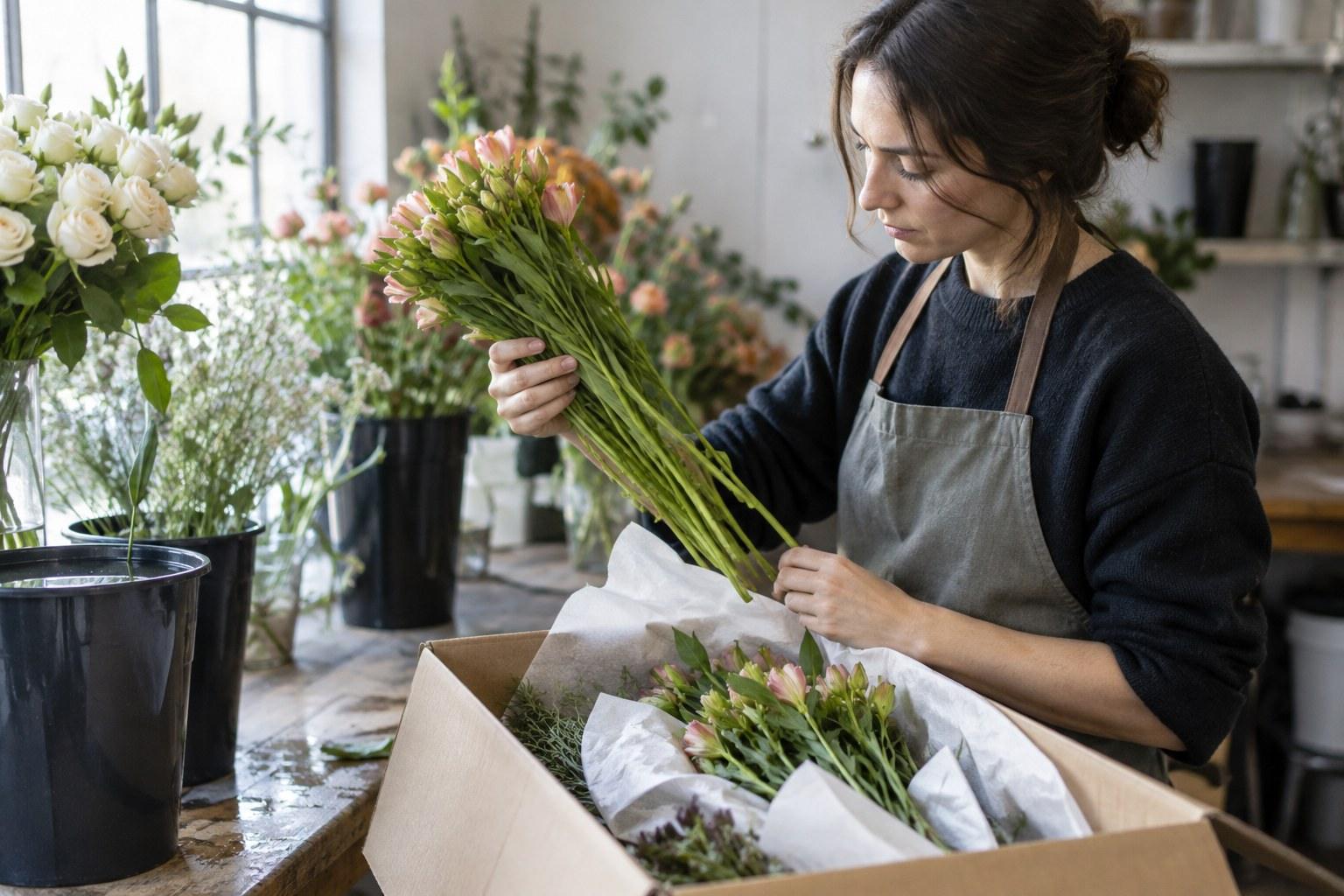
Unpack straight away. Count everything against your order, then check stems for bruised petals, botrytis (grey mould), broken necks, wilting, pests and colour that doesn’t match. Photograph problems immediately and contact your supplier the same day — most will only consider credits or replacements if you flag issues quickly.
Conditioning on delivery
Strip lower foliage, re-cut stems on an angle with clean, sharp tools, and get them into clean buckets of fresh water with flower food. Keep them cool and out of direct sun and draughts. Learn the specific needs of your regular stems. For a deeper reference you can keep beside the workbench, the Wedding Florist’s Handbook is worth having on hand.
Writing substitution clauses and “florist’s choice” into proposals
Protect yourself before anything goes wrong. Your proposal and contract should say, in plain language, that flowers are natural products and that availability can’t be guaranteed. Then explain what you’ll do about it: if a specified flower is unavailable or below standard, you’ll substitute a flower of similar style, colour and value, keeping the overall look of the design.
“Florist’s choice” language goes further. Instead of promising exact varieties, you promise a palette, a mood and a style, and you pick the best stems available that week. Show couples past work so they understand what they’re agreeing to.
If you also style the wider event, the Certificate in Wedding Styling helps you design whole spaces where florals and décor work as one.
When a couple wants the flower they saw online
It will happen weekly. A couple sends a screenshot of a dreamy bouquet and wants that exact flower. Start by finding out what they love about it — the colour, the shape, the softness, the drama. Often it’s the feeling, not the variety. Then be honest: that image may have been shot on another continent, possibly with editing. Tell them whether you can get it, what it might cost, and what the risks are. Then offer two or three alternatives that are growing locally at the time of their wedding and deliver the same feeling. You’re not saying no. You’re steering them to a version that will actually turn up looking beautiful.
Ready to build these skills properly? The Certificate in Floral Design gives you the floral foundations, and the Advanced Certificate in Wedding Planning, Styling and Business takes you further into the business side of weddings.
Wedding flower sourcing FAQs
Are local flowers better than imported flowers for weddings?
Not automatically. Local flowers often arrive fresher and bring character and a local story, while imported flowers offer wider variety and more consistent stems. Many florists use both, choosing per design and per wedding.
How far in advance should a florist order wedding flowers?
It depends on your suppliers and the stems. Ask each wholesaler or grower what notice they need, place provisional orders early for specialty, imported or high-volume items, and confirm final details in writing closer to the date.
What should a florist do if a wedding flower is unavailable?
Substitute a flower that does the same job in the design — similar colour, shape and value — and make sure your contract already allows for this. Planning two or three backups per key stem makes the swap easy.
What does “florist’s choice” mean in a wedding proposal?
It means the couple approves a palette, style and mood rather than exact varieties, and the florist selects the best available stems close to the wedding. It gives the florist flexibility and usually means fresher flowers.
Can imported flowers be restricted?
Yes, in some cases. Biosecurity and import rules differ by country and can change, and some flowers may be treated, inspected or restricted on arrival. Check with your wholesaler or importer about what applies where you work.
Confident sourcing is what separates a hobbyist from a professional wedding florist. Learn it properly.