
Last Updated: October 23, 2026
Quick Summary
To learn how to market your wedding business online, start with a one-page plan naming your ideal couples, service area, and booking target before choosing any channel. Then split a monthly budget across two or three trackable channels, show real weddings, rank locally, and reply to every inquiry within 24 hours.
- Set a monthly budget you can afford for at least three months and split it across two or three channels.
- Post finished work at least twice a week and answer comments and messages within a day.
- Claim your Google Business Profile and keep your name, phone number, and website identical everywhere.
- Run one ad campaign on one platform for 30 days and compare cost per inquiry to booking value.
- Reply to every inquiry within 24 hours, follow up once after a week, and log each outcome.
Table of Contents
- Start With a Marketing Plan, Not a Channel List
- Wedding Business Marketing Ideas That Build Visibility
- Social Media Marketing for Wedding Vendors: Show the Work
- Wedding Planner SEO: Get Found When Couples Search
- Online Advertising for Wedding Businesses: When Paid Makes Sense
- Turn Inquiries Into Bookings With Better Conversion
- Reviews, Referrals and Reputation: The Compounding Channel
- A 90-Day Roadmap for Marketing Your Wedding Business
- Frequently Asked Questions
Start With a Marketing Plan, Not a Channel List
Most wedding professionals wondering how to market your wedding business online start with channels, an Instagram account, a marketplace listing, and hope inquiries arrive.
Learning how to market your wedding business online starts with a plan naming your ideal clients, service area, and booking target.
A useful plan answers four questions:
- Who are your ideal couples, and what do they care about most?
- What is your service area, and how far will you travel?
- How many weddings do you need to book each year to hit your income goal?
Get those answers on one page before you spend a cent.
Set a Budget You Can Measure
There is no magic budget number. Set a monthly figure you can afford for at least three months, then split it across two or three channels you can track separately.
Track inquiries, not likes. If a channel brings no inquiries in 90 days, cut it. If one brings steady inquiries, give it more.
Give every channel its own tracking link or a unique inquiry form. When a couple gets in touch, ask how they found you. That single question tells you more than any dashboard.
Wedding Business Marketing Ideas That Build Visibility
The strongest wedding business marketing ideas put your work in front of couples who are already planning. Visibility comes from being findable, memorable, and credible, not from posting every day. Here is what works:
- Show real weddings. Photographs of your own work beat stock images every time.
- Get listed where couples search. Wedding marketplaces and local vendor directories put you in front of active planners.
- Publish helpful content. Budget guides, timeline advice, and venue tips bring in search traffic.
The mix matters more than the volume. A florist with ten strong reviews and a clear portfolio will out-book a competitor who posts daily but never shows finished work.
Social Media Marketing for Wedding Vendors: Show the Work
Social media marketing for wedding vendors works best as a portfolio, not a diary.
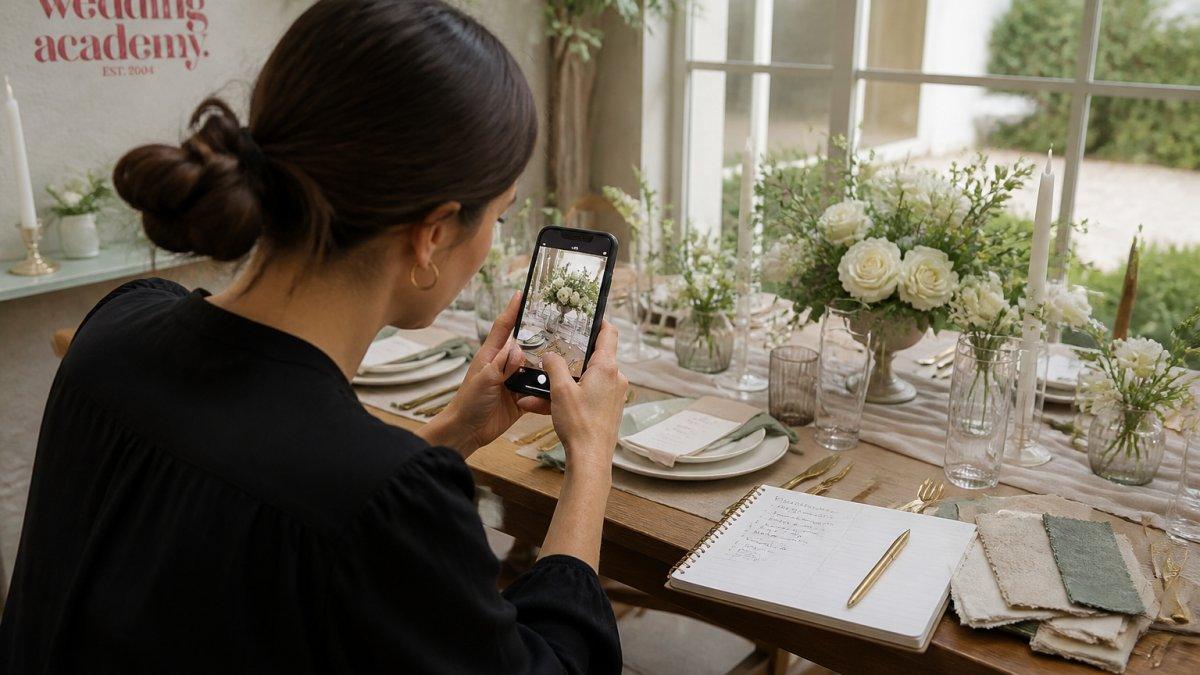
Post the work, the process, and the people. A short venue-setup clip or before-and-after shot does more than a quote graphic.
- Post finished work at least twice a week
- Show behind-the-scenes setup once a week
- Answer comments and messages within a day
Consistency beats volume: two thoughtful posts a week for a year build more trust than a burst of daily posting followed by silence.
Wedding Planner SEO: Get Found When Couples Search
Wedding planner SEO makes your website rank when couples search for services like yours in your area. It is slower than social media but compounds: a ranking page keeps bringing inquiries for years.
Start with the basics:
- Build one clear page for each service you offer.
- Name your service area on every page.
- Write about real questions couples ask, such as budget ranges and timelines.
- Add photos with descriptive file names and alt text.
- Keep your name, address, and phone number consistent everywhere.
Search engines reward pages that answer real questions. A page titled “What a Wedding Planner Actually Does” brings in more qualified leads than one titled “Services.”
Local Search and Your Vendor Listings
Local search is where most couples begin. Claim your Google Business Profile, keep hours and service area accurate, ask happy couples for reviews there, and list your business on the marketplaces and directories couples use in your region.
According to Google’s guidance on local business listings, complete and consistent business profiles are more likely to appear in local results.
Online Advertising for Wedding Businesses: When Paid Makes Sense
Online advertising for wedding businesses makes sense when you have a proven offer and a way to track inquiries.
Paid ads work well in three situations:
- You want inquiries during a slow season
- You are launching in a new service area
- You have a portfolio that converts visitors into inquiries
Start small: run one campaign on one platform for 30 days, track every inquiry, and compare cost per inquiry to your average booking value. If the numbers work, scale; if not, fix the landing page before spending more.
The most common paid ads mistake is sending traffic to a homepage. Send couples to a page built for one service in one area, with a clear inquiry form. Homepage traffic rarely converts.
::: Refining your landing page strategy requires a deep understanding of what couples need when they navigate the digital landscape of modern wedding planning.
Choose the Right Platform for Your Wedding Business
Not every ad platform suits every wedding vendor. Choose based on where your ideal couples spend time and what you can manage.
- Google Search Ads work best when couples are actively searching for a service in your area, such as “wedding florist [city]” or “wedding planner near me.” They capture high-intent traffic, but you must bid on the right keywords and send clicks to a dedicated service page.
- Instagram and Facebook Ads suit visual vendors, photographers, florists, venues, and stylists, because couples discover work through imagery. Use a strong portfolio image or short video, target by location and life events, and send clicks to a landing page with an inquiry form.
- Pinterest Ads can work for planners, florists, and stationers because couples use Pinterest for wedding inspiration and planning. Promoted pins can drive traffic to a portfolio or planning guide.
Start with one platform that matches your strongest visual asset or search intent, run it for 30 days, and add a second only once the first is profitable.
Set a Small, Testable Ad Budget
There is no universal ad budget, but a practical approach is a monthly test budget you can afford to lose for three months, often a few hundred dollars for a local vendor, treated as a learning cost. Split it across one or two campaigns, not five.
Track these numbers for every campaign:
- Spend: what you paid the platform
- Clicks and click-through rate: whether the ad attracts attention
- Landing page inquiries: how many people submitted a form or called
If your average booking value is $2,000 and your cost per booking is $400, the campaign is likely worth scaling. If cost per booking approaches or exceeds your profit margin, pause and fix the offer, landing page, or targeting before spending more.
Build Landing Pages That Convert Ad Traffic
Paid traffic is expensive, so every click should land on a page built for one purpose. A strong ad landing page includes:
- A clear headline naming the service and service area
- Three to six portfolio images of real weddings
- A short paragraph on what the couple gets and how the process works
Avoid sending ad traffic to a blog post, a gallery with no inquiry form, or a homepage that asks couples to figure out what you do. The page should match the ad’s promise exactly.
Target Couples, Not Everyone
Broad targeting wastes budget. Narrow your audience by location, wedding date window, and interests, a photographer might target recently engaged couples within 50 miles interested in wedding photography. Use negative keywords on search campaigns to filter out “cheap,” “free,” or “diy,” and on social platforms exclude people outside your service area or those interested only in inspiration content.
Know When to Pause or Scale
Review your campaign weekly for the first month, then monthly. Pause any ad group that spends past your target cost per inquiry without a single inquiry. Scale campaigns that produce qualified inquiries at an affordable cost per booking. If inquiries come in but do not book, the problem is likely response time, consultation process, or pricing clarity, not the ad.
Give every ad campaign its own tracking link or unique inquiry form so you can see exactly which ads produce inquiries and bookings. Without this, you are guessing.
Paid ads are not a shortcut to bookings, they buy attention once your website, offer, and inquiry process are ready to convert it.
Turn Inquiries Into Bookings With Better Conversion
Getting inquiries is only half the job. Conversion is where most wedding businesses lose bookings, and it rarely has anything to do with price.
Couples often contact several vendors at once. The Knot Worldwide’s 2026 Real Weddings Study found that 37% of couples contacted more vendors than they planned in order to find options within their budget (The Knot Worldwide 2026 Real Weddings Study).
Improve conversion with these steps:
- Reply to every inquiry within 24 hours
- Use a short, warm reply that answers their main question
- Include a clear next step, such as a call or a proposal
A quick, personal reply beats a polished brochure every time.
Map the Funnel From First Visit to Signed Contract
Most wedding businesses track inquiries but not the steps between inquiry and booking. Mapping the funnel makes the leaks visible. A typical funnel:
- First visit: a couple lands on your website, social profile, or marketplace listing.
- Inquiry: they submit a form, email, or direct message.
- Response: you reply with availability, pricing guidance, and a next step.
- Consultation: a call, video meeting, or in-person meeting to discuss needs and fit.
- Proposal: you send a quote, package, or contract.
- Follow-up: you check in if the couple goes quiet.
- Booking: the couple signs and pays a deposit.
Track how many couples move from each step to the next. If 20 couples inquire and only 5 book a consultation, the problem is likely your response or your initial message. If 5 consult and only 1 books, the problem may be your proposal, pricing clarity, or follow-up.
Response Time and First Reply
Speed matters more than most vendors realize: couples often book the vendor who responds first and answers their main question clearly. Aim to reply within 24 hours, and within a few hours during peak periods.
A strong first reply includes:
- A warm greeting using the couple’s names
- Confirmation that you are available (or a clear statement if you are not)
- A direct answer to their main question, such as budget range or availability
Avoid sending a generic brochure with no personal detail. Couples can tell when a reply is automated, and it lowers trust.
Inquiry Forms That Qualify Couples
Your inquiry form should qualify the couple without feeling like a job application. Include:
- Names and email
- Wedding date and venue (or “still deciding”)
- Guest count range
Asking for budget range early saves time for both sides. Couples who are far outside your range will often self-select out, and couples who are a good fit will appreciate the clarity.
Consultations That Move Toward Booking
A consultation is not a sales pitch, it is a conversation to confirm fit and explain how you work. Structure it around the couple’s priorities:
- Ask what matters most to them about your service
- Walk through your process and timeline
- Show relevant portfolio examples
Send a short recap after the call with the next step and any documents they need. Couples often compare vendors after consultations, so a clear recap keeps you top of mind.
Follow-Up Cadence
Most bookings happen after at least one follow-up. A simple cadence works:
- Day 1: reply to the inquiry
- Day 3: if no response, send a brief check-in
- Day 7: share a relevant portfolio example or answer a common question
Stop after two or three follow-ups if there is no response. Persistence is good; pressure is not.
Track Conversion Metrics
To improve conversion, measure it. Track these numbers monthly:
- Number of inquiries
- Percentage answered within 24 hours
- Inquiry-to-consultation rate
A simple spreadsheet is enough. Review it monthly and look for the step with the biggest drop-off. Fix that step first.
Conversion is a process, not a personality trait. The vendors who book the most couples are usually the ones who reply fast, qualify clearly, follow up consistently, and track where inquiries are lost.
Reviews, Referrals and Reputation: The Compounding Channel
Reputation is the channel that keeps paying you back.
Ask for reviews right after the wedding, when the joy is fresh, and make it easy with a direct link.
Referrals work the same way. Build real relationships with photographers, venues, and other vendors. Send them work when you can. They will send it back.
- Ask for a review after every wedding
- Reply to every review within a week
- Thank referring vendors personally
A 90-Day Roadmap for Marketing Your Wedding Business
Here is how we would sequence the first 90 days, assuming a basic website and a small budget.
| Phase | Focus | Key Actions | What to Track |
|---|---|---|---|
| Days 1-30 | Foundation | Write your one-page plan, fix your website, claim local listings | Inquiry form working, listings live |
| Days 31-60 | Visibility | Post consistently, publish two service pages, start review requests | Website traffic, inquiries per channel |
| Days 61-90 | Conversion | Improve reply speed, test one small paid campaign, follow up on leads | Reply time, inquiry-to-booking rate |
Review the numbers at day 90. Cut the channels that brought no inquiries and double down on the ones that did.
To build these skills properly, our Certificate in Wedding Business & Marketing covers planning, pricing, and client coordination in one self-paced course.
Frequently Asked Questions
How do I start marketing my wedding planning business online?
Start with one clear offer and one channel you can maintain. Set up a website with a gallery, your service area and a simple inquiry form, then claim your local listings and vendor profiles. Add a weekly social media habit showing recent work. From there, track how many inquiries arrive and where they came from, so you know which channel to build next. A structured business and marketing course can shorten this learning curve considerably.
How can wedding vendors use social media to attract couples?
Post the work itself: real tablescapes, real couples, real setups. Social media marketing for wedding vendors works best when it shows process and personality, not just polished finals. Share behind-the-scenes clips, supplier credits and client stories, and reply to comments quickly. Consistency beats volume, so a steady two or three posts a week with genuine captions will outperform sporadic bursts.
Should a wedding business use paid online advertising?
Paid ads make sense once you know your inquiry-to-booking rate and can afford to test. Online advertising for wedding businesses works best for a specific offer, such as a venue open day or a seasonal package, targeted at your service area. Start small, measure cost per inquiry rather than clicks, and only scale a campaign that produces qualified leads.
How can I get more online reviews and referrals for my wedding business?
Ask at the right moment: right after a successful event, when the couple’s relief and gratitude are highest. Send a short message with a direct link to your review profile and make it a two-minute task. For referrals, stay in touch with the suppliers you worked alongside, since planners, florists and photographers pass work to each other constantly. A simple thank-you gesture after a referral keeps that loop running.
Marketing a wedding business online is not about being everywhere. It is about being findable, credible, and quick to respond, then repeating what works. That is hard to do alone, and it is exactly what The Wedding Academy teaches: practical business and marketing skills, a globally recognized certification, and lifetime access to self-paced courses you can complete around a full-time job. Browse the courses and start building a marketing plan that brings in the right couples.