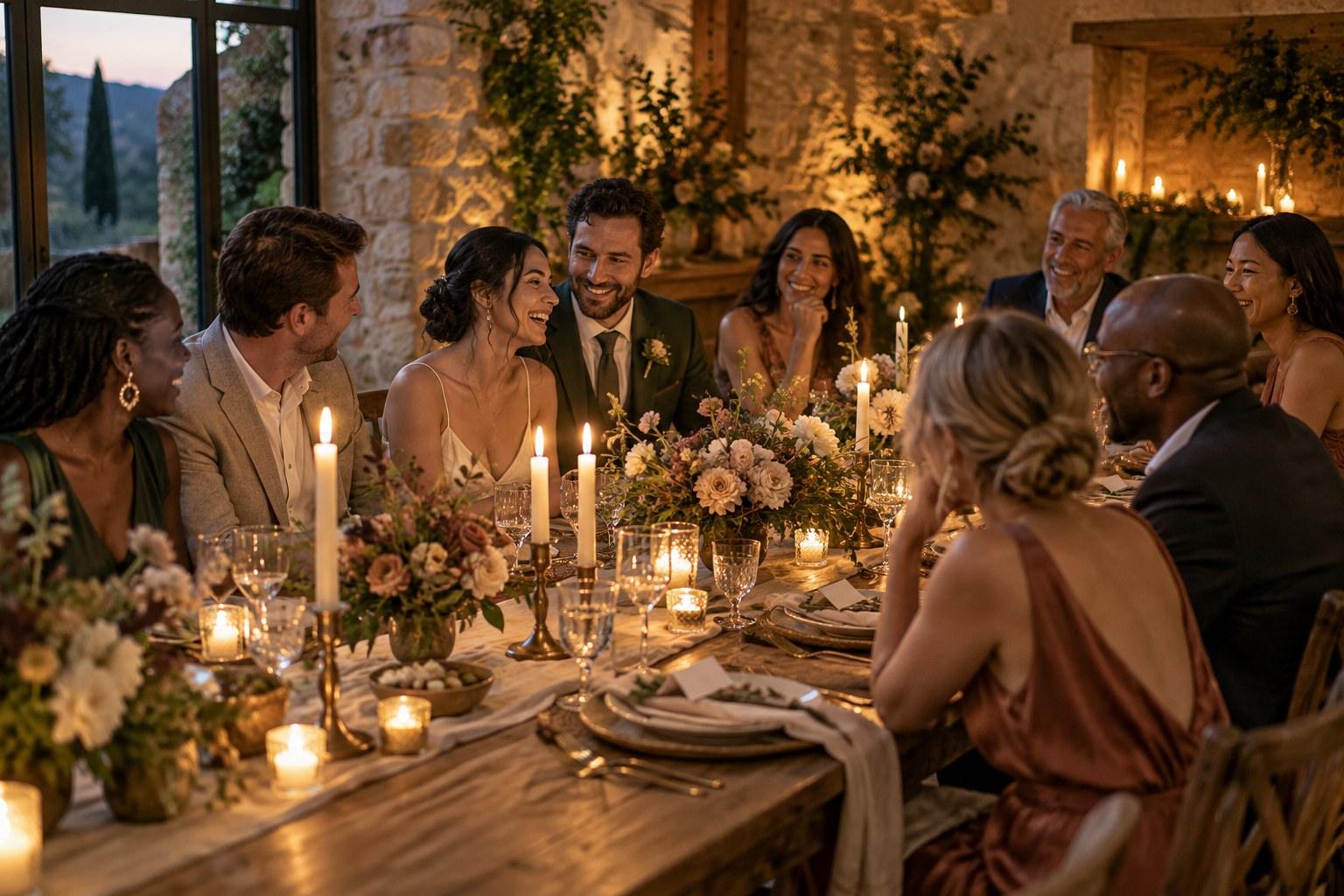
Ten guests. One long table. How hard can it be? If you’ve ever said that out loud about a micro wedding, you’ve probably also spent a week chasing a venue that wouldn’t hold the date for a party that size, or watched a couple realise their “simple” day still needed a florist, a photographer, a celebrant, a menu, a timeline and a plan for the cousins who weren’t invited.
Micro and intimate weddings are some of the most rewarding events you can plan. They’re also surrounded by more misunderstanding than almost any other wedding format. Couples assume small means cheap and easy. Some planners assume small means not worth their time. Both are wrong.
Here are the micro wedding myths we hear most often — and what’s actually true for the couples planning them and the professionals running them.
Elopement vs micro wedding vs intimate wedding: what’s the difference?
Before we bust anything, let’s get the words straight — because half the confusion starts here. There’s no official rulebook, and definitions vary between planners, venues and countries. In general terms:
- Elopement — the couple, often with just their legal witnesses, an officiant and a photographer. Sometimes a handful of loved ones. The focus is the two of them.
- Micro wedding — a very small guest list, usually immediate family and the closest friends, with the shape of a full wedding: ceremony, a meal, speeches, maybe dancing.
- Intimate wedding — a little larger than micro, still deliberately small, where the couple knows every guest well and the experience is built around connection rather than scale.
Which leads straight to the first myth.
Myth 1: “A micro wedding is just an elopement with friends”
An elopement can be beautifully spontaneous. A micro wedding usually isn’t. The moment you add guests, you add hosting — someone has to feed them, seat them, move them between locations, keep them warm or cool, and make sure Grandma has a chair during the vows. You’ve moved from an experience for two to an event for a group, and events need planning.
Your job as the planner is to name the format clearly at the first meeting. Ask the couple what they picture: a ceremony and a long lunch? A weekend away with family? A city ceremony followed by dinner at their favourite restaurant? The answer tells you what you’re actually planning.
Myth 2: “Micro weddings are always cheap”
This is the big one. Yes, fewer guests can reduce the overall spend. But many couples choose a small wedding precisely so they can spend differently — not necessarily less. With a shorter guest list, the cost per guest often goes up, because the couple upgrades what each person experiences: a chef’s tasting menu instead of a buffet, a boutique venue instead of a function room, better wine, a private dining room, a gift at every place setting.
Some costs also don’t shrink with headcount. A photographer still spends the day with you. A celebrant still writes the ceremony. Hair and makeup, the dress, the rings, the legal paperwork — none of that scales down because there are fewer chairs.
Help couples reframe the budget around priorities, not just totals. “What matters most to you?” is a far better question than “How little can we spend?”
Myth 3: “You don’t need a wedding planner for a small wedding”
Couples often think a planner is for big, complicated weddings. In reality, a micro wedding has nearly all the same moving parts — venue, suppliers, legalities, timing, guest communication — and the couple is often trying to manage it alongside jobs and family expectations. Add a destination or an unusual location and the logistics multiply.
A planner also brings something couples can’t buy elsewhere: knowing which venues and suppliers genuinely welcome small events, and which will treat them as an afterthought. That network alone can save a couple weeks of dead-end enquiries. It’s a core part of what we teach in the Certificate in Intimate, Micro & Destination Weddings.
Myth 4: “Any venue will happily take a small wedding”
Plenty of venues are built — commercially and physically — for larger weddings. Some have a minimum spend that a small party simply won’t reach on food and drink alone. Some only book the whole property exclusively, so a group of twelve pays for a space designed for many more. Others won’t hold a prime day for a small booking when a larger enquiry might come in.
Where micro weddings fit best
- Restaurants with private dining rooms
- Boutique hotels, guesthouses and villas
- Rooftops, gardens and galleries that hire by the hour
- Wineries, farms and estates with smaller event spaces
- Venues offering weekday or daytime packages
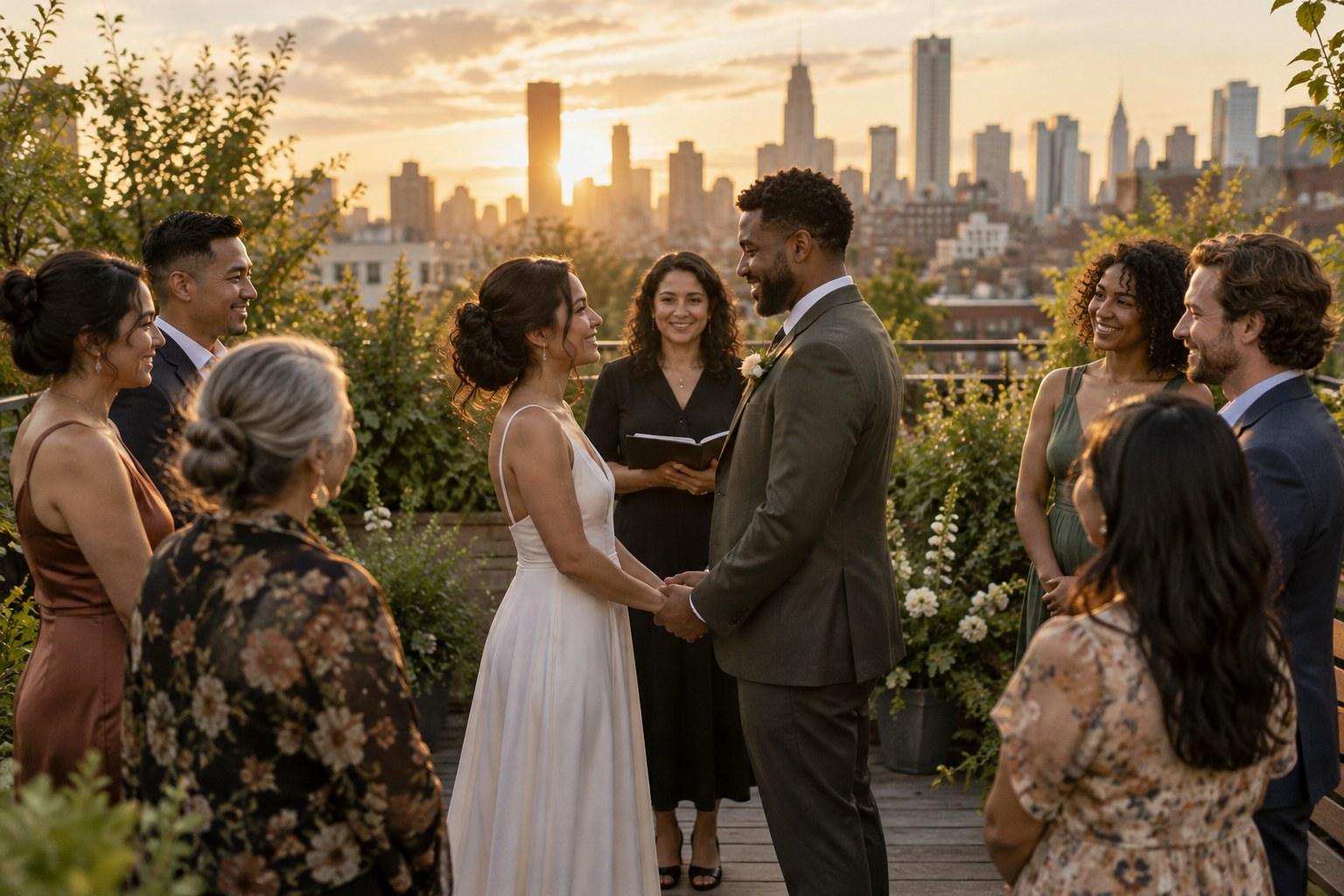
Weekday dates are often your secret weapon here. Venues that would never hold a prime weekend for a small party may be delighted to host one midweek. Always read the minimum spend and exclusivity terms before you fall in love with a space.
Myth 5: “Small means less work”
Fewer guests, fewer decisions? Not really. A couple planning a micro wedding still decides on a venue, a date, a ceremony, a menu, flowers, attire, photography, music and a running order. The number of decisions barely changes. What changes is the level of detail per guest.
At a large wedding, a guest is one of many. At a micro wedding, every guest is a VIP. You’ll know their dietary needs by name, plan around their mobility, maybe arrange their accommodation and transport, and think about where each person sits and who they’ll talk to. That’s not less work — it’s more personal work.
Myth 6: “You can skip the timeline for an intimate wedding”
Small weddings run long and loose if nobody holds the clock. The restaurant has a second sitting. The rooftop has a noise curfew. The photographer is booked for a set number of hours. The golden light you planned the portraits around won’t wait for a third round of drinks.
A micro wedding timeline can be relaxed — it just has to exist. Build in breathing room, share it with every supplier, and keep a simple version for the couple so they can stay present instead of checking their phones.
Myth 7: “Micro weddings don’t need styling”
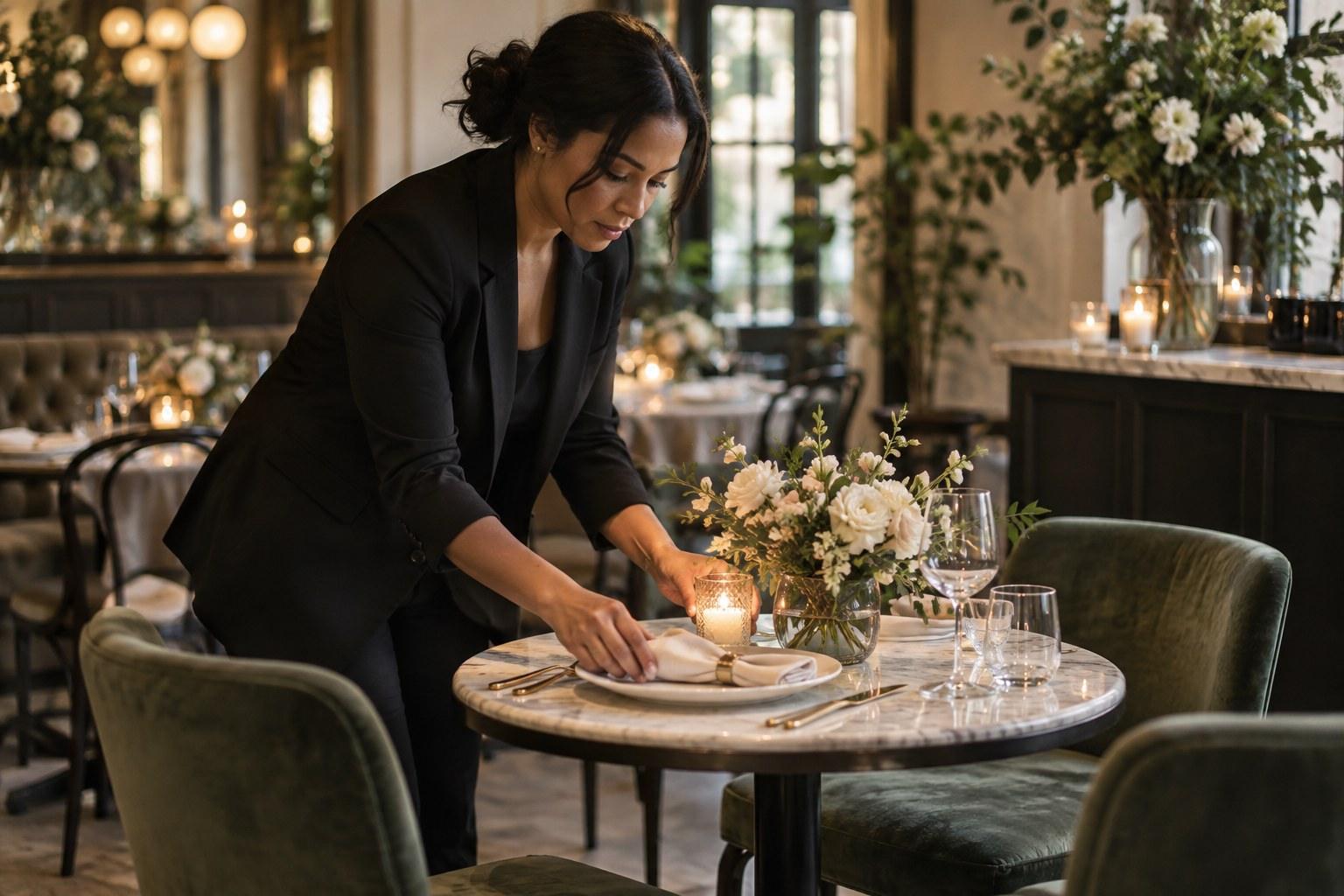
Here’s the truth: styling matters more at a small wedding, not less. At a large reception, guests see the room. At a micro wedding, they see the napkin, the candle, the glassware, the menu card and the flowers within arm’s reach of their plate. Every detail is seen up close — and photographed up close.
The upside? A small table lets you go further with less. One beautiful long table, layered linens, low florals and candlelight can feel more luxurious than a ballroom full of centrepieces. Couples who might never afford premium styling across a big reception often can for a table of ten.
Myth 8: “Vendors won’t care about small weddings”
Some won’t — and that’s useful information. But many suppliers love micro weddings: chefs who can cook something special for a small group, photographers who get real, unposed moments, florists who can put their best work on one table instead of spreading it thin. Some actively offer intimate or weekday packages.
Part of your value is building a go-to list of suppliers who genuinely want this work, so your couples are treated as a priority rather than squeezed in.
Myth 9: “Guests won’t mind being left out”
Some will. A small guest list means hard conversations, and couples often underestimate how hurt an aunt or a long-time friend might feel. Planners can help couples handle this with honesty and grace:
- Communicate early and clearly — a simple, warm announcement explaining that the wedding is deliberately small, before the rumour mill starts.
- Keep the rules consistent — “immediate family only” works until one cousin is the exception.
- Plan a later celebration — a relaxed party, a backyard lunch or a gathering back home lets wider family and friends celebrate too.
- Share the moment — photos, a short film or a livestream can help people feel included.
Myth 10: “Micro weddings are a trend that will pass”
Nobody can promise what wedding trends will do. What we can say is that many couples choose a small wedding for reasons that aren’t about fashion at all: they want intimacy, they’d rather put their budget into experience than headcount, they have family spread across the world, or they want to marry somewhere far from home. Those motivations aren’t going anywhere.
Micro wedding myths vs reality: a quick reference for planners
| Myth | Reality | What the planner does |
|---|---|---|
| It’s just an elopement with friends | Guests mean hosting, and hosting means planning | Defines the format and scope at the first meeting |
| Micro weddings are always cheap | Cost per guest often rises as couples upgrade the experience | Builds the budget around the couple’s priorities |
| You don’t need a planner | Almost all the same moving parts still apply | Manages suppliers, logistics and guest communication |
| Any venue will take a small wedding | Minimum spends and exclusivity rules can rule venues out | Shortlists small-friendly venues and weekday options |
| Small means less work | Same decisions, more detail per guest | Tracks every guest’s needs individually |
| You can skip the timeline | Curfews, sittings and supplier hours still apply | Writes a relaxed but real running order |
| No styling needed | Every detail is seen and photographed up close | Focuses the styling where guests actually look |
| Vendors won’t care | Many suppliers love intimate work | Builds a trusted micro-friendly supplier list |
| Guests won’t mind | Leaving people out needs careful handling | Helps with announcements and later celebrations |
How to package and price micro wedding planning services
The biggest mistake planners make with micro weddings is discounting them by headcount. Your time isn’t measured in guests. A micro wedding still needs consultations, venue sourcing, supplier bookings, a timeline, styling and on-the-day management.
- Price on time and complexity — estimate the real hours, including travel and revisions, rather than charging per guest.
- Create a dedicated micro package — a clear scope (venue sourcing, a set number of suppliers, timeline, styling, day-of coordination) makes it easy for couples to say yes.
- Offer add-ons — guest accommodation, a welcome dinner, the later celebration back home, or destination logistics.
- Sell the outcome — “a wedding where every guest feels looked after and you get to be fully present” lands better than a list of tasks.
If you want ready-made checklists and planning frameworks for small weddings, the Micro, Intimate & Destination Wedding Handbook is a practical companion to keep on your desk.
Why micro and intimate weddings are a real specialism
Planning a small wedding well takes a different skill set from planning a big one. You need to know which venues work, how to negotiate around minimum spends, how to style at close range, how to guide couples through guest list etiquette, and — often — how to handle the logistics of a wedding away from home.
Planners who position themselves as micro and intimate wedding specialists stand out from generalists. Couples searching for help with a small wedding want someone who gets it — not someone who treats their day as a smaller version of a ballroom event. The Certificate in Intimate, Micro & Destination Weddings is designed to give you exactly that edge. And if you’re building your planning foundations first, start with the Certificate in Wedding Planning.
Micro wedding myths: FAQs
Is a micro wedding cheaper than a traditional wedding?
It can be, but not always. Fewer guests can lower the total, yet many couples use a small guest list to upgrade the food, venue and experience, so the cost per guest often rises. Some costs, like photography, attire and the ceremony, don’t shrink with headcount at all.
What is the difference between a micro wedding and an elopement?
Definitions vary, but generally an elopement focuses on the couple, sometimes with only witnesses or a few loved ones. A micro wedding has a small guest list of close family and friends and usually includes the elements of a full wedding, such as a meal and speeches.
Do you need a wedding planner for a micro wedding?
You don’t have to have one, but a micro wedding has nearly the same moving parts as a larger wedding. A planner helps with small-friendly venues and suppliers, the timeline, guest communication and the logistics, especially for destination or unusual locations.
How do you tell people they’re not invited to a micro wedding?
Be early, warm and consistent. Explain that the wedding is deliberately small, apply the same guest list rules to everyone, and consider a later celebration or sharing photos so wider family and friends still feel part of it.
How should wedding planners price micro weddings?
Price on the time and complexity involved, not the number of guests. Build a dedicated micro package with a clear scope, then offer add-ons such as accommodation coordination, welcome dinners or destination logistics.
Ready to make small weddings your specialty? Enrol in the Certificate in Intimate, Micro & Destination Weddings and start planning the days couples remember up close. 💍