Last Updated: November 2, 2026
Quick Summary
You can start a floral design business from home by training first, setting up a workable studio, pricing for profit, and growing your client list steadily. Most successful home florists start small and part-time, taking a handful of weddings and events each season while keeping their day job. A home studio keeps overhead low while you build skills, a client list, and a design style.
- Plan spending in three stages: validation, first orders, and growth, scaling up only when revenue proves it is safe.
- Set up four working zones: a conditioning area, design bench, cool storage, and staging area for pickup and delivery.
- Register your business, open a business bank account, and arrange insurance before taking paid orders.
- Keep flowers fresh with clean water, cool storage, and fast conditioning of stock on arrival.
- Build a portfolio from practice arrangements and reach out to local venues, planners, and photographers for clients.
Table of Contents
- Is Starting a Floral Design Business from Home Realistic?
- What Are the Floral Design Business Startup Costs?
- Home-Based Flower Shop Setup: Workspace, Storage and Equipment
- How to Keep Flowers Fresh Longer in a Home Studio
- Registering, Insuring and Pricing Your Floral Design Business
- Building a Portfolio and Finding Clients as a Floral Design Freelancer
- Enrol in Floral Design Training Before You Take Your First Order
- Frequently Asked Questions
Is Starting a Floral Design Business from Home Realistic?
Yes, you can start a floral design business from home, and plenty of florists do exactly that. A home studio keeps overhead low while you build skills, a client list, and a design style. This guide walks you through the whole path: startup costs, workspace setup, flower care, registration, pricing, and finding your first clients.
The realistic version looks different from the fantasy. Most successful home florists start small and part-time. They take a handful of weddings and events each season, keep their day job, and grow the business once demand proves steady.
That’s the honest framing. A home-based flower business is a real business, not a hobby with a cash box. It needs a plan, a budget, and a workspace that actually works.
Below, we break down each step so you can decide whether this is the right move for you, and how to do it without wasting money on the wrong setup.
What Are the Floral Design Business Startup Costs?
Floral design business startup costs depend on your scale, but a home setup keeps them far lower than leasing a shop.
Stage 1, Validation (before your first paid order). This is the smallest possible spend that lets you design, photograph, and quote.
Stage 2, First orders. Once you have bookings, add the items that protect quality and margin: a dedicated flower refrigerator or cool space, more buckets in several sizes, delivery containers, and public liability insurance.
Stage 3, Growth. Only after steady orders should you consider a larger cool room, a second workbench, professional photography, or paid marketing. Buying growth-stage equipment during validation is the most common way new florists tie up cash before they have customers.
Here is how to think about the budget by category:
- Workspace basics: a sturdy table at standing height, shelving, and good lighting
- Tools: snips, knives, buckets, ribbon, wire, and floral foam
- Cooling: a small refrigerator or a cool room for storage
- Stock: your first wholesale flower order
- Admin: registration, insurance, and a business bank account
- Marketing: a simple website or portfolio page and basic photography
A common pattern is to underestimate the recurring costs, water, electricity for cooling, fuel for delivery, and waste, while overestimating the one-time equipment costs.
Worked unit economics. Pricing is where startup costs and profit meet, so build a simple per-order model before you quote.
Watch out: quoting from a gut feeling rather than a per-order model is how home florists end up busy and unprofitable. Build the model once, then update it as your supplier costs and order mix change.
Plan your spending in three stages so you only scale up once revenue proves it is safe.
| Stage | What to spend on | When |
|---|---|---|
| Validation | Work surface, snips, knife, buckets, vases, ribbon, wire, portfolio, registration | Before your first paid order |
| First orders | Flower refrigerator or cool space, more buckets, delivery containers, public liability insurance | Once you have bookings |
| Growth | Larger cool room, second workbench, professional photography, paid marketing | Only after steady orders |
Home-Based Flower Shop Setup: Workspace, Storage and Equipment
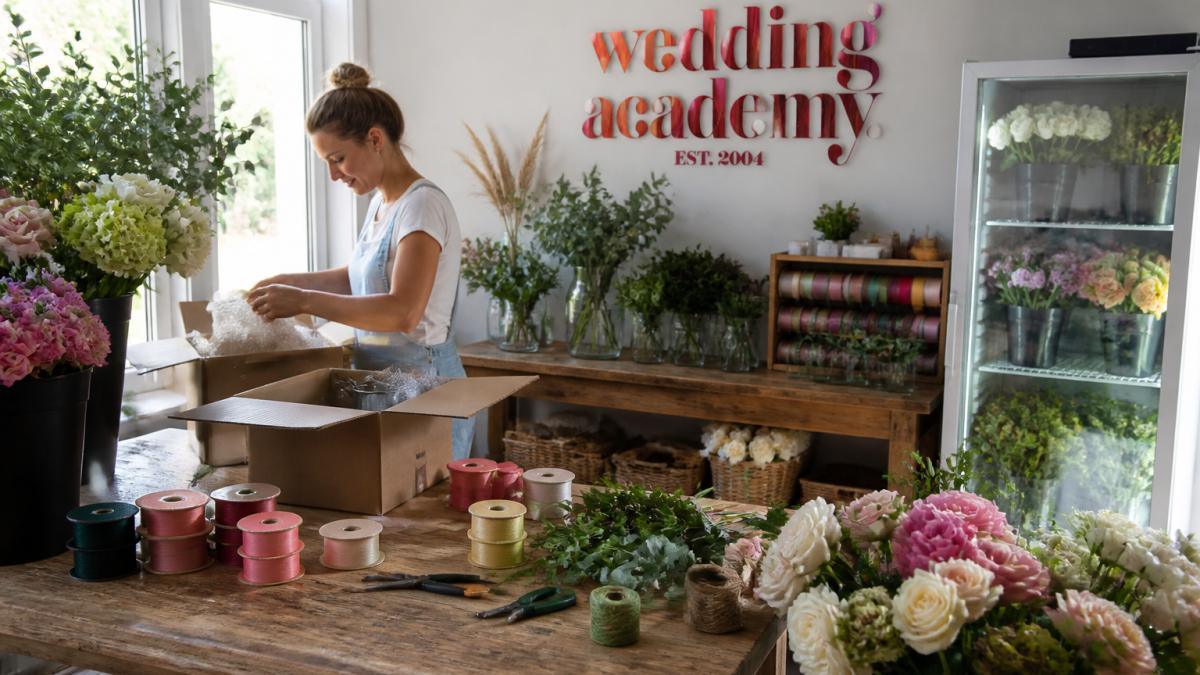
A home-based flower shop setup needs four working zones, not three: a conditioning area, a design bench, cool storage, and a staging area for pickup and delivery. Most guides stop at the workbench and the fridge. The difference between a home studio that works and one that fights you is how those four zones connect, especially water, waste, and the path an order takes from delivery to customer.
Zone 1, Conditioning area. This is where stock is unpacked, stripped, cut, and placed into deep water.
Zone 2, Design bench. You need a solid table at standing height, ideally near a window for natural light. Add shelving for vases, ribbon, and tools so your surface stays clear.
Zone 3, Cool storage. Fresh flowers need cool, humid conditions. Many home florists use a dedicated refrigerator set to a temperature suited to cut flowers, kept separate from food.
Zone 4, Staging for pickup and delivery. Finished arrangements need a cool, stable place to wait, out of direct sun and away from doors that bang.
Water and waste workflow. Water access matters more than most new florists expect.
Compliance check before you build. Before you convert a room or garage, confirm what your local authority requires for a home business.
An equipment checklist to start:
- Sturdy workbench at standing height
- Floral snips and a sharp knife
- Buckets and vases in several sizes
- Ribbon, wire, tape, and floral foam
- A cool storage space or refrigerator
- Shelving and storage bins
- A water source and floor protection
- A labeled staging area for pickup and delivery
- A dedicated waste bin for trim and old water
Watch out: setting up the design bench before you have planned water, waste, and the order path is the most common home-studio mistake, it looks right in photos but slows every real order.
How to Keep Flowers Fresh Longer in a Home Studio
Keeping flowers fresh longer comes down to three habits: clean water, cool storage, and fast conditioning when stock arrives. Get these right and you’ll cut spoilage, which protects your profit margin on every order.
Condition flowers the moment they arrive. Strip lower leaves, cut stems at an angle, and place them straight into clean, deep water. This lets stems drink properly after transit.
Change the water often. Dirty water breeds bacteria that clog stems and shorten vase life. A common mistake is topping up old water instead of replacing it.
Keep stock cool but not freezing, and away from direct sun and ripening fruit. Ethylene gas from fruit speeds up wilting.
A simple freshness routine:
- Condition all new stock on arrival
- Recut stems and refresh water every couple of days
- Remove wilting stems immediately so they don’t spoil the bucket
- Store finished arrangements in cool conditions until delivery
Good flower care is a skill, and it’s one worth learning properly before you take on wedding work.
Registering, Insuring and Pricing Your Floral Design Business
Registering your floral design business means choosing a legal structure, registering the name, opening a business bank account, and arranging insurance. Do this before you take paid orders, not after. Establishing these financial safeguards provides the necessary foundation for accurate budgeting for floral designs as you begin to scale your operations.
The steps, in order:
- Choose a legal entity. Many solo florists start as a sole trader or a limited company, depending on local rules.
- Register the business name. Check it’s available and not already trademarked.
- Open a business bank account. Keep business and personal money separate from day one.
- Arrange insurance. Look into public liability and product cover for event work.
- Check home-business rules. Confirm permits, zoning, and tax obligations for running a business from home.
Watch out: skipping the home-business checks can mean a fine or a forced shutdown later. Confirm what your local authority requires before you set up your studio.
Pricing deserves equal care. Price for profit, not just to win the job. Add up your flowers, supplies, time, delivery, and a margin, then quote from that number. For a deeper walkthrough of how to price wedding services, see how to price your wedding planning services.
Building a Portfolio and Finding Clients as a Floral Design Freelancer
A floral design freelancer wins work through a strong portfolio and steady outreach. Clients book designers whose work they can see and trust, so your portfolio is your best marketing tool.
Start with practice arrangements. Photograph everything in good light, build a simple online portfolio, and post consistently on social media. A floral portfolio doesn’t need paid shoots at first, just clear, well-lit images of your design style.
Then find clients through research and outreach:
- Local wedding venues and planners who need floral partners
- Photographers who shoot weddings and events
- Small businesses wanting weekly flowers
- Friends’ and family events you can document
For a step-by-step approach to building your book of work, read how to build a wedding planning portfolio from scratch. And when you’re ready to attract steady inquiries, our guide to marketing your wedding business online covers the tactics that work.
Enrol in Floral Design Training Before You Take Your First Order
Training first, orders second. Formal floral design training gives you the skills, confidence, and credibility to charge properly from your very first booking. Learning by trial and error on a paying client’s wedding is a costly way to figure things out.
A structured course covers what self-teaching misses: conditioning and care, design mechanics, installation, and the business side. That includes budgeting, supplier management, and pricing, which matter just as much as the flowers.
If you’re comparing options, see our roundup of the best online wedding floral design courses to find a fit.
At The Wedding Academy, our Certificate in Floral Design teaches practical, real-world skills you can apply straight away. It’s 100% online and self-paced, so you can train while keeping your full-time job. You also gain a globally recognized certification and join a global community of wedding professionals and mentors. One graduate, Kelsey Reiersen of Stone & Co.
If you’re weighing whether this path is for you at all, our guide to starting a wedding business with no experience covers the wider picture.
Starting a floral design business from home is realistic when you build it in the right order: train first, set up a workable studio, price for profit, and grow your client list steadily.
Frequently Asked Questions
How much space do you need for a home-based flower business?
A spare room, garage corner, or covered outdoor area of roughly 10 to 15 square metres is enough to start. You need a sturdy workbench, floor space for buckets, a cool spot for storage, and a sink nearby. Keep the area separate from living spaces because sap, leaf debris, and water damage add up. If you plan to hold wedding-scale installations, measure doorways and access routes first, since wide arrangements cannot pass through narrow halls.
What are the typical floral design business startup costs?
Expect to budget for tools such as snips, knives, and buckets, a workspace fit-out, initial wholesale flower orders, business registration, insurance, and a website or social profiles. Costs vary widely by country and scale, so list every item and get local quotes rather than relying on generic figures. Start with a small-scale launch: buy the minimum equipment, take a few practice arrangements, and reinvest revenue into refrigeration and larger inventory as orders grow.
How do you keep flowers fresh longer for a floral business?
Condition every stem on arrival: strip lower leaves, cut stems at an angle with sharp snips, and place them in clean water with flower food. Keep buckets and vases scrubbed, change water daily, and store finished work in a cool, dark space away from direct sun and ripening fruit. Ethylene gas from fruit speeds wilting. For weddings, schedule delivery as close to the event as possible and keep arrangements hydrated during transport with damp paper or water picks.
How do you find your first floral design clients from home?
Start with people you already know: friends, family, and local venues that need regular arrangements. Build a portfolio of practice work and small paid jobs, then post consistent photos on social media with clear pricing and enquiry details. Partner with wedding planners, photographers, and cafés who can refer clients. Ask every customer for a review and a referral, and track where each enquiry came from so you spend time on the channels that actually bring orders.