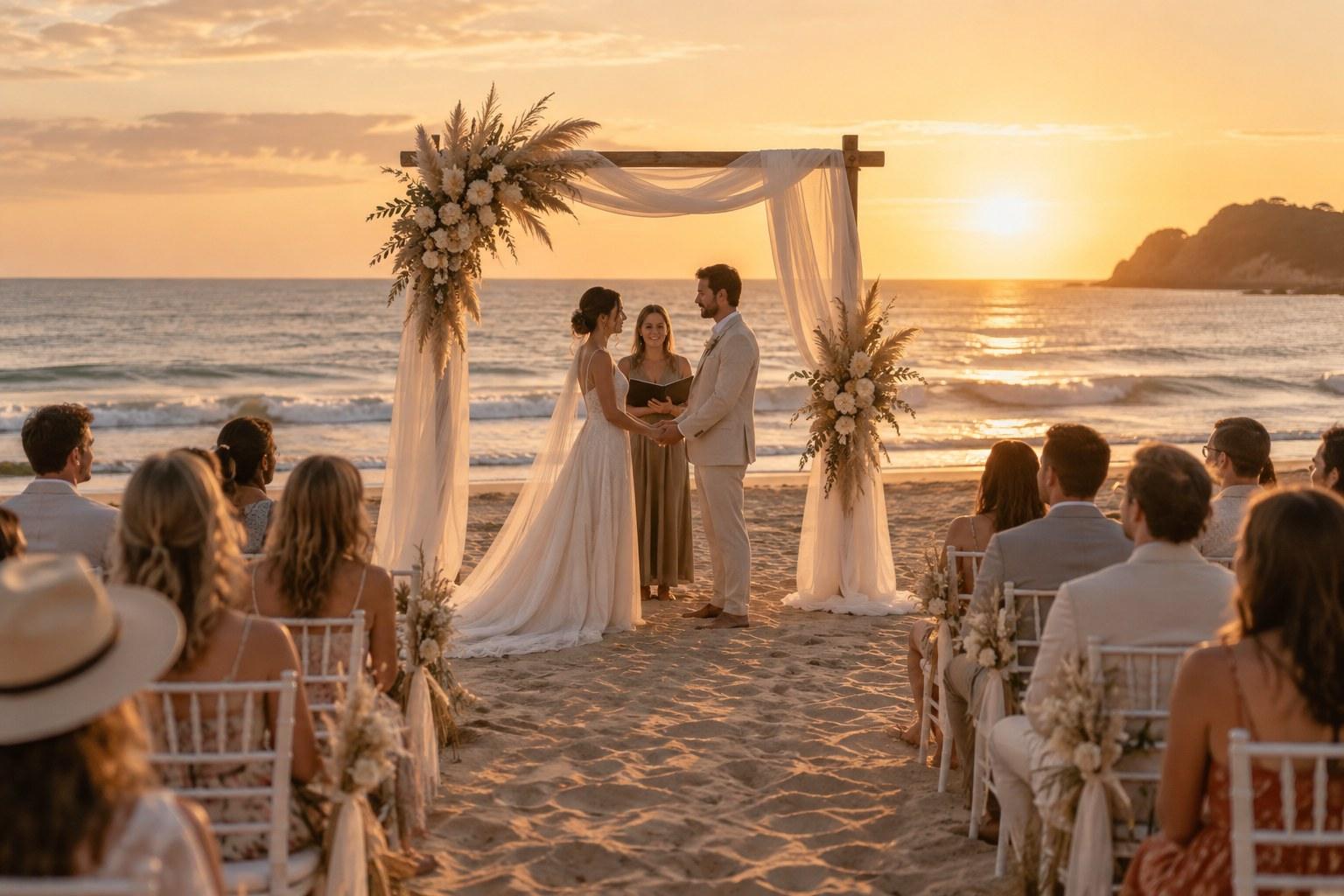
Every couple who wants a beach wedding has the same picture in their head: bare feet, a soft breeze, the ocean glittering behind the vows. And it can look exactly like that. But the gap between that picture and the actual day is filled with tides, wind, glare, sand, sound and council rules — and it’s the planner who has to close it.
Here’s the honest version of beach wedding planning: the things experienced planners wish every couple knew before they fell in love with a stretch of sand, and how a professional quietly manages each one so the day still feels effortless.
Beach wedding planning starts with permission, not Pinterest
Most beaches are public land. That means someone — usually a local council, a parks authority or a state or regional body — decides what you can and can’t do there. “Public” doesn’t mean “anything goes.”
Rules vary enormously from place to place, so never assume. Before a couple pays a deposit on anything, you contact the relevant local authority and ask directly:
- Do we need a permit or booking for a ceremony at this location?
- Is there a limit on guest numbers?
- Can we bring chairs, an arbour, a marquee or a shade structure?
- Are amplified sound, generators or music allowed — and at what times?
- Are there restrictions on confetti, petals, balloons, candles or glass?
- Is the area protected for wildlife, dunes or nesting seasons?
Get every answer in writing and keep it in the wedding file. Any fees, lead times and conditions come straight from the authority — don’t guess and don’t quote from memory, because they change. And a permit rarely means exclusive use — plan for passers-by.
This kind of location due diligence is core to the Certificate in Intimate, Micro and Destination Weddings.
Tides: the beach wedding detail couples never check
That wide, flat stretch of sand on the site visit? It might be underwater at 4pm on the wedding date. The spot you loved at low tide can shrink to a strip — or vanish — at high tide.
- Pull the tide chart for the exact date and location as soon as it’s available, from an official tide prediction source for that coastline.
- Visit at the same time of day, ideally on a day with a similar tide, so you see how much usable sand there really is.
- Set up above the high-water line, with room to spare. Wet sand looks great in photos and terrible under a guest’s chair.
- Build the timeline around the tide, not the other way around — including setup and pack-down time.

The beach wedding detail that ruins photos every time
It’s not the wind. It’s not the dress. It’s timing — specifically, where the sun is.
A midday beach ceremony gives you hard overhead light, deep shadows under eyes, blown-out white dresses, glare bouncing off the water and sand, and a front row of guests squinting through the vows. No amount of editing fully fixes that.
What time should a beach wedding ceremony be?
Most planners and photographers steer couples towards the softer light of late afternoon, leading into golden hour — or, for the brave, early morning. Look up the sunset time for the exact date, then work backwards with your photographer so the ceremony, family photos and couple portraits land in the best light, not after it’s gone.
Which way should the ceremony face?
This is the one couples never think about. If guests face straight into a low sun, they squint. If the couple faces it, they squint in every close-up. Check where the sun will sit at ceremony time — on the site visit or with a sun-position app — and angle the aisle so nobody is staring into it. Loop your photographer into this decision.
Wind, sound and the ocean you forgot was loud
Beaches are windy. Even a “calm” day can gust hard enough to lift veils, flip hair across faces and send a welcome sign cartwheeling down the sand. Wind also carries sound away, and waves are louder than anyone remembers.
If your celebrant is speaking unamplified to more than a handful of guests, the back rows will likely hear surf, not vows. Planners solve this by:
- Confirming amplification is permitted at that location first
- Using a battery-powered PA with a lapel mic, and a windshield on every microphone
- Testing sound on site, at ceremony time, with someone standing in the back row
- Keeping the ceremony layout compact — a tight semi-circle carries better than long, deep rows
And tell the bride about the veil. A long veil in beach wind is either the best photo of the day or a battle — warn her, and pack extra pins.
Beach wedding styling that actually survives the wind
Beach styling is where pretty ideas meet physics. Loose petal aisles blow away (and many locations don’t allow them anyway). Lightweight signage becomes a kite. Tall, top-heavy arrangements tip. Tealights won’t stay lit without protection.
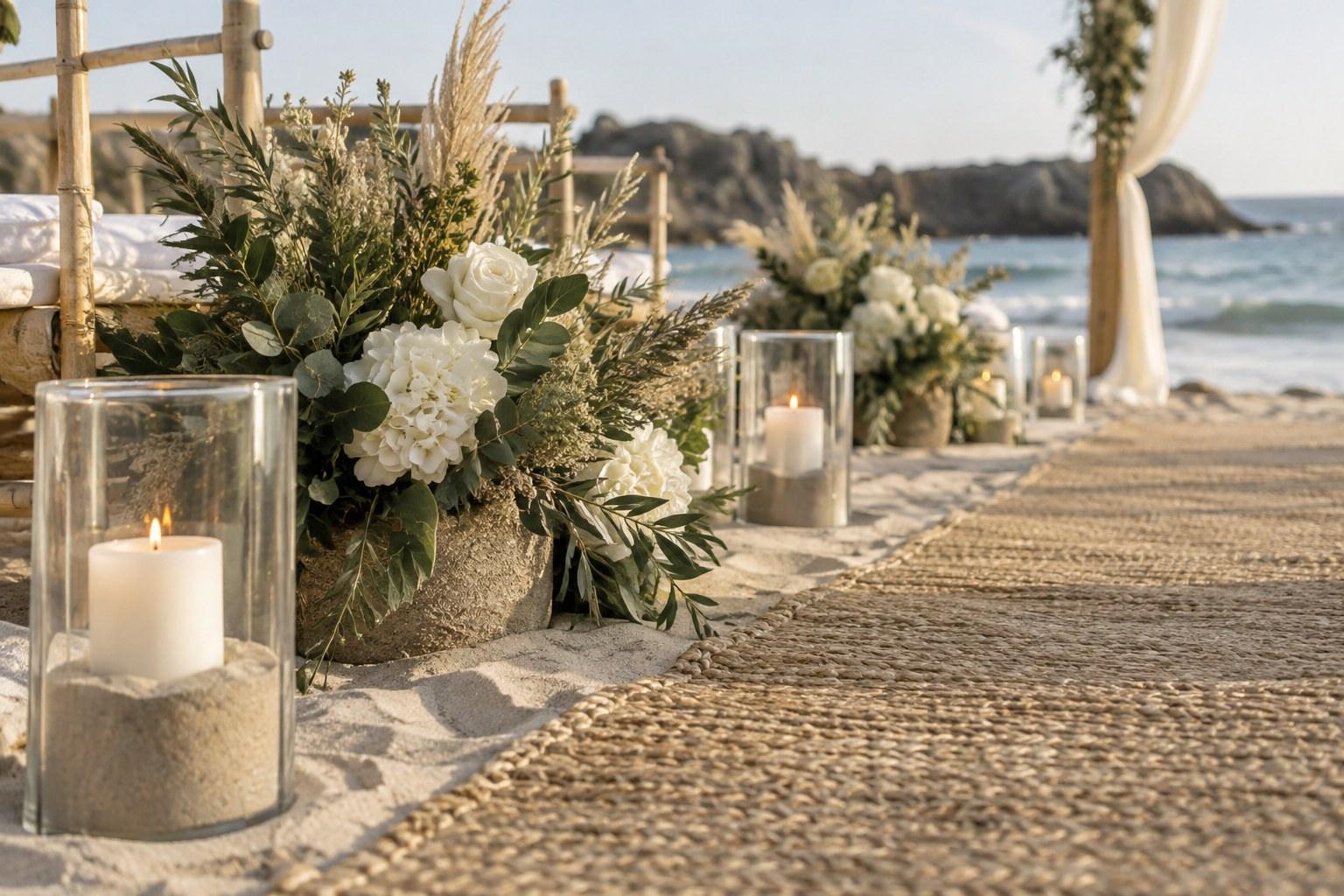
- Go low and heavy. Low floral arrangements with wide bases, secured in weighted vessels.
- Weight everything. Hurricane lanterns with sand in the base, signage on solid easels or timber stands that can be staked or sandbagged.
- Choose movement on purpose. Flowing fabric on an arbour looks beautiful in wind — just tie it off securely at the base.
- Pin the aisle runner. Woven or natural-fibre runners staked into the sand, never paper or lightweight fabric.
- Skip anything that can litter. Confetti, petals and balloons create cleanup problems and may breach local rules.
If you love the design side of this, the Certificate in Wedding Styling goes deep into creating looks that work in real conditions, not just in a flat lay.
Sand, shoes and guest comfort on a beach
Sand is gorgeous to look at and exhausting to walk on — especially in heels, in formalwear, in the heat.
Footwear
Put the dress code on the invitation or wedding website — “beach formal, flat shoes recommended” saves a lot of sinking stilettos. A basket of flip-flops and a spot to rinse sandy feet are small details guests remember.
Seating on sand
Chairs sink and wobble on soft sand. Place them on firmer sand where you can, check each one is level, and keep the ceremony short enough that guests aren’t perched for long. Reserve stable, well-positioned seats for older guests.
Shade and water
There’s usually no natural shade on a beach. Plan shade (if permitted), a water station, sunscreen and fans or parasols for warm-weather dates. It’s hospitality and risk management in one.
Access for elderly guests and anyone with mobility needs
This is the part couples forget, and the part grandparents never forget. Steep dune paths, stairs down to the sand, long walks from the car park and soft sand are real barriers for elderly guests and anyone using a walking aid or wheelchair.
On your site visit, walk the full route from car park to ceremony and time it. Ask the authority about beach access mats or accessible paths. Position the ceremony near a firm access point, arrange close drop-off and assign an usher to help. Sometimes the kindest option is a ceremony on the grass or deck just above the beach — with the ocean still in every photo.
Beach wedding backup plans: rain, heat and wind
Every beach wedding needs a Plan B that the couple has seen, approved and doesn’t hate. “We’ll just hope it’s nice” is not a plan.
| Risk | What goes wrong | How a planner manages it |
|---|---|---|
| High tide | Ceremony spot shrinks or floods | Check tide charts early; set up above the high-water line; time the ceremony around the tide |
| Harsh sun | Squinting guests, harsh photos, heat stress | Late-afternoon or early-morning timing; angle the aisle away from the sun; shade and water |
| Strong wind | Décor blows away, vows lost, veils wild | Weighted, low styling; amplification with windshields; compact layout |
| Rain or storms | Ceremony can’t go ahead on the sand | Covered backup venue nearby, confirmed in writing, with a clear decision time |
| Extreme heat | Guests unwell, flowers wilting | Short ceremony, shade, water station, heat-tolerant flowers, cooler time of day |
| Access | Elderly guests can’t reach the ceremony | Walk the route; ask about access mats; drop-off plan; ushers; nearby firm-ground option |
Agree a decision time — for example, the morning of the wedding — when you’ll look at the forecast and call Plan A or Plan B. Tell every supplier the call time in advance so the switch is a phone call, not a crisis.
Cleanup and leave no trace
A beach wedding isn’t finished when the couple walks back up the aisle. Everything that came onto the beach has to leave it — every cable tie, every stray bloom, every wooden stake. Many authorities make this a permit condition.
Build pack-down into the timeline with enough crew, bring bins and bags, and do a final walk of the site before you leave. If you’re on a tide-affected beach, pack down before the water comes in, not after.
Selling beach wedding planning as a planner
Couples book beach weddings for the romance. They book planners for everything in this article. When you can explain tides, sun position, permits and backup plans calmly in a first consultation, you instantly sound like the person who’s done it before.
If intimate, outdoor and destination weddings are where you want to specialise, the Certificate in Intimate, Micro and Destination Weddings shows you how to plan, price and run them. Pair it with the Certificate in Wedding Planning for the core planning systems behind every event.
Beach wedding planning FAQs
Do you need a permit to get married on the beach?
Often, yes — but it depends entirely on the location. Contact the local council or authority that manages the beach and ask about permits, guest limits, structures, sound and any restrictions before paying deposits. Get the answers in writing.
What is the best time of day for a beach wedding?
Late afternoon into golden hour is the usual favourite for softer light and cooler temperatures, with early morning as an alternative. Avoid midday if you can — harsh overhead sun means squinting guests and unflattering photos. Always check the sunset time and tide chart for your exact date.
How do you stop decorations blowing away at a beach wedding?
Design low and heavy. Use weighted vessels and hurricane lanterns, sturdy signage stands that can be staked or sandbagged, pinned aisle runners and securely tied fabric. Skip loose petals, confetti and lightweight paper signs.
Can guests hear the vows at a beach wedding?
Not reliably without help. Wind and waves swallow voices, so use a battery-powered PA with lapel mics and windshields (if permitted), keep the layout compact and test the sound on site at ceremony time.
What should a beach wedding backup plan include?
A confirmed covered venue close by, a clear decision time for calling Plan A or Plan B, a supplier communication plan, and heat measures like shade and water. The couple should see and approve the backup well before the day.
Ready to plan beach and destination weddings with genuine confidence? Your next step is below. 🌊