Most planners ask for testimonials the wrong way. They send a quick “would you mind leaving us a review?” text the week after the wedding, get back three lines that say “She was amazing, highly recommend!” Then they wonder why their website isn’t converting.
Here’s the honest truth: that review isn’t wrong, it’s just not useful. It tells a stranger nothing about what you actually do, what problem you solved or why they should trust you with the biggest party of their lives. Good wedding planner testimonials are specific, story-shaped and sitting exactly where a nervous couple is deciding whether to hit “enquire”.
Here’s when to ask, what to ask and where to put testimonials so they do real work — plus a copy-and-paste email script.
Why generic wedding planner testimonials don’t convert
Couples who land on your website are usually carrying a quiet fear: what if we spend all this money and it still goes wrong? A testimonial’s job is to answer that fear with evidence from someone just like them.
“She was amazing” can’t do that. Compare it with something like: “We were terrified our families wouldn’t mix. On the day, we didn’t field a single question — we just got to be there.” Same happy client, completely different weight. The second one names a fear, shows what changed and gives a moment the reader can picture.
That’s the formula you’re fishing for in every testimonial:
- The before — what they were worried about, stuck on or overwhelmed by
- The shift — what you did, or how working with you felt different
- The moment — one specific scene from the planning or the day that proves it
When to ask for wedding planner testimonials
Timing is where most planners lose the best reviews. The morning after the wedding, your couple is exhausted, hungover, possibly on a plane and definitely not thinking about you.
Ask when the emotion comes back
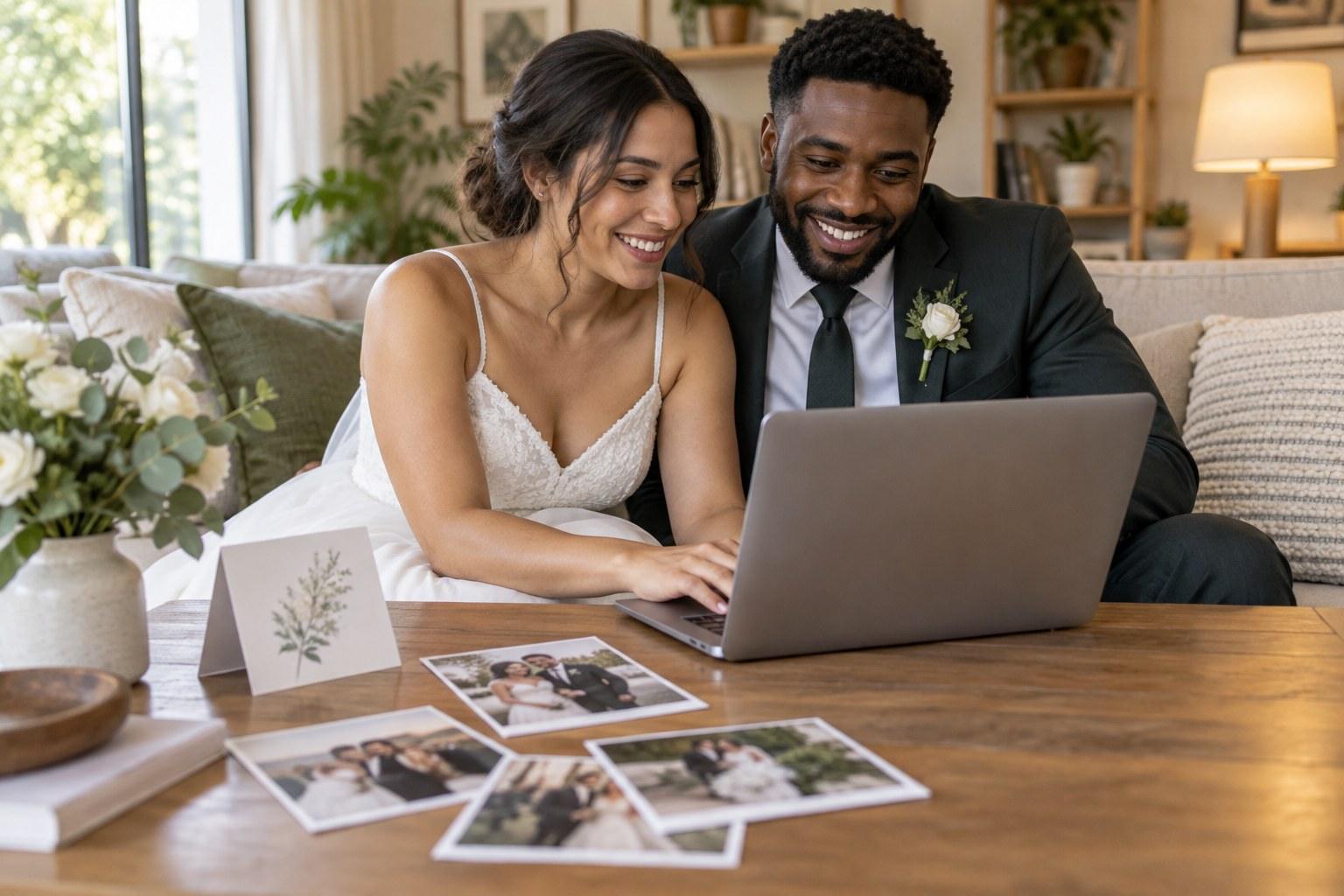
The sweet spot is when something brings the wedding flooding back — and for most couples that’s the day their photos or film arrive. Ask photographers to tell you when galleries are delivered, or ask the couple when they’re expecting them and diarise it.
Other good moments to ask
- When they send you a thank-you message or card — reply warmly, then ask if you can share their words (or expand on them)
- On a post-wedding wrap-up call, while they’re telling you their favourite moments out loud
Avoid asking in the final invoice email.

How to ask for a testimonial: questions that pull out real stories
If you ask “Can you write us a review?”, you’re handing your couple a blank page — and blank pages produce “She was amazing.” Instead, give them a few prompts.
Here’s a question list you can borrow and adapt:
- What were you most worried about before you booked a planner?
- What made you decide to book us over doing it yourselves (or someone else)?
- Was there a moment during planning when you felt relieved you had us?
- What’s one moment from the day you keep thinking about?
- Did anything go off-plan that you only found out about later?
- What would you tell a friend who’s on the fence about hiring a planner?
That fifth question is gold. “We had no idea the florist ran late” is the most persuasive proof of your value you’ll ever get.
Make it ridiculously easy to say yes
Every extra step loses you testimonials. Remove friction wherever you can:
- Offer a short form. A simple online form with your prompt questions and a consent tick-box.
- Accept voice notes. Some couples will happily talk for two minutes but freeze at a keyboard. Transcribe it, send them the text and ask them to approve it.
- Send your direct Google review link. Grab the “ask for reviews” link from your Google Business Profile so they land straight on the review box — no searching for you by name.
- Follow up once. One polite reminder is professional. Three is pressure.
Sample email: asking for a wedding planner testimonial
Copy it, adjust the details and make it sound like you:
Subject: Your photos + a small favour 💌
Hi Priya and Tom,
I just heard your gallery has landed — I hope you’ve been happily lost in it! That shot of you both under the fig tree is going to stay with me for a long time.
Planning your wedding was a genuine joy, and I’d love to help other couples feel the way you did. Would you be open to sharing a few words about your experience? No need to write an essay — here are a few prompts if they help:
• What were you worried about before we started?
• Was there a moment you were glad you had a planner?
• What’s one moment from the day you keep coming back to?You can reply to this email, send me a voice note, or pop it on Google here: [your review link]. Let me know if you’re happy for me to use your first names and a photo or two — completely fine if you’d rather not.
Thank you both, truly.
[Your name]
Writing client communication like this — warm, clear, action-focused — is a big part of what we teach in the Certificate in Wedding Business & Marketing.
Getting permission to use names, photos and quotes
A kind email isn’t blanket permission. Before you publish anything, get clear written consent covering:
- Whether you can use their full names, first names only or no names
- Which photos you can pair with the words — and remember the photographer usually owns the images, so check their terms and credit them
- Where you’ll use it: website, proposals, social media, ads
- That you may shorten it, and that you’ll send any shortened version back for approval
A tick-box on your form or a “yes, happy for you to use that!” reply in writing is enough for most planners — keep a record. Some couples will want to stay anonymous — respect it completely. “Bride, vineyard wedding, 2025” still works.
Where to use wedding planner testimonials so they actually book couples
A testimonial buried on a lonely “Kind Words” page does a fraction of the work it could. Put them where decisions happen:
| Where | What to use | Why it works |
|---|---|---|
| Service pages, near the enquiry button | One or two short, specific quotes that match that service | Answers doubts right at the moment of action |
| Home page | A single strong “before and after” story | Builds trust fast for first-time visitors |
| Proposals and pricing guides | A testimonial from a couple with a similar wedding style or size | Helps justify your fee when couples are comparing |
| Google Business Profile | Genuine reviews left directly by couples | Visible in local search and maps before anyone clicks your site |
| Social media | Quote graphics, carousel stories, voice-note snippets (with consent) | Social proof in the feed where couples are browsing |
Match testimonials to the page. A quote about calm family management belongs on your full-planning page; a quote about “we only booked you for the day and wish we’d booked sooner” belongs on your on-the-day coordination page.

Turn one testimonial into several marketing assets
One great testimonial isn’t one piece of content — it’s a small content bank. From a single approved review you can create:
- A pull quote on the relevant service page
- An Instagram quote tile and a carousel telling the fuller story
- A slide in your proposal template
- A story you tell out loud on discovery calls — “I had a couple last year who were worried about exactly that…”
Just stay inside what your couple approved.
How to handle a lukewarm or negative review
Sooner or later you’ll get a review that’s polite but flat — or one that raises a genuine complaint. Don’t panic and don’t argue.
- Look for the truth in it. Was communication slower than you’d like during a busy season? That’s useful information.
- Respond publicly with grace if it’s on Google: thank them, acknowledge the specific point, briefly note what you’ve changed. Keep it short and never share private details.
- Take any real conversation offline with a phone call or email.
- Never offer incentives to change or remove a review.
Future couples read your replies closely — a calm, professional response builds real trust.
Never fabricate or edit the meaning
The pressure to look established pushes some new planners into dodgy territory. Don’t invent testimonials. Don’t “borrow” a friend’s words and attribute them to a client. Don’t stitch two reviews together, and don’t edit a quote so it says something the couple didn’t mean.
Trimming for length is fine — with approval. Fixing an obvious typo is fine. Changing “it was mostly smooth” to “it was flawless” is not. Fake or misleading reviews can breach consumer protection rules and platform policies — and couples talk.
Just starting out with no clients yet? Collect honest feedback from styled shoots, supplier collaborations, or friends’ events you genuinely helped plan — and label them accurately. Everyone starts somewhere. Building those foundations properly, from your first portfolio to your first paid booking, is exactly what the Certificate in Wedding Planning is designed for, while the Advanced Certificate in Wedding Planning, Styling and Business goes deeper into running and growing the whole business.
Ready to build a marketing system that turns happy couples into your best source of new enquiries? The Certificate in Wedding Business & Marketing walks you through branding, your website, social media and client experience step by step.
Wedding planner testimonials FAQs
When is the best time to ask a couple for a testimonial?
Ask when the wedding feels vivid again — the day their photos or film are delivered is often ideal. Avoid the morning after the wedding and never bundle the request with a final invoice.
What questions should I ask to get a good wedding planner testimonial?
Ask what they were worried about before booking, whether there was a moment they were glad to have a planner, one moment from the day they keep thinking about, and what they’d tell a friend considering a planner. Prompts produce specific stories instead of generic praise.
Can I edit a client’s testimonial before posting it?
You can shorten it or fix an obvious typo, but send the edited version back to the couple for approval first. Never change the meaning, combine reviews or add words they didn’t say.
Do I need permission to use a couple’s name and photos with their review?
Yes. Get written consent covering names, photos and where you’ll use the testimonial. Check the photographer’s terms too, since they usually own the images, and credit them.
Where should I put testimonials on my wedding planner website?
Put short, specific quotes on each service page close to your enquiry button, one strong story on your home page, and relevant testimonials in proposals. Encourage couples to leave reviews on your Google Business Profile as well.
Your happy couples already have the words that will book your next clients — you just need a better way to ask. Learn how to build that system properly inside the Certificate in Wedding Business & Marketing.