You’ve seen it happen. The bouquet looks incredible at 11am, glows through the ceremony, and by 3pm it’s slumped against the bride’s hip like it’s had a very long week. The centrepieces in the sun-drenched courtyard are drooping before the speeches even start. The damage was usually done days earlier, in the car, or in the first hour on site.
Good wedding flower care is the invisible half of floristry. Couples never see it — they just see fresh blooms in every photo. Here’s how professional florists keep wedding flowers fresh from the moment the stock arrives to the moment the couple toss the bouquet — and what to tell everyone holding them. 💐
Why wedding flowers wilt by 3pm (and how to stop it)
Flowers are still alive after they’re cut. They keep drinking, breathing and losing water through their petals and leaves. Wilting is simply what happens when they lose water faster than they can take it up. On a wedding day, almost everything conspires to speed that up:
- Heat and direct sun — warm air and sunlight pull moisture out of petals fast, especially on delicate varieties.
- Wind — a breezy clifftop or beach ceremony dries flowers out far quicker than a still room.
- Dehydration before the day — stems that were never properly conditioned start the wedding already thirsty.
- No water source — bouquets, buttonholes, flower crowns and some installations spend hours with no water at all.
- Ethylene — a natural gas given off by ripening fruit, some decaying plant material and exhaust fumes that can speed up ageing, petal drop and bud failure in sensitive flowers.
- Handling — warm hands gripping stems, bouquets being passed around, photographers asking for “one more” in full sun.
The fix isn’t one trick. It’s a chain of small, non-negotiable habits — and any weak link shows up in the afternoon photos.
Wedding flower care starts days before: buying and conditioning
Fresh blooms on the day come from what you do when the stock lands. Conditioning — the process of rehydrating and preparing cut flowers after transport — is where professional wedding flower care really begins.
Start with scrupulously clean buckets
Bacteria in water clog the stems so flowers can’t drink, even while they’re standing in a full bucket. Scrub buckets with hot soapy water or a proper floral cleaner between every use, rinse well, and fill with fresh, cool water.
Fresh cuts, at an angle, with a sharp blade
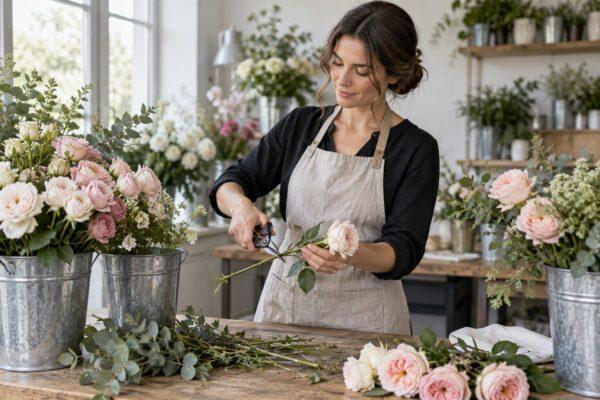
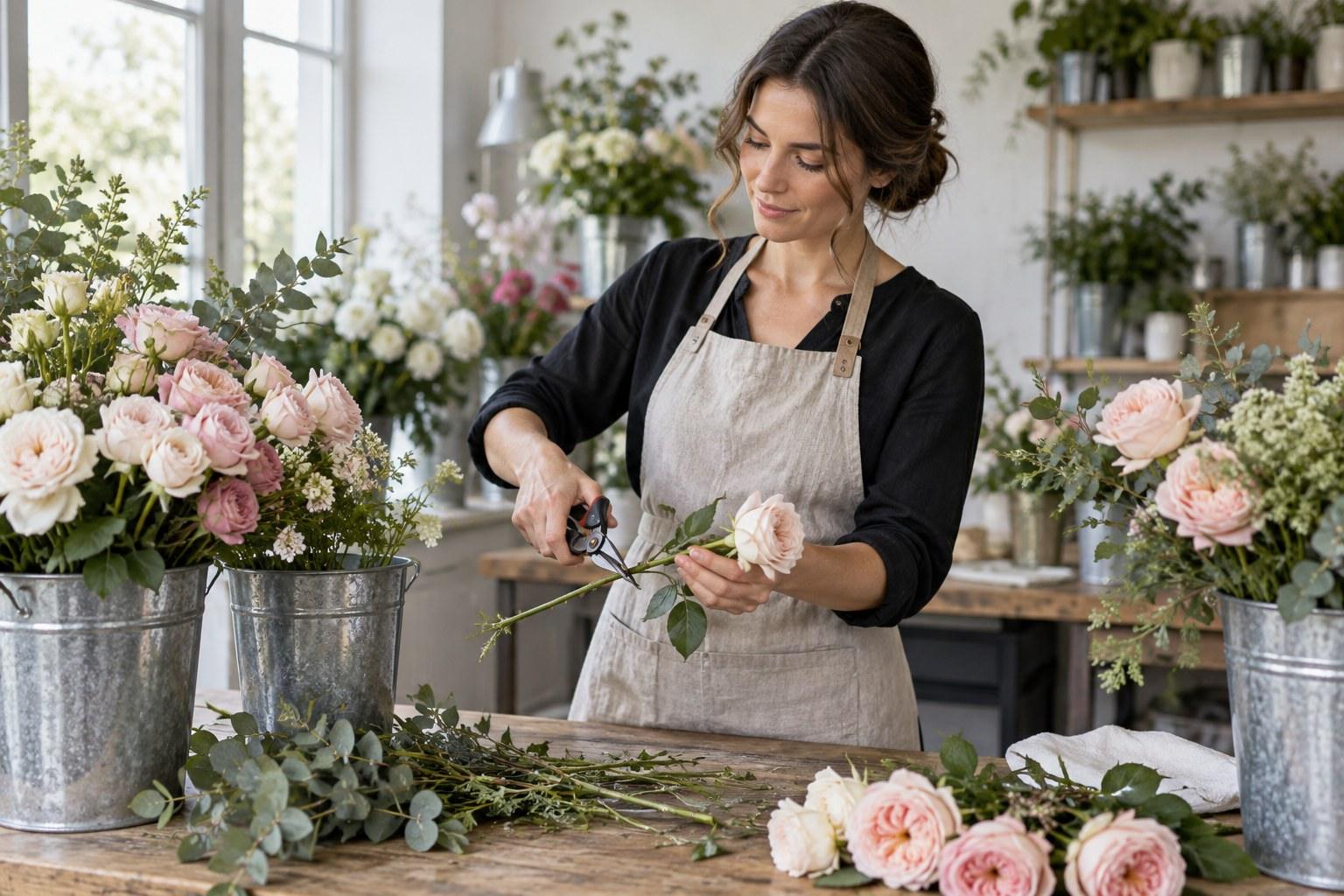
Stems seal over in transit. Recut every stem with sharp, clean snips or a florist’s knife, taking a small amount off the base at an angle. The angle gives more surface for water uptake and stops the stem sitting flat on the bucket floor. Blunt tools crush the stem, so keep blades sharp.
Strip foliage below the waterline
Any leaf sitting underwater will rot, feed bacteria and foul the bucket. Remove everything that would sit below the waterline. De-thorn roses gently so you don’t tear the stem.
Give them proper hydration time
Once conditioned, flowers need several hours — ideally overnight — somewhere cool and dark-ish to fully drink up before you design with them. Rushing this is one of the most common reasons wedding flowers flop early.
Store cool, and keep fruit well away
Store conditioned flowers in the coolest space you have, out of sunlight, away from heaters, draughts and — this matters — fruit bowls, ripening produce and vehicle exhausts, because of that ethylene problem. Check water daily and change it when it turns cloudy.
Sourcing, conditioning and storing stock properly is foundational technique inside the Certificate in Floral Design — because the most beautiful design in the world won’t survive a badly conditioned stem.
Thirsty, delicate or hardy? Know your wedding blooms
Not all flowers behave the same, and part of keeping blooms fresh is choosing them with the conditions in mind. Broadly, stems fall into three camps:
- Thirsty flowers — hydrangeas are the classic example; they drink heavily and can collapse quickly out of water. Many soft garden-style flowers fall here too. Use them where they can stay in water, or plan extra hydration.
- Delicate flowers — soft, papery petals such as sweet peas, many garden roses and fully blown blooms bruise and brown easily with handling and heat. They’re stunning, but they need gentle treatment and the right placement.
- Hardy flowers — sturdy stems and waxy or tougher petals, such as many orchids, proteas and other native varieties, along with a lot of structural foliage, generally cope better out of water and in warmer conditions.
If the wedding is outdoors in summer and the couple are set on hydrangeas in a hand-held bouquet, that’s a conversation for the consult, not the morning of. Offer lookalike alternatives, or plan how you’ll keep those stems hydrated.
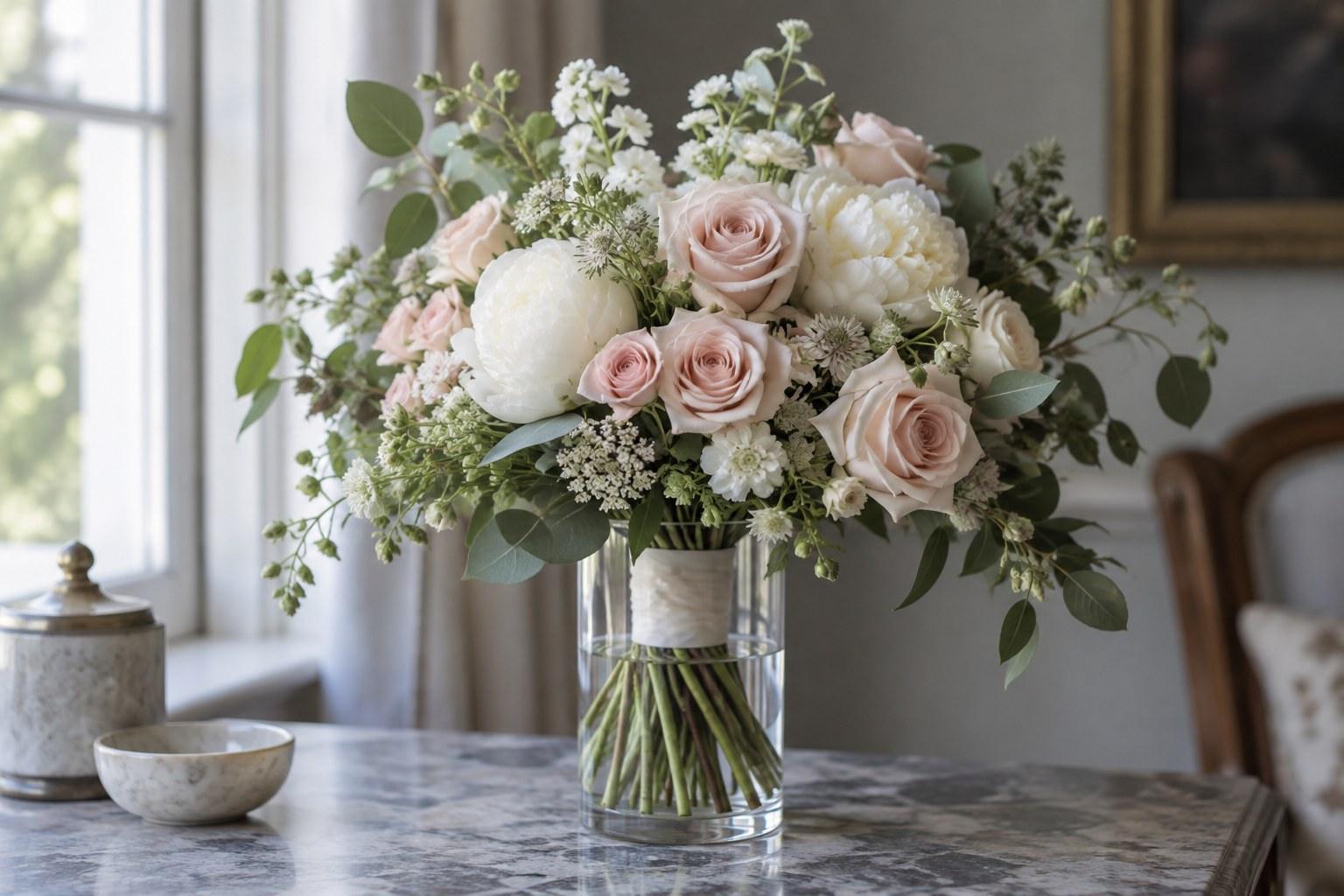
How to keep a wedding bouquet fresh: bouquets and buttonholes
Personal flowers are the hardest to keep fresh because they spend the day out of water, in hands, in heat and in front of cameras. Give them every advantage you can.
Hydrate before you design, and after
Only design with fully conditioned stems. Once a hand-tied bouquet is finished, recut the stems evenly and stand it straight back in clean water in a cool spot until it has to leave.
When to wrap the stems
Ribbon-wrapped stems can’t drink. Many florists leave the final wrap until as close to delivery as practical, so the bouquet stays in water as long as possible. When you do wrap, keep the stem ends clear if you can, so the bouquet can go back into a vase between moments.
Misting — helpful, but not a cure
A light mist of water can help petals stay fresh in warm conditions,. But misting doesn’t replace hydration through the stem, and some flowers spot or mark when wet, so know your varieties. Never mist so heavily that water drips onto dresses or suits.
Buttonholes, corsages and crowns
These are tiny, have no water source and sit right against warm bodies. Choose tougher, longer-lasting blooms and foliage for them, make them as late as your schedule allows, and keep them cool and boxed until handover. Pack spares — someone always sits on one.
Transporting wedding flowers without cooking them
A car on a warm day can undo days of careful conditioning in half an hour. Treat transport as part of your wedding flower care plan, not an afterthought:
- Run the air conditioning before you load, and keep it running for the whole trip.
- Secure buckets and boxes so they can’t tip, slide or knock together — crates, non-slip mats and bucket holders are worth every cent.
- Keep flowers out of direct sun through windows; cover them if you need to.
- Carry arrangements in water wherever possible, and pack bouquets upright in water-filled vases or buckets.
- Don’t leave a loaded vehicle parked in the sun while you “just pop in” to check the venue.
On-site wedding flower care: shade, water and timing
Once you arrive, you’re managing the environment as much as the flowers.
Find the shade and the water
Know where the coolest, shadiest spot at the venue is, and claim it as your staging area. Find the nearest water, and ask the planner which areas get afternoon sun — the ceremony arbour that’s in shade at 10am may be in blazing sun at 2pm.
Time your installation
For outdoor or exposed pieces, install as late as the run sheet allows while still leaving yourself enough buffer to finish calmly. Where you can, design pieces with a water source — hidden tubes, vessels or suitable mechanics — rather than relying on stems out of water for hours. This is where close communication with the planner and stylist matters; if you’re working alongside them, it helps to understand how they think about timelines and room flips, which our Certificate in Wedding Styling and Certificate in Wedding Planning cover from their side of the day.
Pack a proper touch-up kit
Your kit should include sharp snips, a mister, a watering can or bottle, spare stems of your key flowers and foliage, extra buttonholes, pins, ribbon, tape, cloths and a bin bag. Walk through before guests arrive, replacing tired stems and topping up water.
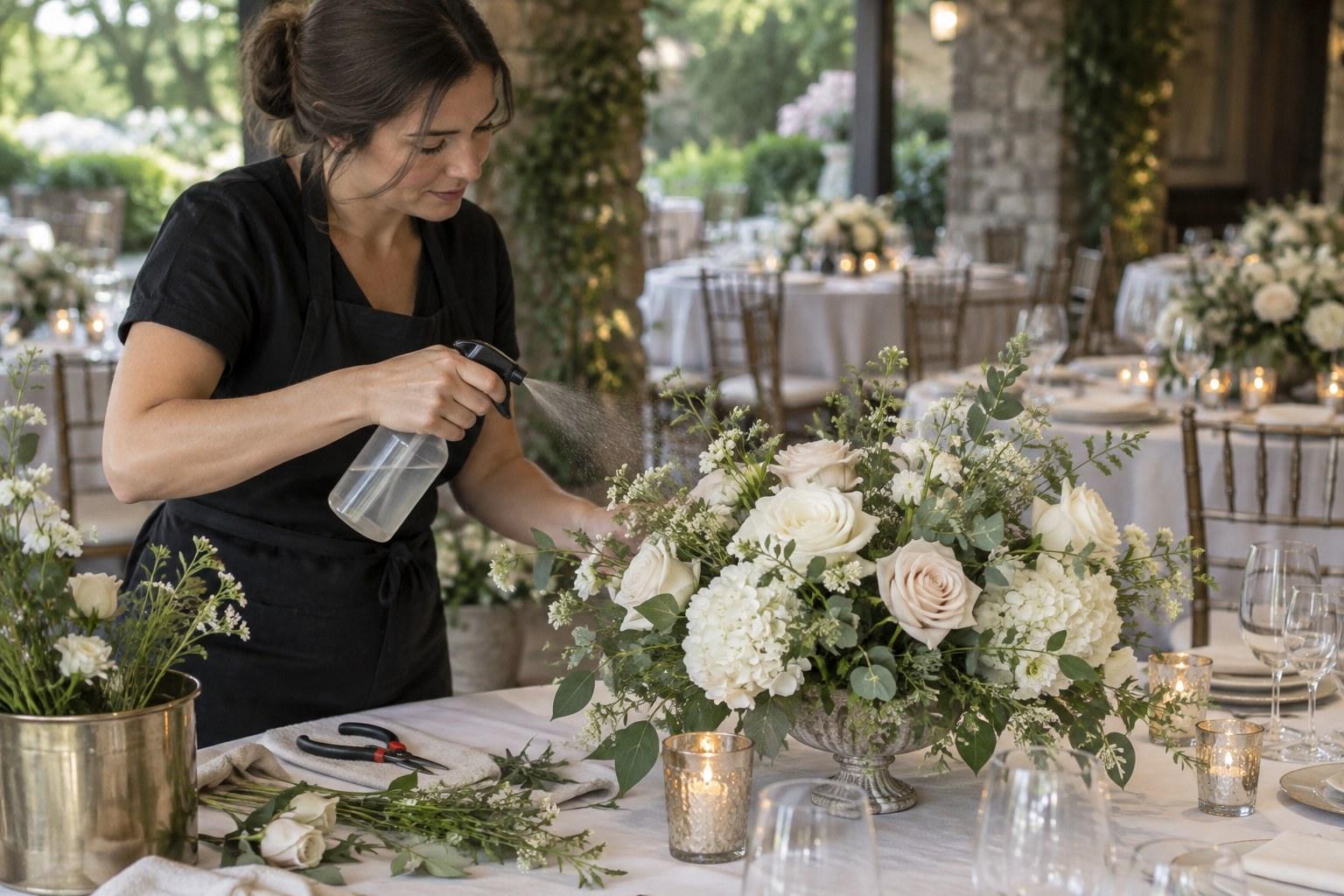
Wedding flower care timeline: from delivery to the day
Use this as a starting framework and adjust it to your stock, your studio and the wedding’s schedule.
| When | What to do | Why it matters |
|---|---|---|
| Stock arrives (a few days out) | Unpack immediately, recut stems at an angle, strip low foliage, place into clean buckets of fresh water | Stems seal and dehydrate in transit; fast conditioning restores water uptake |
| First night | Leave to hydrate somewhere cool, dark and away from fruit and heaters | Flowers need time to fully drink before you handle or design |
| Daily until the wedding | Check water levels, change cloudy water, remove damaged petals or stems | Bacteria and decay shorten vase life and spread quickly |
| Day before | Design arrangements and centrepieces in water or with a water source; store cool | Gives designs time to settle and lets you spot any weak stems |
| Evening before or early morning | Make bouquets, buttonholes and corsages; keep bouquets standing in water | Personal flowers have the least water access, so make them as late as practical |
| Morning of | Final wrap of bouquet stems, light misting where suitable, pack securely in a cool vehicle | Protects hydration right up to handover |
| On site | Stage in shade, install exposed pieces as late as the run sheet allows, touch up before guests arrive | Heat, sun and wind do their worst in the hours after installation |
| Handover | Brief the couple and bridal party on holding and resting flowers in water | The people holding bouquets decide how they look at 3pm |
Keeping wedding flowers fresh in the heat and outdoors
Hot days and outdoor ceremonies need a stricter plan. Choose hardier blooms for exposed pieces, especially anything hand-held or sitting in direct sun. Build in water sources for arches and installations wherever possible. Keep bouquets indoors in water until the last moment, and have a vase ready at the ceremony and reception for them.
And be honest with couples. Some flowers simply aren’t built for a hot, windy afternoon. Saying so at the quote stage is far better than explaining a wilted arch on the day.
What to tell the couple and bridal party about their bouquets
This is the step most florists skip, and it’s the one that decides whether your work survives the afternoon. A short, friendly briefing at handover goes a long way:
- Hold bouquets by the wrapped stem, not by squeezing the flower heads.
- Rest bouquets in water whenever they’re not in use — point out the vases you’ve provided.
- Keep them out of direct sun and off hot car seats between locations.
- Don’t leave them lying flat on a table in the heat during photos or the reception.
- Hand buttonholes back or keep them somewhere cool if they’re taken off.
Put the same points on a small card tucked in with the bouquets and brief the coordinator too.
Wedding flower care FAQs
How far ahead should wedding flowers be bought and conditioned?
Most florists bring stock in a few days before the wedding so it has time to be conditioned and fully hydrated, and so tight buds have time to open. The exact timing depends on the varieties — some need longer to open, others are best used fresh — so plan it per flower, not as one rule.
How do you keep a bridal bouquet fresh all day?
Design it from fully conditioned stems, keep it standing in water until as close to handover as practical, wrap the stems late, and give the couple a vase at the ceremony and reception so it can rest in water between moments. Keeping it out of direct sun and heat does the rest.
Does misting wedding flowers really help?
A light mist can help petals stay fresh in warm conditions, but it doesn’t replace water taken up through the stem. Some flowers spot or mark when wet, so know your varieties, and never mist so heavily that it drips onto clothing.
Which wedding flowers are best for hot outdoor weddings?
Choose hardier blooms with sturdier petals, such as many orchids, proteas and other native varieties, along with tough foliage, especially for hand-held or exposed pieces. Save thirsty or delicate flowers like hydrangeas and garden roses for arrangements that can stay in water or sit in shade.
Why do wedding flowers wilt so quickly on the day?
Usually it’s a combination of heat, sun, wind, no water source and stems that weren’t properly hydrated beforehand. Handling and exposure to ethylene from fruit or exhaust fumes can speed it up. Good conditioning, cool transport, shade on site and briefing the bridal party prevent most of it.
Wedding flower care is a skill you can learn, and it’s what separates a florist couples trust from one they hope for the best with. If you want the technique and systems to run wedding flowers with confidence, the Certificate in Floral Design is where to start. Enrol today and learn to create wedding flowers that look as fresh at the last dance as they did at the first look.