
You wake up, reach for your phone, and there it is: a string of messages that arrived at 3am. The couple has changed their minds about the ceremony time. The venue abroad has replied to an email you sent two days ago. The florist wants a decision by “end of day” — but whose day? Welcome to coordinating a wedding in a different time zone.
Here’s the thing most planners learn the hard way: distance isn’t the real problem. Video calls, shared documents and messaging apps have more or less solved distance. The real problems are lag and ambiguity — the hours between a question and its answer, and the confusion about what “Tuesday at 10” actually means when three countries are involved.
Destination wedding for local clients, or overseas couple marrying at home — the fix is the same: systems that remove the lag and kill the ambiguity.
Why coordinating a wedding in a different time zone goes wrong
Most cross-time-zone disasters are small, slow leaks:
- A decision that should take an hour takes three days because each reply lands while the other person is asleep
- A call booked for “9am” that one side joins and the other side misses entirely
- A vendor who confirmed something on WhatsApp that nobody else can find
- A planner — you — quietly burning out because you’ve started answering messages at all hours to make up for the gap
None of these are fixed by working harder. They’re fixed by agreeing the rules up front, then running everything through one clear system.
Set communication hours before the planning starts
The single most useful thing you can do is decide — and write down — when you’re available and how quickly you’ll respond. Do it before the first planning meeting, not after the first 3am panic.
Put response times in the contract
Your contract should state your working hours in your own time zone, your typical response time for non-urgent messages, and what counts as a genuine emergency. Keep it simple and human — couples relax when they know what to expect.
Repeat it in the welcome pack
Nobody rereads a contract. Your welcome pack is where the expectations actually land. Show your hours in both time zones, the best way to reach you, and who to call if something truly urgent happens. If you have an on-the-ground coordinator at the destination, introduce them here too.
Create one shared planning hub — one source of truth
Across time zones, scattered communication is lethal. An email here, a WhatsApp voice note there — and the final decision about welcome drinks exists only in a message nobody can find.
Pick one planning hub and make it the only place decisions live. It might be your planning software, a shared project board or a well-organised shared folder with a master planning document. The tool matters far less than the rule: if it isn’t in the hub, it hasn’t been decided.
This is the backbone of how we teach destination planning in the Certificate in Intimate, Micro and Destination Weddings — a single record is what keeps you calm when everyone is awake at different times.
Find your overlap window and batch your calls
Every time zone pairing has an overlap window — the few hours when everyone is awake and alert. Find it early and protect it.
- Batch your calls into that window rather than scattering them across the week. One focused hour beats five rushed fifteen-minute calls.
- Send an agenda ahead so the call is for decisions, not discovery. Couples can think it over in their own daytime.
- Send a written recap straight after — decisions made, actions owned, deadlines set — and file it in the hub.
- Rotate the inconvenience — it shouldn’t always be you on the 6am call.
Always write times with the time zone named
This sounds painfully obvious. It is also the most common cause of missed calls and wrong deliveries in destination planning. “Let’s talk at 4” is not a time. “4pm Brisbane time / 8am Rome time” is a time.
Make it a house rule: every time you write — in emails, the hub, the timeline, invoices, calendar invites — names its time zone. Use a world clock that shows both zones at a glance, and set your calendar to display a secondary time zone so you’re never doing mental maths at 7am before coffee.
And watch for daylight saving changes. Different countries shift their clocks on different dates — and some don’t shift at all — so the gap between you and your couple can change partway through the planning year. Check it whenever you book anything important.
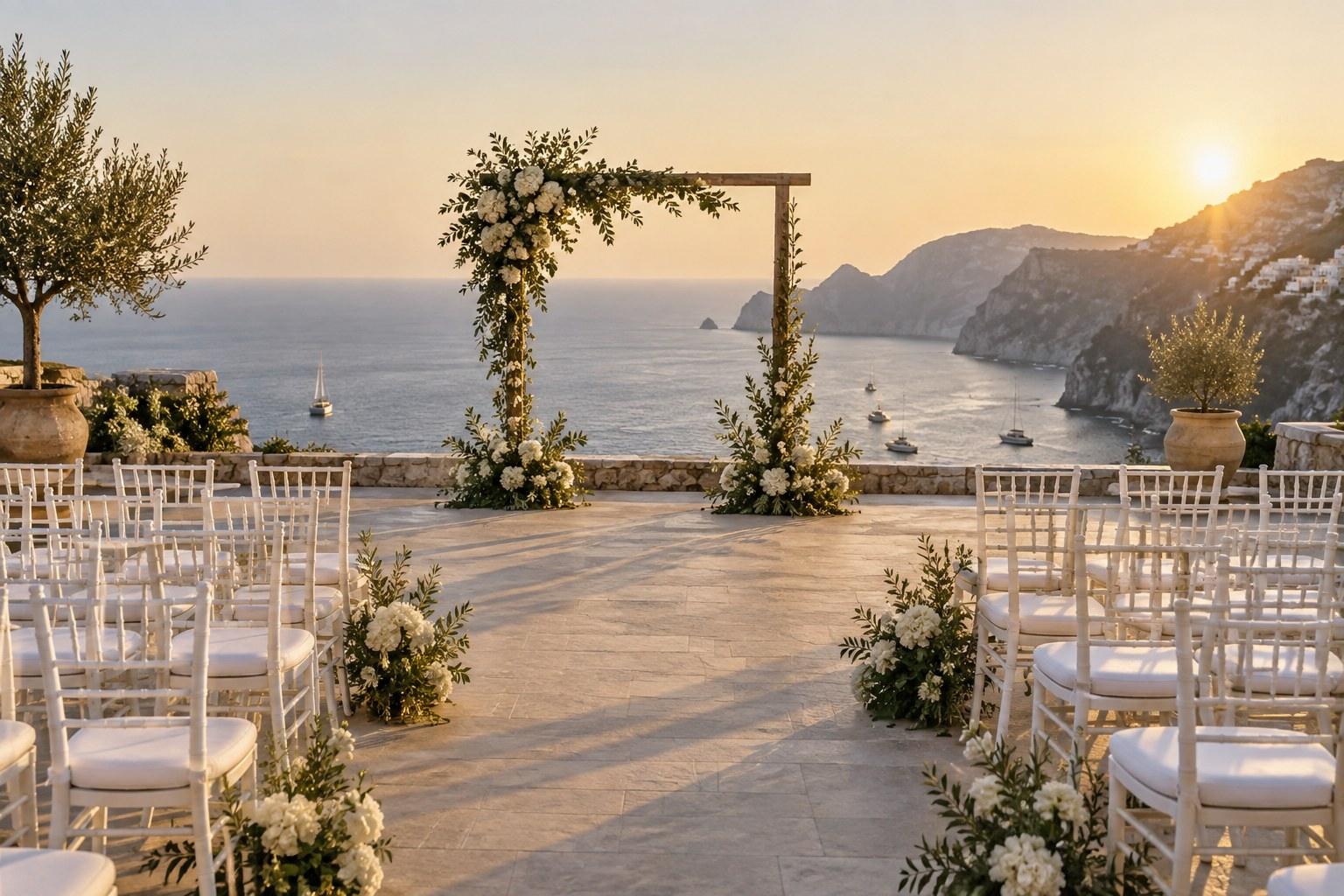
What to agree up front with a couple in a different time zone
Use this as your checklist at the first planning meeting.
| What to agree | Why it matters | How to set it |
|---|---|---|
| Your working hours | Stops the couple expecting instant replies at any hour | State them in the contract and welcome pack, in both time zones |
| Response times | Removes anxiety and chasing | One clear promise for non-urgent messages, with a shorter window for the final fortnight |
| What counts as urgent | Keeps your phone quiet at 3am unless it truly matters | Define examples in writing and give a separate channel for real emergencies |
| The planning hub | Prevents decisions getting lost across apps | Name one tool; confirm that anything outside it isn’t final |
| Standing call slot | Protects the overlap window | Book a recurring time in both zones, with an agenda sent beforehand |
| Decision deadlines | Stops the lag eating into vendor timelines | Set dates with a built-in buffer, shared in the hub |
| Who talks to local vendors | Avoids mixed messages and double-bookings | Agree that vendor contact runs through you or your local coordinator |
| Time zone for the run sheet | Avoids confusion on the day | Agree that all wedding-week documents use destination local time only |
Managing local vendors abroad
Coordinating a destination wedding means working with suppliers you may have met only on a screen, in a country with its own business customs, public holidays and — often — its own language.
Have a trusted person on the ground
A local coordinator, a venue coordinator you trust, or a planner partner in the destination is worth their weight in gold. They can check a delivery, chase a reply in person and flag problems while you sleep. Be clear who vendors treat as the decision-maker.
Get deposits and confirmations in writing
A friendly voice note is not a confirmation. Every booking, deposit, change and final detail should be confirmed in writing and filed in your hub — quantities, delivery times, set-up access, what’s included and what isn’t.
Plan around language barriers
Keep written messages short, clear and free of slang. Use numbered lists for anything important. Where there’s a real language gap, lean on your local contact or a professional translator for contracts and key details rather than guessing.
Build decision deadlines with buffer for the lag
In a single time zone, “I’ll need an answer by Friday” works. Across time zones, a question sent on your Thursday afternoon might not be seen until the couple’s Friday morning — and their reply might land on your Saturday. That’s a whole weekend lost on one question.
So build the lag into every deadline. Work backwards from the vendor’s real cut-off, subtract your buffer, subtract the time zone delay, and that’s the date you give the couple. Bundle related decisions so you’re not waiting a day per question.

The site visit and the final fortnight
Once you’re physically at the destination, the time zone problem flips. Now you’re the one in local time, and the couple, their families or your own office might be the ones asleep while you work.
Use the site visit to meet key vendors face to face, walk the venue at the actual time of day the ceremony will happen and confirm every detail in person. In the final fortnight, shorten response times and add a daily check-in if needed.
Jet lag: for the couple, the guests and you
Jet lag is a planning issue, not just a travel inconvenience. A couple who land the day before, exhausted and foggy, won’t enjoy their rehearsal.
- Encourage the couple to arrive early enough to settle before any key event.
- Think about guests — a late welcome party the night most people land is a tough ask.
- Protect yourself. Arrive with enough time to adjust before you’re running a full day on your feet. Your judgement is the product the couple is paying for.
Write the run sheet in local time only
Throughout planning you’ve been naming both time zones. On the wedding week, stop. Your run sheet, vendor schedules and day-of timeline should all be in destination local time, and only destination local time. State the time zone once at the top, then keep every time clean.
Set boundaries so you don’t burn out
It’s tempting to answer that 3am message just to be helpful. Do it once and you’ve taught the couple that 3am works. Protect your hours: turn off notifications outside working time, use scheduled send so your replies arrive during their daytime, and route true emergencies through the channel you agreed up front. Being responsive is part of the job. Being permanently on call is not.
If you want to go deeper into the business side — pricing your time, packaging destination services and setting boundaries that clients respect — the Advanced Certificate in Wedding Planning, Styling and Business builds on these foundations, while the Certificate in Wedding Planning covers the core planning process end to end.
And if destination and micro weddings are where you want to specialise, the Certificate in Intimate, Micro and Destination Weddings is built for exactly that. 🌍
Coordinating a wedding in a different time zone: FAQs
How do you plan a wedding in a different time zone?
Agree your working hours and response times up front, keep every decision in one shared planning hub, find the overlap window for calls, and always write times with the time zone named. Build a buffer into every decision deadline so the lag doesn’t eat into vendor timelines.
What should a destination wedding planner put in the contract about communication?
Your working hours in your own time zone, your typical response time for non-urgent messages, what counts as an emergency and how to reach you for one, and how communication changes in the final weeks before the wedding.
How do you manage vendors for a wedding abroad?
Ideally through a trusted contact on the ground, such as a local coordinator. Confirm every booking, deposit and change in writing, keep it all in your planning hub, and keep messages short and clear where there’s a language barrier.
Should the wedding run sheet use home time or local time?
Local time only. During planning you name both time zones, but all wedding-week documents — run sheet, vendor schedules and timeline — should be written in destination local time so nobody turns up at the wrong hour.
How do wedding planners avoid burnout working across time zones?
Set clear working hours, turn off notifications outside them, use scheduled send so replies arrive in the client’s daytime, and agree a separate channel for genuine emergencies so ordinary messages can wait until morning.
Ready to plan weddings anywhere in the world — without the 3am panic? Build the systems, confidence and destination know-how with the Certificate in Intimate, Micro and Destination Weddings.